


AI Chatbot Development in Singapore: Cost, Use Cases & Guide in 2026
AI chatbot development is rapidly becoming a key priority for businesses in Singapore as companies look to scale operations, improve customer experience, and reduce reliance on manual processes. With advancements in AI and large language models, modern chatbots are no longer limited to simple FAQs; they can now handle complex interactions, automate workflows, and integrate seamlessly with business systems.
However, many organizations still face important questions:
- What exactly is AI chatbot development?
- How much does it cost in Singapore?
- Should you build, buy, or outsource?
- What are the real use cases and challenges?
This guide provides a practical, business-focused overview of AI chatbot development in Singapore, covering use cases, development process, tools, cost, and implementation strategies to help you make informed decisions.
Key Takeaways:
- AI chatbots are becoming a business necessity: Driven by changing user expectations and the need for faster, always-on support.
- Use cases go beyond customer support: From logistics and healthcare to retail and fintech, AI chatbots improve both operations and customer experience.
- AI chatbot development costs vary based on complexity and scale: Typical investment ranges from SGD 8,000 to SGD 150,000+, depending on features and integrations.
- Choosing the right approach is critical: Build, buy, or outsource decisions impact cost, speed, and scalability.
- Success depends on more than technology: Data quality, system integration, security, and continuous optimization are key factors.
- A structured development process ensures better outcomes: From defining use cases to deployment and optimization.
Table of Contents
- Why AI Chatbots Are Becoming a Business Necessity in Singapore
- What Is AI Chatbot Development?
- AI Chatbot vs Traditional Chatbots: What Has Changed in 2026?
- When Does Your Business Actually Need an AI Chatbot?
- Key Use Cases of AI Chatbot Development Across Industries
- AI Chatbot Development Process: How to Build a Secure & Scalable Solution
- Popular AI Chatbot Development Tools (And When to Use Them)
- What Is the Cost of Developing an AI Chatbot in Singapore (2026)?
- Build vs Buy vs Outsource: Which Approach Is Right for Your Business?
- Key Challenges in Developing AI Chatbot (And How to Overcome Them)
- Why Choose Kaopiz for AI Chatbot Development in Singapore
- Conclusion
- FAQs
Why AI Chatbots Are Becoming a Business Necessity in Singapore
AI adoption in Singapore is accelerating rapidly, with more businesses integrating AI into their daily operations. According to PERSOLKELLY, 45% of Singaporean businesses are already using AI, while 38% are planning to adopt it in the near future.
Among the most widely used tools in the workplace, AI chatbots and virtual assistants rank highest at 27%, followed by AI writing tools (23%) and Robotic Process Automation (19%). This highlights the growing role of conversational AI as a practical and accessible entry point for businesses adopting AI.
At the same time, global adoption continues to rise, with over 987 million people using AI chatbots worldwide, and the market exceeding $9 billion. As customer expectations shift toward faster, always-on service, businesses in Singapore—where labor costs are high—are turning to AI chatbots to automate operations, improve response times, and scale without increasing headcount.
As a result, AI chatbots are no longer just a support tool; they are becoming a core component of modern business infrastructure.
What Is AI Chatbot Development?
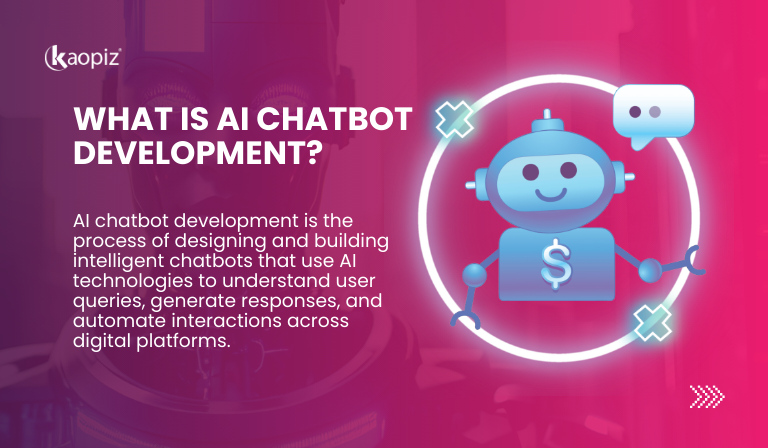
AI chatbot development is the process of building intelligent chatbots that can understand and respond to human language using technologies like NLP (Natural Language Processing) and Large Language Models (LLMs).
AI chatbots can handle complex queries, provide contextual responses, and continuously improve over time. In practice, the development involves:
- Understanding user intent
- Connecting to business data (FAQs, systems, databases)
- Designing conversation flows
- Integrating with platforms like websites, CRM, or messaging apps
For businesses, it enables automation, faster response times, and scalable customer interactions, making it a key part of modern digital operations.
AI Chatbot vs Traditional Chatbots: What Has Changed in 2026?
The biggest shift in 2026 is the move from rule-based chatbots to AI-powered, context-aware assistants. Traditional chatbots follow predefined scripts and respond based on keywords, while AI chatbots use LLMs to understand intent, generate natural responses, and handle more complex conversations.
| Criteria | AI Chatbots | Traditional Chatbots |
|---|---|---|
| Understanding | Understand intent and context | Match keywords or predefined rules |
| Responses | Dynamic, human-like responses | Fixed, scripted replies |
| Conversation | Handle multi-turn, complex queries | Limited to simple flows |
| Learning | Improve over time with data and feedback | Require manual updates |
| Flexibility | Adapt to different scenarios and inputs | Break when input is unexpected |
| Integration | Easily integrate with systems (CRM, APIs, databases) | Limited integration capabilities |
| Scalability | Suitable for enterprise-scale operations | Best for simple, repetitive tasks |
As customer expectations shift toward instant, personalized, and intelligent interactions, the use of AI in chatbot has become the standard.
The shift is clear: from basic automation to intelligent interaction, enabling businesses to scale efficiently while delivering better user experiences.
When Does Your Business Actually Need an AI Chatbot?
Not every business needs an AI chatbot, but for many, it becomes essential once operations start to scale, and manual processes can no longer keep up.
User behavior already shows how widely AI chatbots are being adopted in daily life. Most users primarily rely on chatbots to search for information (81.2%) and support work or studies (61%), while others use them for career advice (18.7%), personal matters (21.6%), and even emotional support (10.2%).
This shift indicates that people are increasingly comfortable interacting with AI across both professional and personal contexts, raising expectations for businesses to offer similar experiences.
You may need an AI chatbot if:
- You receive a high volume of repetitive inquiries: FAQs, order status, basic support requests, etc.
- Your team struggles to respond quickly: Slow response times can impact customer satisfaction and conversion rates.
- You want to provide 24/7 support without increasing headcount: Especially important in markets like Singapore with high labor costs.
- Your business is growing and needs to scale operations efficiently: Handling more customers without proportional hiring.
- You have structured data available: FAQs, knowledge bases, or internal documents that a chatbot can leverage.
- You are looking to automate internal workflows: HR queries, IT support, internal knowledge search, etc.
AI chatbots are most valuable when they solve real operational bottlenecks, not just as a “nice-to-have” feature. When implemented correctly, they can reduce workload, improve response speed, and enhance user experience across both customer-facing and internal processes.
If your business is facing scaling challenges or rising operational costs, it’s often the right time to consider AI chatbot development.
Key Use Cases of AI Chatbot Development Across Industries
AI chatbot adoption for businesses is driven not just by technology, but by changing user behavior. As customers and employees increasingly rely on AI for information, support, and decision-making, businesses must adapt to meet these expectations.
Across industries, AI chatbots are increasingly used to automate repetitive tasks, improve response time, and enhance customer experience at scale.
Logistics & Supply Chain
AI chatbots help logistics companies manage high volumes of inquiries related to shipment status, delivery updates, and coordination. By providing real-time information and automating communication, chatbots reduce manual workload and improve operational visibility across the supply chain.
Real-life example: A global logistics company implemented an AI chatbot integrated with its shipment tracking system to automate customer inquiries. The chatbot provided instant updates on delivery status, handled booking requests, and supported customers across multiple time zones.
As a result, the company was able to:
- Handle up to 100x more tracking inquiries at scale
- Improve customer satisfaction by around 50% through faster, personalized responses
- Reduce average response time by up to 70% with 24/7 automated support
This demonstrates show AI chatbots can streamline logistics operations and deliver real-time, scalable support in complex supply chain environments.
Healthcare & Wellness
In healthcare, AI chatbots support appointment scheduling, patient inquiries, and basic symptom guidance. They help reduce administrative burden while improving accessibility and response time for non-critical interactions.
Real-life example: One of the best chatbot development platforms, Ada Health provides medical chatbots focused on health information lookup and symptom guidance. Studies show that such chatbots can address up to 80% of common patient questions with high accuracy, helping streamline communication between patients and healthcare providers.
Key benefits include:
- Reducing phone call volume to nurses and administrative staff (in some cases by up to 50%)
- Improving patient satisfaction and engagement through faster responses
- Freeing up medical staff to focus on critical, non-repetitive tasks
- Providing 24/7 access to personalized health information for patients
Therefore, AI chatbots can enhance both operational efficiency and patient experience in modern healthcare systems.
Retail & E-commerce
AI chatbots help retail and e-commerce businesses deliver instant, personalized customer experiences across the entire shopping journey—from product discovery to post-purchase support. By providing real-time assistance and recommendations, chatbots reduce friction and improve conversion rates.
Real-life example: Global beauty retailer Sephora implemented AI-powered chatbots and virtual assistants to support product discovery and personalized shopping. These tools help customers find suitable products, try them virtually, and make more confident purchasing decisions.
As a result, the company was able to:
- Contribute to strong e-commerce growth, with online revenue increasing from $580 million to $3 billion over several years
- Improve customer engagement through interactive and personalized experiences
- Reduce return rates by enabling more accurate product selection (e.g. virtual try-ons)
This shows how AI chatbots can drive higher conversions, improve customer satisfaction, and deliver scalable, personalized shopping experiences.
Fintech
AI chatbots help financial institutions handle high volumes of customer inquiries while ensuring speed, accuracy, and consistent service. By automating routine interactions such as account inquiries, transactions, and support requests, chatbots reduce operational workload and improve customer experience.
Real-life example: ICICI Bank implemented an AI-powered assistant called iPal to streamline customer interactions across its digital platforms. Integrated with its banking systems, iPal enables users to access information, perform transactions, and receive support instantly.
As a result, the bank was able to:
- Handle over 1 million customer queries daily across multiple channels
- Reduce call center workload by more than 40%
- Deliver responses in under 2 seconds, improving service speed
- Achieve over 85% customer satisfaction
This example illustrates how AI chatbots can transform banking operations by enabling faster, more efficient, and scalable customer service while maintaining high levels of accuracy and trust.
AI Chatbot Development Process: How to Build a Secure & Scalable Solution
AI chatbot app development requires more than just technology; it involves aligning business goals, data, and system integration to deliver real value. A structured approach ensures the solution is both secure and scalable, and aligned with business needs.
- Define Business Objectives and Use Cases: Start by identifying what the chatbot is expected to achieve—whether it’s reducing support costs, improving response time, or automating internal workflows. Clear objectives help prioritize features and ensure measurable outcomes.
- Identify Users and Key Scenarios: Understand who will use the chatbot (customers, employees, partners) and define the most common interaction scenarios. This ensures the chatbot is designed around real user needs rather than assumptions.
- Prepare and Structure Data: AI chatbots rely on high-quality data. This includes FAQs, internal documents, knowledge bases, and historical interactions. Proper data structuring improves accuracy and ensures consistent responses.
- Select AI Models and Technology Stack: Choose the appropriate technologies based on complexity and scale. This may include LLMs, NLP models, RAG frameworks, and cloud infrastructure to support performance, security, and scalability.
- Design Conversation Flow and User Experience: Design how the chatbot interacts with users, including conversation logic, tone, and fallback handling. A well-designed experience ensures interactions feel natural, intuitive, and efficient.
- Develop, Integrate, and Test the Chatbot: Build the chatbot and integrate it with existing systems such as CRM, ERP, or messaging platforms. Thorough testing is essential to ensure accuracy, reliability, and smooth performance across use cases.
- Deploy, Monitor, and Continuously Optimize: Once deployed, monitor performance using analytics and user feedback. Continuous optimization helps improve response quality, expand capabilities, and maintain long-term effectiveness.
Popular AI Chatbot Development Tools (And When to Use Them)
Choosing the right tools is a critical step in AI chatbot development. The best approach depends on your business goals, required level of customization, and system complexity. In practice, most solutions combine multiple tools across AI models, frameworks, and platforms.
| Category | Examples | When to Use | Best For |
|---|---|---|---|
| LLM Providers | OpenAI, Anthropic, Google Gemini | Natural conversations, complex queries, multi-turn interactions | AI-powered chatbots with advanced capabilities |
| AI Frameworks & Orchestration | LangChain, LlamaIndex | Connecting AI with data sources, building RAG systems, managing workflows | Custom chatbot development with data integration |
| No-code / Low-code Platforms | Dialogflow, Microsoft Bot Framework, Chatbot.com | Quick deployment, MVPs, simple automation | Businesses with limited technical resources |
| Cloud Infrastructure & AI Services | AWS (Lex, Lambda), Azure AI, Google Cloud AI | Scalable systems, security, enterprise integration | Production-grade, enterprise chatbot solutions |
Key takeaway: There is no one-size-fits-all solution.
- Simple use cases → no-code platforms may be sufficient
- Advanced, enterprise needs → require custom development with LLMs, frameworks, and cloud infrastructure
- In many cases, businesses adopt a hybrid approach—combining multiple tools to build a chatbot that is both flexible and scalable.
What Is the Cost of Developing an AI Chatbot in Singapore (2026)?
The cost of developing an AI chatbot in Singapore varies based on complexity, functionality, and integration requirements. In most cases, businesses can expect a range from SGD 8,000 to over SGD 150,000, depending on the scope of the solution.
| Type of Chatbot | Estimated Cost (SGD) | Timeline | Description |
|---|---|---|---|
| Simple FAQ Bot | SGD 8,000 – SGD 12,000 | 3–4 weeks | Handles basic questions from a knowledge base |
| Lead Qualification Bot | SGD 12,000 – SGD 18,000 | 4–6 weeks | Captures and qualifies leads with basic automation |
| Customer Support Bot | SGD 15,000 – SGD 22,000 | 6–8 weeks | Manages support inquiries and integrates with systems |
| Enterprise AI Chatbot | SGD 20,000 – SGD 50,000+ | 8–12+ weeks | Advanced, scalable solution with full system integration |
More advanced implementations with custom AI models, multi-language support, and deep AI integrations can exceed SGD 100,000+.
Several factors influence the final investment:
- Use case complexity: simple FAQs vs multi-step workflows
- System integration: CRM, ERP, payment systems, databases
- Data readiness: structured vs unstructured data
- Customization level: off-the-shelf vs fully tailored solutions
- Security and compliance requirements
In Singapore, where labor costs are high, AI chatbots can deliver strong long-term ROI. Instead of scaling teams, businesses can automate large volumes of interactions with a one-time development investment and lower ongoing costs.
For example, companies using AI chatbots have reported:
- Automating up to 70–80% of repetitive inquiries
- Reducing reliance on customer support staff
- Providing 24/7 service without additional headcount
Over time, this shifts operational costs from recurring manpower expenses to scalable automation.
Want an accurate estimate? Talk to our AI experts for a tailored cost breakdown based on your business needs.
Build vs Buy vs Outsource: Which Approach Is Right for Your Business?
When implementing an AI chatbot, one of the most important decisions is choosing the right approach: build in-house, outsource, or buy an off-the-shelf solution. Each option comes with trade-offs in terms of cost, speed, flexibility, and scalability.
| Approach | Pros | Cons | Best For |
|---|---|---|---|
| Build (In-house) | Full control, tailored to specific needs | High cost, longer development time, requires AI expertise | Large enterprises with internal AI teams |
| Buy (SaaS / Platform) | Fast deployment, lower upfront cost, easy to use | Limited customization, less flexibility, potential scalability limits | SMEs with simple use cases |
| Outsource (Development Partner) | Balanced cost, faster time-to-market, access to expertise | Requires vendor selection and coordination | Most businesses seeking scalable, customized solutions |
When to Build In-house
Building internally makes sense if your organization:
- Has a strong AI and engineering team
- Requires full control over data, models, and infrastructure
- Is developing AI as a core competitive capability
However, this approach often involves significant investment in hiring, training, and ongoing maintenance.
When to Buy a Ready-made Solution
Buying a SaaS chatbot platform is ideal when:
- You need a quick solution for basic use cases
- Your requirements are relatively simple (e.g. FAQs, lead capture)
- You want minimal setup and lower upfront cost
The trade-off is limited flexibility, especially when scaling or integrating with complex systems.
When to Outsource AI Chatbot Development
Outsourcing is often the most practical option for businesses that:
- Need a custom solution tailored to their workflows
- Want to integrate with existing systems (CRM, ERP, databases)
- Do not have an in-house AI team
- Require faster deployment with controlled costs
By working with an experienced development partner like Kaopiz, companies can access specialized expertise without the overhead of building internal capabilities from scratch, while potentially reducing development costs by 40–60%.
Key takeaway: There is no one-size-fits-all approach.
- Build → maximum control, highest cost
- Buy → fastest setup, limited flexibility
- Outsource → best balance of cost, speed, and customization
For most businesses in Singapore, outsourcing provides a scalable and cost-effective path to implement AI chatbot solutions while maintaining flexibility for future growth.
Key Challenges in Developing AI Chatbot (And How to Overcome Them)
While AI chatbots offer significant business benefits, building an effective solution comes with several challenges. Understanding these early helps businesses avoid common pitfalls and ensure successful implementation.
| Challenge | Description | How to Overcome |
|---|---|---|
| Data Quality & Availability | Incomplete or unstructured data leads to inaccurate responses | Consolidate, clean, and continuously update data sources |
| Understanding User Intent | Users phrase queries differently, causing misinterpretation | Use advanced NLP/LLMs, train on real queries, add fallback flows |
| System Integration | Difficulty connecting with CRM, ERP, or internal systems | Use APIs, plan architecture early, prioritize key integrations |
| Security & Data Privacy | Handling sensitive data requires compliance and protection | Implement encryption, access control, and follow regulations (e.g. PDPA) |
| User Experience & Adoption | Poor UX reduces usage and effectiveness | Design intuitive flows, enable human handover, optimize interactions |
| Maintenance & Optimization | Performance declines without continuous updates | Monitor performance, retrain models, iterate based on user data |
Key takeaway: Successful AI chatbot development requires the right balance of data, integration, security, and user experience. Businesses that proactively address these challenges can build AI chatbots that are accurate, scalable, and aligned with long-term business goals.
Why Choose Kaopiz for AI Chatbot Development in Singapore
Choosing the right development partner is critical to the success of your AI chatbot initiative. Beyond technology, it requires a partner who understands business use cases, system integration, and long-term scalability.
At Kaopiz, we combine AI expertise, engineering capabilities, and real-world implementation experience to deliver the best AI chatbot for web development tailored to enterprise needs in Singapore and across APAC.
What Sets Us Apart?
At Kaopiz, we go beyond building chatbots; we deliver end-to-end AI solutions aligned with real business outcomes. Our approach combines strong engineering capabilities, industry experience, and a deep understanding of enterprise needs in Singapore and across APAC.
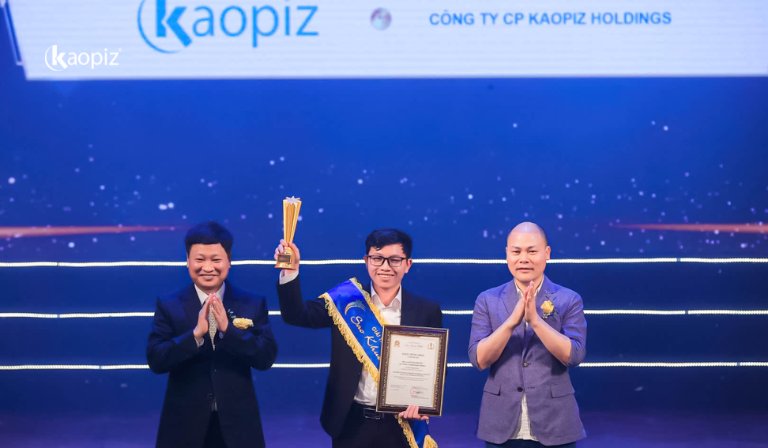
- 1,000+ engineers with proven delivery track record: With a team of over 1,000 engineers, we have delivered 1,000+ projects for 500+ global clients. This scale allows us to handle projects of varying complexity while maintaining consistent quality and delivery speed.
- End-to-end AI chatbot development: We support the full lifecycle, from use case consulting and solution design to development, deployment, and continuous optimization.
- Strong system integration expertise: Our teams have hands-on experience integrating chatbots with CRM, ERP, internal databases, and third-party platforms, enabling seamless automation across business workflows and reducing manual processes.
- Scalable, cloud-native architecture: We build solutions on modern cloud platforms such as AWS, Azure, and Google Cloud, ensuring high availability, flexibility, and scalability as your business grows.
- Security-first and compliance-driven approach: Kaopiz follows international standards such as ISO 27001 and ISO 9001, with experience supporting clients in regulated industries that require strict data protection and compliance.
- Cost-efficient delivery model (up to 40–60% savings): By leveraging our Vietnam-based engineering teams, businesses can access top-tier talent while reducing development costs compared to in-house or local hiring in Singapore.
- Faster deployment timelines: Depending on scope, MVP chatbot solutions can typically be delivered within 4–8 weeks, helping businesses quickly validate use cases and achieve early ROI.
- Proven experience across industries: We have successfully delivered AI chatbot solutions across logistics, healthcare, fintech, retail, and enterprise internal systems, allowing us to adapt quickly to different business requirements.
Kaopiz Case Study: AI Chatbot for Internal Knowledge Automation
A company in the SaaS and system integration industry sought to improve internal efficiency by leveraging AI to automate operations and enhance knowledge sharing across departments. As the organization scaled, managing internal processes and information became increasingly complex.
Business Challenges
- Internal knowledge scattered across multiple departments and documents
- Difficulty accessing accurate information quickly
- High dependency on individuals for answering process-related questions
- Limited AI experience among employees
Our Solution
Kaopiz developed a custom AI chatbot to centralize knowledge and automate internal inquiries:
- Built on AWS infrastructure (Amazon Lex, Lambda, S3) for scalability
- AI chatbot trained on internal documents and business workflows
- Integrated directly into the company portal for seamless access
- Implemented a knowledge base system for continuous updates
- Conducted internal training on AI usage and prompt design
Results
- Enabled a 24/7 internal support system through AI chatbot automation
- Reduced dependency on individuals by standardizing responses
- Improved access to internal knowledge and workflows
- Accelerated AI adoption through employee training
- Built a scalable foundation for future expansion and integrations
This case demonstrates how AI chatbots can transform internal operations by improving knowledge accessibility, reducing manual workload, and enabling scalable growth. With Kaopiz, you gain a partner who can deliver secure, scalable, and business-aligned AI solutions tailored to your needs.
Looking to build a secure and scalable AI chatbot? Contact Kaopiz to explore a solution tailored to your business.
Conclusion
AI chatbot development is no longer a future trend—it is becoming a business necessity for companies looking to scale efficiently, improve customer experience, and stay competitive in Singapore’s fast-moving digital landscape.
From automating customer support and streamlining operations to enabling real-time, personalized interactions, AI chatbots offer clear and measurable value across industries. However, success depends on choosing the right approach, building on a solid data foundation, and ensuring scalability, security, and seamless integration with existing systems.
FAQs
- Can AI Chatbots Integrate with Existing Business Systems?
- Yes. Modern AI chatbots can integrate with systems such as CRM, ERP, databases, and third-party platforms through APIs. This allows them to retrieve real-time data, automate workflows, and provide more accurate and contextual responses.
- How Much Does AI Chatbot Development Cost in Singapore?
- The cost typically ranges from SGD 8,000 to over SGD 150,000, depending on complexity, features, and integration requirements. Simple FAQ bots are more affordable, while enterprise-grade solutions with advanced AI capabilities and system integrations require higher investment.
- How Long Does It Take to Deploy an AI Agent?
-
Deployment time varies based on scope:
- Simple chatbot: 3–4 weeks
- Mid-level solution: 4–8 weeks
- Enterprise AI chatbot: 8–12+ weeks
- Is My Data Secure When Using AI Chatbot Solutions?
- Yes, if built correctly. Enterprise AI chatbot solutions follow best practices such as data encryption, access control, and secure cloud infrastructure. Compliance with regulations (e.g. PDPA in Singapore) is also critical, especially for industries handling sensitive data.
- Should I Build or Outsource AI Chatbot Development?
-
It depends on your resources and goals:
- Build in-house: full control but high cost and longer timelines
- Buy (platform): faster setup but limited customization
- Outsource: balanced approach with faster delivery and access to expertise
Trending Post

No Comments yet!