















AI in Manufacturing: Should Manufacturers Invest in 2026?
Artificial intelligence is transforming modern factories faster than ever. AI in manufacturing enables companies to automate production, analyze massive volumes of industrial data, and improve operational efficiency across the entire value chain. From predictive maintenance and smart robotics to intelligent supply chains, manufacturers are increasingly adopting AI to stay competitive in the era of Industry 4.0.
But is investing in AI really worth it for manufacturers in 2026? This article explores real-world applications, measurable benefits, implementation challenges, and future trends of AI in manufacturing—along with practical examples and case studies that help businesses evaluate whether AI investment makes sense for their operations.
Key Takeaways:
- AI is transforming manufacturing operations by enabling factories to automate processes, analyze industrial data, and improve decision-making across the production lifecycle.
- AI technologies can increase production efficiency by up to 20% and significantly reduce operational costs through automation, predictive maintenance, and real-time analytics.
- Computer vision systems can reduce product defects by up to 50% while increasing manufacturing yield by 10–20% through automated quality inspection.
- Predictive maintenance helps manufacturers prevent costly downtime, which currently causes around $50 billion in annual losses across the global manufacturing industry.
- With government grants and Industry 4.0 initiatives in Singapore, manufacturers now have stronger support to adopt AI and accelerate digital transformation.
Table of Contents
- What Is AI in Manufacturing
- How Is AI Used in Manufacturing Industries: Top Applications for 2026
- 7 Key Benefits of AI in Manufacturing
- Real-World AI Manufacturing Case Studies
- Challenges of Implementing AI in Manufacturing
- How Manufacturers Can Successfully Implement AI
- Should Singapore Manufacturers Invest in AI in 2026?
- Why Choose Kaopiz for AI Manufacturing Solutions
- Future Trends in AI Manufacturing (2026–2030)
- Conclusion
- FAQs
What Is AI in Manufacturing
As manufacturers continue to pursue higher productivity, better product quality, and more resilient supply chains, artificial intelligence is emerging as a core technology in modern industrial operations. AI in manufacturing refers to the integration of artificial intelligence technologies into production environments to improve how factories operate, analyze data, and make decisions.
Definition of AI in Manufacturing
AI in manufacturing is a key component of the broader digital transformation in manufacturing, where companies adopt advanced technologies such as IoT, data analytics, and automation to modernize production processes and improve operational efficiency.
In practice, AI in manufacturing refers to the application of technologies such as machine learning, computer vision, and advanced analytics within production environments. These technologies enable manufacturers to analyze large volumes of industrial data, identify patterns, and automate decision-making across various stages of the production process.

For example, machine learning models can predict equipment failures before they occur, enabling predictive maintenance and reducing downtime. At the same time, computer vision systems can automatically inspect products on production lines and detect defects with high accuracy, improving quality control and overall manufacturing performance.
Key Technologies Powering AI in Manufacturing
Several core technologies enable the adoption of AI in manufacturing industries. Machine learning is widely used to analyze historical production data, enabling predictive maintenance, demand forecasting, and operational optimization. Computer vision allows automated quality inspection by detecting defects in real time on production lines.
At the infrastructure level, industrial IoT sensors collect continuous data from equipment and production systems. When combined with advanced analytics platforms, this data allows AI-powered manufacturers to monitor operations and improve efficiency at scale.
How Is AI Used in Manufacturing Industries: Top Applications for 2026
Across many AI in manufacturing industries, companies are applying machine learning, automation, and data analytics to solve practical operational problems, from predicting machine failures to optimizing energy usage in factories. These AI applications in manufacturing help organizations analyze large volumes of production data, automate repetitive tasks, and make faster data-driven decisions.
Predictive Maintenance
One of the most widely adopted AI applications in manufacturing is predictive maintenance. Traditional maintenance strategies typically rely on scheduled servicing or reactive repairs after equipment fails. Both approaches can lead to unnecessary downtime or increased maintenance costs.
AI-powered predictive maintenance uses machine learning algorithms to analyze sensor data collected from industrial equipment. By continuously monitoring factors such as temperature, vibration, and operational performance, AI systems can detect early signs of potential equipment failure.
Research from Deloitte highlights the significant operational impact of maintenance strategies in manufacturing. Poor maintenance practices can reduce an asset’s productive capacity by 5–20%, while unplanned downtime is estimated to cost industrial manufacturers around $50 billion annually.
By leveraging predictive analytics and real-time equipment monitoring, manufacturers can reduce unplanned downtime and improve overall equipment reliability, making predictive maintenance a key component of modern AI-enabled manufacturing operations.
AI-Powered Quality Inspection
Ensuring consistent product quality is critical for manufacturers operating in highly competitive markets. Traditional inspection methods often rely on manual checks, which can be time-consuming and prone to human error.
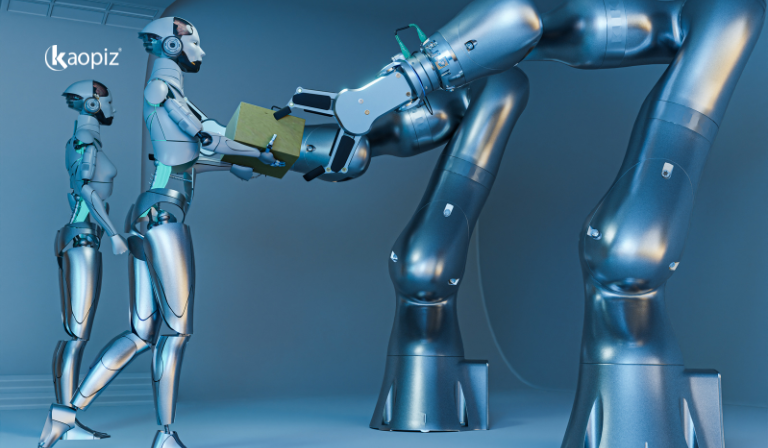
AI-powered quality inspection systems use computer vision algorithms to automatically analyze images captured by cameras installed along production lines. These systems can detect defects, surface irregularities, or assembly errors with high accuracy and speed.
By automating visual inspection processes, manufacturers can improve defect detection while reducing the time required for quality control. Many AI-in-manufacturing companies are now integrating computer vision systems into their production lines to ensure consistent product standards while minimizing waste and rework.
Smart Robotics and Cobots
Industrial robotics has long been a key component of factory automation, but the integration of artificial intelligence is enabling a new generation of intelligent robotic systems.
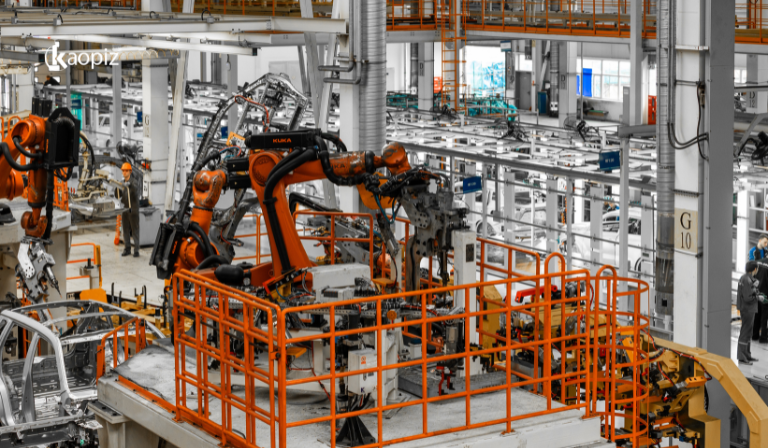
Smart robotics powered by AI is becoming a core component of modern factories. These systems combine machine learning, computer vision, and automation to improve productivity and reduce human error in production lines. Many manufacturers are adopting AI-driven industrial automation to build more flexible and efficient smart factories.
As robotics becomes more intelligent and adaptable, these systems are playing an increasingly important role in the manufacturing industry, helping companies improve productivity while maintaining flexible and scalable production processes.
Supply Chain and Demand Forecasting
Manufacturing companies rely on efficient supply chain planning to maintain stable production operations. However, global supply chains are becoming increasingly complex and vulnerable to disruptions.
AI-powered demand forecasting helps manufacturers analyze large volumes of operational data to predict customer demand, optimize inventory, and improve logistics planning. Integrating AI into supply chain management allows companies to build more resilient and responsive manufacturing ecosystems.
McKinsey & Company research suggests that AI-driven forecasting systems can reduce supply chain errors by 20–50%, helping organizations improve planning accuracy and operational efficiency.
Generative Design for Product Development
AI is also transforming how manufacturers design and develop new products. One emerging example of AI in manufacturing is generative design, a process where algorithms automatically generate multiple design alternatives based on engineering constraints.
Instead of manually creating individual design prototypes, engineers can input parameters such as material properties, structural requirements, or cost targets. AI systems then generate thousands of optimized design options that engineers can evaluate.
According to Autodesk, generative design technologies can significantly accelerate product development cycles while producing lighter and more efficient designs.
Energy Optimization in Manufacturing Plants
Energy consumption is a major operational cost in many factories, especially in energy-intensive sectors such as automotive, electronics, and heavy industry. As manufacturers pursue higher efficiency and sustainability, AI in manufacturing is increasingly used to monitor and optimize energy usage across production systems.
Through advanced analytics and machine learning algorithms, AI applications in manufacturing can analyze operational data from machines, sensors, and production lines to identify inefficiencies in energy consumption. AI systems can detect abnormal usage patterns, recommend equipment adjustments, and optimize production schedules to reduce unnecessary energy waste.
7 Key Benefits of AI in Manufacturing
Adopting AI in manufacturing offers far more than simple automation; it enables manufacturers to improve efficiency, enhance product quality, and make smarter operational decisions. Below are the seven key benefits of AI in manufacturing that are reshaping industrial operations today.
Increased Production Efficiency by Up to 20%
One of the most important benefits of AI in manufacturing is improved production efficiency. By using automation, machine learning, and real-time data analysis, artificial intelligence in manufacturing helps factories optimize workflows and monitor equipment performance.
Several studies conclude that AI technologies can increase manufacturing productivity by up to 20% by improving process optimization and enabling data-driven decision-making across production systems.
Reduced Operational Costs
Another major advantage of adopting AI in factories is the ability to lower operational expenses. Through automation and advanced data analytics, AI systems help manufacturers optimize energy consumption, streamline production workflows, and reduce manual intervention in repetitive tasks. These technologies allow factories to use resources more efficiently while maintaining stable output and production quality.
Based on PwC, artificial intelligence could contribute up to $15.7 trillion to the global economy by 2030, largely driven by productivity gains and cost reductions across industries, including manufacturing. By improving efficiency and resource utilization, AI helps manufacturers operate more competitively in increasingly complex industrial environments.
Improved Product Quality
Another major benefit of AI in manufacturing is improved product quality. Using machine learning, computer vision, and real-time data analysis, AI in manufacturing can automatically inspect products and detect defects during production. These AI applications in manufacturing help factories identify quality issues earlier and maintain consistent standards across AI-enabled manufacturing operations.
AI-driven quality inspection systems are able to reduce product defects by up to 50% and increase manufacturing yield by 10–20% by identifying problems earlier in the production process. This allows AI-powered manufacturers to reduce waste, improve product consistency, and enhance overall performance in modern manufacturing industries.
Faster Data-Driven Decision Making
AI also enables manufacturers to make faster and more accurate decisions based on real-time data. By analyzing information from sensors, production systems, and supply chains, artificial intelligence in manufacturing helps identify patterns, predict outcomes, and support more informed operational strategies. This allows factories to respond quickly to changes in demand, equipment performance, or production conditions.
According to IBM, organizations that adopt AI-driven analytics can improve decision-making speed and operational efficiency by transforming large volumes of industrial data into actionable insights. In manufacturing environments, this capability helps managers optimize production planning, reduce risks, and improve overall factory performance.
Greater Production Flexibility
AI enables manufacturers to achieve greater flexibility in their production systems. By using machine learning and real-time data analysis, intelligent systems can automatically adjust production schedules, machine settings, and workflows based on changes in demand or supply conditions. This allows factories to switch between product types more efficiently and respond faster to market fluctuations.
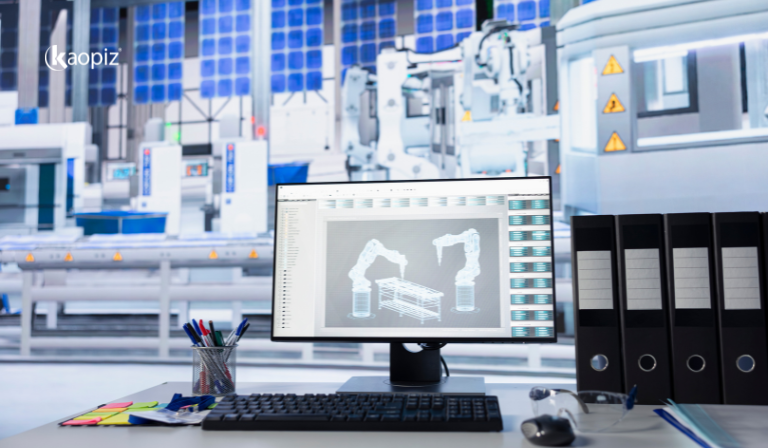
World Economic Forum shows that AI and digital technologies are key drivers of smart factories, enabling more adaptive and flexible production systems within Industry 4.0. With these capabilities, manufacturers can produce customized products at scale while maintaining operational efficiency.
Improved Workplace Safety
Ensuring worker safety has become a priority for modern factories, and AI technologies are playing an important role in this area. With the support of computer vision, smart sensors, and predictive analytics, AI systems can monitor production environments in real time and identify potential hazards such as unsafe equipment conditions or risky worker movements.
An article from International Labour Organization states that digital technologies including AI can significantly improve workplace safety by supporting hazard detection and risk prevention in industrial environments. In manufacturing settings, these tools help organizations protect employees while maintaining stable and efficient production operations.
Stronger Competitive Advantage
Adopting AI technologies allows manufacturers to gain a stronger competitive advantage in rapidly evolving markets. With the ability to analyze large volumes of operational and market data, AI helps companies identify new opportunities, improve strategic planning, and adapt more quickly to industry changes.
In addition, AI supports continuous improvement across manufacturing operations, enabling businesses to scale production, introduce new products faster, and meet customer expectations more effectively. As a result, manufacturers that successfully integrate AI solutions can strengthen their market position and remain competitive in increasingly AI-driven manufacturing industries.
Real-World AI Manufacturing Case Studies
The impact of AI in manufacturing is best demonstrated through real-world applications across global industries. Many manufacturers are increasingly adopting AI-driven technologies as part of the push toward smart manufacturing and Industry 4.0 across the world.
Below are several real-world AI manufacturing case studies that illustrate how companies are successfully implementing artificial intelligence in their operations.
Agilent Technologies – AI-Driven Defect Detection
Background: Agilent Technologies is a global manufacturer of electronic measurement and analytical equipment used in electronics and semiconductor production. As one of the notable AI in manufacturing companies, it applies AI to improve quality control and factory efficiency.
Problem: In printed circuit assembly production, Agilent faced low yields and slow defect diagnostics. Traditional inspection systems struggled to analyze large volumes of manufacturing data, making it difficult to quickly detect faults across complex automated factory equipment.
Solution: The platform uses intelligent fault-detection software to identify defective components and anomalies earlier in the production line. By combining automation, data analytics, and AI-powered inspection, the system improves troubleshooting speed and enhances quality control across manufacturing operations.
Result:
- Production yield increased from ~40–50% to 98.8%.
- Up to 98% of defects detected during screening.
- Repair time reduced from 3 hoursto 30 minutes.
- Annual repair costs reduced by about $1.8 million.
- Internal rate of return exceeded 300%.
AI-Powered Hazard Zone Detection for Construction Safety (Kaopiz Case Study)
Background: A large engineering and infrastructure company in the manufacturing industry sought to improve construction site safety through AI-enabled manufacturing operations and digital monitoring systems. The project focused on applying AI in manufacturing and construction environments to enhance hazard detection and workplace safety.
Problem: On construction sites, hazardous zones caused by heavy machinery and excavation work were traditionally marked with cones and bars installed manually. However, these visual markers often created challenges in visibility, monitoring, and record-keeping, making it difficult for managers to track dangerous areas or share safety information efficiently.
Solution: An AI-powered hazard zone detection system was developed using computer vision and machine learning to analyze images and video from on-site cameras. The system automatically detects cones and safety bars, then connects their locations to identify and visualize hazardous areas in real time. Hazard zones are displayed through overlays or pop-ups on the monitoring interface, while detection results are stored in a shareable digital format to support reporting and safety management.
Result:
- Automated detection of cones and safety bars using AI image analysis improves hazard zone identification accuracy.
- Real-time visualization of hazardous areas from site video feeds enhances monitoring and safety awareness.
- Improved worker safety and site management efficiency through automated hazard tracking.
- Digital recording and sharing of hazard data reduces manual reporting workload and supports better coordination among teams.
Interested in implementing AI-powered safety monitoring in your operations? Kaopiz helps manufacturers and infrastructure companies develop computer vision solutions for hazard detection, real-time monitoring, and automated safety management. Talk to our AI experts to explore how AI can improve workplace safety and operational efficiency.
Siemens Amberg Smart Factory
Background: Siemens operates the Electronics Works Amberg (EWA), one of the most advanced examples of AI in manufacturing industries and a benchmark for smart factories. The facility produces SIMATIC programmable logic controllers used to automate industrial systems worldwide.
Problem: With around 1,200 product variants and 350 production changeovers per day, the factory must process enormous volumes of manufacturing data to maintain efficiency and product quality. Bottlenecks in processes such as PCB inspection and unexpected machine downtime created challenges for optimizing production.
Solution: The factory integrates AI, Industrial Edge computing, and cloud analytics into its automation systems. Machine learning algorithms analyze real-time sensor data from production equipment to predict defects, optimize inspection processes, and enable predictive maintenance within the digital manufacturing environment.
Result
- About 17 million SIMATIC products produced annually.
- Around 50 million data points analyzed in production processes.
- 75% of the manufacturing value chain is automated by machines and robots.
- Product quality rate reaches about 99.9990%.
Challenges of Implementing AI in Manufacturing
Before adopting AI, companies often face several operational, technical, and organizational challenges. The table below summarizes the most common barriers manufacturers encounter when implementing AI in manufacturing environments.
| Challenge | Description | Impact on Manufacturing Operations |
|---|---|---|
| High Initial Investment | Implementing AI requires significant upfront costs for infrastructure, AI software, sensors, data platforms, and skilled specialists. | Small and mid-sized manufacturers may struggle to justify the ROI in early stages. |
| Data Availability and Quality Issues | AI systems depend on large volumes of accurate and well-structured manufacturing data for training and analysis. | Poor or fragmented data can reduce algorithm accuracy and limit AI effectiveness. |
| Workforce Skill Gap | Many factories lack employees with expertise in AI, machine learning, and data analytics. | Companies must invest in training programs or hire specialized AI talent. |
| Integration with Legacy Systems | Older manufacturing equipment and software systems are often not designed to integrate with modern AI platforms. | Integration can become complex, requiring system upgrades or custom solutions. |
| Cybersecurity and Data Privacy Risks | AI-powered factories rely on connected systems, IoT devices, and cloud platforms that increase cybersecurity exposure. | Manufacturers must strengthen security frameworks to protect sensitive production data. |
How Manufacturers Can Successfully Implement AI
Successfully adopting AI in manufacturing requires more than just deploying new technology. Manufacturers need a clear strategy, reliable data systems, and a gradual implementation approach to ensure AI solutions deliver measurable value. The following steps outline how companies can effectively introduce artificial intelligence in manufacturing operations.
- Identify High-Impact Use Cases
- Focus on areas where AI delivers the most value, such as predictive maintenance, quality inspection, and demand forecasting.
- Targeting specific operational problems helps demonstrate quick results and ROI.
- Build a Strong Data Infrastructure
- Reliable, well-structured data is essential for AI systems.
- Integrate machine data through IoT devices, data platforms, and cloud systems.
- Start with Pilot Projects
- Begin with small pilot deployments instead of full-scale implementation.
- This allows teams to test AI performance and evaluate real operational impact.
- Scale AI Across Operations
- Expand successful pilots across production lines and workflows.
- Integration with existing systems and workforce training helps build fully AI-enabled factories.
Should Singapore Manufacturers Invest in AI in 2026?
Yes. As global competition intensifies, AI in manufacturing helps Singapore companies improve productivity, automate operations, and enable data-driven decisions. However, successful adoption requires careful evaluation of business needs and technical readiness.
When Does AI Investment Make Sense?
AI investment is most effective when manufacturers face operational challenges that data and automation can solve. For example, companies dealing with frequent equipment downtime, quality inconsistencies, or unpredictable demand can benefit from AI-enabled manufacturing operations such as predictive maintenance and demand forecasting.
AI adoption also becomes more viable when production systems generate sufficient operational data that can be analyzed using machine learning models.
Government Grants and Support Programs in Singapore
Singapore actively supports digital transformation and AI adoption in manufacturing industries through government initiatives. Programs such as the Productivity Solutions Grant (PSG), Enterprise Development Grant (EDG), and AI Singapore initiatives help manufacturers reduce implementation costs and accelerate innovation.
These programs provide funding support for automation technologies, digital transformation projects, and AI development, making it easier for Singapore manufacturers to experiment with AI-powered manufacturing solutions.
What Should Companies Prepare First?
Before implementing AI, manufacturers should ensure that their operational foundation is ready. This includes establishing a reliable data infrastructure, integrating machines with digital monitoring systems, and identifying business processes where AI can create measurable improvements. Companies should also build internal capabilities by training employees or collaborating with technology partners experienced in AI applications in manufacturing.
AI Investment Decision Framework
To determine whether investing in AI is the right move, manufacturers can evaluate the following checklist:
- Clear business problem: Is there a specific operational challenge that AI can solve?
- Available data: Does the company have sufficient production data to train AI models?
- Measurable ROI: Can the expected benefits, such as efficiency gains or cost reduction, be quantified?
- Suitable technology partner: Is there a reliable partner who understands both AI technology and manufacturing operations?
If most of these conditions are met, AI adoption is more likely to deliver meaningful results. Choosing the right technology partner becomes the next critical step for successful implementation.
Why Choose Kaopiz for AI Manufacturing Solutions
Adopting AI in manufacturing requires more than implementing new tools; it requires a partner who understands industrial operations, data infrastructure, and scalable technology architecture. With 12+ years of experience, 1,000+ staff, 1,000+ completed projects, and 500+ global clients, 98% client satisfaction rate, Kaopiz has proven expertise in building reliable AI-powered manufacturing systems for complex industrial environments. We help manufacturers optimize production processes, enhance decision-making, and develop data-driven supply chain operations.

Kaopiz supports Industry 4.0 transformation through intelligent platforms designed for both small factories and large-scale industrial operations. These solutions help companies build scalable AI-enabled manufacturing operations while maintaining flexibility and efficiency.
Key solutions include:
- AI-powered predictive maintenance: Monitor machine conditions in real time and detect potential failures early, reducing downtime and extending equipment lifespan.
- IoT-enabled factory dashboards: Provide centralized visibility into production lines, energy consumption, and equipment performance through real-time monitoring systems.
- Smart inventory and logistics tracking: Use AI and sensor data to automate stock management, prevent shortages, and improve logistics planning.
- Digital twin development: Create virtual models of factory systems to simulate operations, test improvements, and reduce operational risks before implementation.
- Cloud-based manufacturing platforms: Connect machines, data systems, and teams across departments to eliminate data silos and support scalable collaboration.
Kaopiz provides end-to-end support for manufacturers exploring AI applications in manufacturing, from consulting and system integration to custom software development and ongoing optimization.
For companies in Singapore and global markets, partnering with Kaopiz means gaining a long-term technology partner capable of building future-ready smart factories, improving operational efficiency, and accelerating digital transformation at scale.
Future Trends in AI Manufacturing (2026–2030)
As digital technologies continue to evolve, AI in manufacturing will expand beyond automation into fully intelligent and adaptive production systems. Between 2026 and 2030, manufacturers are expected to adopt more advanced AI applications that improve operational efficiency, accelerate product innovation, and strengthen supply chain resilience.
The following AI trends are likely to shape the next phase of the manufacturing industry.
- AI-Driven Smart Factories: AI-driven smart factories integrate IoT sensors, machine learning, and automation to monitor and optimize production in real time. These systems help manufacturers improve equipment performance, reduce downtime, and increase operational efficiency.
- Generative AI for Product Design: Generative AI enables manufacturers to automatically generate multiple design options based on materials, constraints, and performance requirements. This helps accelerate product development while reducing prototyping time and costs.
- Autonomous Supply Chains: AI-powered supply chains use machine learning to analyze demand patterns, supplier data, and logistics conditions. This allows manufacturers to optimize planning, improve forecasting accuracy, and respond faster to supply disruptions.
Conclusion
AI is transforming how factories operate, innovate, and compete. From predictive maintenance and quality inspection to smart robotics and supply chain optimization, AI in manufacturing enables companies to improve efficiency, reduce operational costs, and make more informed decisions based on real-time data.
However, successful implementation requires careful planning. Manufacturers must ensure they have clear use cases, reliable data infrastructure, and the right technology partners to support AI adoption. Companies that approach AI strategically, starting with high-impact applications and scaling gradually, are more likely to unlock long-term value.
As the manufacturing industry moves toward AI-driven smart factories, businesses that invest in intelligent technologies today will be better positioned to lead in the next era of digital and automated production.
FAQs
- What Industries Benefit the Most from AI in Manufacturing?
- Industries with complex production processes and large volumes of operational data benefit the most from AI in manufacturing. These include automotive, electronics, semiconductors, aerospace, pharmaceuticals, and industrial equipment manufacturing. In these sectors, AI can improve quality control, predictive maintenance, and production efficiency.
- How Much Does It Cost to Implement AI in Manufacturing?
- The cost of implementing artificial intelligence in manufacturing varies depending on the scale of the project, infrastructure requirements, and integration complexity. Small pilot projects may cost tens of thousands of dollars, while large enterprise deployments involving automation systems and data platforms can require significantly higher investment.
- How Long Does It Take to See ROI from AI Projects?
- Return on investment from AI-enabled manufacturing projects often appears within 6–18 months, depending on the use case. Applications such as predictive maintenance or quality inspection typically generate faster ROI because they directly reduce downtime, defects, and operational costs.
- What Data Is Required to Implement AI in Factories?
- AI systems require access to reliable production data such as machine sensor readings, equipment maintenance records, production output metrics, and quality inspection data. Well-structured and high-quality manufacturing data is essential for training machine learning models and generating accurate insights.
- How Can Manufacturers Choose the Right AI Technology Partner?
- Manufacturers should look for partners with experience in both AI technologies and industrial systems. A strong technology partner should provide expertise in machine learning, data engineering, and system integration, while also understanding manufacturing workflows and operational challenges. Selecting a partner capable of delivering end-to-end AI solutions for manufacturing increases the chances of successful implementation.
Trending Post







No Comments yet!