












Blockchain App Development: A Complete Guide in Singapore
Blockchain has evolved far beyond cryptocurrencies. In Singapore, companies across finance, logistics, healthcare, and government are now exploring blockchain app development to increase transparency, strengthen data security, and streamline cross-organization workflows.
With strong regulatory clarity from MAS, an active Web3 ecosystem, and a mature technology landscape, Singapore has become one of Asia’s leading markets for enterprise blockchain adoption. More organizations are asking how blockchain can drive efficiency—and how to build secure, scalable applications that deliver measurable ROI.
This guide offers a clear, business-focused blockchain app development tutorial in Singapore, including key use cases, technology choices, costs, and how to select the right development partner.
Table of Contents
- What Is Blockchain App Development?
- Why Singapore Is a Prime Market for Blockchain Development
- What Are Blockchain App Use Cases in Singapore?
- Technology Stacks Used in Blockchain Application Development
- How to Build a Blockchain App: Step-by-Step Guide
- Step 1 — Define Business Problem & Use Case
- Step 2 — Choose Blockchain Type (Public vs Private vs Hybrid)
- Step 3 — Architecture & Solution Design
- Step 4 — UI/UX & Front-End Development
- Step 5 — Smart Contract Development & Testing
- Step 6 — Back-End, APIs & Wallet Integration
- Step 7 — Infrastructure / Node Setup (Cloud / On-premises)
- Step 8 — QA & Security Audit
- Step 9 — Deployment & Monitoring
- Step 10 — Maintenance & Scalability Planning
- How Much Does Blockchain App Development Cost in Singapore?
- Blockchain Development Services in Singapore: What Do Vendors Offer?
- In-House vs. Hiring Blockchain Developers vs. Outsourcing
- How to Choose the Right Blockchain App Development Partner
- Challenges & Risks of Blockchain App Development (and How to Overcome Them)
- Why Choose Kaopiz for Blockchain App Development?
- Conclusion
- FAQs
What Is Blockchain App Development?
Blockchain app development refers to the process of designing, building, and deploying applications that run on a blockchain network instead of a traditional centralized database. These applications use distributed ledger technology (DLT) to record transactions in a secure, tamper-proof, and transparent way—making them ideal for industries where trust, data integrity, and multi-party collaboration are critical.

At its core, a blockchain application consists of several key components:
- Smart Contracts: Self-executing programs that run on the blockchain and automate rules, logic, and transactions without intermediaries.
- Front-End Interface (Web or Mobile App): The user-facing layer that interacts with the blockchain through APIs and wallets.
- Back-End Services & APIs: Off-chain databases, services, or business logic that support the app while maintaining performance and scalability.
- Wallets & Identity Management: Used to authenticate users, sign transactions, and enable secure access to blockchain data.
- Nodes & Infrastructure: Servers (on cloud or on-premises) that validate and maintain the blockchain network.
Depending on business needs, blockchain apps can take different forms:
- Public Blockchain Apps (e.g., Ethereum, Polygon): Decentralized, transparent, suitable for dApps and token-based systems.
- Private/Enterprise Blockchain Apps (e.g., Hyperledger, Quorum): Permissioned, secure, and ideal for enterprise workflows, compliance, and sensitive data.
- Hybrid Apps: Combine on-chain transparency with off-chain efficiency.
Why Singapore Is a Prime Market for Blockchain Development
Singapore is rapidly becoming one of the world’s leading hubs for blockchain innovation. By 2025, more than 550 blockchain companies are expected to operate in the country—driven by strong government support, clear regulations, and a national focus on digital transformation.
Regulators like MAS and IMDA have created an environment where businesses can safely experiment with blockchain while maintaining compliance. Initiatives such as the Payment Services Act, Project Ubin, and TradeTrust further encourage real-world adoption.
According to PwC, 82% of financial institutions in Singapore are already testing or deploying blockchain solutions, particularly in cross-border payments, trade finance, and digital identity. Combined with Singapore’s role as a global financial and logistics hub, this makes the country one of the most attractive markets for enterprise-grade blockchain development.
What Are Blockchain App Use Cases in Singapore?
Blockchain adoption in Singapore is driven by industries that rely heavily on security, transparency, and multi-party collaboration. Below are the most prominent blockchain app use cases where Singaporean enterprises are already seeing measurable value.
Fintech & Digital Payments
Singapore’s status as a global financial hub makes fintech one of the fastest adopters of blockchain. Banks and payment providers leverage blockchain for faster cross-border transactions, reduced settlement times, and improved fraud prevention.

MAS-led initiatives like Project Ubin have paved the way for real-time, blockchain-based payment networks used by financial institutions across the region.
Supply Chain & Logistics
As a major trade and logistics gateway, Singapore uses blockchain to improve traceability, shipment visibility, and document authentication.
Platforms such as IMDA’s TradeTrust help enterprises verify digital trade documents, reduce manual paperwork, and minimize delays caused by cross-border inconsistencies. Blockchain increases trust among freight forwarders, customs authorities, and logistics providers.
Healthcare & Medical Records
Healthcare organizations are exploring blockchain to secure electronic medical records, consent management, and clinical data sharing.
By storing critical information on tamper-proof ledgers, hospitals and labs can ensure data integrity and patient privacy, while enabling controlled access for insurance companies, specialists, or research institutions—an essential requirement in Singapore’s tightly regulated healthcare ecosystem.
Identity & Compliance (KYC/AML)
Blockchain-powered digital identity solutions enable secure, reusable, and verifiable identity records, reducing onboarding time and compliance costs for banks and regulated businesses.
In Singapore, blockchain is increasingly used to streamline KYC/AML processes, allowing institutions to share verified customer data while maintaining PDPA compliance and enhancing overall security.
Real Estate & Tokenization
Real estate firms and investment platforms use blockchain to tokenize property assets, enabling fractional ownership and more efficient transfer of value.
Tokenization improves liquidity, automates compliance checks through smart contracts, and simplifies investment processes—especially useful in Singapore’s high-value property market, where digital asset frameworks are evolving rapidly.
Government & Public Sector
The Singapore government actively supports blockchain adoption in areas like licensing, public records, digital notarization, and procurement. Blockchain ensures transparency, reduces administrative overhead, and strengthens citizen trust.
Projects such as OpenCerts (for certificate verification) demonstrate Singapore’s commitment to scalable, nation-wide blockchain solutions.
Technology Stacks Used in Blockchain Application Development
Blockchain applications are built using a mix of blockchain networks, smart contract tools, traditional back-end technologies, and cloud infrastructure. The right stack ensures security, scalability, and compliance—especially important for Singapore’s regulated industries.
| Category | Technologies / Tools | Ideal For |
|---|---|---|
| Public Blockchains | Ethereum, Polygon, Solana, Avalanche, BNB Chain | dApps, token systems, consumer Web3 apps |
| Private / Enterprise Blockchains | Hyperledger Fabric, Quorum, R3 Corda | Finance, supply chain, healthcare, government; permissioned networks |
| Smart Contract Languages & Tools | Solidity, Rust, Go, Java; Hardhat, Truffle, OpenZeppelin | Writing, testing, and securing smart contracts |
| Back-End & APIs | Node.js, Python, Java; PostgreSQL, Redis; web3.js, ethers.js | App logic, database management, blockchain integration |
| Cloud & Infrastructure | AWS, Azure, Google Cloud (Blockchain Node Engine, managed blockchain services) | Deployment, scaling, compliance, secure node hosting |
How to Build a Blockchain App: Step-by-Step Guide
Building a blockchain application requires more than writing smart contracts—it involves careful planning, architecture design, security validation, and ongoing maintenance. Below is a step-by-step guide on how to build blockchain app for enterprise use in Singapore.
Step 1 — Define Business Problem & Use Case
Every blockchain project should start with a clear business objective. Identify the problem you want to solve, the stakeholders involved, and why blockchain is the right fit compared to traditional databases. In Singapore, this often relates to transparency, data integrity, compliance, or multi-party collaboration.
Step 2 — Choose Blockchain Type (Public vs Private vs Hybrid)
Select the blockchain model that best aligns with your requirements:
- Public chains (e.g., Ethereum) for open, transparent dApps.
- Private/permissioned chains (e.g., Hyperledger, Corda) for enterprise workflows with strict access control.
- Hybrid models for combining transparency with privacy.
Regulated sectors in Singapore often favor permissioned networks for compliance and governance.
Step 3 — Architecture & Solution Design
Design the overall system architecture, defining how smart contracts, backend services, identity management, and off-chain components will interact. This stage includes planning data flow, choosing technology stacks, and creating technical documentation that guides development.
Step 4 — UI/UX & Front-End Development
Create an intuitive user interface for both web and mobile users. Blockchain apps must balance security with usability—especially when users interact with wallets, signatures, or transaction confirmations. Good UI/UX significantly improves adoption.
Step 5 — Smart Contract Development & Testing
Smart contracts implement the core business logic. Developers write, test, and optimize contract code, ensuring it is secure, gas-efficient, and aligned with the intended workflows. Rigorous testing and internal audits help prevent vulnerabilities and financial risks.
Step 6 — Back-End, APIs & Wallet Integration
The backend connects the blockchain with your application logic. This includes building APIs, integrating databases, managing authentication, and enabling interactions with wallets (e.g., MetaMask, mobile wallets). Most enterprise blockchain apps rely on a hybrid on-chain/off-chain structure.
Step 7 — Infrastructure / Node Setup (Cloud / On-premises)
Deploy blockchain nodes and supporting infrastructure using cloud platforms like AWS, Azure, or Google Cloud—or on-premise for high-security environments. Proper node configuration ensures reliability, performance, and compliance with local regulations.
Step 8 — QA & Security Audit
Thorough testing is essential. QA teams validate functionality, performance, and edge cases, while security audits assess vulnerabilities in smart contracts and system architecture. This step is critical for avoiding exploits and ensuring regulatory compliance.
Step 9 — Deployment & Monitoring
Once validated, the application is deployed to the chosen blockchain network. Continuous monitoring tools track transaction performance, node health, and system stability. This ensures smooth operation from day one.
Step 10 — Maintenance & Scalability Planning
Blockchain systems require ongoing improvements. Maintenance includes updating smart contracts, improving UI/UX, optimizing performance, and scaling the infrastructure as user demand grows. For Singapore enterprises, long-term support is crucial to meet compliance and audit requirements.
How Much Does Blockchain App Development Cost in Singapore?
While global benchmarks suggest basic blockchain apps begin around $20,000–40,000, and more complex enterprise systems range from $100,000–300,000+, costs for Singapore-based projects tend to trend toward the higher end due to strict regulatory, compliance, and regional market factors.
Key Cost-Drivers
- Project Complexity & Scope: More features, integrations, and workflows = higher cost.
- Type of Blockchain: Permissioned/enterprise platforms (common in Singapore) usually cost more upfront than basic public-chain apps.
- Technical Stack & Integration: Smart contract logic, wallet integrations, and legacy system link-ups add cost.
- Talent & Location: Developer rates, especially for niche blockchain and smart-contract expertise, are higher in Singapore/Asia region.
- Security, Compliance & Maintenance: For regulated industries (finance, healthcare) common in Singapore, audits and ongoing support add 15–30%+ of the initial cost each year.
Typical Cost Ranges (for Singapore Projects)
The cost of blockchain app development varies based on complexity, features, integrations, and security requirements. Below is a simplified breakdown to help Singapore businesses estimate investment levels.
| Project Type | Description | Estimated Cost (SGD) | Suitable For |
|---|---|---|---|
| MVP / Simple Use Case | Single smart contract, basic front-end, limited features | $30,000 – $80,000 | Startups validating an idea, simple dApps, pilot projects |
| Mid-Tier Application | Multiple modules, APIs, dashboards, wallet integration, permissioned network | $100,000 – $250,000 | SMEs and enterprises building production-ready solutions |
| Enterprise-Grade Platform | Complex workflows, multi-party network, full backend, audits, DevOps, high security | $300,000+ | Large corporations, financial institutions, government-level projects |
Expert Tips:
- Validate your use case and technical assumptions with a minimum viable product before committing to a full-scale build.
- Combine Singapore-based oversight with regional engineering teams to reduce costs while maintaining compliance and quality.
- Reserve 10–20% of the initial budget annually for maintenance, infrastructure, audits, and scalability improvements.
Blockchain Development Services in Singapore: What Do Vendors Offer?
Singapore’s blockchain ecosystem is one of the most mature in Asia, and local vendors typically provide a wide range of services tailored to regulated industries such as finance, logistics, and healthcare.

These services go far beyond smart contract coding—they cover end-to-end solution delivery with a strong emphasis on security, compliance, and enterprise integration.
- Blockchain Consulting & Use Case Assessment: Vendors help organizations assess whether blockchain is the right fit, identify suitable use cases, estimate cost and ROI, and plan a roadmap aligned with regulatory requirements.
- Smart Contract Development: Developers build secure, efficient smart contracts for payments, asset tokenization, workflow automation, and multi-party agreements. Auditing and vulnerability testing are often included.
- dApp & Web3 Application Development: Full-stack development for decentralized applications, including user interfaces, wallet integration, authentication flows, and blockchain interaction layers.
- Enterprise Blockchain Solutions (Permissioned Networks): Vendors design and deploy Hyperledger Fabric, Quorum, or Corda networks suited for high-security environments—common among banks, supply chain operators, and government projects.
- Blockchain Integration Services: Integration with legacy systems, databases, ERP, CRM, identity systems, and cloud platforms. This is critical for enterprises transitioning from traditional infrastructure.
- Tokenization & Digital Asset Platforms: Support for building token-based platforms, including security tokens, utility tokens, fractional real estate ownership, or loyalty reward systems—aligned with MAS guidelines.
- Blockchain Infrastructure Setup & Node Deployment: Setup and management of nodes on AWS, Azure, or on-premises environments, ensuring uptime, scalability, and security.
- Testing, Security Audits & Compliance: End-to-end QA, smart contract audits, performance tests, and compliance alignment with PDPA, MAS, and international standards.
- Ongoing Support & Maintenance: Long-term updates, scalability enhancements, infrastructure monitoring, and continuous security improvements.
In-House vs. Hiring Blockchain Developers vs. Outsourcing
Singapore businesses exploring blockchain often face a common decision: whether to build an internal blockchain team, hire freelancers, or outsource to a specialized development partner. Each option has strengths and limitations depending on budget, timeline, and technical requirements.
| Model | Pros | Cons | Best For |
|---|---|---|---|
| In-House Developers (Singapore) |
• Full control and alignment with company culture • Strong collaboration with internal teams • Ideal for long-term strategic development |
• Very high salaries (SGD 8,000–15,000+/month) • Hard to hire blockchain talent locally • Slow onboarding and limited scalability |
Large enterprises building long-term, mission-critical blockchain products |
| Freelancers |
• Low cost and fast engagement • Good for small tasks or prototypes • Flexible, no long-term commitment |
• Inconsistent quality • Limited accountability • Not suitable for compliance-heavy or complex systems |
Small projects, POCs, minor smart contract or UI work |
| Outsourcing / Offshore Teams |
• Access to specialized skills • Faster delivery from experienced teams • More cost-effective than Singapore hiring • Scalable based on workload |
• Quality and communication vary by vendor • Requires strong project management |
Companies wanting full end-to-end development without hiring internally |
| Staff Augmentation |
• Dedicated engineers working as part of your team • Cost-efficient vs local salaries • Fast onboarding and flexible scaling • High consistency and long-term engagement |
• Requires internal PM/PO to manage developers | SMEs and enterprises needing skilled blockchain developers quickly with full control over execution |
How to Choose the Right Blockchain App Development Partner
Choosing the right blockchain development partner is critical—especially in Singapore, where compliance, security, and long-term maintainability matter just as much as technical expertise. A reliable vendor should offer not only strong engineering capabilities but also a clear understanding of industry regulations, interoperability, and enterprise integration.

Checklist to Evaluate Vendors
Use the checklist below to assess whether a vendor is the right fit for your blockchain app development solutions:
- Proven Blockchain Portfolio: Experience delivering real blockchain projects—not just PoCs—with relevant use cases.
- Expertise in Target Industry: Understanding of domain requirements (finance, logistics, healthcare, government).
- Strong Smart Contract & Security Skills: Demonstrated ability to write, test, and audit secure smart contracts.
- Capability with Multiple Blockchain Platforms: Knowledge of both public chains (Ethereum, Polygon) and enterprise chains (Hyperledger, Quorum, Corda).
- Compliance & Regulatory Familiarity: Awareness of MAS guidelines, PDPA, digital asset rules, and sector-specific compliance needs.
- Integration Capabilities: Experience connecting blockchain networks with ERP, databases, APIs, identity systems, and cloud infrastructure.
- Scalable Engineering Team: Ability to support long-term development, new modules, and future upgrades.
- Transparent Pricing & Delivery Model: Clear estimation, roadmap, communication process, and defined responsibilities.
- Ongoing Support & Maintenance: Provision of post-launch updates, monitoring, audits, and long-term enhancements.
Questions to Ask Before Hiring a Vendor
These questions help you uncover a vendor’s true capabilities and ensure alignment with your business goals:
- Can you show blockchain projects you’ve delivered that are similar to ours?
- Which blockchain platforms do you recommend for our use case, and why?
- How do you approach smart contract security and auditing?
- What is your experience working with regulated industries in Singapore?
- How will the system integrate with our existing infrastructure?
- What is your development process—from discovery to deployment to maintenance?
- What team structure will be assigned to our project (PM, BA, developers, QA)?
- How do you estimate cost, effort, and timeline for blockchain projects?
- Do you provide post-launch support, monitoring, and scalability planning?
- How do you ensure transparency and communication throughout the project?
Challenges & Risks of Blockchain App Development (and How to Overcome Them)
While blockchain offers strong benefits in transparency, security, and multi-stakeholder collaboration, building a production-ready blockchain application comes with unique challenges. Singapore businesses—especially those in regulated sectors—must carefully address both technical and operational risks to ensure successful deployment.
| Challenge / Risk | Description | How to Overcome |
|---|---|---|
| Scalability & Performance | Public networks may face slow transactions and congestion. | Use Layer-2 solutions, sidechains, or permissioned blockchains; optimize smart contracts. |
| Smart Contract Security Vulnerabilities | Bugs or logic flaws can cause financial or operational failures. | Conduct audits, use secure libraries (OpenZeppelin), run automated testing. |
| Regulatory & Compliance Requirements | MAS, PDPA, and industry rules require strict privacy and governance. | Choose compliant frameworks, implement access controls, work with regulatory-aware vendors. |
| Integration with Legacy Systems | Complex to connect blockchain with ERP, CRM, and existing databases. | Use API gateways/middleware; adopt hybrid on-chain/off-chain architecture. |
| Talent Shortage | Limited supply of experienced blockchain engineers in Singapore. | Partner with specialized vendors; leverage regional/offshore teams; use staff augmentation. |
| High Development & Maintenance Costs | Requires investment in audits, infrastructure, and long-term support. | Build an MVP first; use cloud-managed blockchain services; scale features gradually. |
| User Adoption & Usability Issues | Wallets and signing workflows can confuse non-technical users. | Improve UI/UX; simplify onboarding; abstract blockchain complexity from end-users. |
Why Choose Kaopiz for Blockchain App Development?
Kaopiz combines deep engineering expertise with practical experience delivering secure, scalable blockchain solutions for finance, logistics, healthcare, and enterprise operations.
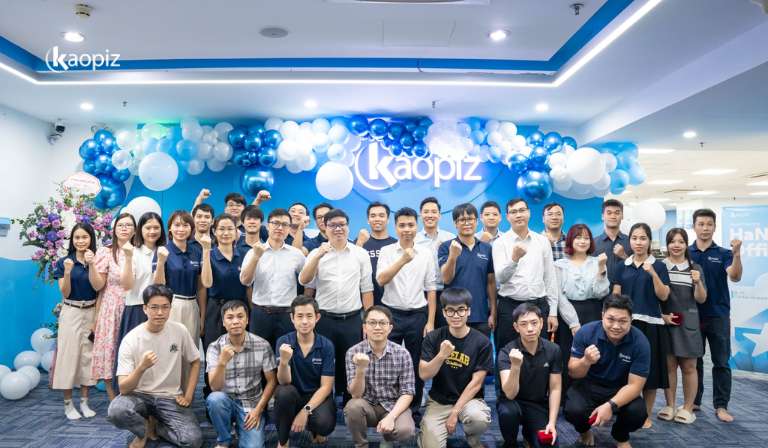
With a strong track record across Singapore and APAC, we help businesses move from concept to production with confidence.
- Experienced Blockchain & Web3 Engineers: Our teams have hands-on experience with public chains (Ethereum, Polygon) and enterprise frameworks (Hyperledger, Quorum, Corda), covering smart contracts, dApps development, and permissioned blockchain networks.
- Strong Understanding of Singapore’s Regulatory Landscape: We work with industries where compliance matters. Our engineers are familiar with MAS guidelines, PDPA requirements, and enterprise-grade security practices—ensuring your solution is both innovative and compliant.
- End-to-End Development Capability: From consulting and architecture to development, integration, cloud infrastructure, and long-term maintenance, Kaopiz provides complete blockchain app development services tailored to your business needs.
- Proven Expertise Across Multiple Industries: We have delivered 1,000+ projects across fintech, logistics, retail, government, and enterprise automation—bringing valuable domain experience to every blockchain engagement.
- Scalable Teams Through Staff Augmentation: Kaopiz provides dedicated blockchain developers who integrate directly into your team, accelerating delivery while maintaining full visibility and control.
- Commitment to Security & Quality: We follow strict development, audit, and QA processes to ensure every smart contract, module, and integration meets enterprise-grade performance and security standards.
“I’ve chosen Kaopiz as a partner for the core development team. I found really talented people here that allow me to really trust them with this very core piece of the engineering that we’re doing.” – Ariel Geifman, Founder of Felix AI
Ready to develop blockchain for your business? Contact Kaopiz to discuss your goals and receive a tailored development plan.
Conclusion
Blockchain is becoming a practical solution for improving transparency, security, and efficiency across Singapore’s key industries. With clear regulations, strong government support, and growing enterprise adoption, Singapore offers an ideal environment for building production-ready blockchain applications.
Successful implementation, however, requires the right expertise—from platform selection and security to compliance and integration. Kaopiz helps businesses navigate this journey with end-to-end blockchain app development capabilities and a deep understanding of both technology and the Singapore market.
FAQs
- How Long Does It Take to Develop a Blockchain App?
- Most blockchain apps take 3–6 months to build, depending on complexity, integrations, and security needs. Simple MVPs can be completed in 6–10 weeks, while enterprise solutions may require 6–12 months.
- How Much Does Blockchain App Development Cost in Singapore?
- Costs typically range from SGD 30,000 to SGD 300,000+, depending on use case, smart contract complexity, platform choice, and compliance requirements. Enterprise-grade systems generally sit at the higher end.
- Do I Need Cryptocurrency to Build a Blockchain Application?
- No. Enterprise or permissioned blockchains (like Hyperledger or Corda) do not require cryptocurrency. Public blockchains may need tokens only to pay network fees, not to operate the app itself.
- What Is the Difference Between a Blockchain App and a dApp?
- A blockchain app can run on public or private blockchains and may include centralized components. A dApp runs primarily on a public blockchain and relies heavily on smart contracts with no central authority.
- Should I Hire In-house Blockchain Developers or Outsource to a specialist team?
- It depends on your goals. In-house teams are good for long-term R&D, but hiring in Singapore is costly and competitive. Outsourcing or staff augmentation offers faster access to experienced blockchain engineers at a more sustainable cost.
Trending Post

No Comments yet!