














How Much Is Web App Development Cost in Singapore (2026)?
For businesses in Singapore navigating digital transformation, understanding web app development cost is a critical first step before launching any project. Whether building an internal system, a SaaS platform, or a customer-facing application, companies need clear visibility into how budgets are structured and what drives cost variations.
Beyond just numbers, the cost of web app development depends on multiple factors such as complexity, features, and development approach. By gaining a structured overview early on, decision-makers can better plan investments, avoid unexpected expenses, and ensure their web application delivers long-term business value.
Then, how much does it cost to build a web app in Singapore in 2026? In this article, we provide key cost factors, timelines, and tips to optimize your budget. Let’s dive in!
Key Takeaways
- Web app development costs vary widely depending on complexity, features, and architecture, typically ranging from SGD 10,000+ for basic apps to SGD 100,000+ for complex systems.
- Development time scales with complexity, from 2–6 weeks (basic apps) to 4–9+ months (complex platforms), directly impacting total cost and resource allocation.
- App complexity remains the biggest cost driver, especially for systems requiring real time processing, AI capabilities, or multi-layer integrations.
- Feature selection significantly affects budget with an MVP approach helping reduce initial costs while enabling faster time to market and iterative improvements.
- UI/UX design impacts both cost and ROI as strong design improves user retention and reduces long term redesign expenses.
- Offshore development can reduce costs by up to 60%, making it a strategic option for businesses looking to optimize budgets without compromising quality.
- Maintenance is a major long-term expense, typically accounting for 15–25% of the initial development cost annually, including updates, security, and infrastructure.
Table of Contents
- Understanding Web App Development Cost
- Web App Development Cost in Singapore: What Should Businesses Expect?
- What Factors Affect Web App Development Cost the Most?
- How Much Does It Cost to Build Different Types of Web Apps?
- How to Estimate Web App Development Cost for Your Project?
- How to Optimize Your Web App Development Cost
- Common Mistakes That Increase Web App Development Cost
- Why Choose Kaopiz for Web App Development in Singapore?
- Conclusion
- FAQs
Understanding Web App Development Cost
Web app development refers to the process of building applications that run on web browsers, allowing users to access services without installation. For businesses in Singapore, these applications range from internal systems like ERP and CRM to customer-facing platforms such as SaaS products or digital marketplaces. As digital transformation accelerates, understanding web app development cost becomes a key factor in planning and prioritizing technology investments effectively.

The cost of web app development goes beyond coding and includes the full development lifecycle: requirement analysis, UI/UX design, frontend and backend development, testing, deployment, and ongoing maintenance. Each stage contributes to the overall budget, and overlooking any component can lead to unexpected costs or performance limitations. For medium to large enterprises, having a clear cost breakdown ensures better financial control and long-term scalability.
Web App Development Cost in Singapore: What Should Businesses Expect?
For companies planning digital transformation initiatives, understanding the typical web app development cost in Singapore is essential before allocating budgets. While actual pricing depends on specific business requirements, having a clear benchmark allows organizations to evaluate feasibility, prioritize features, and avoid underestimating investment needs. In a high-cost market like Singapore, where demand for digital solutions continues to grow, gaining visibility into cost structures helps businesses make more strategic and informed decisions.
The cost should not be viewed purely as an expense but as a long-term investment. The right approach, balancing functionality, scalability, and development resources, can significantly impact ROI. By understanding how costs vary across complexity levels, regions, and industries, businesses can better align their technology strategy with both short-term goals and long-term growth.
Average Web App Development Cost in Singapore
Based on market benchmarks, web app development cost in Singapore is commonly segmented into three tiers:
- Basic Web Applications (SGD 10,000 – 30,000): These include simple solutions such as appointment booking systems, internal dashboards, or small-scale eCommerce platforms. They typically offer core functionality, basic UI/UX design, and limited integrations, making them suitable for SMEs or businesses starting their digital journey.
- Mid-Level Applications with Integrations (SGD 30,000 – 80,000): These applications feature more advanced capabilities, including third-party integrations (e.g., payment gateways, CRM, ERP systems) and enhanced user experience. Common examples include customer portals, multi-vendor platforms, and apps with basic AI-driven features, often used in retail, logistics, and service industries.
- Enterprise-Grade Applications (SGD 100,000+): Large-scale systems involve complex workflows, extensive integrations, and advanced capabilities such as analytics and high-level security. Examples include fintech platforms, healthcare management systems, and government-related solutions. These projects require robust infrastructure, dedicated teams, and ongoing support, often pushing costs into six-figure ranges.
Cost Comparison: Singapore vs Offshore Development
The cost of web app development varies significantly depending on the location of the development team. Singapore is considered a premium market due to high labor costs and strong technical expertise.

In contrast, offshore development in regions such as Southeast Asia offers a significantly more cost-efficient alternative. Businesses can achieve cost savings of up to 60% while maintaining comparable quality standards.
This cost advantage allows companies to optimize budgets without sacrificing performance, especially when partnering with experienced offshore vendors. As a result, many organizations adopt hybrid models that combine local project management with offshore engineering teams. This approach not only maximizes cost efficiency but also ensures better communication, quality control, and overall project alignment.
Industry-Specific Cost Differences
Another important factor influencing web app development cost is the industry in which the application is built. Different sectors require varying levels of complexity, compliance, and system integration.
- In finance and healthcare, costs are typically higher due to strict regulatory requirements, advanced data security, and compliance standards. These industries demand highly reliable systems with strong protection mechanisms and audit capabilities.
- In retail and e-commerce, costs are more moderate, with a strong focus on user experience, seamless payment integration, and scalability. Businesses in this sector prioritize customer journey optimization and performance across multiple devices.
- In enterprise and logistics, projects often involve complex workflows and integration with existing systems such as ERP or CRM platforms. This leads to higher development costs due to the need for customization and system interoperability.
Ultimately, the cost of development is closely tied to the business context. Organizations that clearly define their requirements and operational needs from the beginning are better positioned to control costs and ensure their digital solutions deliver sustainable long-term value.
What Factors Affect Web App Development Cost the Most?
Understanding the web app development cost requires more than looking at surface-level estimates. Multiple underlying factors shape the final budget, and each decision made during planning and execution can significantly influence total expenses. For businesses aiming to optimize their cost, identifying these key cost drivers early helps ensure better resource allocation, realistic expectations, and stronger return on investment.
App Complexity
One of the most important factors affecting the web app development cost is the overall complexity of the application. Simple web apps with limited functionality, such as CMS or booking systems, require less time and resources, resulting in a lower cost.

In contrast, complex applications involve multi-layer architecture, real-time processing, and advanced backend logic. These requirements increase development effort, testing, and optimization, which directly raises the total cost.
Features & Functionalities
The number and sophistication of features significantly impact the cost of web app development. Basic functionalities such as user authentication or dashboards are relatively standard and cost-efficient.
However, advanced features like payment systems, real-time messaging, or AI integration require more development time and expertise. Prioritizing essential features through an MVP approach helps control the initial cost while allowing future expansion.
UI/UX Design Requirements
Design plays a crucial role in shaping the cost. Simple interfaces using standard templates are faster and cheaper to implement compared to highly customized designs.
At the same time, investing in strong UI UX design improves user engagement and product success. Activities such as user research, prototyping, and testing increase upfront costs but reduce long-term risks and redesign expenses.
Development Team Location & Expertise
The location and expertise of the development team directly influence the cost to build a web app. Teams in high-cost regions typically charge more due to higher labor rates.
Offshore teams offer more cost-efficient options while still delivering quality if chosen carefully. Experienced developers may have higher rates but can work more efficiently, helping optimize the overall cost.
Maintenance & Scaling Costs
Beyond development, maintenance and scalability are key components of the total web app development cost. Many businesses overlook these ongoing expenses, leading to unexpected budget increases. Industry standards indicate that maintenance typically accounts for 15% to 20% of the initial development cost annually.
Costs include updates, bug fixes, security, and infrastructure. As the application grows, scaling requires additional investment, often ranging from SGD 30 to over SGD 1,350/month, depending on traffic, making early planning essential to control long-term costs.
How Much Does It Cost to Build Different Types of Web Apps?
The web app development cost varies significantly depending on the type of application being built. Different categories require different levels of functionality, architecture, and development effort. Understanding these differences helps businesses choose solutions that align with both budget and long-term goals.
Instead of approaching development with a one-size-fits-all mindset, companies should evaluate the cost based on the specific type of product they want to build. Web application cost breakdown in Singapore typically ranges from SGD 10,000+ to over SGD 100,000, depending on complexity, features, and development scope.
| Type Name | Overview | Price (SGD) | Time to Develop |
|---|---|---|---|
| Basic Web Apps | Simple websites, landing pages, CMS with minimal functionality | 10,000 – 30,000+ | 2 – 6 weeks |
| Mid-Level Apps | SaaS, dashboards, portals with integrations and user management | 30,000 – 80,000 | 2 – 4 months |
| Complex Apps | AI platforms, marketplaces, enterprise systems with advanced features | 100,000+ | 4 – 9+ months |
Basic Web Apps (Landing Pages, CMS)
Basic applications represent the lowest tier of cost, including landing pages, CMS, and simple websites. These apps focus on delivering core information with minimal interactivity, such as forms or content browsing.
The cost of web app development for basic apps typically ranges from SGD 10,000 to 30,000, with an average development time of 2–6 weeks. They rely on simple architecture, limited backend logic, and ready-made templates, making them fast and cost-efficient to build.
Mid-Level Web Apps (SaaS, Dashboards)
Mid-level applications include SaaS platforms, dashboards, and internal systems with more advanced functionality. These apps require structured backend systems, databases, and integrations such as payment gateways or CRM tools.
The cost of web app development for mid-level apps usually ranges from SGD 30,000 to 80,000, with development timelines of 2–4 months. While more resource-intensive, they provide strong value through automation, data management, and improved operational efficiency.
Complex Web Apps (AI platforms, Marketplaces)
Complex applications are the most expensive due to advanced features like AI, real-time processing, and large-scale system architecture. Examples include marketplaces, fintech platforms, and enterprise solutions.
The cost for complex web apps typically starts from SGD 100,000+, with development timelines of 4–9+ months depending on scope. These systems require high-performance infrastructure, scalability planning, and continuous iteration, making them long-term investments.
How to Estimate Web App Development Cost for Your Project?
Estimating the web app development cost accurately is a critical step in planning any digital product. Without a clear estimation approach, businesses may face budget overruns, delayed timelines, or incomplete features.
Cost Estimation Methods (Fixed Price vs Time & Materials)
There are two common pricing models used to estimate web app development cost, each with its own advantages depending on project clarity and flexibility needs.
The fixed price model works best when project requirements are clearly defined from the beginning. In this approach, the development team provides a total cost based on a detailed scope, timeline, and deliverables. This method offers predictability and helps businesses control the cost, but it lacks flexibility if requirements change during development.
On the other hand, the time and materials model charges based on actual hours and resources used. This approach is more suitable for complex or evolving projects where requirements may change over time. While it may seem less predictable, it allows greater flexibility and often results in better product outcomes. Choosing the right model is essential to balancing risk, flexibility, and overall cost.
Cost Calculator & Budget Planning Tips
There are two common pricing models used to estimate cost, each with its own advantages depending on project clarity and flexibility needs.

The fixed price model works best when project requirements are clearly defined from the beginning. In this approach, the development team provides a total cost based on a detailed scope, timeline, and deliverables. This method offers predictability and helps businesses control the cost, but it lacks flexibility if requirements change during development.
On the other hand, the time and materials model charges based on actual hours and resources used. This approach is more suitable for complex or evolving projects where requirements may change over time. While it may seem less predictable, it allows greater flexibility and often results in better product outcomes. Choosing the right model is essential to balancing risk and flexibility.
Hidden Costs to Consider
Many businesses underestimate hidden factors that can increase the cost beyond initial estimates. These costs often emerge after development begins or even after the product is launched.
Common hidden costs include third-party services such as APIs, payment gateways, and cloud infrastructure. Licensing fees, security enhancements, and compliance requirements can also add to the overall cost.
In addition, ongoing expenses such as maintenance, updates, and performance optimization should not be overlooked. As user demand grows, scaling the application may require additional investment in infrastructure and development resources.
Understanding these hidden elements allows businesses to build a more realistic budget and avoid financial surprises. By taking a comprehensive approach, companies can better manage their web app development costs and ensure long term project success.
How to Optimize Your Web App Development Cost
Optimizing the cost is not just about cutting expenses but about making smarter strategic decisions throughout the development process. Businesses that focus on efficiency, scalability, and prioritization can significantly reduce the cost of web app development while still achieving high-quality outcomes. By applying the right approaches early on, companies can avoid unnecessary spending and maximize long-term value.
MVP Development Approach
One of the most effective ways to reduce costs is by adopting a minimum viable product approach. Instead of building a fully featured product from the start, businesses focus only on core functionalities that solve the main user problem.
This approach minimizes initial development time and reduces the cost of web app development. It also allows companies to test their ideas in the market, gather user feedback, and make improvements before investing further. By iterating based on real data, businesses avoid wasting resources on features that may not be necessary.
Consider Low-Code/No-Code Solutions for Simple Projects
For simple applications, using low-code or no-code platforms can significantly lower the cost. These tools enable faster development by providing prebuilt components and visual interfaces, reducing the need for extensive coding.

This approach is especially useful for internal tools, prototypes, or small-scale applications. While it may not be suitable for complex systems, it helps businesses save both time and cost when requirements are straightforward.
Use Progressive Web Apps (PWA)
Adopting progressive web app technology is another way to optimize the cost. PWAs combine the functionality of web and mobile applications, allowing users to access the app through a browser while still enjoying features like offline access and push notifications.
By building a single solution that works across multiple devices, businesses can avoid the need to develop separate mobile applications. This reduces development effort, while still delivering a high-quality user experience.
Choosing the Right Tech Stack
Selecting an appropriate technology stack plays a crucial role in controlling the web app development pricing. The right stack ensures faster development, better performance, and easier maintenance.
Using widely adopted frameworks and tools can reduce development time and make it easier to find skilled developers. On the other hand, choosing overly complex or niche technologies may increase the cost of web app development due to limited expertise and higher maintenance requirements.
Outsourcing vs In-house Development
The choice between outsourcing and in-house development has a direct impact on the cost. In-house teams offer better control and alignment with company culture but come with higher costs related to salaries, infrastructure, and long-term commitments.
Outsourcing, especially to regions with lower labor costs, provides a more cost-efficient alternative. Businesses can access skilled developers at a lower price while maintaining quality if they choose the right partner.
Ultimately, optimizing the cost of web app development requires a balanced approach. By combining the right strategies, such as MVP development, efficient tools, scalable technologies, and flexible team structures, companies can build effective applications without exceeding their budgets.
Common Mistakes That Increase Web App Development Cost
Before starting a project, many businesses underestimate how small decisions can significantly increase the cost. From unclear requirements to poor planning, these common mistakes often lead to delays, rework, and unnecessary expenses. Identifying and avoiding them early is key to keeping the cost under control and ensuring a smoother development process.
| Mistake | Impact on Web App Development Cost | How to Avoid |
|---|---|---|
| Unclear Requirements | Causes rework and increases web app development cost | Define clear scope and goals early |
| Scope Creep | Expands timeline and raises the cost of web app development | Control changes and prioritize features |
| Skipping MVP | High upfront cost and slower launch | Start with a minimum viable product |
| Wrong Tech Stack | Longer development and higher maintenance costs | Choose scalable and suitable technologies |
| Poor UI UX Design | Leads to redesigning and higher web app development cost | Invest in design from the beginning |
| Inexperienced Team | Errors and inefficiencies increase costs | Balance cost with expertise |
| No Testing | Bugs lead to costly fixes later | Implement continuous testing |
| Ignoring Scalability | Requires expensive rebuilds in the future | Plan for growth early |
| Hidden Costs | Budget overruns beyond estimates | Include infrastructure and maintenance |
| Poor Communication | Delays and misunderstandings increase costs | Ensure clear and regular communication |
Why Choose Kaopiz for Web App Development in Singapore?
At Kaopiz, we go beyond building applications; we deliver end-to-end digital solutions aligned with real business outcomes. Our approach combines strong engineering capabilities, industry experience, and a deep understanding of enterprise needs in Singapore and across APAC.
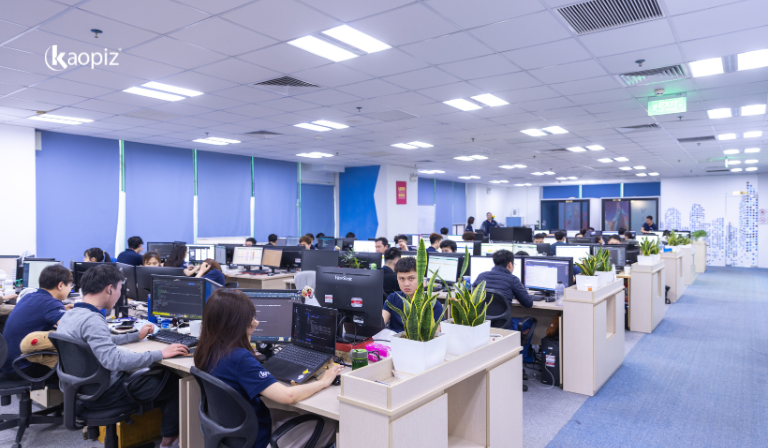
- 1,000+ engineers with proven delivery track record: With a team of over 1,000 engineers, we have delivered 1,000+ projects for 500+ global clients. This scale allows us to handle projects of varying complexity while maintaining consistent quality and delivery speed, helping optimize overall cost.
- End-to-end web app development: We support the full lifecycle, from business analysis and solution design to development, deployment, and continuous optimization, ensuring efficient control of the cost.
- Strong system integration expertise: Our teams have hands-on experience integrating web applications with CRM, ERP, internal systems, and third-party platforms, enabling seamless workflows and reducing manual processes.
- Scalable cloud native architecture: We build solutions on modern cloud platforms such as AWS, Azure, and Google Cloud, ensuring high availability, flexibility, and scalability as your business grows.
- Security first and compliance-driven approach: Kaopiz follows international standards such as ISO 27001 and ISO 9001, with experience supporting projects that require strong data protection and reliability.
- Cost-efficient delivery model up to 40 to 60% savings: By leveraging Vietnam-based engineering teams, businesses can access top-tier talent while significantly reducing the cost compared to in-house or local development in Singapore.
- Faster deployment timelines: Depending on project scope, MVP web applications can typically be delivered within a few weeks, helping businesses validate ideas quickly and achieve faster return on investment.
Ready to turn your idea into a scalable, high-performance web application? At Kaopiz, we combine technical expertise with a deep understanding of business needs to deliver cost-effective and future-ready solutions tailored to your goals.
Whether you’re building a simple MVP or a complex enterprise platform, our team is here to support you at every stage, from strategy to deployment and beyond.
Conclusion
Understanding and managing web app development costs is essential for any business planning to build a scalable digital solution. From app complexity and features to team structure and long-term maintenance, each factor plays a critical role in shaping the overall cost. Without a clear strategy, businesses can easily face budget overruns or invest in solutions that do not deliver expected value.
However, by applying the right approaches such as prioritizing essential features, choosing suitable technologies, and planning for scalability, companies can significantly optimize their cost while still achieving high quality outcomes. A well-structured development process not only reduces unnecessary expenses but also ensures that the final product aligns with business goals and user expectations.
FAQs
- What Is the Average Web App Development Cost in Singapore?
- The web app development cost in Singapore typically ranges from USD 5,000 for basic applications to over USD 100,000 for complex systems. The final cost of web app development depends on factors such as features, complexity, and team structure.
- How Long Does It Take to Develop a Web App?
- Development time varies based on project scope. A basic app may take a few weeks, while mid-level or complex applications can take several months. The timeline directly impacts the overall web app development cost.
- What Factors Influence the Cost of Web App Development the Most?
- Key factors include app complexity, number of features, UI UX design, development team location, and ongoing maintenance. These elements collectively determine the total cost of web app development.
- How Can Businesses Reduce Web App Development Cost?
- Businesses can optimize the web app development cost by starting with an MVP, choosing the right tech stack, outsourcing to cost efficient teams, and prioritizing essential features instead of building everything at once.
- Is Outsourcing Web App Development a Good Option?
- Yes, outsourcing can significantly reduce the cost of web app development, especially when working with experienced providers. It allows businesses to access skilled developers at lower costs while maintaining quality and scalability.
Trending Post




No Comments yet!