






How AI Chatbots for e-Commerce Can Boost Conversion Rates by Up to 25%
In today’s fast-paced e-commerce landscape, customers expect instant responses, personalized recommendations, and seamless shopping experiences. However, meeting these expectations while managing rising operational costs, especially in markets like Singapore, can be a major challenge for businesses.
This is where AI chatbots are making a difference. By combining real-time customer support with intelligent automation, AI chatbots help e-commerce businesses engage customers more effectively, reduce workload, and increase conversion rates.
In this guide, we explore key use cases and benefits of AI chatbots for e-commerce, and how you can implement them to drive measurable results for your e-commerce business.
Key Takeaways
- AI chatbots support the entire customer journey, from product discovery to post-purchase, helping increase conversion rates by 10–25% and automate up to 70–80% of customer inquiries.
- From 24/7 support and product recommendations to cart recovery and upselling, chatbots directly impact sales and customer experience.
- Success depends on clear goals, proper system integration, and continuous optimization, not just deploying the technology.
- While initial investment differs by approach (SaaS vs custom), AI chatbots typically deliver long-term value through cost savings and increased revenue.
- Combining AI chatbots with human support ensures both efficiency and high-quality customer experience.
- Working with an experienced technology partner like Kaopiz helps ensure scalable, integrated, and ROI-driven chatbot solutions.
Table of Contents
- What Are AI Chatbots for e-Commerce?
- 7 Key Use Cases of AI Chatbots for e-Commerce
- 5 Benefits of AI Chatbots for e-Commerce Businesses in Singapore
- AI Chatbots vs Live Chat: What’s Better for e-Commerce?
- How to Implement AI Chatbots for e-Commerce (Step-by-Step)
- Cost of AI Chatbots for e-Commerce: What to Expect in 2026
- What Can Go Wrong with AI Chatbots and How to Get It Right
- Why Work with Kaopiz for AI Chatbot Development in Singapore
- Conclusion
- FAQs
What Are AI Chatbots for e-Commerce?
AI chatbots for e-commerce are intelligent virtual assistants that use technologies like NLP and AI models to interact with customers in a natural, human-like way. Unlike traditional rule-based bots, they can understand intent, handle complex queries, and provide personalized responses.
In e-commerce, AI chatbots act as both a customer support agent and a sales assistant. They can answer questions, recommend products, assist with orders, and provide post-purchase support, all in real time.
By integrating with platforms like Shopify, CRM systems, and product databases, AI chatbots enable faster responses, better customer experiences, and higher conversion rates.
7 Key Use Cases of AI Chatbots for e-Commerce
AI chatbots for e-commerce are transforming how businesses engage with customers across the entire buying journey. Below are 7 key use cases with AI-powered chatbot examples that deliver the most impact, from driving sales to improving customer experience.
24/7 Customer Support Automation
An AI chatbot platform for e-commerce provides instant, 24/7 customer support, ensuring no query goes unanswered, regardless of time or volume.
Common use cases include:
- Answering FAQs (shipping, returns, product details)
- Providing real-time order tracking
- Assisting customers during browsing and checkout
For example, an online fashion store can instantly respond to questions like “Do you have this in size M?” or “When will my order arrive?”, even late at night. This immediate support helps customers continue their purchase instead of leaving due to delays.
In fast-paced markets like Singapore, where speed and convenience are critical, 24/7 support becomes a key driver of both customer satisfaction and revenue.
Product Recommendation & Personalized Shopping
AI chatbots act as intelligent sales assistants by delivering personalized product recommendations based on customer behavior, preferences, and browsing history. Instead of manually searching, customers receive tailored suggestions in real time, making the shopping experience faster and more engaging.
Common use cases include:
- Recommending products based on user preferences or past purchases
- Suggesting alternatives when items are out of stock
- Guiding customers to the right product through conversational queries
For example, H&M launched a chatbot that acts as a virtual stylist, asking users about their style preferences and suggesting outfit combinations. Simplifying product discovery improved user experience and conversion rates, especially for mobile shoppers.
Cart Abandonment Recovery
Cart abandonment is one of the biggest challenges in e-commerce, with many customers leaving before completing their purchase. AI chatbots help recover these lost opportunities by re-engaging customers in real time and guiding them back to checkout.

Common use cases include:
- Sending reminders when a customer leaves items in their cart
- Offering limited-time discounts or incentives
- Answering last-minute questions (pricing, shipping, returns)
- Recommending alternatives if hesitation is detected
For example, an online store can trigger a chatbot message like “You left this item in your cart, would you like to complete your purchase?” or offer a small discount to encourage checkout. This timely intervention can significantly reduce drop-offs.
Order Tracking & Post-Purchase Support
AI chatbots streamline order tracking and post-purchase support by providing instant updates and handling common after-sales queries without human intervention. This ensures customers stay informed and reduces the burden on support teams.
Common use cases include:
- Providing real-time order status and delivery updates
- Answering questions about shipping, returns, and refunds
- Assisting with order changes or cancellations
- Proactively notifying customers of delays or delivery progress
For example, Zalando uses automated chat and tracking systems to let customers check order status, delivery timelines, and return processes instantly, without contacting support. This improves transparency and reduces customer service tickets.
Lead Generation & Qualification
AI chatbot development helps e-commerce businesses capture and qualify leads by engaging visitors in real time and collecting relevant information through conversational interactions. Instead of relying on static forms, chatbots create a more interactive and frictionless way to turn visitors into potential customers.
Common use cases include:
- Collecting customer details such as email, preferences, and intent
- Asking qualifying questions to understand needs and budget
- Segmenting users based on behavior or interests
- Routing high-quality leads to sales or targeted campaigns
For example, Shopify merchants often use chatbots to engage visitors with prompts like “Looking for something specific?” or “Can I help you find the right product?”. Based on responses, the chatbot can recommend products while capturing lead information for follow-up marketing.
Upselling & Cross-Selling in Real Time
AI chatbots enable e-commerce businesses to increase revenue by delivering real-time upselling and cross-selling recommendations during the shopping journey. By understanding customer intent and context, chatbots can suggest relevant add-ons or higher-value alternatives at the right moment.
Common use cases include:
- Recommending complementary products (e.g., accessories, bundles)
- Suggesting premium or upgraded options
- Offering bundle deals or limited-time promotions
- Highlighting “frequently bought together” items
For example, Amazon uses AI-driven recommendations to suggest related products like “Frequently bought together” or “Customers also bought”. When integrated into a chatbot, these suggestions can be delivered conversationally, increasing the likelihood of additional purchases.
Customer Feedback Collection & Insights
AI chatbots help e-commerce businesses collect real-time customer feedback through conversational interactions, making it easier to understand customer satisfaction and identify areas for improvement. Instead of relying on static surveys, chatbots can engage users naturally at key moments in the customer journey.
Common use cases include:
- Asking for feedback after purchase or delivery
- Collecting ratings on products or the shopping experience
- Identifying pain points (e.g., checkout issues, product concerns)
- Gathering insights to improve products, UX, and marketing
For example, Shopee prompts users to rate their experience and leave feedback after receiving an order. With AI chatbots, this process can be made more interactive, asking follow-up questions to better understand customer sentiment.
5 Benefits of AI Chatbots for e-Commerce Businesses in Singapore
AI chatbots deliver measurable value for e-commerce businesses by improving both revenue and operational efficiency. In Singapore, where customer expectations are high and labor costs are rising, these benefits become even more critical for sustainable growth.
Increase Conversion Rates
AI chatbots help e-commerce businesses increase conversion rates by engaging customers at critical moments in their buying journey. Instead of leaving users to navigate alone, chatbots provide instant assistance, answer questions, and guide them toward purchase decisions.
By reducing response time and eliminating friction, such as unanswered queries or uncertainty, chatbots can significantly improve the likelihood of conversion. Studies show that implementing AI chatbots can increase conversion rates by 10–25%, while responding to customers within the first minute can boost conversions by up to 3x compared to delayed responses.
24/7 Customer Engagement
AI chatbots for customer service enable businesses to maintain continuous, real-time engagement with customers across all touchpoints. Whether users are browsing, comparing products, or returning after hours, chatbots ensure the conversation never stops.
By proactively initiating conversations, such as offering help, recommending products, or answering questions, chatbots keep customers engaged and reduce the chances of drop-off. This is especially important in mobile-first markets like Singapore, where users expect instant interaction.
As a result, businesses can increase engagement rates, improve customer experience, and drive higher conversion opportunities, without being limited by business hours or team capacity.
Reduce Customer Support Costs
AI chatbots help e-commerce businesses significantly reduce customer support costs by automating repetitive and high-volume queries. Instead of relying solely on human agents, chatbots can handle common requests such as order tracking, FAQs, returns, and product inquiries instantly.
By resolving a large portion of customer interactions automatically, businesses can reduce the need for large support teams, lower operational expenses, and scale more efficiently. Studies show that AI chatbots can handle up to 70–80% of routine inquiries, allowing support teams to focus on more complex, high-value tasks.
In high-cost markets like Singapore, where labor expenses are a key concern, AI-driven support automation offers a practical way to improve efficiency while maintaining service quality.
Personalized Shopping Experience
AI-powered chatbot development for customer support delivers a highly personalized shopping experience by tailoring interactions based on customer behavior, preferences, and past purchases. Instead of a one-size-fits-all approach, each customer receives relevant product suggestions and guidance in real time.

By understanding intent through conversational inputs, such as “I’m looking for a gift under $50”, chatbots can recommend suitable products, narrow down options, and simplify decision-making.
This level of personalization helps businesses increase customer satisfaction, boost engagement, and drive higher conversion rates and AOV, while creating a more intuitive and enjoyable shopping experience.
Scalable Growth Without Linear Cost Increase
AI chatbots enable e-commerce businesses to scale customer interactions without proportionally increasing costs. Unlike human support teams, chatbots can handle thousands of conversations simultaneously, across multiple channels, without additional staffing.
As traffic and order volumes grow, businesses can maintain fast response times and consistent service quality without hiring more agents. This is especially valuable during peak periods such as sales campaigns or seasonal spikes.
By decoupling growth from headcount, AI chatbots help businesses increase operational efficiency, control costs, and scale sustainably, making them a strategic advantage in high-cost markets like Singapore.
AI Chatbots vs Live Chat: What’s Better for e-Commerce?
Both AI chatbots and live chat play important roles in e-commerce, but they serve different purposes. The key difference lies in automation vs human interaction, and choosing the right approach depends on your business needs, scale, and customer expectations.
| Aspect | AI Chatbots | Live Chat (Human Agents) |
|---|---|---|
| Response Time | Instant (real-time replies) | Depends on agent availability |
| Availability | 24/7, no downtime | Limited to business hours or team capacity |
| Scalability | Handles thousands of conversations simultaneously | Limited by number of agents |
| Cost | Lower long-term cost | Higher operational and staffing cost |
| Consistency | Consistent, rule/data-driven responses | Varies by agent experience |
| Personalization | Data-driven recommendations | Human empathy and judgment |
| Best Use Cases | FAQs, order tracking, product recommendations | Complex issues, complaints, high-value sales |
Key takeaways: For most e-commerce businesses, the best approach is a hybrid model. AI chatbots can handle up to 70–80% of routine queries, while live agents focus on more complex or sensitive interactions.
How to Implement AI Chatbots for e-Commerce (Step-by-Step)
Implementing AI chatbots in e-commerce requires a clear strategy to ensure they deliver real business value, not just automation. Below is a practical step-by-step approach to get started:
- Step 1: Define Your Business Goals: Identify what you want to achieve, such as improving customer support, increasing conversions, or automating sales. Clear goals help determine the chatbot’s scope and success metrics.
- Step 2: Choose the Right Approach: Decide between SaaS, custom, or hybrid solutions based on your needs. SaaS is faster to deploy, while custom offers greater flexibility and long-term scalability.
- Step 3: Integrate with Your E-Commerce Stack: Connect the chatbot with systems like Shopify, CRM, and product databases. This ensures accurate, real-time responses and seamless customer experiences.
- Step 4: Design Key Use Cases & Conversations: Map out core journeys such as product discovery, checkout assistance, and order tracking. Focus on natural, user-friendly interactions that guide users toward action.
- Step 5: Train and Optimize Continuously: Use real customer data to improve chatbot accuracy over time. Monitor conversations and refine responses to enhance performance and user experience.
- Step 6: Track Performance and Scale: Measure key metrics like response time, resolution rate, and conversion rate. As your business grows, expand chatbot capabilities across more channels and use cases.
By following this structured approach, businesses can successfully implement AI chatbots that enhance customer experience, improve efficiency, and drive measurable ROI.
Cost of AI Chatbots for e-Commerce: What to Expect in 2026
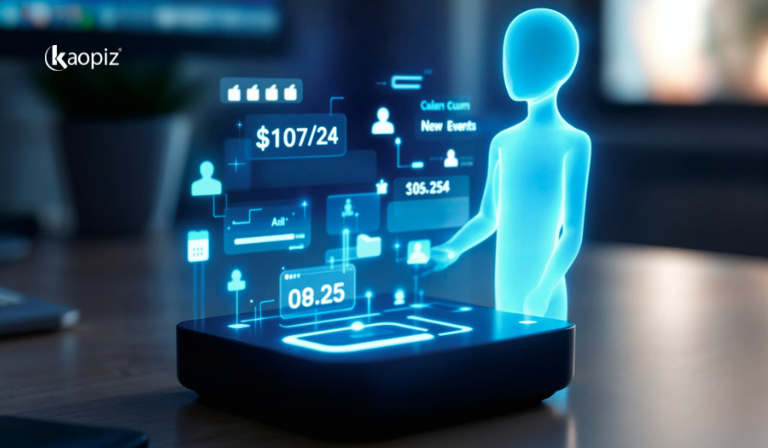
The cost of AI chatbots in 2026 varies widely depending on complexity, features, and deployment model. From simple SaaS tools to fully custom enterprise solutions, pricing can range from $30/month to $200,000+.
- Basic SaaS chatbots (SMEs): Entry-level tools typically cost around $30–$150/month, suitable for simple FAQs and small-scale automation.
- Mid-market solutions: More advanced AI chatbots with integrations and personalization features range from $500–$2,500/month, often with additional setup fees.
- Enterprise AI chatbots: Large-scale deployments can cost $3,000–$15,000+ per month or $40,000–$400,000+ for custom development, depending on complexity and integrations.
- Custom-built solutions: Fully tailored AI chatbots typically range from $75,000 to $150,000+, with enterprise-grade systems reaching $200,000+ or more.
Key takeaways:
- SaaS tools are ideal for quick deployment and lower budgets
- Custom or hybrid solutions deliver better scalability and long-term value
For e-commerce businesses in Singapore, where labour costs are high, investing in AI chatbots is less about cost and more about efficiency, scalability, and revenue growth.
What Can Go Wrong with AI Chatbots and How to Get It Right
While AI chatbots offer significant benefits, poor implementation can lead to frustrating user experiences and missed business opportunities. Understanding common pitfalls and how to address them is key to achieving real ROI.
| Challenge | What Can Go Wrong | How to Get It Right |
|---|---|---|
| Poor Data Quality | Inaccurate answers, wrong product recommendations | Ensure clean, structured, and regularly updated product and customer data |
| Over-Automation | Frustrated users with no human support for complex issues | Use a hybrid model with smooth handover to human agents |
| Lack of Integration | Limited functionality, cannot provide real-time info | Integrate with CRM, inventory, and e-commerce platforms |
| Generic Conversations | Robotic responses, low engagement | Use AI-powered models and train with real customer data |
| No Continuous Optimization | Performance stagnates over time | Track metrics (conversion, resolution, CSAT) and improve regularly |
AI chatbots are not a “set-and-forget” solution. With the right strategy—combining quality data, proper integration, human fallback, and continuous optimization, businesses can turn potential risks into competitive advantages.
Why Work with Kaopiz for AI Chatbot Development in Singapore
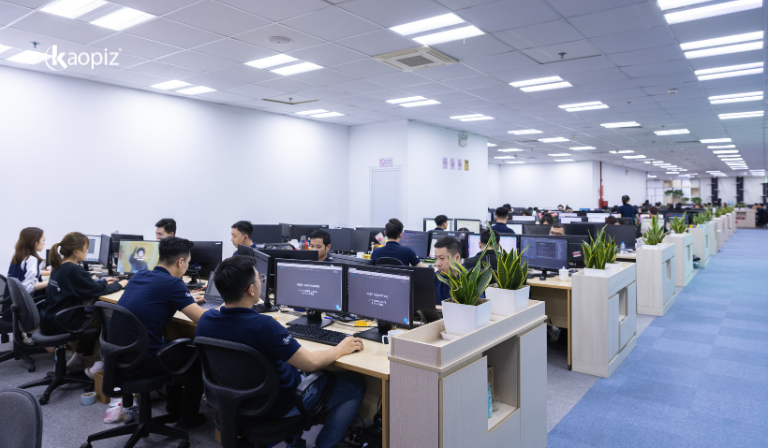
Choosing the right technology partner in Singapore is critical to successfully implementing AI chatbots that deliver real business value. At Kaopiz, we combine AI expertise, strong engineering capabilities, and a cost-efficient delivery model to help e-commerce businesses in Singapore scale effectively.
What Sets Us Apart?
- End-to-End AI & System Integration Expertise: We go beyond standalone chatbots, designing solutions that integrate seamlessly with your e-commerce platform, CRM, and backend systems to ensure accurate, real-time interactions.
- Focus on Business Outcomes, Not Just Technology: Our approach is driven by measurable results, such as improving conversion rates, reducing support costs, and enhancing customer experience—not just deploying features.
- Cost-Effective Delivery with High Quality: With a Vietnam-based engineering team and strong Singapore market experience, we deliver enterprise-grade solutions at a competitive cost, helping you maximize ROI.
- Flexible Engagement Models: Whether you need a dedicated team, staff augmentation, or a full project delivery, we offer flexible models to match your business needs and timeline.
- Proven Experience with Global Clients: With over a decade of experience and 1,000+ successful projects, Kaopiz has helped businesses across industries implement scalable and secure digital solutions.
Kaopiz Case Study: AI Chatbot Platform Enhancement
An AI solutions provider partnered with Kaopiz to enhance a B2C chatbot platform designed for real-time customer engagement. The chatbot was built to be embedded into e-commerce websites, enabling businesses to interact with customers instantly and automate common queries.
Challenge:
The platform had reached the prototype stage but faced several limitations:
- The admin interface was not user-friendly, making chatbot management inefficient
- Limited front-end resources created risks of delays in feature development
- The system needed to be production-ready within a tight timeline
Solution:
Kaopiz strengthened the development team and improved the platform by:
- Enhancing the UI/UX of the admin dashboard for easier chatbot configuration
- Implementing additional features to support chatbot management and customization
- Optimizing the system to ensure scalability and readiness for real-world deployment
Results:
- Improved usability of the chatbot management system, enabling faster setup and updates
- Reduced manual workload for managing chatbot interactions
- Established a scalable foundation to support high volumes of customer conversations
This project demonstrates how a well-designed AI chatbot system can help e-commerce businesses streamline operations, improve customer engagement, and scale support efficiently, laying the groundwork for higher conversion rates and better customer experience.
Ready to implement AI chatbots for your e-commerce business? Get in touch with our team to explore a tailored solution that fits your goals and budget.
Conclusion
AI chatbots for e-commerce are no longer just a support tool; they have become a key driver of revenue, efficiency, and customer experience. From handling customer inquiries and recommending products to recovering abandoned carts, they play a critical role across the entire customer journey.
For businesses in Singapore, where customer expectations are high and operational costs are rising, AI chatbots offer a practical way to scale operations without increasing costs linearly.
By choosing the right strategy and technology partner, businesses can unlock the full potential of AI chatbots, improving conversion rates, reducing costs, and delivering a more personalized shopping experience at scale.
FAQs
- How Much Does an AI Chatbot Cost for e-Commerce?
- Costs vary depending on the solution. Basic SaaS tools can start from $30–$150/month, while custom or enterprise solutions can range from $40,000 to $200,000+ depending on complexity and integrations.
- Can AI Chatbots Really Increase Conversion Rates?
- Yes. By providing instant responses, personalized recommendations, and proactive support, AI chatbots can improve conversion rates by 10–25% by reducing friction and guiding users toward purchase.
- How Long Does It Take to Implement an AI Chatbot?
- Implementation time depends on scope. Simple chatbot setups can take 2–4 weeks, while more advanced or custom solutions may take 6–12+ weeks.
- Should I Choose a SaaS Chatbot or a Custom Solution?
- It depends on your needs. SaaS tools are faster and cheaper to deploy, while custom solutions offer better flexibility, integration, and scalability. Many businesses choose a hybrid approach for the best balance.
- Do AI Chatbots Replace Human Customer Support?
- No. AI chatbots are designed to handle routine queries and automate repetitive tasks. Human agents are still essential for complex issues, ensuring a balanced and effective customer support system.
Trending Post

No Comments yet!