













How AI in Industrial Automation Are Transforming Businesses
Artificial Intelligence (AI) is redefining industrial automation by enabling machines, systems, and robots to perceive, learn, decide, and act autonomously. Unlike traditional rule-based automation, AI-powered automation adapts to real-time data, optimizes production processes, predicts failures, and continuously improves performance without manual reprogramming.
In Singapore—one of Asia’s leading smart manufacturing and Industry 4.0 hubs—AI-driven industrial automation is rapidly transforming sectors such as manufacturing, automotive, logistics, and electronics. Companies are using computer vision for quality inspection, machine learning for predictive maintenance, and intelligent robotics for autonomous operations, driving higher efficiency, lower costs, and improved resilience.
This guide explores what AI in industrial automation means, how it works, real-world use cases in manufacturing and automotive industries, the rise of agentic AI, and why many Singapore businesses partner with offshore AI development companies to accelerate innovation.
Table of Contents
- What Is AI in Industrial Automation?
- Industrial Automation Landscape in Singapore
- How AI in Industrial Automation Works
- Benefits of AI and Automation for Singapore Businesses
- Applications and Examples of AI in Industry
- Challenges in Implementing AI in Industrial Automation
- Why Singapore Businesses Choose Offshore AI Development Partners
- How to Hire AI Developers for Industrial Automation Projects
- Why Partner with Kaopiz for AI Development in Industrial Automation
- The Future of AI in Industrial Automation (2026–2030 Outlook)
- Conclusion
- FAQs
What Is AI in Industrial Automation?
AI in industrial automation refers to the use of artificial intelligence technologies—such as machine learning, computer vision, natural language processing, and intelligent robotics—to enable industrial systems to make decisions, learn from data, and adapt autonomously.
Unlike traditional automation, which relies on predefined rules and fixed workflows, AI-powered automation continuously improves performance by analyzing real-time data and responding dynamically to changing conditions.
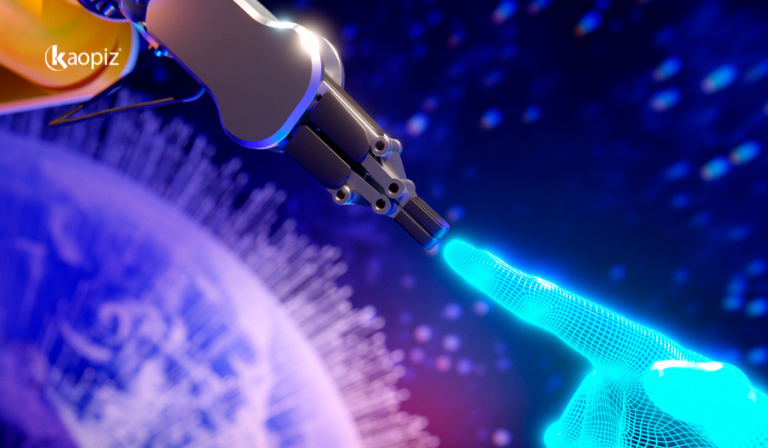
In practice, this means machines can now detect defects visually, predict equipment failures before they happen, optimize energy consumption, and adjust production schedules automatically. AI allows industrial systems to move beyond simple task execution toward intelligent, goal-oriented behavior—reducing downtime, increasing efficiency, and improving overall product quality.
For Singapore businesses operating in highly competitive and precision-driven industries, AI in industrial automation plays a crucial role in supporting Industry 4.0 initiatives. It enables smart factories where robots, sensors, and software systems collaborate seamlessly, making operations more resilient, scalable, and data-driven.
Industrial Automation Landscape in Singapore
Singapore’s industrial automation landscape is dynamic, technology-driven, and strategically supported by government initiatives. The city-state has established itself as one of Asia’s most advanced hubs for smart manufacturing and automation, blending AI, robotics, machine learning (ML), and Internet of Things (IoT) technologies to optimize industrial efficiency and competitiveness.
The automation and instrumentation market in Singapore is significant and expanding. In 2024, the market size was estimated at around USD 200 billion, and it is projected to grow to approximately USD 300 billion by 2033 at a CAGR of 4.5%—reflecting steady adoption of smart automation technologies across sectors.
Key drivers of growth include:
- Strong government support: Initiatives like Smart Nation and Industry 4.0 transformation programmes help businesses adopt digital and automation technologies, supported by incentives, frameworks, and capability building.
- Industry 4.0 adoption: Singapore’s manufacturers increasingly deploy AI and automation to enable real-time monitoring, predictive maintenance, data-driven optimization, digital twins, and connected production systems.
- Robotics and smart systems: High uptake of industrial robotics, autonomous guided vehicles (AGVs), and vision-guided systems is reshaping factory floors and logistics operations.
- Innovation ecosystem: A rich ecosystem of solution providers—local tech firms, multinational automation vendors, and AI specialists—supports end-to-end digital transformation in manufacturing, electronics, automotive, and precision engineering.
Overall, Singapore’s industrial automation landscape blends technology innovation, policy support, and strategic industry focus, making it a core pillar of the nation’s manufacturing competitiveness and digital economy growth.
How AI in Industrial Automation Works
AI in industrial automation works by combining data collection, intelligent algorithms, and autonomous decision-making to optimize industrial processes in real time. Instead of following fixed rules like traditional automation, AI-powered systems continuously learn from data, adapt to changing conditions, and improve performance without manual reprogramming.
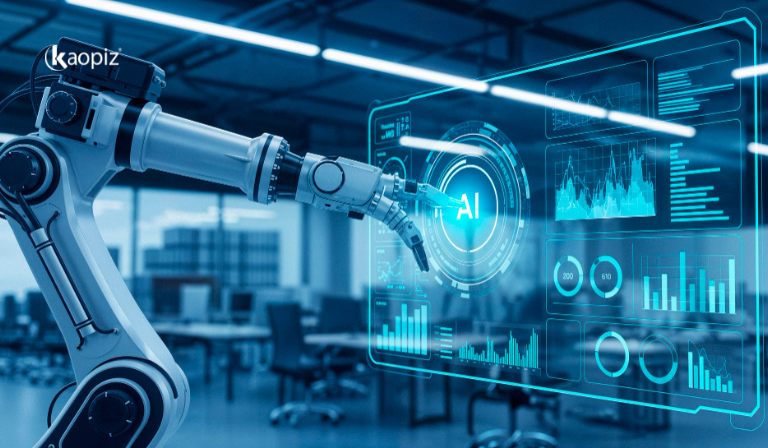
At a high level, AI-driven automation operates through the following layers:
- Data acquisition: Sensors, IoT devices, cameras, and industrial machines collect real-time data on temperature, vibration, speed, defects, energy usage, and more.
- Data processing: AI models analyze large volumes of structured and unstructured data using machine learning, deep learning, and statistical techniques.
- Perception and understanding: Computer vision detects defects, anomalies, or patterns; natural language processing enables human–machine interaction.
- Decision-making: AI engines recommend or execute optimal actions—such as adjusting machine parameters, rerouting workflows, or triggering maintenance.
- Continuous learning: Models refine themselves over time based on new data, feedback loops, and operational outcomes.
In smart factories, these components are integrated with robotics, digital twins, edge computing, and cloud platforms, allowing systems to operate autonomously, collaborate with humans, and respond instantly to disruptions.
Benefits of AI and Automation for Singapore Businesses
AI and automation enable Singapore businesses to operate faster, smarter, and more efficiently in highly competitive and cost-sensitive environments. By embedding intelligence into machines and workflows, companies can move from reactive operations to predictive, adaptive, and autonomous systems.
Key benefits include:
- Higher productivity: AI-driven systems optimize workflows, reduce bottlenecks, and minimize manual intervention.
- Lower operational costs: Predictive maintenance and energy optimization reduce downtime, waste, and repair expenses.
- Improved quality and consistency: Computer vision and AI-based inspection detect defects with higher accuracy than manual checks.
- Real-time decision-making: AI analyzes production data instantly, enabling faster and more informed operational decisions.
- Scalability: Automated systems can scale with demand without proportional increases in labor.
- Workforce augmentation: AI supports workers by handling repetitive tasks, allowing humans to focus on higher-value activities.
For Singapore enterprises facing rising labor costs, strict quality standards, and global competition, AI-powered automation is no longer optional—it is a strategic enabler for long-term growth, resilience, and innovation.
Applications and Examples of AI in Industry
AI is being applied across industries to automate complex tasks, improve decision-making, and optimize production processes in real time. From smart manufacturing and automotive production to robotics and supply chains, AI-driven systems are transforming how industrial operations are designed, monitored, and scaled.
AI in Manufacturing
AI enables manufacturers to operate more intelligently by turning real-time data into automated decisions that improve efficiency, quality, and resilience.
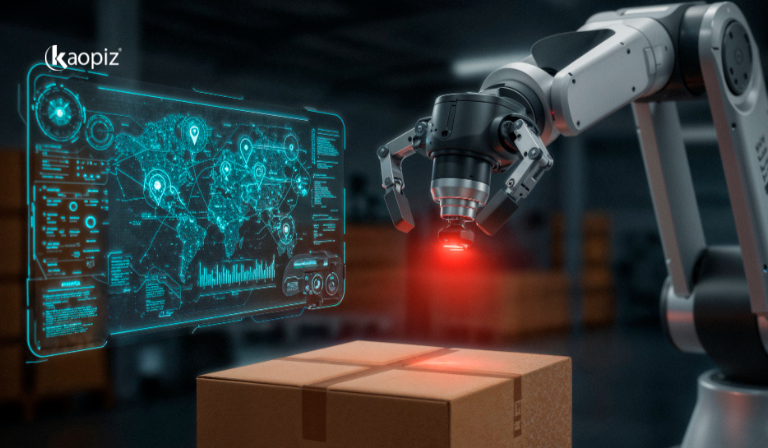
- Quality control using computer vision: AI-powered cameras detect defects, surface flaws, and inconsistencies in real time, ensuring higher accuracy and consistent product standards.
- Predictive maintenance for machinery: Machine learning models analyze sensor data to forecast failures before they happen, reducing downtime and maintenance costs.
- Energy optimization and waste reduction: AI monitors energy and material usage, automatically adjusting processes to minimize waste and improve sustainability.
- Smart production scheduling: AI dynamically plans production based on demand, capacity, and supply conditions, improving throughput and on-time delivery.
These applications help manufacturers transition from traditional automation to adaptive, data-driven smart factories.
AI in Automotive
AI is reshaping the automotive industry by enabling smarter production lines, more accurate quality checks, and data-driven decision-making across the entire value chain.
- Autonomous assembly lines and robotics: AI-powered robots perform complex assembly tasks with high precision, improving speed, safety, and consistency.
- AI-driven supply chain and inventory management: Machine learning forecasts demand, optimizes stock levels, and reduces delays by adapting to real-time disruptions.
- Quality assurance and defect detection: Computer vision systems inspect components and finished vehicles to detect defects faster and more accurately than manual checks.
- Predictive analytics in vehicle production: AI analyzes production data to anticipate bottlenecks, optimize workflows, and prevent costly downtime.
Together, these applications enable automotive manufacturers to build more flexible, efficient, and resilient smart factories.
Industrial Robotics Applications
Industrial robots powered by AI are transforming factory operations by performing tasks with greater speed, precision, and adaptability. Unlike traditional robots that follow fixed instructions, AI-enabled robots can perceive their environment, learn from data, and adjust actions in real time.
Common applications include:
- Collaborative robots (cobots) working safely alongside humans
- Vision-guided picking and sorting for higher accuracy
- Autonomous material handling using AGVs and AMRs
- Precision assembly and welding with minimal error rates
These intelligent robotic systems help businesses increase throughput, improve safety, and build more flexible, future-ready production lines.
Challenges in Implementing AI in Industrial Automation
While AI delivers significant benefits, implementing it in industrial environments comes with several challenges that businesses must address.
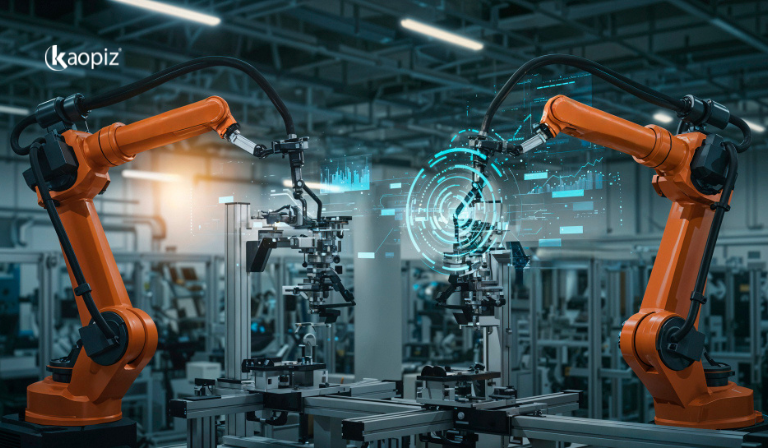
- Legacy system integration: Many factories still rely on outdated machines and software, making AI integration complex and costly.
- Data quality and availability: AI models require large volumes of accurate, well-structured data, which is often fragmented across systems.
- High initial investment: Infrastructure upgrades, sensors, computing resources, and AI development can require substantial upfront costs.
- Cybersecurity and safety risks: Connected and autonomous systems increase exposure to cyber threats and operational risks.
- Skills gap: There is a shortage of professionals who understand both AI and industrial processes.
- Change management: Employees may resist automation due to concerns about job displacement or new workflows.
To overcome these barriers, Singapore businesses adopt phased AI deployment. They partner with experienced AI developers and invest in workforce upskilling.
Why Singapore Businesses Choose Offshore AI Development Partners
Singapore businesses increasingly partner with Vietnam offshore AI development firms to accelerate innovation while controlling costs and scaling faster. Offshore teams provide access to a larger talent pool, specialized AI expertise, and flexible delivery models that may be difficult to source locally.
Key reasons include:
- Cost efficiency: Offshore development reduces project costs without compromising quality.
- Access to specialized talent: Companies gain experts in machine learning, computer vision, robotics, and industrial AI.
- Faster time-to-market: Dedicated teams enable rapid prototyping, testing, and deployment.
- Scalability: Businesses can quickly scale teams up or down based on project needs.
- 24/7 development cycles: Time zone differences allow continuous progress.
For industrial automation projects that require deep technical expertise and long-term iteration, offshore partnerships offer Singapore firms a strategic advantage in speed, flexibility, and innovation.
How to Hire AI Developers for Industrial Automation Projects
Hiring the right AI developers is critical to the success of industrial automation initiatives. Beyond technical skills, developers must understand how AI systems interact with real-world machines, data pipelines, and production environments.
When evaluating AI talent, Singapore businesses should look for:
- Domain expertise: Experience in manufacturing, robotics, IoT, or industrial systems—not just general AI.
- Strong data engineering skills: Ability to handle sensor data, edge computing, and real-time processing.
- Machine learning and computer vision proficiency: Essential for quality inspection, predictive maintenance, and robotics.
- System integration experience: Knowledge of PLCs, SCADA, MES, ERP, and legacy system connectivity.
- Security and compliance awareness: Especially important for regulated and mission-critical environments.
- Scalable delivery capability: Teams should support prototyping, testing, deployment, and long-term optimization.
Many companies choose offshore or hybrid hiring models to access specialized expertise faster, reduce costs, and scale teams flexibly—while maintaining strong project governance and communication.
Why Partner with Kaopiz for AI Development in Industrial Automation
Kaopiz is an AI-first software development company helping enterprises build intelligent, scalable, and secure industrial automation solutions. With a team of 700+ engineers, 1,000+ completed projects, and 250+ global clients, we bring proven expertise in delivering real-world AI systems that work reliably in complex industrial environments.
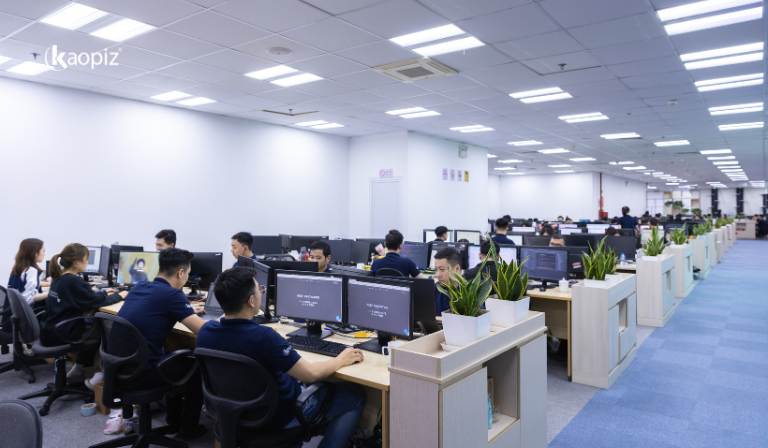
Why Singapore businesses choose Kaopiz:
- AI-first engineering approach: We design systems that learn, adapt, and self-optimize—not just automate.
- Strong technical depth: Specialists in machine learning, computer vision, robotics, and industrial data pipelines.
- End-to-end delivery: From AI strategy and prototyping to deployment and continuous optimization.
- Enterprise-grade integration: Seamless connectivity with PLCs, MES, ERP, IoT platforms, and legacy systems.
- Cost-efficient offshore model: Save up to 40–60% in development costs without sacrificing quality.
- Security and compliance: ISO 9001 & ISO 27001 certified processes for data protection and reliability.
With Kaopiz, Singapore companies gain a long-term AI partner capable of building future-ready smart factories, reducing operational risks, and accelerating digital transformation at scale.
The Future of AI in Industrial Automation (2026–2030 Outlook)
Between 2026 and 2030, AI will move industrial automation from rule-based systems to fully autonomous, self-optimizing production environments. Factories will increasingly rely on AI to make real-time decisions, coordinate machines, and adapt operations without human intervention.
Key AI trends shaping the future include:
- Rise of agentic AI: Autonomous systems that can set goals, learn from outcomes, and continuously improve processes.
- Hyperautomation: Integration of AI, robotics, IoT, and RPA to automate entire workflows end-to-end.
- Digital twins at scale: AI-powered virtual replicas of factories will simulate, predict, and optimize operations before changes are implemented.
- Edge AI adoption: More AI models will run directly on machines and devices for ultra-low latency and real-time responsiveness.
- Human–AI collaboration: Workers will shift from manual tasks to supervisory, creative, and strategic roles.
For Singapore businesses, this evolution means smarter factories, higher resilience to disruptions, and a stronger competitive position in global manufacturing. Early adopters of AI automation will scale, innovate, and lead.
Conclusion
AI in industrial automation is a present-day competitive advantage. By enabling machines to learn, adapt, and make autonomous decisions, AI is transforming how factories operate, from quality control and predictive maintenance to robotics and intelligent scheduling.
For Singapore businesses facing rising costs, global competition, and rapid digitalization, AI-powered automation offers a path to higher efficiency, resilience, and scalability. As technologies like agentic AI, edge computing, and smart robotics mature, factories will become more autonomous, data-driven, and self-optimizing.
Partnering with the right AI development company is critical to realizing this potential. With the right strategy, talent, and implementation approach, organizations can turn AI into a long-term growth engine—building smarter operations today and future-ready industries for tomorrow.
FAQs
- Can AI Replace Automation?
- No, AI does not replace automation—it enhances it. Traditional automation executes predefined rules, while AI enables systems to learn from data, adapt to changes, and make autonomous decisions. Together, they create smarter and more flexible industrial systems.
- How Can AI Improve Manufacturing Efficiency in Singapore?
- AI improves efficiency through predictive maintenance, real-time quality inspection, energy optimization, and intelligent scheduling. For Singapore manufacturers facing high labor costs and strict quality standards, AI-driven automation increases productivity while reducing waste and downtime.
- What’s the Difference Between Automation and AI Automation?
- Traditional automation follows fixed rules and workflows. AI automation learns from data, adapts to change, and optimizes processes continuously. It can predict issues and improve performance without constant manual reprogramming.
- How Can Agentic AI Be Applied in Factories?
- Agentic AI enables factories to operate more autonomously by setting goals, making decisions, and taking actions with minimal human input. Examples include self-learning robots, adaptive production lines, and systems that detect and resolve operational issues in real time.
- Why Should Singapore Firms Consider Offshore AI Partners Like Kaopiz?
- Offshore AI partners provide specialized talent, faster delivery, and cost efficiency—often reducing development costs by 40–60%. Companies like Kaopiz offer end-to-end AI development, enterprise-grade security, and scalable teams—helping Singapore firms innovate faster without compromising quality.
Trending Post

No Comments yet!