





AI in Software Development: Transforming Efficiency and Innovation in 2026
Artificial intelligence is rapidly transforming how modern software is built, tested, and delivered. In 2026, AI in software development goes far beyond basic automation — it acts as an intelligent assistant across the entire software development lifecycle (SDLC), from planning and coding to testing and deployment.
For fast-moving markets like Singapore, where speed, quality, and innovation are critical, AI-driven development is becoming a strategic advantage. In this guide, we explore how AI is used in software development, its key benefits and challenges, and how organizations can adopt it effectively.
Table of Contents
- What Does “AI in Software Development” Really Mean?
- Why AI Is Becoming Essential for Modern Software Teams
- How AI Is Used Across the Software Development Lifecycle
- Top AI Tools Popular in Software Development (2026)
- What Challenges & Risks Should You Know?
- How Singapore Companies Are Leveraging AI in Software Development
- How to Successfully Implement AI in Your Software Development Process
- Kaopiz’s AI Software Development Services
- Conclusion
- FAQs
What Does “AI in Software Development” Really Mean?
AI in software development refers to the use of artificial intelligence technologies — such as machine learning (ML), large language models (LLMs), and predictive analytics — to enhance activities across the Software Development Lifecycle. Instead of relying entirely on manual effort, teams use AI to assist with planning, coding, testing, deployment, and ongoing maintenance.

It is important to distinguish AI-driven development from traditional rule-based automation. Rule-based systems follow fixed instructions: if a specific condition occurs, the system executes a predefined action. While effective for repetitive tasks, they cannot adapt beyond programmed logic.
AI-driven development, on the other hand, learns from data and patterns. AI tools can suggest code based on vast training datasets, detect anomalies in production, generate test cases, and even predict potential defects. This ability to adapt and improve makes AI more dynamic and scalable than conventional automation.
AI in 2026 is also far more advanced than AI in 2020. Earlier tools were limited in contextual understanding and real-world integration. Today’s AI copilots and enterprise AI platforms can interpret requirements, generate near production-ready code, and integrate directly into DevOps pipelines. AI is no longer experimental — it is becoming a strategic asset in modern software engineering.
Why AI Is Becoming Essential for Modern Software Teams
Software teams today face increasing pressure to deliver high-quality products faster — while keeping costs under control. For CTOs and founders in competitive markets like Singapore, AI is no longer optional; it is becoming a strategic necessity.
Talent Shortage in Singapore
Singapore continues to experience strong demand for skilled software engineers, AI specialists, and DevOps professionals. Hiring experienced talent is expensive and time-consuming.
AI helps teams do more with existing resources by:
- Automating repetitive coding and documentation tasks
- Assisting with debugging and code reviews
- Reducing dependency on large development teams
This allows companies to scale output without scaling headcount at the same rate.
Rising Development Costs
Beyond salaries, software development involves infrastructure, security, compliance, and QA expenses. Fixing defects late in the lifecycle can significantly increase project costs.
AI helps reduce costs by:
- Detecting bugs earlier in development
- Automating test case generation and regression testing
- Improving code quality from the start
Early intervention means fewer expensive reworks and delays.
Faster Release Cycles
Modern users expect continuous updates and rapid feature delivery. Traditional development processes often struggle to keep up.

AI accelerates delivery through:
- Intelligent code suggestions
- Automated CI/CD optimization
- Predictive monitoring and incident detection
This enables faster releases without sacrificing stability.
Pressure to Innovate
In sectors like fintech, SaaS, and digital services, innovation speed determines competitiveness.
AI empowers innovation by:
- Enabling rapid prototyping
- Analyzing user data for smarter product decisions
- Supporting experimentation with lower operational risk
For modern software teams, AI is not about replacing engineers — it is about amplifying their capabilities to build smarter, faster, and more competitively.
How AI Is Used Across the Software Development Lifecycle
Artificial intelligence is no longer limited to code completion tools. In 2026, AI supports nearly every stage of the SDLC, helping teams make better decisions, reduce manual effort, and deliver higher-quality software faster. From early planning to post-deployment monitoring, AI acts as an intelligent layer across processes.
AI in Planning & Requirements Gathering
The foundation of any successful software project lies in clear and accurate requirements. However, gathering and analyzing requirements is often time-consuming and prone to misinterpretation.
AI improves this phase through:
- Requirement summarization: Large language models can process lengthy documents, emails, and meeting transcripts to generate concise requirement summaries. This reduces ambiguity and ensures alignment between business and technical teams.
- Stakeholder interview analysis: AI tools can analyze interview transcripts, identify recurring themes, extract action points, and detect potential inconsistencies. This helps product managers prioritise features more effectively.
- Risk prediction: By analyzing historical project data, AI can identify patterns that previously led to delays or cost overruns. Predictive insights allow teams to proactively manage risks before development begins.
This early-stage intelligence improves clarity, reduces scope creep, and strengthens project governance.
AI in Coding & Code Generation
Coding is where AI adoption is most visible. AI copilots and code assistants are increasingly embedded into development environments, enhancing developer productivity.

Key use cases include:
- Copilot-assisted development: Tools like GitHub Copilot and enterprise AI assistants suggest code snippets, auto-complete functions, and generate boilerplate code. This accelerates development while reducing repetitive tasks.
- Refactoring legacy code: AI can analyze outdated codebases, recommend refactoring improvements, and modernize syntax. For organizations managing legacy systems, this significantly reduces technical debt.
- Code vulnerability scanning: Security is a growing concern, particularly for enterprise and regulated industries. AI-powered security tools can scan code in real time, detect potential vulnerabilities, and recommend secure coding practices. This “shift-left” security approach prevents issues from reaching production.
Rather than replacing developers, AI enhances their capabilities, allowing them to focus on architecture and complex problem-solving.
AI in Testing & QA
Quality assurance is traditionally one of the most resource-intensive phases of software development. AI-driven testing significantly reduces manual effort while increasing coverage and accuracy.
Common applications include:
- Auto test case generation: AI tools can generate unit tests, integration tests, and regression test cases based on code structure and user flows. This ensures broader test coverage with less manual scripting.
- Visual regression AI: For frontend and UI-heavy applications, AI can detect visual inconsistencies across devices and browsers. Unlike rule-based visual testing, AI recognizes contextual differences and reduces false positives.
- Performance prediction: AI models analyze historical system behavior to predict performance bottlenecks under different load conditions. This enables teams to optimize applications before deployment rather than reacting to failures later.
AI-powered QA not only shortens testing cycles but also improves defect detection earlier in the lifecycle.
AI in Deployment & DevOps
AI’s role extends beyond development and testing into operations. Intelligent DevOps practices are increasingly driven by data and predictive analytics.
Key applications include:
- Intelligent CI/CD pipelines: AI can optimize build sequences, detect failing patterns in pipelines, and recommend configuration improvements. This reduces deployment errors and accelerates release frequency.
- Predictive maintenance: By analyzing logs and system metrics, AI can identify early signs of infrastructure degradation or performance decline. This enables proactive maintenance instead of reactive firefighting.
- Incident response AI: During system outages or anomalies, AI tools can correlate logs, trace root causes, and suggest remediation steps. This significantly reduces mean time to resolution (MTTR).
In fast-paced markets where uptime and reliability are critical, AI-powered DevOps improves operational resilience and business continuity.
Top AI Tools Popular in Software Development (2026)
AI adoption in software development has moved beyond experimentation. In 2026, leading engineering teams are integrating AI tools directly into their daily workflows — from coding to deployment monitoring. Below are some of the most widely used and enterprise-ready tools shaping modern development.
GitHub Copilot
GitHub Copilot remains one of the most popular AI coding assistants globally. Integrated directly into IDEs, it supports developers by:
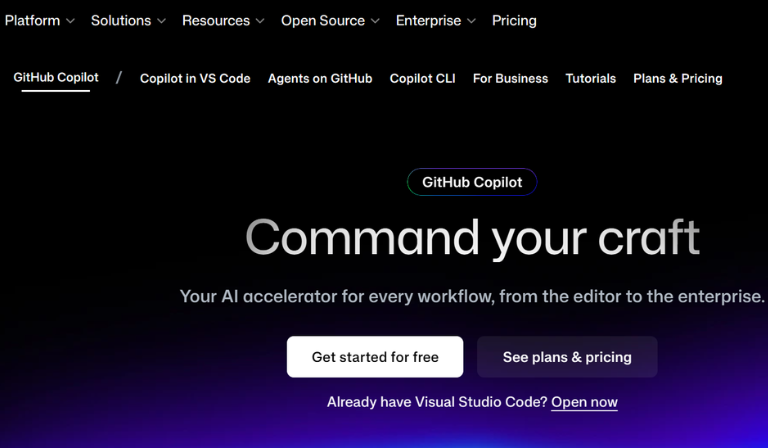
- Suggesting real-time code completions
- Generating boilerplate functions
- Writing unit tests
- Assisting with documentation
For fast-moving product teams, Copilot significantly reduces development time, especially for repetitive or pattern-based coding tasks.
Amazon CodeWhisperer
Amazon CodeWhisperer is increasingly adopted by companies operating within the AWS ecosystem. It is particularly relevant for teams building cloud-native applications.
Key strengths include:
- AI code recommendations optimized for AWS services
- Built-in security scanning for vulnerabilities
- Compliance-aware suggestions aligned with enterprise requirements
- Seamless integration with AWS development tools
For organizations leveraging AWS infrastructure, CodeWhisperer offers contextual suggestions tailored to cloud best practices — making it a strong option for enterprise-scale projects.
ChatGPT Enterprise
ChatGPT Enterprise extends beyond simple prompting. It supports:
- Requirement summarization
- Architecture brainstorming
- API documentation generation
- Code explanation and refactoring
- Internal knowledge base querying
With enterprise-grade security and data privacy controls, it enables teams to safely leverage large language models for planning, coding support, and cross-team collaboration.
AI-Driven Observability Platforms
Modern DevOps teams increasingly rely on AI-powered observability tools to monitor application performance and infrastructure health.
These platforms provide:
- Anomaly detection across logs and metrics
- Root cause analysis suggestions
- Predictive alerts before system failure
- Intelligent incident correlation
By reducing noise and highlighting meaningful patterns, AI observability tools improve uptime and shorten incident resolution time.
Comparison of Leading AI Development Tools (2026)
| Tool | Primary Use Case | Strengths | Best For | Security Features |
|---|---|---|---|---|
| GitHub Copilot | Code generation & completion | Fast IDE integration, test generation | Agile product teams | Basic enterprise controls |
| Amazon CodeWhisperer | Cloud-native code assistance | AWS-optimized suggestions, security scanning | AWS-based enterprises | Built-in vulnerability scanning |
| ChatGPT Enterprise | Documentation & planning support | Requirement analysis, architecture ideation | Cross-functional teams | Enterprise-grade data privacy |
| AI Observability Tools | Monitoring & incident response | Anomaly detection, predictive insights | DevOps & SRE teams | Log-level security controls |
Selecting the right AI tool depends on your tech stack, security requirements, and business objectives. For many enterprises in Singapore, combining coding assistants with AI-driven observability and enterprise LLM platforms delivers the highest ROI — accelerating development while maintaining governance and security standards.
What Challenges & Risks Should You Know?
AI brings powerful advantages to software development — but it also introduces new risks that engineering leaders must manage carefully.
- Inaccurate or Misleading Outputs: AI-generated code and test cases may contain logical errors or misinterpret requirements. Human review and validation are still essential before deployment.
- Security & Data Privacy Risks: Sensitive source code may be exposed when using public AI models. Enterprises must ensure compliance, secure environments, and proper governance.
- Overreliance on AI Suggestions: Developers may accept AI outputs without critical evaluation. This can increase technical debt and weaken architectural quality.
- Skill Gaps & Workflow Disruption: Teams need new skills to prompt, validate, and integrate AI effectively. Without training and change management, AI adoption can create inefficiencies.
- Integration Complexity: AI tools may not seamlessly fit into legacy systems or existing pipelines. A poor integration strategy can reduce ROI instead of improving productivity.
How Singapore Companies Are Leveraging AI in Software Development
In Singapore’s fast-paced tech ecosystem, organizations across industries are turning to AI to stay competitive, reduce time-to-market, and improve software quality. From innovative startups to large enterprises, AI is rapidly becoming a strategic part of development practices rather than a novelty.
SMEs Accelerating Development with AI
Small and medium enterprises (SMEs) in Singapore are using AI tools to level the playing field with larger competitors. By integrating AI coding assistants and automated testing tools, these teams can:
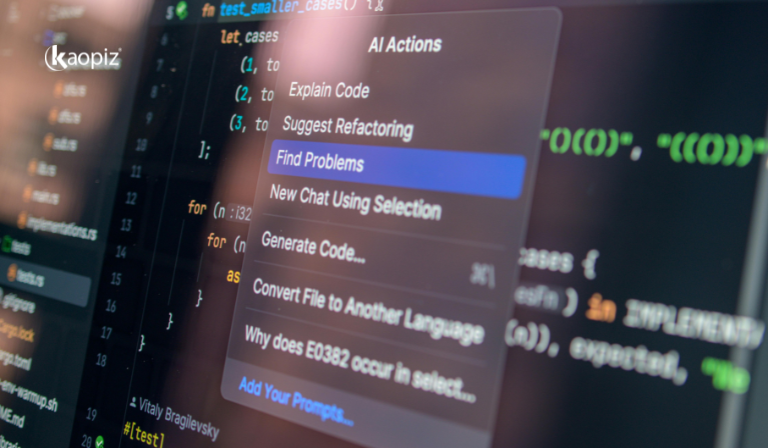
- Generate code snippets and test cases faster
- Reduce manual QA effort and cycle time
- Deliver updates with higher consistency
For resource-lean teams, AI acts as a productivity multiplier — enabling them to deliver more with fewer engineers while maintaining quality standards.
Enterprise Adoption for Complex Systems
Larger organizations with complex systems, such as fintech, logistics, and healthcare providers, are leveraging AI to manage scale and reliability. Common applications include:
- Predictive analytics to forecast system performance issues
- AI observability platforms to detect anomalies earlier
- Intelligent DevOps pipelines to optimize CI/CD workflows
These capabilities help enterprises maintain service uptime, comply with regulatory requirements, and deploy updates confidently across distributed environments — a key competitive advantage in regulated markets like Singapore.
Real Benefits Reported by Singapore Teams
Across sectors, companies leveraging AI in development are seeing measurable results:
- Shorter release cycles: Teams report faster build and deployment times through automated pipelines and AI-assisted coding.
- Improved quality: Early defect detection and visual regression AI reduce production bugs and improve user experience.
- Better resource utilization: Developers can focus on high-value tasks like architecture and UX, while AI handles repetitive work.
These outcomes highlight AI’s role not just as a technical tool, but as a driver of business efficiency and innovation.
Government and Industry Support
Singapore’s national push for digital transformation and AI adoption further accelerates uptake. Initiatives that encourage AI research, skills development, and enterprise innovation are helping local companies integrate AI responsibly and strategically into their software development processes.
By combining Singapore’s supportive ecosystem with modern AI capabilities, companies are redefining what it means to build software — smarter, faster, and with greater resilience.
How to Successfully Implement AI in Your Software Development Process
Implementing AI effectively requires strategy, governance, and measurable goals — not just tools. Here’s how to approach it:
- Define Clear Business Objectives: Set measurable KPIs such as reducing release cycles or lowering QA costs. Align AI adoption with real business outcomes, not experimentation.
- Start with High-Impact, Low-Risk Use Cases: Begin with code assistance, automated testing, or CI/CD optimization. Quick wins build internal trust and demonstrate ROI early.
- Priorities Security & Compliance: Ensure source code is protected, and tools meet data regulations (e.g., PDPA). Choose enterprise-grade AI platforms with governance controls.
- Keep Humans in the Loop: Require code reviews and validation of AI-generated outputs. AI should assist developers, not replace engineering judgment.
- Upskill Your Team: Train developers to prompt effectively and evaluate AI suggestions. Strong AI literacy increases productivity and reduces risk.
- Measure and Optimize Continuously: Track deployment speed, defect rates, and cost savings. Refine your AI strategy based on performance data.
A structured, secure approach ensures AI becomes a long-term competitive advantage — not a short-term experiment.
Kaopiz’s AI Software Development Services
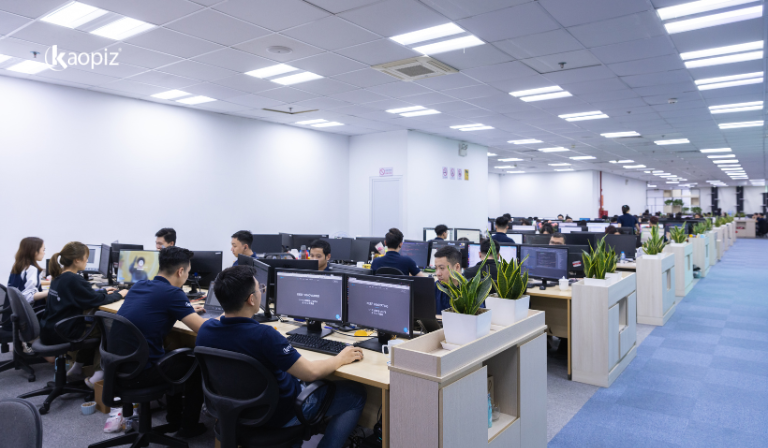
At Kaopiz, we deliver solution-based AI integration tailored to your business objectives — not generic automation.
- AI-Augmented SDLC Optimization: We embed AI across your software lifecycle to improve speed, quality, and predictability. From requirement analysis and AI-assisted coding to automated testing and intelligent DevOps, we help engineering teams reduce cycle time while maintaining governance and security standards.
- Custom AI Software Development: We design and develop bespoke AI-powered systems aligned with enterprise workflows. Whether you require predictive analytics, recommendation engines, or AI-enabled internal tools, our solutions are built for scalability and measurable ROI.
- AI-OCR & Kari AI Chatbot: Kaopiz has developed proprietary AI solutions, including:
- AI-OCR systems for intelligent document processing and automation
- Kari AI chatbot, enabling conversational AI for customer service, internal knowledge bases, and workflow automation
- AWS-Native AI Solutions: As an AWS Advanced Consulting Partner, Kaopiz builds cloud-native AI architectures leveraging AWS services for scalability, security, and compliance. We design infrastructure that supports long-term growth and enterprise-level performance.
Our capabilities are backed by:
- 700+ engineers and AI specialists
- 1000+ successfully delivered projects
- ISTQB Platinum Partner certification ensures QA excellence
- Singapore office at One Raffles Place, providing localized support and regulatory understanding
With deep AI expertise, enterprise-grade partnerships, and a strong presence in Singapore, Kaopiz empowers organizations to transform their software development process — securely, strategically, and at scale.
Conclusion
AI is no longer an experimental trend — it is redefining how modern software is built, tested, and scaled. From intelligent requirement analysis to AI-assisted coding, automated QA, and predictive DevOps, AI enhances every stage of the Software Development Lifecycle.
For businesses in competitive markets like Singapore, the question is no longer whether to adopt AI, but how to implement it strategically. When deployed with the right governance, security controls, and measurable goals, AI delivers tangible outcomes: faster release cycles, improved code quality, reduced operational costs, and stronger innovation capacity.
However, successful adoption requires more than standalone tools. It demands a structured roadmap, skilled teams, and a technology partner who understands both AI capabilities and enterprise realities.
FAQs
- Is AI Secure for Enterprise Software?
- Yes — but security depends on how AI is implemented. Enterprise-grade AI solutions offer data encryption, access controls, audit logs, and compliance alignment (e.g., PDPA in Singapore). However, risks arise when using public AI tools without governance. Companies should priorities secure cloud environments, private model deployment, and human oversight to ensure data protection.
- Can SMEs in Singapore Afford AI Adoption?
- Yes — especially with phased implementation. SMEs can begin with cost-efficient AI tools such as coding assistants or automated testing platforms. These solutions reduce manual workload and improve productivity without requiring large upfront investment. Singapore’s strong digital ecosystem and cloud adoption also make scalable AI implementation more accessible for smaller businesses.
- Is AI Going to Replace Software Developers?
- No. AI augments developers rather than replacing them. AI handles repetitive tasks like code suggestions and test generation, while developers focus on architecture, business logic, and innovation. Teams that leverage AI effectively will outperform traditional teams — but human expertise remains essential.
- How Much Does AI Integration Cost?
-
Costs vary depending on scope and complexity. Factors influencing cost include:
- Type of AI tools (off-the-shelf vs. custom-built)
- Infrastructure requirements (cloud, security, compliance)
- Integration with legacy systems
- Training and change management
Many organizations start with pilot projects to measure ROI before scaling investment. - What Industries Benefit Most from AI in Software Development?
-
AI-driven development delivers value across industries, particularly those with high digital demands, including:
- Fintech and banking
- E-commerce and retail
- Healthcare and MedTech
- Logistics and supply chain
- SaaS and technology providers
Any organization seeking faster innovation, improved quality, and scalable digital systems can benefit from AI-enhanced software development.
Trending Post

No Comments yet!