







Custom Mobile App Development in Singapore: Complete Guide (2026)
Singapore’s fast-moving digital landscape has made mobile apps essential for businesses of all sizes. From SMEs modernizing internal workflows to enterprises integrating complex legacy systems, many organizations now require custom mobile app development that go beyond the limits of off-the-shelf solutions. But custom app development also raises important questions: What exactly does “custom” mean? When is it necessary? How much does it cost in Singapore? Which technology stack should you choose? And how do you select the right development partner?
This 2026 guide provides clear, practical answers. You’ll learn the benefits of custom mobile apps, key development steps, cost ranges, common challenges — and how Kaopiz helps Singapore businesses build secure, scalable, PDPA-compliant mobile solutions that deliver real business value. Let’s get started.
Table of Contents
- Custom Mobile App Development Overview
- 7 Key Benefits of Custom Mobile App Development for Singapore Businesses
- The 5-Step Custom Mobile App Development Process in 2026
- Technology Stack for Custom Mobile Applications
- How Much Does Custom Mobile App Development Cost in Singapore?
- Common Challenges in Mobile App Projects & How to Avoid Them
- Choosing the Right Development Partner for Your Custom App
- Why Choose Kaopiz as Your Custom Mobile App Development Partner in Singapore
- Conclusion
- FAQs
Custom Mobile App Development Overview
A clear overview of custom mobile app development helps businesses evaluate whether a tailored, scalable mobile solution is the right fit for their operations and long-term digital strategy.
What Is Custom Mobile App Development?
Custom mobile application development is the process of designing and building mobile apps that are tailored specifically to a business’s unique needs, workflows, and user experiences. Unlike generic or off-the-shelf applications, custom apps are created from the ground up — allowing companies to define every feature, integration, and interface based on their operational requirements and long-term digital strategy.
A custom app can support internal processes, enhance customer engagement, or introduce new digital services. It provides full flexibility in terms of UI/UX, functionality, backend architecture, and security controls. This makes custom development especially valuable for businesses in Singapore that must meet PDPA compliance, integrate with existing systems (CRM, ERP, POS), or deliver high-performance, scalable mobile solutions suited to local market expectations.
Who Needs Custom Mobile App Development in Singapore?
Custom mobile app development is suited for organizations that require tailored digital solutions to match their unique workflows, user expectations, and compliance needs. In Singapore’s mobile-first environment, custom apps help businesses modernize operations, enhance engagement, and maintain a competitive edge.
You may need a custo m mobile application if your organization:
- SMEs & Growing Businesses
- Want to digitize manual processes or automate internal workflows
- Need customer-facing apps (booking, loyalty, ordering, e-commerce) that fit their brand and operations
- Require scalable solutions that can grow with the business
- Enterprises & Regulated Industries (Finance, Healthcare, Logistics, Education)
- Must meet strict PDPA and data security requirements
- Need deep integration with existing systems (CRM, ERP, POS, SAP, Oracle, custom legacy systems)
- Operate complex workflows that off-the-shelf apps cannot support
- Product-Led Startups
- Need unique features unavailable in template apps
- Require rapid prototyping, iterative development, and scalable architecture
- Need a solid mobile foundation to support user growth and investor expectations
Therefore, any organization seeking flexibility, security, and long-term scalability can benefit from a custom mobile application tailored to Singapore’s market.
When Do Businesses Need a Custom App?
Businesses typically need a custom mobile application when their operational needs, customer expectations, or compliance requirements cannot be met by generic or off-the-shelf solutions. You likely need a custom app when:
- Your workflows are unique or complex: Off-the-shelf apps cannot support tailored processes such as multi-step approvals, custom inventory rules, or industry-specific operations.
- You require deep system integrations: Custom apps integrate seamlessly with existing CRM, ERP, POS, payment gateways, or legacy systems — common across enterprises in Singapore.
- You must comply with PDPA or industry regulations: Healthcare, finance, logistics, and education organizations often require custom data handling, access control, and audit mechanisms.
- You want to create differentiated customer experiences: Loyalty programs, personalized recommendations, omni-channel journeys, and branded UX typically require custom development.
- Your current tools limit scalability: As Singapore businesses grow, template apps often become bottlenecks in performance, flexibility, or security.
- Your product vision requires unique features: Startups and product-led companies need custom apps for features like AI integration, real-time tracking, IoT, or advanced analytics.
- You aim to reduce manual work and improve operational efficiency: Internal apps streamline workflows, automate data capture, and reduce labor dependency — a significant advantage in Singapore’s high-cost talent environment.
The 5 Different Types of Custom Mobile Apps
Custom mobile applications can take many forms depending on a business’s goals, users, and operational needs. Below are the five most common categories of custom mobile apps businesses build today:
| Type of App | Primary Users | Key Features | Best For |
|---|---|---|---|
| 1. Customer-Facing Apps | Consumers, end-users | E-commerce, booking, loyalty, digital payments | Retail, F&B, wellness, service businesses |
| 2. Internal Workflow Apps | Employees, operations teams | Task management, reporting, inventory, scheduling | SMEs, logistics, construction, field operations |
| 3. Industry-Specific Apps | Regulated sectors | PDPA-compliant data handling, system integrations | Healthcare, fintech, logistics, education |
| 4. Product-Led / Consumer Apps | Startup users, general public | Unique features, social elements, subscriptions | Startups, digital platforms, marketplaces |
| 5. IoT, AI & Data-Driven Apps | Technical users or customers | Device connectivity, AI/ML, OCR, smart automation | Manufacturing, smart home, energy, enterprise innovation teams |
Custom Mobile Apps vs Off-the-Shelf Solutions
Businesses in Singapore embracing app development trends often face a common dilemma when planning their digital transformation: Should we build a custom mobile app, or use an off-the-shelf solution?
Both approaches have value, but the right choice depends on your goals, workflows, scalability needs, and long-term digital strategy.
| Criteria | Custom Mobile App | Off-the-Shelf Solution |
|---|---|---|
| Flexibility | Fully customized features, workflows, and UI/UX | Limited to predefined features and configurations |
| Integration Capability | Deep integration with CRM, ERP, POS, payment systems, and legacy software | Often restricted; may require additional plugins or may not integrate at all |
| Scalability | Designed to scale with business growth and evolving needs | May struggle as operations expand or become more complex |
| Compliance & Security | Can be built to meet PDPA and industry-specific regulations | Security and compliance depend on the vendor; limited control |
| Ownership & Control | Full ownership of source code, data handling, and infrastructure | No ownership; dependent on vendor updates and policies |
| User Experience | Tailored to your users and local market expectations | Generic experience shared across all users |
| Upfront Cost | Higher initial investment | Lower upfront cost |
| Long-Term Cost | Lower over time (no per-user or subscription fees) | Costs increase with subscriptions, add-ons, or user expansion |
| Time to Market | Longer development timeline | Immediate or quick deployment |
| Best For | Businesses with custom workflows, compliance needs, or long-term digital strategy | Simple, short-term needs or early-stage businesses |
Key takeaways:
- If your business needs unique features, industry-specific compliance, or deep integration with existing systems, a custom mobile app provides far greater long-term value.
- If your needs are simple and temporary, an off-the-shelf solution is a practical starting point.
7 Key Benefits of Custom Mobile App Development for Singapore Businesses
Custom apps give Singapore organizations the flexibility, security, and performance needed to compete in a digital-first economy. Here are the seven core custom mobile app development benefits:
- Built for Your Exact Business Needs: Custom features and workflows designed specifically for your operations — no unnecessary limitations.
- Enhanced User Experience: Tailored UI/UX ensures smoother interactions, higher engagement, and improved customer satisfaction.
- Seamless System Integration: Connects effortlessly with CRM, ERP, POS, payment systems, and legacy software commonly used in Singapore.
- Strong Security & PDPA Compliance: Full control over data handling, encryption, authentication, and regulatory compliance.
- Scalable Architecture for Growth: Easily add new features, support more users, or expand into new markets without needing to rebuild the app.
- Greater Competitive Differentiation: Offer unique digital experiences that competitors using off-the-shelf tools cannot replicate.
- Long-Term Cost Efficiency: Higher upfront investment but lower lifetime costs — no per-user fees, fewer workarounds, and better operational efficiency.
From improved user experience and operational efficiency to compliance and long-term scalability, custom mobile applications equip Singapore businesses with the digital foundation needed to grow in a fast-moving, highly regulated, mobile-first economy.
The 5-Step Custom Mobile App Development Process in 2026
Developing a custom mobile app in 2026 requires a clear, structured process to ensure speed, quality, and scalability. Below is the five-step approach used by leading development teams to deliver reliable, high-performing mobile applications.
Step 1: Strategic Discovery & Validation
The first step in custom application development is understanding the business problem, user needs, and desired outcomes. During the strategic discovery phase, development teams work closely with stakeholders to define the app’s purpose, target users, and success metrics. This ensures the project is aligned with real business value before any design or coding begins.

Discovery and validation typically involve:
- Clarifying business objectives and identifying the core challenges the app must solve
- Mapping user personas and user journeys to confirm actual user needs
- Assessing technical feasibility, integrations, and constraints
- Prioritizing features for the MVP versus future releases
- Validating assumptions through workshops, interviews, or rapid prototypes
This upfront clarity significantly reduces risks, controls project costs, and ensures the app is built on a foundation of meaningful business insights — a critical advantage for Singapore companies operating in competitive and highly regulated industries.
Step 2: Prototyping and UI/UX Design
Once the project vision is defined, the next step is turning ideas into visual and interactive concepts. Through prototyping and UI/UX design, businesses can explore how the app will look, feel, and function before development begins — reducing uncertainty and ensuring alignment across stakeholders.
This stage focuses on:
- Wireframes and low-fidelity prototypes to map core screens and user flows
- High-fidelity UI design that reflects branding, accessibility standards, and modern design principles
- User journey optimization to ensure every interaction is intuitive and frictionless
- Iterative feedback cycles with stakeholders and end users to refine the experience
- Validation of usability and information architecture before committing to full development
For Singapore’s mobile-first audience, strong UI/UX is essential. A well-designed prototype not only accelerates development but also ensures the final product delivers a smooth, engaging, and culturally relevant user experience.
Step 3: Agile Development & Continuous Integration (CI/CD)
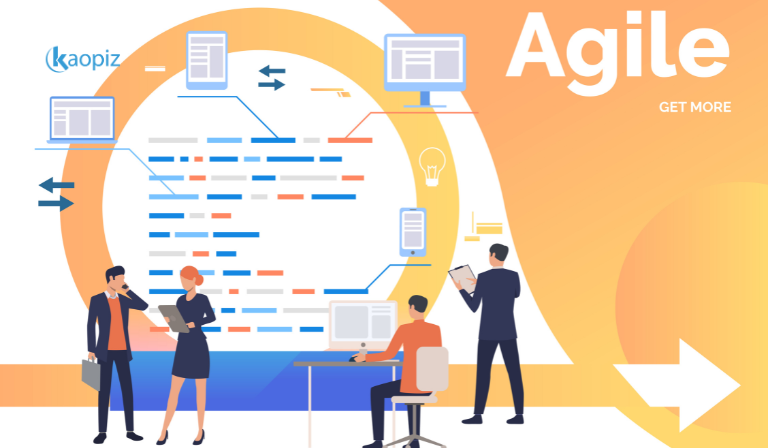
After the design is validated, development begins using an Agile methodology, allowing the team to build the app in iterative sprints. This approach provides flexibility, faster delivery of functional modules, and continuous visibility for stakeholders — ensuring the product evolves based on real feedback rather than assumptions.
Key activities during this stage include:
- Sprint-based development, delivering incremental features every 1–2 weeks
- Regular reviews and demos to keep business and technical teams aligned
- Continuous Integration (CI) to merge code frequently and detect issues early
- Continuous Deployment (CD) pipelines to automate testing, builds, and environment releases
- Rapid response to changes in requirements or priorities without delaying the project
For Singapore businesses that operate in fast-paced, competitive sectors, Agile + CI/CD ensures the app remains stable, scalable, and adaptable — with higher quality and shorter time-to-market compared to traditional development models.
Step 4: Comprehensive Quality Assurance (QA) and Testing
Quality Assurance is a critical stage in customized mobile app development, ensuring the application is stable, secure, and ready for real-world use. Instead of treating testing as a final checkpoint, modern development teams embed QA throughout the entire lifecycle to identify issues early and maintain high product quality.
This phase typically includes:
- Functional testing to verify that every feature works as intended
- Usability testing to ensure the app is intuitive and user-friendly
- Performance and load testing to confirm the app can handle real usage and traffic spikes
- Security testing to identify vulnerabilities and ensure PDPA-compliant data protection
- Compatibility testing across multiple devices, OS versions, and screen sizes
- Bug tracking and iterative fixes to maintain stability throughout development
Rigorous QA is essential to prevent operational disruptions, ensure compliance, and deliver a seamless experience from day one for Singapore businesses — especially those in finance, healthcare, and logistics.
Step 5: Deployment & Continuous Improvement
Once the app has passed all quality checks, it moves into the deployment stage, where the application is released to production environments or published on the App Store and Google Play. This phase includes preparing release builds, configuring hosting or cloud infrastructure, and ensuring compliance with store guidelines and security requirements.
Deployment is not the end of the process. Real-world usage provides new insights, and continuous improvement is essential to keep the app relevant and high-performing. Ongoing activities typically include:
- Monitoring app performance and user behaviour through analytics
- Fixing post-launch issues and optimizing stability
- Releasing feature updates based on feedback and evolving business needs
- Ensuring ongoing security patches and compliance updates
- Scaling infrastructure as user demand increases
Continuous improvement ensures the mobile app remains fast, secure, and aligned with changing customer expectations — supporting long-term digital success.
Technology Stack for Custom Mobile Applications
Choosing the right technology stack is one of the most important decisions in custom mobile app development. It directly impacts performance, scalability, development speed, security, and long-term maintenance. The ideal stack depends on your business goals, user requirements, and integration needs — especially in Singapore, where security, compliance, and mobile performance are top priorities.
Native (iOS/Android) vs Cross-platform (Flutter/React Native)
The first major technical decision is whether to build native apps or use a cross-platform framework.
| Criteria | Native Development (Swift for iOS, Kotlin for Android) | Cross-Platform Development (Flutter, React Native) |
|---|---|---|
| Performance | Best-in-class performance and responsiveness | Near-native performance with modern UI frameworks |
| Access to Device Features | Full access to hardware and OS capabilities | Limited access compared to native; depends on plugins |
| Security | Stronger security controls, ideal for high-risk industries | Secure but may require additional libraries or native modules |
| Development Speed | Slower, separate builds for iOS and Android | Faster — one codebase for both platforms |
| Cost | Higher cost (two separate apps) | More cost-efficient, especially for SMEs and startups |
| Use Cases | Complex, high-performance, or mission-critical apps (finance, healthcare, logistics) | Simple to mid-complexity apps, rapid MVPs, consumer apps |
| Time to Market | Longer due to dual development | Faster due to shared codebase and easier iteration |
| Scalability | Highly scalable but requires more resources | Scalable but may need native modules for complex features |
Key Takeaways:
- Native apps offer the best performance, security, and device access — ideal for complex or regulated industries.
- Cross-platform apps are faster and more cost-efficient to build, making them suitable for SMEs, startups, and rapid MVPs.
- The right choice depends on your performance needs, budget, timeline, and integration requirements.
Backend, Cloud and Integrations
A strong backend is essential for any custom mobile app. It powers user authentication, data processing, business logic, and communication with other systems.
Key components include:
- Backend frameworks: Node.js, .NET, Java, Python
- Databases: PostgreSQL, MySQL, MongoDB, Firebase, DynamoDB
- Cloud platforms: AWS, Azure, Google Cloud
- API architecture: REST, GraphQL, gRPC
- Microservices & serverless options for scalable architecture
Singapore businesses often require advanced integrations, such as:
- CRM/ERP: Salesforce, SAP, Oracle, Microsoft Dynamics
- POS & inventory systems
- Payment gateways: PayNow, Stripe, GrabPay
- Legacy or proprietary systems used by enterprises
A well-designed backend ensures smooth performance, scalability, and secure data flow.
Security & PDPA Compliance
Security is a non-negotiable requirement for Singapore’s digital ecosystem. Custom mobile apps must be built with PDPA compliance and enterprise-grade security in mind from day one.
Key security practices include:
- End-to-end encryption of sensitive data
- Secure authentication & authorization (OAuth2, JWT, MFA)
- Role-based access control (RBAC) for user permissions
- Regular vulnerability assessments & penetration testing
- Audit trails and activity logging
- Secure API communication and protection against common attacks
Industries like finance, healthcare, and government face stricter compliance requirements, making custom-built security essential. A properly engineered tech stack ensures the app can safely handle sensitive data and meet regulatory expectations.
How Much Does Custom Mobile App Development Cost in Singapore?
Custom mobile app development costs in Singapore typically range from SGD 10,000 to SGD 200,000+, depending on complexity and scope. A basic app with simple features usually falls between SGD 10,000–30,000 and can be completed within 1–2 months. More sophisticated mid-level apps with custom workflows, integrations, or enhanced UI/UX generally cost SGD 30,000–80,000, requiring 2–4 months of development.
For large-scale, mission-critical, or compliance-heavy solutions, enterprise-grade apps may range from SGD 80,000 to 200,000+, with timelines extending 4–6 months or longer.
Note: These ranges are indicative and can vary based on vendor, team location, design expectations, and integration requirements.
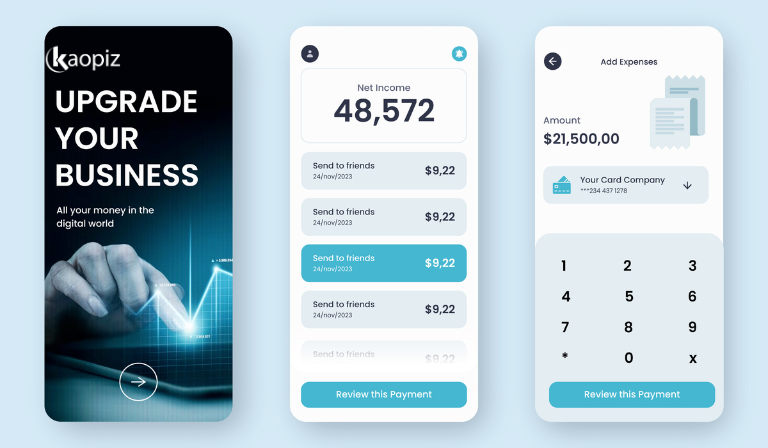
Many Singapore businesses choose a hybrid model, combining local business analysis and product leadership with offshore engineering execution. This approach can reduce development costs by 40–60% while maintaining quality, communication, and local insight — a strong advantage over purely local or purely offshore models.
Want to reduce development costs without compromising quality? Discover how our hybrid Singapore–Vietnam model can accelerate your app development.
Common Challenges in Mobile App Projects & How to Avoid Them
Even well-planned mobile app projects can encounter obstacles that affect budget, timeline, and overall product quality. Many of these challenges are not technical in nature—they stem from unclear requirements, integration issues, or underestimating long-term maintenance needs. Understanding these risks helps businesses avoid costly setbacks and build a more successful, scalable app.
| Common Challenge | Impact on the Project | How to Avoid It |
|---|---|---|
| Unclear requirements & scope changes | Delays, rework, increased costs | Conduct structured discovery, prioritize features, validate with prototypes |
| Poor UX/UI & lack of user testing | Low user adoption, poor engagement | Invest in UX research, test prototypes, gather early feedback |
| Integration difficulties with existing systems | Technical bottlenecks, instability | Assess feasibility early, use API-first design, involve IT teams |
| Security gaps & PDPA non-compliance | Data breaches, legal risks, user trust issues | Implement strong authentication, encryption, security testing, PDPA compliance checks |
| Underestimating QA & device fragmentation | Bugs across devices, poor performance | Test on multiple devices/OS, follow structured QA, use automation tools |
| Lack of post-launch maintenance | Declining performance, user frustration, security risks | Allocate maintenance budget, monitor analytics, schedule updates |
| Choosing the wrong development partner | Misalignment, delays, quality issues | Review portfolio, check expertise, confirm PDPA and integration experience |
By understanding these challenges early, Singapore businesses can make informed decisions, reduce project risks, and ensure their mobile app delivers long-term value.
Choosing the Right Development Partner for Your Custom App
Selecting the right app development partner is one of the most important factors in building a successful custom mobile application. Beyond technical expertise, you need a team that understands your business goals, can operate within Singapore’s regulatory environment, and has a proven track record of delivering high-quality, scalable apps.
When evaluating a custom mobile app development company, look for:
- Strong portfolio and relevant industry experience
- Clear development process with transparent communication
- Expertise in UX/UI, backend architecture, and system integrations
- Security and PDPA compliance capabilities
- Post-launch support and long-term maintenance options
A reliable iOS or Android app development company should guide you from strategy to deployment, ensuring your app is delivered on time, within budget, and aligned with your long-term digital vision.
Why Choose Kaopiz as Your Custom Mobile App Development Partner in Singapore
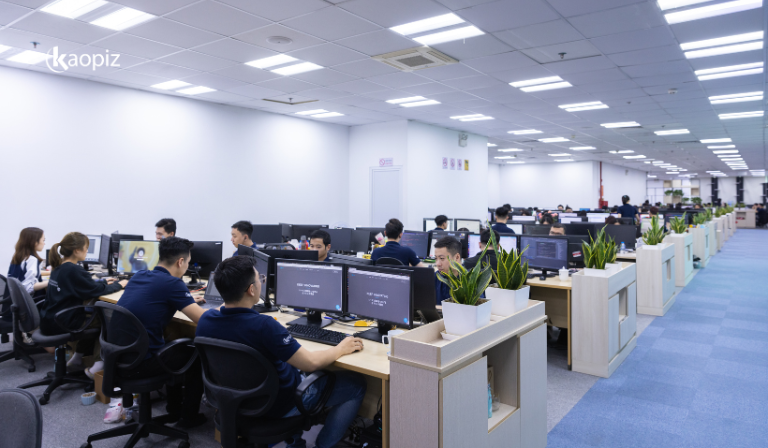
With a strong presence in Singapore and a 700+ engineering workforce in Vietnam, Kaopiz offers custom mobile application development services and a unique hybrid delivery model that combines local collaboration with high-quality, cost-efficient development at scale. We help 250+ businesses build secure, scalable, and user-centric mobile apps that align with Singapore’s regulatory environment and digital expectations.
What Sets Us Apart
- Singapore-focused delivery model: Local product consultants work directly with your team, ensuring clear communication, fast decision-making, and alignment with business goals.
- 700+ experienced engineers & cross-functional teams: Access top talent across mobile, backend, QA, DevOps, AI/ML, and cloud — enabling Kaopiz to support projects of any size or complexity.
- Deep expertise in regulated industries: Proven experience delivering PDPA-compliant, secure applications for fintech, healthcare, education, and enterprise sectors.
- Strong UX/UI and product thinking: We design apps that not only function well but also deliver intuitive, engaging user experiences for Singapore’s mobile-first audience.
- Scalable and cost-efficient development approach: Our hybrid SG + Vietnam model offers enterprise quality while optimizing cost, speed, and resource scalability.
- Long-term partnership mindset: Beyond development, we provide continuous improvement, maintenance, and support as your mobile app evolves.
Our Case Study: Hypertension Management App
A healthcare organization specializing in chronic disease management sought a mobile app to improve treatment outcomes for hypertensive patients by making at-home blood pressure tracking more intuitive and engaging.
Challenges:
Traditional tracking methods were tedious and inconsistent, leading to poor patient adherence. The client needed a user-friendly solution that simplified measurements, visualized trends, and encouraged patients to monitor their blood pressure regularly.
Kaopiz Solution: We developed a cross-platform mobile app that connects directly with blood pressure monitors, enabling real-time data capture and alerts for abnormal readings. To boost engagement, we introduced an aquarium-themed gamification system that rewards consistent tracking and makes daily monitoring more enjoyable.
Results:
- Improved patient adherence through interactive, game-inspired design
- Higher measurement accuracy with guided monitoring workflows
- Fast delivery: fully developed in just 2 months, meeting all healthcare compliance standards
This project demonstrates Kaopiz’s ability to combine medical-grade functionality with intuitive UX to drive meaningful health outcomes.
Ready to transform your idea into a high-performing mobile application? Let our team help you define requirements, estimate costs, and start your development journey with confidence.
Conclusion
Custom mobile app development has become a strategic advantage for businesses in Singapore, enabling organizations to streamline operations, deliver exceptional user experiences, and meet strict compliance requirements like PDPA. Whether you’re an SME modernizing internal workflows, an enterprise integrating complex systems, or a startup building a scalable digital product, a well-planned custom app can drive meaningful long-term value.
By understanding the process, cost factors, technology choices, and common challenges, businesses can make informed decisions and choose the custom mobile app development agency for their goals.
FAQs
- What Is the Difference Between Custom and Template Mobile Apps?
- Custom mobile apps are built from scratch to match your exact business needs, workflows, and branding. Template or off-the-shelf apps offer fixed features and limited customization, making them faster and cheaper initially but less flexible for long-term growth or system integration.
- How Long Does Development Take?
-
The timeline depends on app complexity:
Basic apps: 1–2 months
Mid-level apps: 2–4 months
Enterprise apps: 4–6+ months
Factors such as design depth, system integrations, and compliance requirements can extend the development duration. - Should I Outsource or Build an In-house Mobile Development Team?
- In-house teams are suitable for long-term product companies but involve higher costs and ongoing resource management. Outsourcing or staff augmentation is more cost-efficient, provides faster access to expertise, and scales easily — making it a strong choice for most Singapore businesses.
- Can Kaopiz Integrate with My Existing Systems?
- Yes. Kaopiz has extensive experience integrating mobile apps with CRM, ERP, POS, payment systems, and custom legacy platforms. We follow an API-first approach to ensure smooth, secure, and scalable integrations.
- Does Kaopiz Offer Post-launch Maintenance?
- Absolutely. We provide ongoing support, performance monitoring, feature enhancements, bug fixes, and security updates to keep your app reliable and aligned with evolving business needs.
Trending Post

No Comments yet!