






Enterprise Mobile App Development Guide for Secure Apps in Singapore
Enterprise mobile app development has become essential for Singapore businesses aiming to improve operations, strengthen customer engagement, and meet rising digital expectations. Unlike consumer apps, enterprise mobile solutions must prioritize scalability, security, PDPA compliance, and seamless integration with core systems such as ERP, CRM, and legacy platforms.
This guide provides a concise, practical overview of enterprise mobile app development in Singapore—covering architecture, security, costs, processes, and how to choose the right technology partner. It is designed to help business and IT leaders make informed decisions as they plan and execute long-term mobile strategies.
Key Takeaways
- Enterprise vs consumer apps: Enterprise mobile apps are fundamentally different from consumer apps, prioritizing security, scalability, compliance, and deep system integration.
- Growing Singapore market: Singapore’s enterprise app market is expanding, driven by digital transformation, regulatory requirements, and rising demand for mobile-enabled operations.
- Architecture as the foundation: A successful enterprise mobile app requires a solid architectural foundation, including cloud readiness, API-first integration, and strong PDPA-centric security.
- Structured development lifecycle: The development process should follow clear phases—from discovery to design, development, testing, deployment, and ongoing evolution.
- Cost expectations in Singapore: Costs vary widely: enterprise-grade mobile apps in Singapore typically range from SGD 120,000 to 200,000+, with large-scale systems often exceeding SGD 300,000.
- Impact of technology stack: Choosing the right technology stack directly affects long-term maintainability, scalability, and total cost of ownership.
- Choosing the right partner: To succeed, enterprises should partner with a provider that offers enterprise experience, integration capabilities, strong governance, and a hybrid delivery model.
- Business value and ROI: When executed well, enterprise mobile apps deliver significant business value, including productivity gains, improved workflows, better data visibility, and long-term strategic advantage.
Table of Contents
- What Is Enterprise Mobile App Development?
- 5 Types of Enterprise Mobile Applications
- 7 Benefits of Enterprise Mobile App Development
- Enterprise Mobile App Trends & Market Outlook (2026)
- Must-Have Features of Enterprise Mobile Apps in 2026
- Key Architecture & Security Considerations for Enterprise Mobile Apps
- Enterprise Mobile App Development Process: 5-Phase Breakdown
- Choosing the Right Technology Stack for Enterprise Scale
- Enterprise Mobile App Development Cost in Singapore
- Choosing the Right Enterprise Mobile App Development Partner in Singapore
- Common Challenges in Enterprise Mobile App Development & How to Avoid Them
- Partner with Kaopiz for Enterprise Mobile App Development in Singapore
- Conclusion
- FAQs
What Is Enterprise Mobile App Development?
Enterprise mobile app development is the process of designing, building, and maintaining mobile applications specifically for large organizations and complex business environments. Unlike simple consumer apps or short-term MVPs, enterprise mobile apps are created to support critical business operations, serve multiple user roles, and integrate deeply with existing enterprise systems.
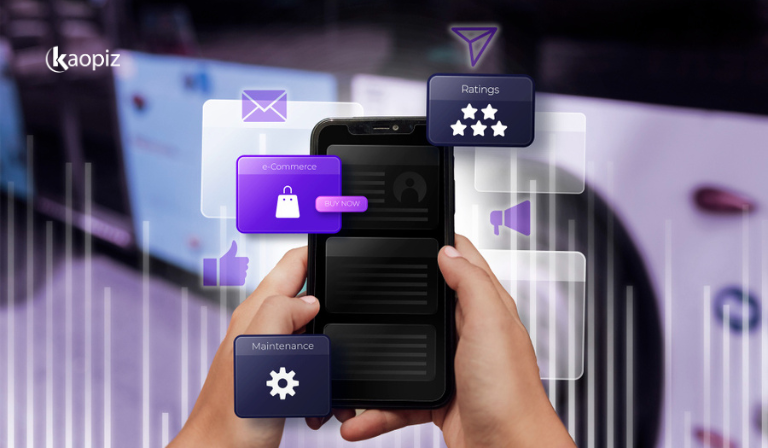
Enterprise Apps vs Consumer Apps
While consumer mobile apps focus primarily on user experience, speed to market, and mass adoption, mobile app for enterprise development are built with different priorities:
| Category | Enterprise Mobile Apps | Consumer Mobile Apps |
|---|---|---|
| Purpose | Support internal workflows, customer portals, partner collaboration, and data-driven operations | Serve individual users with lifestyle, entertainment, social, or utility functions |
| Target Users | Employees, partners, stakeholders, enterprise customers | General public or specific consumer segments |
| Scale & Complexity | Built for large organizations with multiple departments, high data volume, and complex workflows | Typically simpler, focused on individual user needs and smoother UX |
| Security & Compliance | Must follow strict security standards (e.g., encryption, RBAC) and regulations such as PDPA or MAS guidelines | Standard security measures; compliance requirements are usually less demanding |
| Integration Requirements | Deep integration with ERP, CRM, HRM, databases, and legacy enterprise platforms | Minimal integration; often standalone or connected to simple third-party services |
| Development Priorities | Stability, scalability, access control, audit logging, long-term maintainability | Fast time-to-market, user engagement, intuitive UI/UX |
| Lifecycle | Long-term investment that evolves with business processes and enterprise growth | Shorter cycles driven by market trends, user behavior, and competition |
| Deployment & Governance | Controlled release, internal testing, strict governance policies | Public app stores with broad availability |
Key Characteristics of Enterprise Mobile Applications
Enterprise mobile apps typically share the following characteristics:
- Scalable architecture to support growth in users, data, and features.
- Role-based access control to manage different user permissions and responsibilities.
- High security and data protection, including encryption, secure authentication, and audit logging.
- System integration capabilities with existing enterprise and third-party platforms.
- Reliability and performance, ensuring stable operation for business-critical functions.
- Long-term maintainability, allowing continuous enhancement without major rework.
In short, enterprise mobile app development goes beyond building an app—it involves creating a secure, scalable, and sustainable mobile solution that aligns with an organization’s long-term business and technology strategy.
5 Types of Enterprise Mobile Applications
Mobile applications are designed to support different business functions across an organization. Depending on the use case and industry, enterprises in Singapore typically implement one or more of the following 5 types of mobile applications.
- Internal workforce & operations apps: Support employee productivity and internal processes such as workforce management, task tracking, internal communication, and reporting.
- Customer-facing enterprise apps: Provide secure customer portals, self-service features, loyalty programs, booking systems, and account management.
- Sales & field service apps: Enable mobile access for sales teams and field staff with real-time data, offline functionality, job scheduling, and CRM integration.
- Partner & vendor collaboration apps: Facilitate data sharing and workflow collaboration with partners, suppliers, and distributors using role-based access control.
- Industry-specific enterprise apps: Tailored solutions for sectors such as fintech, healthcare, education, logistics, and manufacturing, designed to meet regulatory and operational requirements.
Each type of enterprise mobile application serves a distinct purpose, but all share common requirements—scalability, security, system integration, and long-term reliability—to support enterprise operations effectively.
7 Benefits of Enterprise Mobile App Development
Here are seven key mobile app benefits that enterprises can gain by investing in an application.
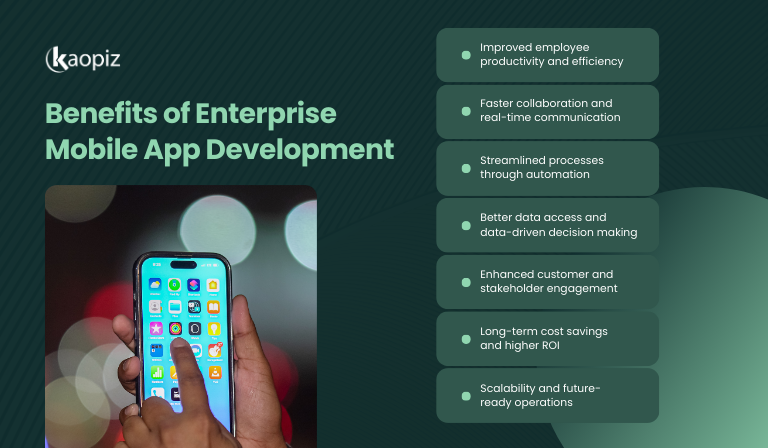
1. Improved employee productivity and efficiency
Enterprise mobile apps give employees secure, on-the-go access to tools, data, and workflows. This reduces time spent on manual tasks and approvals. Industry reports frequently cite productivity gains of up to 20–30% when business processes are mobilized.
2. Faster collaboration and real-time communication
With built-in notifications, messaging, and workflow updates, teams can collaborate in real time. This shortens response times and helps enterprises operate more efficiently across departments and locations.
3. Streamlined processes through automation
Enterprise apps replace paper-based processes, emails, and fragmented systems with unified digital workflows. Approvals, reporting, data capture, and task management become faster and more consistent, reducing operational bottlenecks and human error.
4. Better data access and data-driven decision making
When integrated with ERP, CRM, and analytics platforms, enterprise mobile apps provide real-time business insights. Executives and managers gain visibility into operations, KPIs, and performance trends, supporting quicker and more informed decisions.
5. Enhanced customer and stakeholder engagement
Customer-facing enterprise apps enable secure self-service, personalized notifications, and faster support. Mobile-first experiences significantly improve customer satisfaction and retention, particularly in service-oriented industries.
6. Long-term cost savings and higher ROI
Enterprise mobile apps reduce long-term costs by lowering manual work, consolidating systems, and improving process efficiency. Many organizations report measurable ROI within a few years through operational savings and productivity gains.
7. Scalability and future-ready operations
Enterprise mobile apps built with scalable, cloud-ready architectures can grow alongside the business. They allow enterprises to add users, features, and integrations over time—supporting long-term digital transformation and maintaining competitiveness.
Enterprise Mobile App Trends & Market Outlook (2026)
The enterprise mobile app development market is experiencing strong, sustained growth as organizations worldwide accelerate digital transformation. Globally, the market is projected to grow from USD 110.99 billion in 2024 to USD 125.39 billion in 2025, at a CAGR of 13.0%, driven by widespread smartphone adoption, cloud-based services, improved mobile networks, enterprise mobility management (EMM), and business process automation.
By 2026, enterprise mobile apps will have evolved from supportive tools into core business platforms. Enterprises increasingly rely on mobile applications to run critical workflows, support distributed workforces, enable real-time data access, and improve operational visibility rather than simply extending existing web systems to mobile devices.
A major mobile app development trend shaping the market is the shift toward cloud-native and API-first architectures. Enterprises want mobile apps that can scale easily, integrate with ERP, CRM, and data platforms, and adapt to changing business needs without major rework. Monolithic or rigid mobile architectures are becoming less viable for long-term enterprise use.
Must-Have Features of Enterprise Mobile Apps in 2026
In 2026, enterprise mobile apps are expected to function as secure, scalable, and business-critical platforms.
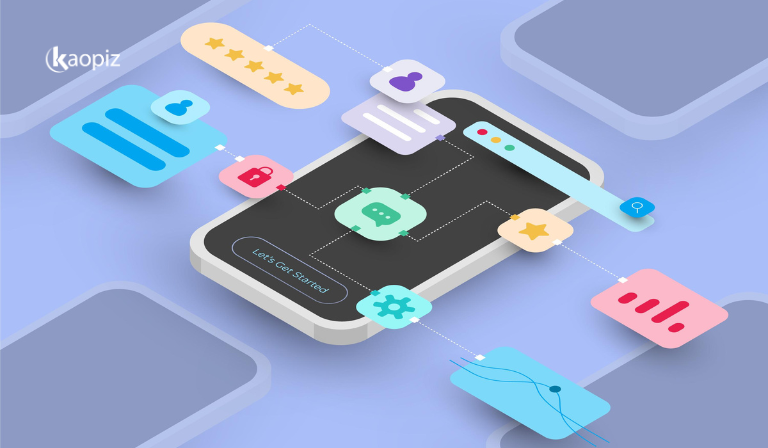
The following features are considered essential for modern enterprise use.
- Enterprise-grade security: Strong authentication, role-based access control, data encryption, and audit logging built in from the start.
- Seamless system integration: API-driven integration with ERP, CRM, HRM, and legacy systems to ensure data consistency and end-to-end workflows.
- Scalable and high-performance architecture: Cloud-ready designs that support growing users, data volumes, and feature expansion without performance issues.
- Offline access with secure synchronization: Reliable offline functionality for field teams, with automatic and secure data sync when connectivity is restored.
- Role-based user experience: Customized interfaces and workflows based on user roles while maintaining usability and consistency.
- Workflow automation and real-time notifications: Automated approvals, task routing, and instant notifications to speed up operations and decision-making.
- Analytics and monitoring: Built-in dashboards and monitoring tools to track usage, performance, and system health.
These features ensure enterprise mobile apps remain reliable, compliant, and adaptable to long-term business needs.
Key Architecture & Security Considerations for Enterprise Mobile Apps
Building an enterprise mobile app requires far more than choosing the right features. The foundation of long-term success lies in making the right architectural and security decisions from day one.
Scalable Enterprise Mobile App Architecture
A scalable architecture ensures the app can grow with the organization’s needs without costly rework. Modern enterprise mobile apps increasingly adopt:
- Cloud-native and microservices architectures: These allow independent scaling of modules, faster deployments, and easier maintenance compared to monolithic systems.
- API-first design: Ensures the mobile app communicates smoothly with backend services and can support future integrations without disrupting the system.
- Load balancing and performance optimization: Critical for apps that serve large user bases, multiple departments, or concurrent workflows.
A scalable architecture helps enterprises avoid performance bottlenecks, reduces downtime, and supports long-term product evolution.
Security & Compliance (PDPA-Centric)
Security is central to enterprise mobile development, particularly in Singapore, where PDPA and industry regulations require strict data protection.
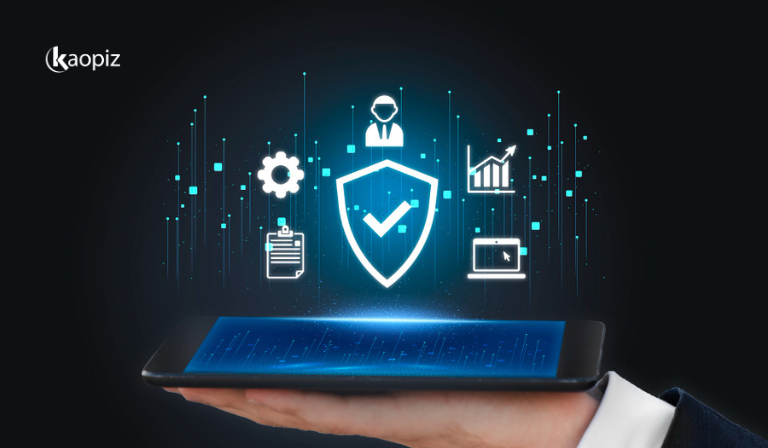
Key security considerations include:
- Robust authentication & authorization: Multi-factor authentication (MFA), single sign-on (SSO), and role-based access control (RBAC) ensure users access only what they should.
- Data encryption: Encryption at rest and in transit protects sensitive corporate and personal data from breaches.
- Audit trails and monitoring: Logging every access and action supports compliance audits and incident investigation.
- Secure coding & vulnerability testing: Regular penetration testing, code reviews, and adherence to secure coding standards help prevent security flaws.
Designing with compliance in mind from the architecture stage reduces legal risks and establishes trust among users, partners, and regulators.
Integration with Enterprise Systems
Enterprise mobile apps rarely operate in isolation—they must connect seamlessly with internal systems to deliver real business value.
Important integration considerations include:
- Connecting to ERP, CRM, HRM, finance, and legacy systems: Ensures consistent data flow and eliminates manual processes or siloed information.
- Middleware and API gateways: Improve communication between mobile apps and complex enterprise infrastructures while enhancing security and scalability.
- Real-time and offline synchronization: Ensures users have access to accurate data whether online or offline, essential for field teams and operations-heavy industries.
Good integration design leads to smoother workflows, higher adoption rates, and a more unified enterprise ecosystem.
Enterprise Mobile App Development Process: 5-Phase Breakdown
Enterprise mobile app development requires a structured and disciplined approach to manage complexity, risk, and long-term scalability. This five-phase breakdown outlines how enterprises can move from strategy and planning to delivery and continuous evolution with greater control and predictability.
1. Discovery & Business Analysis
The Discovery & Business Analysis phase lays the foundation for the entire enterprise mobile app project. In this stage, stakeholders work together to clarify business goals, user requirements, workflows, and technical constraints before any design or development begins. A thorough discovery process helps align business and IT teams, uncover hidden risks, and ensure the solution fits both current operations and long-term strategic plans.

Key activities include identifying user roles and use cases, mapping existing workflows, assessing legacy systems, defining success metrics, and estimating scope. For enterprise projects—often involving multiple departments, integrations, and compliance requirements—this phase is critical to preventing scope creep, budget overruns, and architectural misalignment later in the project.
2. Technical Feasibility Assessment
This phase focuses on validating the technical foundation of the enterprise mobile app before full development begins. Instead of refining business needs, the emphasis shifts to determining how the solution can be built safely, efficiently, and at enterprise scale.
At this stage, teams evaluate architectural options, integration complexity with existing systems, scalability requirements, and compliance constraints such as security and data protection. Potential technical risks—performance bottlenecks, legacy dependencies, or infrastructure limitations—are identified early, allowing enterprises to adjust scope or architecture before costly implementation decisions are locked in.
3. UX/UI & Architecture Design
This phase translates business requirements and technical constraints into a clear, workable product design. UX and UI design focus on creating intuitive, role-based experiences that support complex enterprise workflows, while ensuring consistency, usability, and efficiency across different user groups.
In parallel, the system architecture is defined to support scalability, security, and long-term maintainability. This includes finalizing application structure, data flows, integration points, and infrastructure models. By aligning user experience design with a robust architectural blueprint, enterprises reduce rework, improve adoption, and establish a strong foundation for scalable development.
4. Development, Testing & Deployment
In this phase, the approved architecture and designs are transformed into a functional enterprise mobile application. Development typically follows an iterative approach, allowing teams to build features in manageable increments, validate assumptions early, and adapt quickly to feedback from business stakeholders. Engineering teams implement core modules, integrations, security measures, and performance optimizations while ensuring the app aligns with enterprise standards.

Quality assurance runs in parallel to development. Comprehensive testing—including functional testing, security testing, performance testing, and integration testing—helps identify issues before release.
Once the app meets quality and compliance requirements, it is deployed to the production environment using controlled, repeatable processes. Enterprise deployments often involve phased rollouts, UAT cycles, and monitoring to ensure stability, security, and smooth adoption across the organization.
5. Maintenance, Scaling & Evolution
After deployment, enterprise mobile apps enter a continuous improvement phase. Ongoing maintenance ensures system stability through bug fixes, security patches, performance optimization, and compatibility updates as operating systems and devices evolve.
As business needs grow, the app must scale to support additional users, features, and integrations without disrupting existing operations. This phase also focuses on enhancing functionality, improving user experience, and adapting the solution to new processes, regulatory changes, or strategic goals. A structured approach to maintenance and evolution helps enterprises protect their investment and keep the mobile platform relevant over the long term.
Choosing the Right Technology Stack for Enterprise Scale
Selecting the right technology stack is a strategic decision that directly affects how an enterprise mobile app performs, evolves, and scales over time. Instead of focusing only on tools or frameworks, enterprises should assess each option based on long-term business and operational impact.
Key considerations include:
- Ability to handle enterprise workloads: The stack must support high user concurrency, data-intensive processes, and complex workflows without degradation.
- Alignment with security and governance policies: Technologies should fit existing security standards, audit requirements, and internal IT governance.
- Compatibility with current enterprise systems: Smooth connectivity with ERP, CRM, identity management, data platforms, and other core systems is essential.
- Fit with development and delivery model: The stack should align with whether native performance, cross-platform efficiency, or a hybrid approach is preferred.
- Maturity of the technology ecosystem: Well-supported tools with strong vendor backing, documentation, and active communities reduce long-term risk.
- Flexibility in deployment environments: Support for cloud, on-premises, or hybrid infrastructure helps align with enterprise IT strategies.
- Long-term cost and maintainability: Consider total cost of ownership, availability of skilled talent, and ease of future enhancements.
A carefully chosen technology stack ensures the enterprise mobile app remains stable, adaptable, and capable of supporting business growth well into the future.
Enterprise Mobile App Development Cost in Singapore
In Singapore, enterprise mobile app development costs vary by scope and complexity. Simple internal-use applications typically range from SGD 60,000 to 120,000, while medium-complexity enterprise apps with multiple user roles and moderate system integrations usually fall between SGD 120,000 and 200,000. Full-scale enterprise-grade applications—featuring complex integrations, strong security requirements, and scalable architecture—generally start at SGD 200,000 or more.
For large organizations in highly regulated or mission-critical sectors such as finance, logistics, healthcare, or government, total investment can reach SGD 300,000 to 500,000+, depending on availability requirements and system complexity.

Key factors influencing cost include:
- App scope, number of features, and user roles
- Integration with ERP, CRM, and legacy systems
- Security, compliance, and data protection requirements
- Platform and architecture choices (native vs cross-platform, cloud vs hybrid)
- Testing, deployment, and ongoing maintenance
How Enterprises Optimize Development Cost:
- Start with an MVP and expand iteratively: Reduces upfront cost and ensures alignment before heavy investment.
- Use a hybrid delivery model: Local discovery + offshore engineering offers cost efficiency with enterprise oversight.
- Priorities essential features: Focus on core workflows first; add enhancements later to avoid scope creep.
- Adopt modular architecture: Easier scaling and reduces long-term technical debt.
Choosing the Right Enterprise Mobile App Development Partner in Singapore
Selecting the right enterprise mobile app development company is a critical factor in the success of a project. Beyond technical skills, enterprises need a partner who understands complex business environments, compliance requirements, and long-term delivery expectations common in Singapore’s market.
What Enterprises Should Look For
Enterprises should evaluate potential partners across several key dimensions:
- Proven enterprise experience: Demonstrated track record with complex, multi-role, and integration-heavy systems.
- Strong security and compliance capabilities: Familiarity with PDPA and industry regulations, supported by secure development practices.
- Structured delivery and governance: Clear project management processes, transparent communication, and defined ownership.
- Architecture and integration expertise: Ability to design scalable solutions that integrate smoothly with ERP, CRM, and legacy platforms.
- Long-term support commitment: Capability to maintain, scale, and evolve the solution beyond initial launch.
Local Vendor vs Offshore Partner vs Hybrid Model
Enterprises in Singapore typically choose between three delivery models:
- Local vendors: Offer close proximity, strong regulatory awareness, and easier collaboration, but often come with higher development costs.
- Offshore partners: Provide cost advantages and access to larger engineering teams, but may require additional effort to manage communication, compliance, and governance.
- Hybrid model (local + offshore): Combines local discovery, compliance, and project management with offshore development resources. This model balances cost efficiency with enterprise-grade quality and is increasingly preferred by Singapore enterprises.
Each model has its trade-offs, but for many enterprises, a hybrid approach offers the best balance between control, cost, and scalability for long-term mobile app success.
Common Challenges in Enterprise Mobile App Development & How to Avoid Them
Enterprise mobile app projects often face predictable challenges due to their scale, complexity, and long-term impact. Identifying these enterprise mobile app development challenges early helps enterprises reduce failure rates and deliver sustainable, high-value solutions.
| Common Challenge | Why It Happens | How to Avoid It |
|---|---|---|
| Unclear requirements & scope creep | Multiple stakeholders and evolving business priorities | Conduct thorough discovery, define clear scope, and apply structured change management |
| Legacy system integration complexity | Older systems were not designed for mobile or API access | Perform early technical feasibility assessments and adopt API-based or phased integration approaches |
| Security & compliance risks | Security added late or misunderstood regulatory requirements | Embed security and PDPA compliance from architecture and design stages |
| Low user adoption | Apps do not align with real enterprise workflows | Involve end users early, design role-based UX, and validate through usability testing |
| Performance & scalability issues | Architecture not designed for enterprise workloads | Plan for scale from the beginning and validate performance under realistic loads |
| Underestimated maintenance & support | Focus placed only on launch, not long-term usage | Budget for continuous maintenance, monitoring, updates, and feature evolution |
Partner with Kaopiz for Enterprise Mobile App Development in Singapore
Kaopiz partners with enterprises in Singapore to design, build, and scale secure, enterprise-grade mobile applications that support long-term business objectives. With deep experience in complex systems, compliance-driven environments, and hybrid delivery models, we help 250+ organizations navigate the challenges of enterprise mobile development with confidence.

“Kaopiz has proven to be a strong partner, not only for their ability to attract top talent but also for their sincere approach and consistently high-quality output. We have established a solid relationship of trust through the flexible and responsive support of their bridge SEs who work with us on site and adapt quickly to changing project specifications.” Koichi Nakano, IT Business Unit Manager at SPRIX
Enterprises choose Kaopiz as their mobile app development partner for several key reasons:
- Enterprise-first mindset: We specialize in complex, multi-role, legacy system integration mobile apps rather than simple consumer apps or short-term MVPs.
- Strong focus on security and compliance: Our teams of 700+ professionals design mobile solutions with security, data protection, and regulatory requirements (such as PDPA) built in from the start.
- Hybrid delivery model for Singapore: Kaopiz combines local consulting, project governance, and communication with highly skilled offshore engineering teams—balancing cost efficiency with enterprise-grade quality.
- Architecture and integration expertise: We design scalable, API-driven solutions that integrate seamlessly with ERP, CRM, legacy platforms, and third-party systems.
- Long-term partnership approach: Beyond initial delivery, we support maintenance, scaling, and continuous improvement to protect your technology investment.
Partner with Kaopiz to design, develop, and scale secure, enterprise-grade mobile applications tailored to your business needs. Contact us today to discuss your project and explore the right delivery model for your enterprise.
Conclusion
Enterprise mobile app development has become an essential phase for organizations in Singapore seeking to improve efficiency, enhance security, and modernize their operations. As businesses adopt more complex digital ecosystems, the demand for scalable architectures, strong compliance, seamless integrations, and long-term maintainability continues to grow. Choosing the right development process, technology stack, and delivery partner plays a decisive role in ensuring the app’s success and sustainability.
By understanding market trends, anticipating common challenges, and investing in a strategic development approach, enterprises can transform mobile applications into powerful drivers of productivity and business growth. Whether your goal is to streamline internal workflows, empower field teams, or deliver secure customer-facing services, a well-built enterprise mobile app provides a long-lasting competitive advantage.
FAQs
- What Is the Main Difference Between Developing an Enterprise App and a Standard Consumer App?
- Enterprise apps are built to support complex workflows, multiple user roles, strong security, and deep backend integrations. Consumer apps, on the other hand, prioritize user experience and speed to market with fewer compliance and scalability needs.
- How Long Does Enterprise Mobile App Development Usually Take?
- Enterprise app development typically requires 4 to 9 months or longer, depending on feature complexity, required integrations, security standards, and phased delivery plans.
- What Security Standards Are Critical for Enterprise Apps in Singapore (e.g., MAS Compliance)?
- Enterprise apps must comply with PDPA and—if operating in regulated sectors—additional frameworks such as MAS guidelines.Key requirements include secure authentication, role-based access control, data encryption, audit logging, and ongoing security testing.
- Should Enterprises in Singapore Build Mobile Apps In-house or Outsource Development?
- In-house development provides more control but requires major investment in engineers and long-term maintenance. Many enterprises choose outsourcing or hybrid engagement models to optimize cost, delivery speed, and access to specialized skills.
- How Does Kaopiz Ensure Successful Integration with Our Existing Legacy Systems (CRM/ERP)?
- Kaopiz follows an API-first integration strategy, supported by thorough discovery and technical assessment. Phased integration reduces risks while ensuring compatibility with ERP, CRM, and legacy platforms.
Trending Post

No Comments yet!