













Mobile App Development in 2026: Complete Guide in Singapore
Mobile app development is now a core driver of digital growth for businesses in Singapore. As user expectations rise and regulations like PDPA become more demanding, building a successful mobile app requires more than just technical execution—it requires the right strategy, process, and partners.
This guide provides a practical overview of mobile app development in 2026, covering the development process, key considerations, common challenges, cost factors in Singapore, and how to choose the right development company to ensure long-term success.
Table of Contents
- What Is Mobile App Development?
- Core Technologies & Concepts
- Things to Know Before Building a Mobile App in Singapore
- The 7-Step Mobile App Development Process in 2026
- Mobile App Development Cost in Singapore (Brief Overview)
- Key Success Considerations for Mobile App Projects
- Common Challenges in Mobile App Development — And How to Overcome Them
- How to Choose the Right Mobile App Development Company in Singapore
- Why Work with Kaopiz for Mobile App Development in Singapore
- Mobile App Development Trends in 2026 (What’s Changing in Singapore)
- Conclusion
- FAQs
What Is Mobile App Development?
Mobile app development is the process of designing, building, testing, and maintaining applications that run on mobile devices such as smartphones and tablets. It typically involves developing software for platforms like iOS and Android, integrating backend systems, ensuring security and performance, and continuously improving the app after launch to meet user and business needs.
From a business perspective, mobile app development goes beyond coding. It includes aligning the app with business goals, choosing the right development approach, delivering a smooth user experience, and ensuring compliance with local regulations such as Singapore’s PDPA.
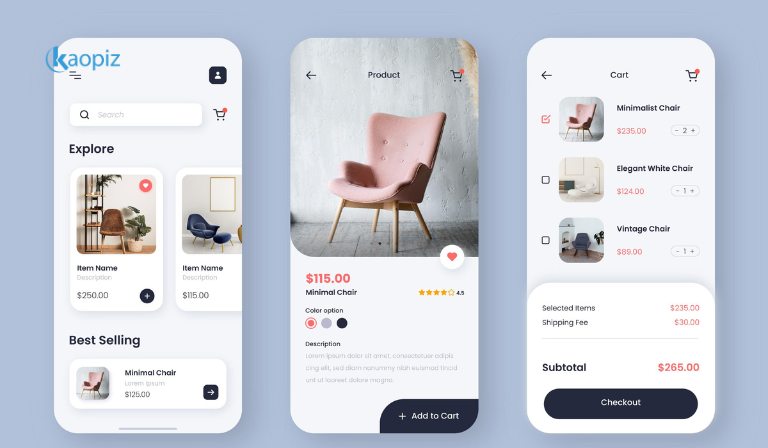
There are several common types of mobile applications, each suited to different business needs:
- Native mobile apps – Built specifically for iOS or Android, offering the best performance and access to device features
- Cross-platform apps – Developed once and deployed across multiple platforms using frameworks like Flutter or React Native
- Hybrid apps – Web-based apps wrapped in a native container, suitable for simpler use cases
- Progressive Web Apps (PWAs) – Web applications that deliver app-like experiences without app store installation
Each type offers distinct advantages in terms of performance, cost, and time-to-market.
Core Technologies & Concepts
Modern mobile app development relies on a combination of frontend, backend, cloud, and security technologies working together to deliver reliable and scalable applications. Understanding these core concepts helps businesses make informed technical decisions—even without deep engineering knowledge.
- Mobile development frameworks (Frontend): Apps are built using native technologies (Swift for iOS, Kotlin for Android) or cross-platform frameworks like Flutter and React Native to balance performance, cost, and time-to-market.
- Backend & APIs: The backend handles business logic, user data, authentication, and integrations. RESTful or GraphQL APIs connect the mobile app to databases, third-party services, and enterprise systems.
- Cloud infrastructure: Cloud platforms enable scalability, high availability, and easier maintenance. They support features such as auto-scaling, backups, monitoring, and continuous deployment.
- Data & analytics: Analytics tools track user behavior, performance, and errors, providing insights to improve features, UX, and overall app effectiveness.
- Security & compliance: Core security practices include encryption, secure authentication, role-based access control, and secure data storage—essential for meeting requirements such as PDPA in Singapore.
Together, these technologies form the technical foundation of a modern mobile application, ensuring performance, security, and long-term scalability.
Things to Know Before Building a Mobile App in Singapore
Before starting a mobile app project in Singapore, businesses should understand several market-specific factors that directly impact cost, timelines, and long-term success.
- Singapore is a mobile-first, digitally mature market: Users in Singapore have high expectations for app performance, design quality, and reliability. Apps tend to be fast, intuitive, and polished from day one—especially for customer-facing use cases.
- PDPA compliance is not optional: Any mobile app that collects or processes personal data must comply with Singapore’s PDPA. This affects authentication, data storage, access control, logging, and security architecture, and should be considered early in the development process.
- User experience standards are high: Singapore users compare new apps against established platforms like Grab, Shopee, and Singpass. Poor UX, slow load times, or unclear flows can lead to quick user drop-off, even if core functionality is strong.
- Local development talent is expensive and competitive: Hiring and retaining in-house mobile developers in Singapore can be costly and time-consuming. As a result, many businesses adopt offshore or hybrid development models to balance quality, speed, and budget.
- Integration is often required from day one: Many apps need to integrate with existing systems such as CRM, ERP, payment gateways, or government and third-party services. These integrations should be planned early to avoid delays and rework later.
Understanding these factors upfront helps Singapore businesses set realistic expectations, avoid common pitfalls, and choose the right development approach before committing time and budget to mobile app development.
The 7-Step Mobile App Development Process in 2026
Building a successful mobile application requires a structured and well-defined approach. Below is a simplified 7-step mobile app development process that reflects current best practices in 2026 and helps businesses move from idea to launch efficiently while managing risk and cost.
Step 1 – Discovery & Requirement Alignment
The discovery phase lays the foundation for the entire mobile app project. At this stage, businesses clarify their objectives, identify target users, and define what success looks like for the app. This includes understanding the problem the app is meant to solve, prioritizing core features, and aligning the product vision with business goals.
Key activities in this step typically include user and stakeholder interviews, requirement workshops, high-level market and competitor analysis, and early discussions around compliance, integrations, and technical constraints. By aligning requirements early and documenting clear scopes and success metrics, teams can reduce the risk of scope creep, budget overruns, and misaligned expectations later in the development process.
Step 2 – UX/UI Design
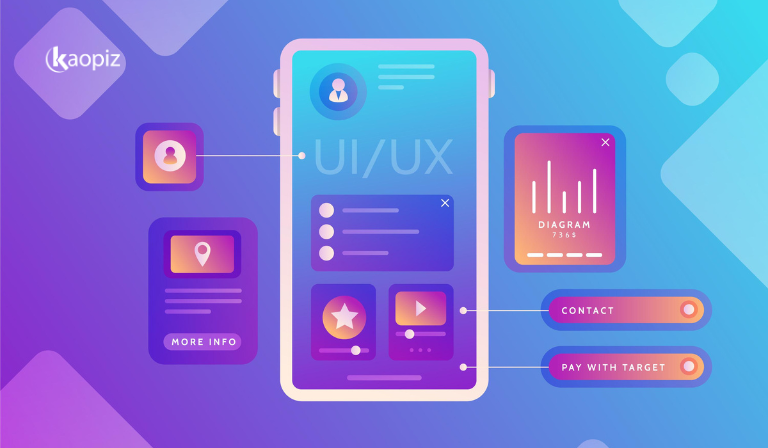
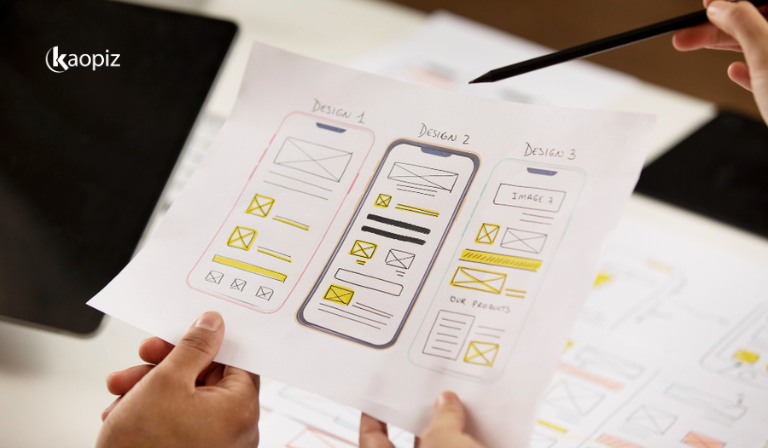
In this stage, ideas and requirements are translated into a clear user experience and visual interface. UX/UI design focuses on how users interact with the app, ensuring flows are intuitive, efficient, and aligned with user expectations—especially important in Singapore’s highly competitive, experience-driven market.

The process typically starts with wireframes to map user journeys and screen layouts, followed by interactive prototypes that allow stakeholders to preview and validate the app before development begins. This approach helps identify usability issues early, reduces rework during development, and ensures the final product delivers a consistent, user-friendly experience across devices.
Step 3 – Architecture & Tech Stack Planning
This step defines the technical foundation of the mobile application. Teams decide on the overall system architecture, select the appropriate technology stack, and plan how the app will scale, integrate, and remain secure over time. Key decisions include choosing between native or cross-platform development, defining backend architecture, selecting cloud infrastructure, and planning APIs and third-party integrations.
Security, performance, and compliance are also addressed at this stage—particularly critical for Singapore projects that must meet PDPA and enterprise security expectations. Making the right architectural and technology choices early helps avoid performance bottlenecks, integration issues, and costly redesigns later in the development lifecycle.
Step 4 – Development (Frontend + Backend)
During the development phase, the approved designs and technical plans are translated into a working mobile application. Frontend development focuses on building the user interface and interactions on iOS and Android, while backend development handles business logic, databases, APIs, integrations, and system security.
Development is typically carried out in iterative cycles, allowing teams to deliver features incrementally, test functionality early, and adapt to feedback without disrupting the overall timeline. Close collaboration between frontend and backend teams ensures the app performs reliably, integrates smoothly with existing systems, and meets the expected performance and security standards before moving into testing.
Step 5 – Quality Assurance & Security Testing
Quality assurance ensures the mobile application functions reliably across devices, operating systems, and real-world usage scenarios. This stage involves functional testing, usability testing, performance testing, and compatibility checks to identify bugs, stability issues, and user experience problems before launch.

For Singapore businesses, security testing is equally critical. Teams assess data protection measures, authentication flows, access control, and vulnerability risks to ensure compliance with PDPA and industry security standards. Thorough testing at this stage reduces post-launch failures, protects user data, and helps deliver a stable, secure app ready for production use.
Step 6 – Deployment to App Store / Play Store
Deployment is the stage where the mobile application is prepared, submitted, and published on the Apple App Store and Google Play Store. This includes final build preparation, environment configuration, app metadata setup, store listing optimization, and compliance checks to meet each platform’s review guidelines.
The process also involves managing certificates, provisioning profiles, and app store approvals, which can impact launch timelines if not handled correctly. Careful preparation and pre-submission testing help ensure a smooth review process, allowing the app to go live with minimal delays and reach users as planned.
Step 7 – Maintenance & Continuous Improvement
After launch, mobile app development continues through ongoing maintenance and continuous improvement. This stage focuses on monitoring app performance, fixing bugs, updating compatibility with new OS versions, and ensuring the app remains secure and stable over time.
Equally important is using real user feedback and analytics to guide enhancements. New features, UX improvements, and performance optimizations are introduced incrementally to keep the app relevant and aligned with evolving business goals and user expectations. Continuous improvement helps maximize return on investment and ensures long-term success in Singapore’s fast-moving digital landscape.
Mobile App Development Cost in Singapore (Brief Overview)
Mobile app development costs in Singapore typically range from SGD 10,000 to SGD 200,000+, depending on the project scope, complexity, and delivery model. Simple apps with limited features sit at the lower end, while complex platforms such as marketplaces or super apps require significantly higher budgets.
As a practical benchmark:
- Basic MVP: SGD 10,000–30,000
- Standard mobile app: SGD 30,000–80,000
- Enterprise or feature-rich platforms: SGD 80,000–200,000+
Cost variations are driven by several key factors, including feature complexity, UX/UI design requirements, platform choices (iOS, Android, or both), and the development approach—local agencies, freelancers, or offshore teams. In addition, ongoing expenses such as maintenance, cloud hosting, third-party services, and app store fees should be factored into the total investment.
With proper planning and the right development partner, businesses can control costs while still delivering a high-quality, scalable mobile application.
Key Success Considerations for Mobile App Projects
Before moving into development, businesses should align on several critical considerations that directly affect project outcomes, timelines, and return on investment.
- Clear business objectives and success metrics: Define what the app is meant to achieve—whether improving customer engagement, streamlining operations, or generating revenue—and establish measurable KPIs to guide decisions throughout the project.
- User-centric design and experience: Understanding target users, their behaviors, and pain points is essential. In Singapore’s competitive market, intuitive navigation, fast performance, and polished UX can determine whether users adopt or abandon an app.
- Technology and platform selection: Choosing the right platform (iOS, Android, or both) and development approach (native or cross-platform) impacts cost, performance, and scalability. Decisions should be based on business needs rather than trends alone.
- Security and regulatory compliance: Mobile apps handling personal or sensitive data must be designed with security in mind from the start. Compliance with regulations such as PDPA should be embedded into architecture, data handling, and access controls.
- Scalability and future growth: The app’s architecture should support future users, features, and integrations without requiring major rework. Planning for growth early reduces long-term technical and financial risk.
- Realistic budget and timeline planning: Clear scoping and phased delivery help control costs and manage expectations. Many successful apps start with a focused MVP and evolve based on usage data and feedback.
- Strong collaboration with the development partner: Transparent communication, regular progress updates, and shared ownership of outcomes are key to keeping the project on track and avoiding late-stage surprises.
As a result, addressing these considerations early increases predictability, minimizes risk, and significantly improves the likelihood of delivering a mobile application that meets both user and business expectations.
Common Challenges in Mobile App Development — And How to Overcome Them
Mobile app projects often face technical, operational, and business challenges that can impact delivery and user adoption. Identifying these risks early makes it easier to manage cost, timeline, and quality.
| Challenge | Impact | How to Overcome It |
|---|---|---|
| Performance issues | Poor user experience, low retention | Optimize architecture, test across real devices, monitor performance early |
| Security & PDPA compliance | Data breach risks, regulatory issues | Build security by design, apply encryption, conduct regular security testing |
| Scalability limitations | App cannot support growth | Use cloud-based, scalable architecture and modular design |
| Legacy system integration | Delays and system incompatibility | Plan integrations early, define clear APIs, test incrementally |
| High user expectations (SG market) | Fast user drop-off | Invest in UX/UI, run usability testing, iterate based on user feedback |
Therefore, addressing these challenges with the right planning and development practices helps ensure a stable, secure, and scalable mobile application that meets Singapore users’ expectations.
How to Choose the Right Mobile App Development Company in Singapore
Choosing the right mobile application development partner is a critical decision that impacts app quality, delivery speed, and long-term scalability. For Singapore businesses, the ideal partner should combine technical expertise, strong communication, and a reliable delivery process.
Key Criteria for Singapore Businesses
- Portfolio & relevant experience: Review past projects similar in scope, industry, or complexity to ensure the vendor understands your business context.
- Technical stack & capabilities: The team should be proficient in modern mobile technologies, backend systems, cloud infrastructure, and integrations.
- Communication & project management: Clear communication, regular updates, and structured project management are essential to avoid delays and misunderstandings.
- Security & compliance readiness: Experience with data security and PDPA compliance is especially important for apps handling user data.
- Timeline discipline: Look for partners with proven delivery track records and realistic milestone planning.
Local vs Offshore (Vietnam) Comparison
In practice, many Singapore businesses weigh the trade-offs between local and offshore development teams when planning mobile app projects. Singapore-based teams offer strong market familiarity and close collaboration but often come with higher costs and limited talent availability.
Vietnam, on the other hand, has emerged as a leading offshore destination, combining strong engineering capabilities with more competitive pricing and scalable team sizes.
As a result, a hybrid approach—local project coordination in Singapore supported by app development outsourcing teams in Vietnam—is increasingly popular for achieving quality, speed, and cost efficiency without compromising delivery standards.
Why Work with Kaopiz for Mobile App Development in Singapore
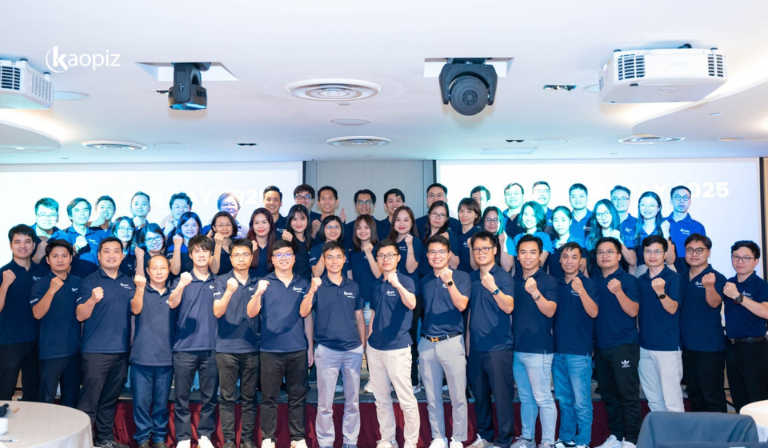
Kaopiz is a trusted mobile app development partner for Singapore businesses seeking a balance between quality, speed, and cost efficiency. With over a decade of experience, Kaopiz combines strong engineering capability with a structured delivery approach to support projects of varying complexity. We have delivered 1000+ successful projects for 250+ global clients with a 98% satisfaction rate.
Mr. Ariel Geifman, Founder of Felix AI: “The skill set that Kaopiz presented with all of its developers anywhere from iOS development AI with deep AI expertise, back-end development. So they had a full demonstrated skill set and they also in terms of the ability to present with exellent team members for the development process”.
Here are some key reasons why businesses choose to work with us:
- Proven engineering scale and expertise: Kaopiz operates with a team of 700+ engineers across mobile, backend, cloud, and emerging technologies, enabling flexible team allocation and on-time delivery.
- Singapore-focused delivery with regional advantage: Kaopiz understands local business expectations, compliance requirements such as PDPA, and the need for clear communication and accountability throughout the project lifecycle.
- Cost-efficient, high-quality development model: By leveraging strong engineering talent in Vietnam while maintaining structured project management and client-facing coordination, Kaopiz helps businesses optimize development costs without compromising technical quality.
- End-to-end mobile app development services: From discovery and UX/UI design to development, testing, deployment, and maintenance, Kaopiz supports the full mobile app lifecycle and adapts delivery based on business goals and timelines.
- Reliable processes and transparent communication: We follow agile development practices—helping clients stay informed and in control throughout the project.
Therefore, by partnering with Kaopiz, Singapore businesses gain a dependable mobile app development partner that prioritizes long-term success, scalability, and measurable business outcomes.
Mobile App Development Trends in 2026 (What’s Changing in Singapore)
Mobile app development in Singapore continues to evolve as businesses adopt new technologies to improve efficiency, user experience, and scalability. In 2026, several key app development trends are shaping how mobile applications are designed, built, and maintained in the Singapore market.
- AI-powered features as the norm: Apps increasingly use chatbots, personalization, and automation to improve engagement and efficiency.
- Cross-platform development at scale: Flutter and React Native help reduce time and cost while maintaining performance.
- Security and data privacy by design: PDPA compliance is now a baseline requirement across architecture and data handling.
- Cloud-native, scalable architectures: Cloud infrastructure supports growth, easier maintenance, and faster updates.
- Deeper ecosystem integration: Apps integrate seamlessly with payments, digital identity, analytics, and third-party services.
Therefore, staying aligned with these trends helps Singapore businesses build future-ready mobile applications that remain competitive, secure, and scalable in a fast-changing digital landscape.
Conclusion
To sum up, mobile app development in 2026 requires more than just technical execution—especially in Singapore’s highly competitive and regulated market. Success depends on clear planning, the right development approach, strong security and compliance practices, and a partner who understands both business and technology.
By following a structured development process, addressing key risks early, and aligning technology choices with long-term business goals, Singapore businesses can build mobile applications that are scalable, secure, and ready for growth.
FAQs
- How Long Does Mobile App Development Take?
- The timeline depends on the app’s complexity and scope. A basic MVP typically takes 8–12 weeks, while more complex or enterprise-level apps may require 4–6 months or longer, including testing and deployment.
- Native vs Cross-platform — Which Is Better?
- Native development delivers the best performance and deeper access to device features, while cross-platform development is faster and more cost-efficient for many use cases. The right choice depends on your performance needs, budget, and target audience.
- What Tech Stack Should I Choose?
- Tech stack selection should align with your business goals, scalability needs, and team capabilities. Common options include native iOS/Android, Flutter, React Native, and cloud-based backend services.
- How Do I Maintain And Update My App?
- App maintenance includes bug fixes, OS compatibility updates, performance monitoring, and releasing enhancements based on user feedback. Continuous maintenance ensures long-term stability and relevance.
- How Can I Ensure PDPA Compliance?
- PDPA compliance starts with secure system design, proper data handling, access control, and encryption. Regular security testing, clear user consent mechanisms, and compliance audits help ensure your app meets Singapore’s data protection requirements.
Trending Post



No Comments yet!