







How to Build an App with ChatGPT: 7-Step Guide
More Singapore businesses are exploring how to build an app with ChatGPT to automate workflows, improve customer support, and enhance productivity without expanding headcount. With the rapid growth of AI adoption across the country, tools like ChatGPT and the OpenAI API now make it possible to turn business processes into intelligent, conversational systems in a matter of weeks.
However, while the technology is accessible, building a reliable ChatGPT application requires thoughtful planning—architecture, PDPA compliance, security guardrails, model selection, and ongoing optimization. This guide provides a practical, business-focused overview to help Singapore companies get started with ChatGPT-powered app development in 2026.
Table of Contents
- What a ChatGPT-Powered App Actually Looks Like (Business-Friendly View)
- 7 Steps to Build an App with ChatGPT
- Why Singapore Companies Are Exploring ChatGPT-Powered Applications
- High-Value Use Cases for Singapore Businesses
- Architecture: How a ChatGPT App Works Behind the Scenes
- How Much Does It Cost to Build a ChatGPT App in Singapore?
- Build In-House, Hire Freelancers, or Partner with an Offshore Team?
- Key Challenges in Building ChatGPT Applications in Singapore (and How to Mitigate Them)
- Why Partner with Kaopiz for ChatGPT Application Development?
- Conclusion
- FAQs
What a ChatGPT-Powered App Actually Looks Like (Business-Friendly View)
A ChatGPT-powered application is not just an AI chatbot—it’s a combination of UI, backend logic, AI reasoning, and secure data handling. Below is a simple business-friendly breakdown of what these generative AI development solutions typically include and when ChatGPT may not be the right solution.
Core Components
A ChatGPT-powered application is built from a few essential building blocks that work together to deliver an intelligent, conversational experience.

At a high level, these components define what the system does, rather than how it is engineered behind the scenes.
- Interaction Interface: The surface where users communicate with the AI—such as a web chat widget, mobile app, internal portal, or integrated customer support tool. This layer focuses on user experience and accessibility, not technical workflows.
- Application Logic: The set of rules that determine how the system behaves, what actions it can perform, and how it responds in different business scenarios. This ensures the AI’s output aligns with company policies and operational requirements.
- AI Reasoning Engine (ChatGPT): The intelligence layer that interprets user input, understands intent, and generates useful responses. This component handles natural language tasks such as summarization, content generation, analysis, and decision support.
- Optional Knowledge Layer: A structure containing documents, FAQs, product information, reports, or internal knowledge that helps the AI provide more accurate, organization-specific answers. It enhances usefulness without requiring complex engineering.
- Execution Environment: The environment where the application runs—typically cloud-hosted—ensuring performance, reliability, and compliance. This includes basic hosting and runtime setup but does not go into infrastructure-level detail.
Capabilities ChatGPT Enables
- Natural Language Understanding & Reasoning: Converts user questions into structured actions, extracting intent and context to automate tasks like answering FAQs or analyzing documents.
- Content Generation & Summarization: Generates emails, reports, messages, and summaries that sound natural and professional—ideal for sales, customer service, and operations teams.
- Document Interpretation & Data Extraction: Reads contracts, invoices, forms, or support tickets, then extracts entities, identifies issues, and recommends actions.
- Multilingual Support for Regional Markets: Supports English, Chinese, Japanese, Malay, Vietnamese and more—helping Singapore companies automate communication across diverse teams and customers.
- Function Calling & Workflow Automation: Executes structured business actions (e.g., “create a ticket,” “draft a proposal,” “find the nearest available driver”) by interacting with APIs and company systems.
When ChatGPT Is NOT Enough
- Highly Regulated or Sensitive Data Use Cases: Scenarios involving medical records, financial transactions, or classified data require strict controls—ChatGPT alone is insufficient without a secure architecture and data anonymization.
- Real-Time or High-Precision Processing: Tasks like instant fraud detection, high-frequency operations, or sensor-based decision-making need specialized ML models, not GPT-based reasoning.
- Complex Enterprise Workflows with Many Edge Cases: ChatGPT may hallucinate or provide inconsistent output without guardrails; human-in-the-loop logic, validation layers, or deterministic rule engines are still required.
- Heavy Computational Tasks: Image processing, large-scale number crunching, or predictive analytics require dedicated ML models; ChatGPT excels at language and reasoning, not raw computation.
7 Steps to Build a ChatGPT App
Building a ChatGPT-powered application requires more than connecting to an API. Singapore businesses need a structured approach that balances user experience, compliance, technical design, and long-term scalability. Below is a practical framework to build an app with ChatGPT based on real implementation experience.
Step 1 — Define the Business Problem
Start by identifying the specific workflow or bottleneck you want to improve—customer support, document processing, reporting, training, or internal knowledge search.
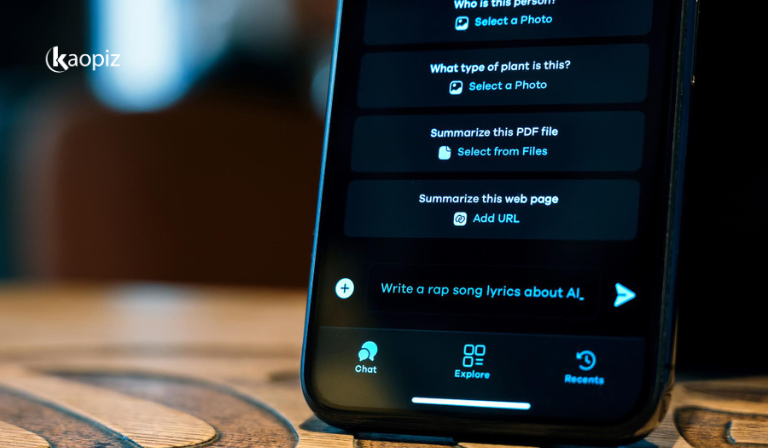
Define clear success metrics such as reduced response time, lower manpower dependency, or improved accuracy. A focused problem statement ensures the AI solution delivers measurable business value.
Step 2 — Design the User Journeys
Map out how users will interact with the AI across different scenarios. Consider questions, intent variations, fallbacks, edge cases, and when human intervention is needed.
Well-designed journeys ensure smooth, predictable experiences and help determine which features require conversational AI versus traditional rules-based logic.
Step 3 — Select the Right GPT Model
Choose a model based on complexity, cost, latency, and language needs.
- GPT-4o for advanced reasoning or multi-step workflows.
- GPT-4o-mini for cost-efficient, lightweight tasks.
- GPT-4.1 when accuracy and consistency are critical.
Selecting the correct model early helps balance performance with long-term operational costs.
Step 4 — Build the System Architecture
Define how the app will process inputs, apply business logic, store data, and interact with external systems like CRM, ERP, HRMS, or document repositories.
Decide whether you need a retrieval layer (vector database) for organization-specific information. This step sets the foundation for scalability, PDPA compliance, and security.
Step 5 — Implement GPT Logic
Develop prompt structures, role definitions, validation rules, and function-calling logic. Create templates for common tasks—summaries, classifications, extractions, recommendations—ensuring consistent outputs.
Add guardrails to prevent hallucinations, inappropriate responses, or misinterpretation of critical instructions.
Step 6 — Test for Reliability & Safety
Evaluate the app across real-world scenarios, including ambiguous questions, unexpected phrasing, and edge cases. Conduct latency checks, load testing, and PDPA compliance reviews.
Validate the AI’s output using predefined acceptance criteria, and implement human-in-the-loop processes when decisions carry operational or regulatory risk.
Step 7 — Deploy & Optimize
Deploy the application to a secure cloud environment and monitor usage patterns, token consumption, error rates, and user satisfaction.
Continuously optimize prompts, add new data sources, improve guardrails, and refine workflows. ChatGPT apps evolve over time—regular updates ensure stable performance and lower long-term costs.
Why Singapore Companies Are Exploring ChatGPT-Powered Applications
Singapore businesses are increasingly turning to build an app with ChatGPT as part of their digital transformation strategy. Rising operating costs, talent shortages, and increasing customer expectations have pushed organizations—especially SMEs and mid-sized companies—to look for scalable, intelligent automation solutions.
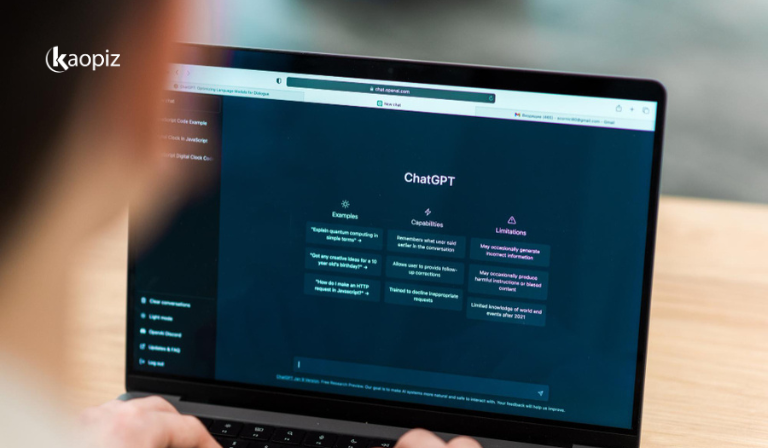
OpenAI’s ChatGPT offers a fast, cost-efficient way to enhance workflows, decision-making, and customer experience without the need to build complex AI models from scratch.
- Talent shortage & rising labor costs: Singapore has one of the tightest tech labor markets in Asia, making it expensive to hire engineers and support staff. ChatGPT-powered applications help companies automate routine tasks and maintain productivity without scaling headcounts.
- Strong multilingual requirements (EN–CN–JP–VN): Many Singapore businesses serve diverse customer groups across APAC. ChatGPT’s multilingual capabilities make it easy to deliver consistent customer support, translate content, and streamline internal communication.
- Increasing pressure to automate operations: Sectors like logistics, retail, healthcare, finance, and education face rising demand for speed and efficiency. ChatGPT enables automated document processing, AI-driven search, reporting, and customer service to reduce manual workload.
- Supportive AI adoption ecosystem: Government initiatives such as IMDA’s AI Verify and SMEs Go Digital encourage responsible AI use. This gives companies confidence to deploy ChatGPT-powered applications with clearer guidelines around PDPA and compliance.
- Faster time-to-market for digital solutions: Traditional AI projects require significant resources, but ChatGPT allows rapid prototyping and deployment. Businesses can test ideas, build MVPs, and launch production-ready AI tools in weeks instead of months.
High-Value Use Cases for Singapore Businesses
Singapore companies are prioritizing automation, efficiency, and multilingual customer support—creating strong demand for ChatGPT-powered applications. Let’s explore the most practical, high-impact use cases across industries.
AI Customer Service Assistants
- Automate first-level support across web, mobile, WhatsApp, or internal chat, reducing manual workload for customer-facing teams.
- Provide accurate, context-aware responses in English, Chinese, Malay, Japanese, or Vietnamese, meeting Singapore’s multilingual customer expectations.
- Integrate with CRM or ticketing systems to create, update, and route support cases automatically, improving response speed and consistency.
Internal Knowledge Search Bots
- Replace outdated intranets and shared folders by letting employees ask natural-language questions and instantly search SOPs, PDFs, manuals, and training documents.
- Reduce dependency on senior staff by providing centralised, AI-driven knowledge retrieval, improving onboarding and operational efficiency.
- Ensure organisation-specific accuracy using RAG (Retrieval-Augmented Generation) to pull responses from verified internal documents.
AI Document Processing & Workflow Automation
- Combine OCR with ChatGPT to extract data from invoices, forms, delivery orders, contracts, and handwritten documents, reducing manual data entry.
- Automate workflows such as approvals, summaries, compliance checks, and classification to accelerate internal processes.
- Ideal for logistics, finance, healthcare, and HR teams that handle large volumes of repetitive document tasks.
AI Sales & Marketing Assistants
- Generate personalized proposals, product descriptions, emails, and reports in minutes, increasing productivity for lean sales teams.
- Analyze customer conversation history or CRM data to recommend follow-up actions, prioritize leads, or craft tailored messaging.
- Support content teams by creating SEO content drafts, campaign ideas, and social media copy, maintaining brand consistency at scale.
Industry-Specific Use Cases
- Healthcare: AI triage assistants, patient FAQ bots, medical document summarization (PDPA-compliant with guardrails).
- Logistics: Automated shipment updates, document validation, customs form extraction, and exception handling.
- Education: AI tutoring systems, automated grading comments, and administrative task automation.
- Finance: KYC document checks, compliance summarization, and customer advisory assistants with rule-based guardrails.
- Retail & eCommerce: Product tagging, catalogue generation, customer Q&A, and AI-driven shopping support.
Architecture: How a ChatGPT App Works Behind the Scenes
A ChatGPT-powered application may look simple on the surface, but under the hood it operates through multiple coordinated layers. Each part plays a critical role in ensuring the system is secure, scalable, and capable of delivering accurate responses.
Frontend Layer
The frontend is what users interact with—typically a web application, mobile app, or embedded chat interface. It captures user messages, sends them to the backend, and displays the AI’s responses in real time.

A well-designed frontend ensures smooth, intuitive conversations and supports features like input validation, user authentication, and session management.
Backend Layer
The backend acts as the “brain controller” of the system, orchestrating the entire workflow behind each request. It applies business logic, manages conversation context, validates inputs, and communicates with external systems such as CRMs, ERPs, or databases.
This layer ensures the AI’s behavior aligns with organizational rules, compliance requirements, and security policies.
ChatGPT API Layer
At the core sits the ChatGPT API integration, responsible for natural language understanding, reasoning, and generating responses. The API transforms user input into structured insights or actions—such as drafting an email, summarizing a report, or interpreting a document.
Developers define prompts, roles, and function-calling rules here to ensure accuracy, consistency, and safe outputs.
Retrieval-Augmented Generation (RAG)
RAG enhances ChatGPT by allowing it to access and reason over company-specific knowledge. Documents such as SOPs, product manuals, PDFs, and past tickets are converted into searchable embeddings stored in a vector database.
When a user asks a question, the system retrieves relevant information and feeds it into the model so responses are accurate, grounded, and tailored to the organization.
Cloud & DevOps
The entire system is deployed and managed on cloud platforms such as AWS, Azure, or GCP. This layer handles scalability, observability, logging, and PDPA-compliant data protection.
DevOps pipelines automate testing, deployment, monitoring, and cost optimization—ensuring the application runs smoothly, securely, and with minimal downtime.
How Much Does It Cost to Build a ChatGPT App in Singapore?
Building a ChatGPT app in Singapore typically costs between SGD 15,000 and SGD 70,000 for most business applications, while enterprise-grade solutions with advanced workflows, RAG, and multi-system integrations can exceed SGD 100,000. Ongoing costs include API usage, cloud hosting, and maintenance, which usually range from SGD 100 to several thousand dollars per month, depending on volume.
Below is a practical breakdown to help businesses estimate budgets and plan effectively.
Development Cost Ranges
| Project Type | Estimated Cost | What’s Included |
|---|---|---|
| Simple MVP | SGD 15,000 – 30,000 | Basic chatbot or FAQ assistant, single-function tool, minimal UI, no deep integrations. Ideal for small pilots or proof-of-concept initiatives. |
| Mid-Complexity App | SGD 40,000 – 70,000 | Multi-step workflows, CRM/ERP integrations, role-based access, simple RAG (document search), and moderate UI/UX requirements. |
| Enterprise-Grade Solution | SGD 100,000+ | Advanced RAG, workflow automation, PDPA compliance, SSO, scalable cloud deployment, audit logs, analytics dashboard, and multi-system integration. |
Note: Singapore-based development tends to be higher due to labor costs. Many companies use a hybrid model—local consulting + offshore engineering—to reduce total cost.
ChatGPT API Usage Costs
API costs are based on tokens used (input + output). Factors influencing cost:
- Length of prompts and documents
- Complexity of tasks
- Frequency of usage (e.g., daily customer queries)
- Model choice (GPT-4o vs GPT-4o-mini)
Typical monthly ranges:
- Light usage: SGD 30 – 300
- Moderate usage: SGD 300 – 1,500
- High-volume enterprise: SGD 1,500 – 10,000+
Choosing the right model and optimizing prompt structure significantly reduces recurring costs.
Additional Cost Considerations
- Cloud hosting (AWS/Azure/GCP): SGD 80 – 500/month depending on scale.
- Vector database for RAG: SGD 50 – 300/month (Pinecone, Weaviate, or in-house).
- Monitoring & logging tools: SGD 50 – 200/month.
- Maintenance & enhancements: Usually 15–25% of project cost per year.
These ensure the application remains stable, secure, and aligned with evolving business needs.
Build In-House, Hire Freelancers, or Partner with an Offshore Team?
Singapore companies building an app with ChatGPT often face a key decision: Should we build internally or work with external talent? Each approach has benefits and trade-offs depending on budget, timeline, and long-term strategy. The table below shows a practical comparison to guide your decision on ChatGPT app development.
| Option | Key Advantages | Drawbacks | Best For |
|---|---|---|---|
| Building In-House | Full control over codebase, security, and data handling. Strong long-term alignment with internal AI strategy. | Hiring AI/ML, cloud, and full-stack engineers in Singapore is expensive and highly competitive. Slower initial ramp-up. | Large enterprises with established tech teams and stable budgets. |
| Hiring Freelancers | Fast, flexible, and cost-effective for small tasks or prototypes. No long-term commitment required. | Quality varies significantly. Limited experience with enterprise AI, DevOps, and security requirements. Hard to scale beyond MVP. | Small experiments or one-off MVPs with minimal complexity. |
| Offshore Development Team (Kaopiz) | Local consulting + offshore engineering for optimal cost and quality. Access to AI, cloud, full-stack, and solution architecture expertise. | Requires coordination and clear project management (which Kaopiz provides). | SMEs and mid-sized companies needing scalable AI apps with strong technical oversight. |
Key Takeaways (with Industry Perspective):
- Building in-house offers full control, but the high cost and talent shortage in Singapore make it challenging for most companies to sustain long-term AI development internally.
- Freelancers work well for quick MVPs, but they rarely provide the reliability, security, or architectural depth required for production-grade ChatGPT applications.
- From an outsourcing perspective, companies achieve the best results when partnering with a specialized offshore team—because you gain access to AI engineers, cloud experts, and solution architects at a fraction of Singapore hiring costs.
- For most SMEs and mid-sized organizations, outsourcing strikes the ideal balance between speed, quality, and affordability—ensuring your ChatGPT initiative moves from concept to production with far less risk.
Key Challenges in Building ChatGPT Applications in Singapore (and How to Mitigate Them)
While ChatGPT offers powerful opportunities for automation and AI integration efficiency, Singapore businesses must navigate a set of technical, compliance, and operational challenges to ensure their applications are secure, reliable, and cost-effective.
| Challenge | Description | Mitigation |
|---|---|---|
| PDPA & Data Privacy | Risk of exposing sensitive data to external AI services. | Mask/anonymize data; use encryption and secure gateways. |
| Prompt Injection | Harmful inputs may lead to unsafe or incorrect outputs. | Add guardrails, system prompts, and validation filters. |
| Token Cost Management | High usage or long prompts can escalate API costs. | Optimize prompts, use smaller models, cache, apply RAG. |
| Legacy System Integration | Older ERPs/CRMs limit smooth AI integration. | Use middleware/API wrappers or modernize systems gradually. |
| Model Hallucinations | AI may generate confident but inaccurate results. | Use structured outputs, retrieval grounding, human checks. |
| Latency & Performance | Heavy workloads can slow down response times. | Use lightweight models, caching, streaming, scalable cloud. |
Why Partner with Kaopiz for ChatGPT Application Development?
Singapore businesses choosing to build ChatGPT-powered applications need a partner who can balance technical depth, cost efficiency, and enterprise-grade reliability. As one of the leading AI app development companies in Singapore, Kaopiz brings a unique combination of engineering capability and regional expertise that makes AI adoption faster, safer, and more scalable.
- Engineering-First Company With 700+ Experts: Kaopiz brings a strong bench of AI/ML engineers, solution architects, and full-stack developers who can translate business requirements into reliable, production-ready systems.
- Proven Experience Across Singapore, Japan, and APAC: We understand the operational, compliance, and cultural expectations of regional markets—especially the PDPA, multilingual support, and enterprise IT environments common in Singapore.
- Deep Expertise in GPT, RAG, OCR, and Cloud: Our teams build end-to-end generative AI solutions, including ChatGPT integration services, document understanding, vector databases, workflow automation, and cloud-native deployments on AWS/Azure/GCP.
- ISO 9001 & ISO 27001 Certified: Our processes follow international standards for quality and information security—critical for organizations working with sensitive data or regulated operations.
- Fast Delivery Through 4–8 Week MVP Cycles: We focus on rapid prototyping and iterative development, enabling businesses to validate ideas quickly and scale confidently based on real-world feedback.
- Flexible Engagement Models: Whether you need a full project team, staff augmentation, or a long-term dedicated AI squad, Kaopiz provides scalable options tailored to your workload and budget.
- End-to-End Ownership: From discovery and UX design to architecture, development, testing, cloud deployment, and ongoing optimization—Kaopiz delivers complete lifecycle support for ChatGPT-powered applications.
If you’re exploring how to build an app with ChatGPT, we’d be happy to help you evaluate the best approach.
Conclusion
ChatGPT-powered applications offer Singapore businesses a fast, practical way to automate tasks, enhance customer service, and improve operational efficiency. But turning AI into real business value requires thoughtful planning—clear problem definition, the right architecture, strong safeguards, and ongoing optimization.
With a structured approach and the right technical partner, companies can build an app with ChatGPT confidently and cost-effectively. Whether you’re exploring a small MVP or planning a broader AI initiative, Kaopiz is here to help you take the next step with clarity and confidence.
FAQs
- How Long Does It Take to Build a ChatGPT App?
- Most ChatGPT-powered MVPs take 4–8 weeks, depending on complexity, integrations, and workflow design. Enterprise-grade solutions with RAG, PDPA compliance, and multi-system integration may require 8–16 weeks.
- Do I Need My Own Data or Can ChatGPT Work Out-of-the-Box?
- ChatGPT works out-of-the-box for general tasks like summarization or conversation. For company-specific knowledge—such as policies, SOPs, or product details—you’ll need a retrieval layer (RAG) so the AI can provide accurate, organization-specific answers.
- What Industries Benefit Most from GPT Apps?
- Industries with heavy documentation or customer interaction see the most value, including logistics, finance, healthcare, education, retail, and professional services. GPT apps excel in automating support, search, reporting, and document-driven workflows.
- What’s the Difference Between ChatGPT API and Fine-Tuning?
-
ChatGPT API: Uses OpenAI’s general-purpose model with prompts and instructions. No training required.
Fine-tuning: Customizes the model with your data for improved accuracy in specialized tasks. Most Singapore businesses start with API + RAG, then consider fine-tuning if needed. - How Much Does API Usage Cost?
- Costs depend on model type and volume. Light usage may cost SGD 30–300/month, while high-volume enterprise workloads may reach SGD 1,500–10,000+. Prompt optimization and using smaller models can significantly reduce ongoing costs.
3 Replies to “How to Build an App with ChatGPT: 7-Step Guide”
Leave a Comment
Trending Post


Pingback:What is DeepSeek AI? Everything You Need to Know in 2025
Pingback:What is OpenAI? Everything You Need to Know (2025 Guide)
Pingback:What is Generative AI? How It Works & Its Applications