



Web System Development for Singapore Businesses (2026 Guide)
As Singapore accelerates its digital transformation, businesses are outgrowing basic websites, off-the-shelf SaaS tools, and manual workflows. Rising manpower costs, stricter PDPA requirements, and the need for seamless departmental collaboration are pushing companies toward enterprise web system development—custom platforms built to streamline operations, integrate data, and automate end-to-end processes.
Unlike simple web apps, these systems support complex workflows, multi-role access, and deep integration with ERP, CRM, HR, finance, and other mission-critical tools. And with many Singapore companies adopting a hybrid model—local project ownership combined with Vietnam offshore engineering—custom web system development is becoming more accessible and cost-effective.
This guide provides a clear, 2026-ready overview of how Singapore businesses can plan, build, secure, and scale their web systems efficiently.
Table of Contents
- What Is Web System Development?
- Benefits of Web System Development
- Web System vs Web App vs Website — Key Differences
- Core Components of Modern Enterprise Web Systems
- Recommended Tech Stacks for Enterprise Web Systems (2026)
- The Enterprise Web System Development Process (Step-by-Step)
- PDPA & Security Requirements for Web Systems in Singapore
- How Much Does Web System Development Cost in Singapore? (2026 Benchmark)
- Engagement & Contract Models for Enterprise Web System Projects
- Why Singapore Companies Choose Vietnam Offshore for Web System Projects
- Why Kaopiz Is a Trusted Web System Development Partner
- Conclusion
- FAQs
What Is Web System Development?
Web system development refers to the process of designing and building large-scale, multi-module platforms that support an organization’s core operations. Unlike simple web applications that handle a single task or workflow, a web system connects multiple departments, automates business processes, centralizes data, and integrates with existing tools such as ERP, CRM, HRMS, POS or accounting systems.

These systems are engineered to reflect the true internal complexity of a business—its roles, approval processes, compliance needs, and operational data flows. For Singapore companies, where PDPA web system, cybersecurity requirements, and manpower constraints are critical concerns, these system provide the structure needed to operate efficiently, securely, and at scale.
A modern enterprise web system often includes:
- multi-role permission controls
- workflow automation and approval routes
- integration with multiple internal/external systems
- real-time dashboards and reporting
- audit logs and compliance features
- scalable web system architecture for future expansion
Benefits of Web System Development
Web system integration offers advantages far beyond what off-the-shelf SaaS tools or standalone apps can provide.
- Streamlined Multi-Department Operations: Automate manual processes, reduce duplicated work, and eliminate reliance on spreadsheets or disconnected tools.
- Centralized and Integrated Data: Connect CRM, ERP, HR, finance, procurement and operations data into a single source of truth.
- Customized Workflow Automation: Every organization operates differently. Custom systems allow businesses to build workflows that match their real-world operations—something SaaS tools often cannot fully support.
- Improved Productivity & Reduced Manpower Costs: A critical benefit for Singapore companies facing labor shortages and rising employment costs.
- PDPA-Compliant Data Management: Custom systems allow organizations to design data flows, access controls, and storage policies aligned with Singapore’s PDPA requirements.
- Better Scalability for Long-Term Growth: As the business grows, new modules, APIs, workflows, or integrations can be added without vendor lock-in.
- Full Ownership & Full Control: Source code, data management, features, and infrastructure are fully customizable and owned by the company.
Web System vs Web App vs Website — Key Differences
Although commonly confused, web system vs web app vs website serve very different purposes—especially in enterprise environments.
| Feature | Website | Web App | Web System |
|---|---|---|---|
| Purpose | Information | Single-task interaction | Enterprise operations |
| Scope | Public content | Limited workflows | Multi-department workflows |
| Complexity | Low | Medium | High |
| Integration | Minimal | Selective | Extensive (ERP/CRM/HRMS) |
| Security | Basic | Moderate | Advanced + PDPA |
| Scalability | Low | Medium | High |
Core Components of Modern Enterprise Web Systems
Modern enterprise web systems are designed to connect departments, streamline operations, and maintain secure, PDPA-compliant data flows. While each organization’s needs differ, most systems are built on several core components.
- Multi-Module Architecture: HR, Finance, Operations, Inventory, CRM, and other modules operate on a unified platform, allowing businesses to scale or add features easily.
- Role-Based Access Control (RBAC): User permissions ensure employees access only what they need, improving security and aligning with PDPA requirements.
- Workflow Automation: Automated approval flows replace manual emails and spreadsheets—for processes like leave requests, procurement, job assignments, and service tickets.
- Integration Layer: Systems connect seamlessly with ERP, CRM, HRMS, accounting tools, payment gateways, and inventory systems to eliminate data duplication and unify operations.
- Centralized Database & Reporting: A single source of truth powers real-time dashboards, enabling faster, data-driven decision-making across departments.
- Audit Logs & Compliance Controls: Every action is tracked for transparency—essential for PDPA compliance, internal audits, and regulated industries.
- Notifications & Background Processing: Automated reminders, task alerts, and scheduled jobs help maintain smooth daily operations.
- Cloud-Native Infrastructure (Singapore Region): Hosting on AWS, Azure, or GCP Singapore ensures scalability, high availability, reduced latency, and compliance with local data protection requirements.
Recommended Tech Stacks for Enterprise Web Systems (2026)
Modern enterprise web systems require technology stacks that are scalable, secure, and flexible enough to support multi-department workflows and long-term growth.

Backend Frameworks (Enterprise-Grade)
These technologies power core logic, workflow automation, integrations, and security.
- Java / Spring Boot — Ideal for large, mission-critical enterprise systems
- .NET / .NET Core — Strong in corporate environments using Microsoft ecosystems
- Node.js — Excellent for microservices, APIs, and real-time operations
- Python (Django / FastAPI) — Great for data-heavy systems and AI-driven workflows
- Laravel (PHP) — Cost-efficient for SMEs needing fast development cycles
Frontend Frameworks
Ensure smooth user experiences across different roles and departments.
- React.js — The most widely used UI library for scalable enterprise interfaces
- Angular — Strong for structured, enterprise-grade applications
- Vue.js — Lightweight and flexible for modular systems
Databases & Storage
Handle large volumes of operational, financial, and workflow data.
- PostgreSQL / MySQL — Reliable relational databases for enterprise use
- MongoDB — Flexible NoSQL option for complex or unstructured data
- Redis — Improves system performance with caching
- Elasticsearch — Used for enterprise search, logs, and analytics
System Architecture Choices
Depending on scale and complexity:
- Monolithic Architecture — Simpler and cost-efficient for smaller systems
- Microservices Architecture — Best for large, fast-evolving enterprise systems
- Event-Driven Architecture — Ideal for high-volume operations and real-time updates
- API-First Design — Ensures flexibility for integrations and future modules
Cloud & Infrastructure (Singapore Region)
Local hosting ensures PDPA compliance, lower latency, and secure operations.
- AWS Singapore Region (ap-southeast-1)
- Microsoft Azure Southeast Asia (Singapore)
- Google Cloud Singapore
- Kubernetes & Docker for containerized, scalable deployments
- CI/CD pipelines (GitHub Actions, GitLab CI, Azure DevOps) for faster releases
Integration & Middleware Tools
Critical for connecting ERP, CRM, POS, HRMS, and third-party services.
- REST & GraphQL APIs
- Message queues (Kafka, RabbitMQ)
- iPaaS connectors (n8n, Make.com, Mulesoft)
- Custom integration middleware for legacy systems
The Enterprise Web System Development Process (Step-by-Step)
Below is the end-to-end process most Singapore companies follow when building custom systems.
- Business Analysis & Requirements Mapping: Map current workflows, bottlenecks, and manual processes across departments. Identify user roles, approval flows, and PDPA requirements to define the system’s operational blueprint.
- System Architecture & Module Planning: Define modules, data structures, API endpoints, and integration needs. Choose the right architecture (monolithic, microservices, event-driven) to ensure long-term scalability and security.
- UI/UX Prototyping (Role-Based): Create wireframes for each user group—HR, finance, operations, managers—to validate workflows early. This reduces rework and ensures alignment with business logic.
- Backend, Frontend & API Development: Build system logic, database operations, user interfaces, and API services. Agile development helps deliver modules incrementally while accommodating evolving requirements.
- Integration with Existing Systems: Connect the web system to ERP, CRM, HRMS, accounting software, payment gateways, or identity systems. This ensures data flows smoothly and eliminates duplicated work.
- Security Implementation & PDPA Compliance: Apply encryption, RBAC, secure API authentication, and audit logs. Host data in Singapore cloud regions to align with PDPA and strengthen data protection.
- QA, UAT & Performance Testing: Conduct functional, integration, and load testing to ensure stability. Department heads validate real workflows during UAT to confirm system readiness.
- Deployment (Singapore Cloud Region): Launch the system on AWS, Azure, or GCP Singapore for low-latency access and compliance. Set up monitoring tools for performance and uptime tracking.
- Training, Documentation & Onboarding: Train staff on new workflows and dashboards. Provide clear documentation to support adoption and future maintenance.
- Continuous Improvement & Feature Enhancements: Add new modules, automations, or integrations as business needs to evolve. Enterprise systems grow over time, supporting long-term digital transformation.
PDPA & Security Requirements for Web Systems in Singapore
Any enterprise web system—especially those managing HR, customer, financial, or operational information—must be designed with PDPA and cybersecurity best practices in mind.
- Data Collection & Purpose Limitation: Systems must only collect data necessary for business operations, and the purpose must be clearly defined. Features should prevent over-collection of sensitive information.
- Access Control & Role Permissions: Web systems must implement strict RBAC, ensuring each user only accesses data relevant to their role. This minimizes internal data leakage and supports PDPA accountability.
- Data Encryption (In Transit & At Rest): Sensitive data must be encrypted using industry standards (TLS, AES-256). This protects information during transfers between modules and when stored in databases.
- Audit Trails & Activity Logs: Systems must record who accessed data, what changes were made, and when. These logs are essential for PDPA investigations, internal audits, and compliance reporting.
- Secure Data Storage (Singapore Cloud Region): Hosting data in AWS, Azure, or GCP Singapore ensures compliance with data residency expectations and reduces exposure to cross-border transfer risks.
- User Consent & Data Retention Controls: Systems should track consent when required and allow custom data retention rules. Automatic purging or anonymization helps avoid unnecessary long-term storage.
- Incident Response & Data Breach Handling: Web systems must include mechanisms to detect anomalies, flag suspicious access, and support rapid response actions. PDPA mandates breach notifications within 3 days.
- API & Integration Security: ERP, CRM, HRMS, or third-party integrations should use secure API tokens, IP whitelisting, and throttling. Poorly secured APIs remain one of the biggest enterprise threat vectors.
- Backup, Recovery & High Availability: Regular encrypted backups, redundancy, and disaster recovery planning ensure business continuity and data protection—even during system failures.
- Penetration Testing & Vulnerability Scans: Routine security tests (internal or third-party) help uncover weaknesses early. Many Singapore enterprises conduct penetration testing annually or before major releases.
How Much Does Web System Development Cost in Singapore? (2026 Benchmark)
Web system development costs in Singapore can vary widely depending on the system’s scope, complexity, and integration requirements. To help businesses plan their budgets, here’s a realistic 2026 benchmark based on current market rates in Singapore and offshore web development alternatives.
Cost Comparison: Singapore Vendor vs Vietnam Offshore
| Role/Service | Singapore Market Rate | Offshore Vietnam Rate* |
|---|---|---|
| Senior Developer | SGD 80–160 / hour | SGD 25–55 / hour |
| Project Manager / BA | SGD 120–180 / hour | SGD 35–60 / hour |
| Full Enterprise System (large-scale) | SGD 80,000 – 350,000+ | SGD 30,000 – 150,000+ |
* Offshore rate estimates assume a Vietnam-based development team working under Singapore-time zone coordination.
Cost Drivers & Timeline Benchmarks
Here are the key factors that influence the cost of web system development:
- Number of modules (HR, Finance, CRM, Procurement)
- Depth of system integrations (ERP, Odoo, POS, legacy systems)
- Workflow & automation complexity (multi-department)
- Security/PDPA compliance and audit-logging requirements
- Cloud infrastructure (Singapore region) & high-availability setups
- Long-term maintenance and scalability considerations
Timeline Benchmarks:
- Small custom web system: ~ 3-4 months
- Mid-sized enterprise system: ~ 6-9 months
- Complex multi-module system: ~ 10–12+ months
ROI and Value-Considerations
Investing in a custom web system is more than the upfront cost:
- Reduces repetitive manual work (spreadsheets/emails)
- Improves data integrity across departments
- Ensures compliance and audit readiness (especially under PDPA)
- Delivers scalability — 5-year+ value rather than short-term app
Engagement & Contract Models for Enterprise Web System Projects
Enterprise web system projects often involve complex workflows, integrations, and evolving requirements. Choosing the right engagement model helps ensure predictable timelines, stable budgets, and effective collaboration between the business and the development team.
| Contract Model | Best For | Pros | Cons |
|---|---|---|---|
| Fixed-Price | Small systems or clearly defined scopes | Predictable budget, clear deliverables | Limited flexibility, costly if requirements change |
| Time & Materials (T&M) | Evolving requirements, complex systems | High flexibility, easy to scale features | Budget may fluctuate depending on changes |
| Dedicated Offshore Development Team | Long-term enterprise systems, continuous development | 40–60% cost savings, consistent team capacity | Requires ongoing management & communication |
| Hybrid SG–VN Delivery Model | Companies needing local touchpoints with offshore cost benefits | Strong alignment, fast communication, cost-efficient | Slightly higher cost than full offshore |
| Retainer / Maintenance Contract | Post-launch enhancements & support | Ensures stability, security updates, quick issue resolution | Ongoing monthly/annual cost |
| Milestone-Based Delivery | Enterprises with strict approval workflows | Clear progress checkmarks, controlled budget releases | Requires well-planned milestones & documentation |
Why Singapore Companies Choose Vietnam Offshore for Web System Projects
To embrace web development trends, many Singapore organizations are adopting a hybrid development model—local project ownership with offshore engineering teams. Vietnam has emerged as one of the most preferred destinations for enterprise system development, especially for mid-market and large companies.
- Significant Cost Efficiency (40–60% Savings): Vietnam offers highly competitive engineering rates compared to Singapore. This enables companies to build multi-module systems without overspending on manpower or development cycles.
- Strong Technical Talent for Enterprise Systems: Vietnamese engineers excel in Java, .NET, Node.js, cloud, and system integrations—skills required for complex enterprise-grade platforms used by finance, logistics, retail, and manufacturing companies.
- Faster Team Scaling & Resource Availability: While Singapore faces talent shortages and rising employment costs, Vietnam provides quick access to skilled developers, QA engineers, BAs, and DevOps specialists, allowing faster project kick-off.
- High English Proficiency & Strong Work Culture: Vietnam’s IT workforce is accustomed to working with global clients—including Japan, the U.S., and Singapore—ensuring smooth communication and high-quality delivery standards.
- Experience with Complex, Multi-Module Systems: Vietnam’s outsourcing industry regularly handles enterprise systems with deep workflows, automation, and heavy integration requirements—similar to what Singapore businesses need.
- Familiarity with Compliance & Security Standards: Developers frequently work with clients requiring strict data protection, audit trails, and secure architectures, making them well-suited for PDPA-aligned systems hosted on Singapore cloud regions.
- Hybrid Model Works Perfectly: Singapore clients benefit from local collaboration (workshops, requirement clarification, stakeholder alignment) combined with Vietnam engineering for faster, more cost-efficient execution.
Why Kaopiz Is a Trusted Web System Development Partner
Singapore companies choose Kaopiz not only for competitive offshore engineering but for our proven ability to deliver enterprise-grade, secure, and scalable web systems. With over a decade of experience and a hybrid Singapore–Vietnam delivery model, Kaopiz provides the right balance of quality, speed, and cost efficiency.
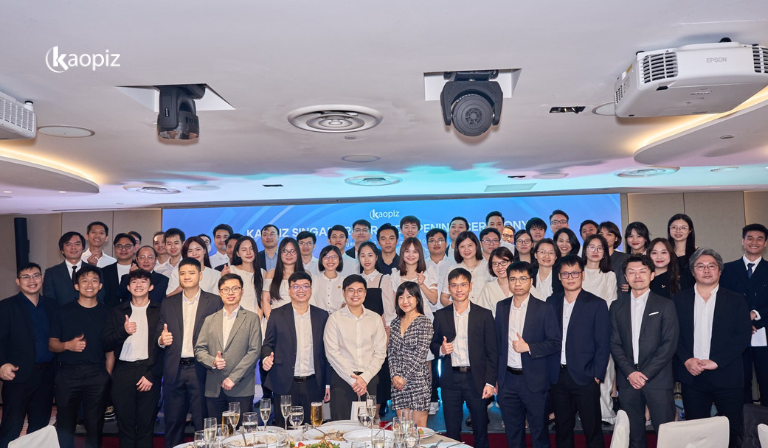
- 11+ Years of Enterprise System Experience: Kaopiz has built complex systems for finance, manufacturing, retail, education, and logistics—ranging from workflow automation to ERP-lite and multi-module business platforms.
- 700+ Skilled Engineers (Java, .NET, Node, AI, Cloud): Our team specializes in the technologies required for large-scale systems, integrations, and modern architectures such as microservices and event-driven designs.
- Local Singapore Presence + Offshore Vietnam Execution: Requirement workshops, communication, and alignment are handled locally, while development and QA are executed by a high-capacity engineering team in Vietnam.
- Strong Background With High-Standard Markets: Kaopiz has over a decade of experience delivering systems for Japanese enterprises—known for strict requirements, quality expectations, and complex workflows.
- PDPA-Aware and Security-Focused Architecture: We design systems with RBAC, audit logs, secure APIs, encryption, and Singapore-region cloud hosting—ensuring compliance and enterprise-grade protection.
- End-to-End Delivery Capability: From business analysis, UI/UX, and system architecture to development, QA, deployment, and long-term maintenance, Kaopiz covers the full lifecycle.
- Proven Success With Multi-Module, Multi-Integration Systems: Our portfolio includes integrations with ERP, CRM, HRMS, POS, payment gateways, and custom middleware—common needs for Singapore enterprises.
- Long-Term Partnership Mindset: We support clients beyond launch with continuous enhancements, new modules, and performance improvements to keep the system aligned with business growth.
Ready to modernize your operations? Contact Kaopiz to discuss your web system requirements.
Conclusion
As Singapore moves deeper into digital transformation, web system development has become essential for managing complex operations, ensuring PDPA compliance, and connecting departments through a unified, data-driven platform. Unlike basic websites or single-purpose web apps, enterprise web systems provide the scalability, automation, and integration needed to support long-term business growth.
Whether you are replacing manual processes, integrating multiple tools, or modernizing legacy infrastructure, building a custom web system offers a clear path toward higher efficiency and better decision-making. And with the rising cost of local development, the hybrid Singapore–Vietnam model provides unmatched value—combining local alignment with high-quality offshore engineering.
FAQs
- How Is a Web System Different from a Web App?
- A web app usually supports a single workflow or function, such as booking or customer login. A web system is a multi-module, enterprise platform that automates internal operations, connects departments, and integrates with systems like ERP, CRM, or HRMS.
- How Long does It Take to Develop a Web System?
- Most custom web systems take 4–12 months, depending on the number of modules, integration complexity, security requirements, and how quickly workflows are finalized during analysis.
- How Much Does a Custom System Cost in Singapore?
- Enterprise systems typically range from SGD 80,000 to SGD 350,000+ with local vendors. With a Singapore–Vietnam hybrid model, companies can expect 30–60% cost savings, bringing the range down to SGD 30,000–150,000+.
- Does Kaopiz Provide End-to-End Development + Maintenance?
- Yes — Kaopiz provides full end-to-end delivery, including business analysis, UI/UX, development, QA, deployment, and long-term maintenance. We also support enhancements, new modules, and system optimization after launch.
- Can Kaopiz Integrate the System with ERP/CRM/Odoo?
- Absolutely. Kaopiz has extensive experience with enterprise integrations — ERP, CRM, HRMS, POS, accounting software, Odoo, SAP, and other platforms using APIs, middleware, or custom connectors.
Trending Post

No Comments yet!