














What Is Codex? OpenAI’s Code-Writing AI Explained for Businesses (2026)
As Singapore businesses accelerate digital transformation, the demand for faster, smarter, and more cost-efficient software development is growing rapidly. From fintech platforms to healthcare systems and enterprise tools, companies are now exploring AI-powered solutions to reduce development time while maintaining quality and security.OpenAI Codex is a code-generating AI model designed to understand natural language and convert it into functional code. It helps developers automate repetitive tasks, write scripts, build applications, and integrate systems more efficiently.
In this 2026 guide, we explain what Codex is, how it works, and why it matters for Singapore businesses—along with real-world use cases, benefits, risks, and how companies can adopt it safely through the right AI development partners.
Table of Contents
- What Is Codex from OpenAI?
- Why Singapore Businesses Should Care About OpenAI Codex
- How Does Codex Work?
- Benefits of Using Codex for Businesses
- Codex Use Cases in Singapore
- Limitations and Challenges
- Why Singapore Companies Choose Offshore AI Partners for Codex-Based Solutions
- How to Choose the Right Offshore AI Development Partner
- Why Partner with Kaopiz for Codex and AI Integration
- The Future of Codex and AI Coding Assistants (2026–2030 Predictions)
- Conclusion
- FAQs
What Is Codex from OpenAI?
Codex from OpenAI is an artificial intelligence model designed specifically for understanding and generating computer code. It translates natural language instructions—such as “create a login API” or “write a data validation script”—into functional code across multiple programming languages, including Python, JavaScript, Java, SQL, and more.
Unlike general-purpose AI models, Codex is trained on a vast corpus of public code repositories, technical documentation, and programming patterns. This allows it to understand software logic, syntax, dependencies, and best practices, making it capable of writing, completing, explaining, and refactoring code.
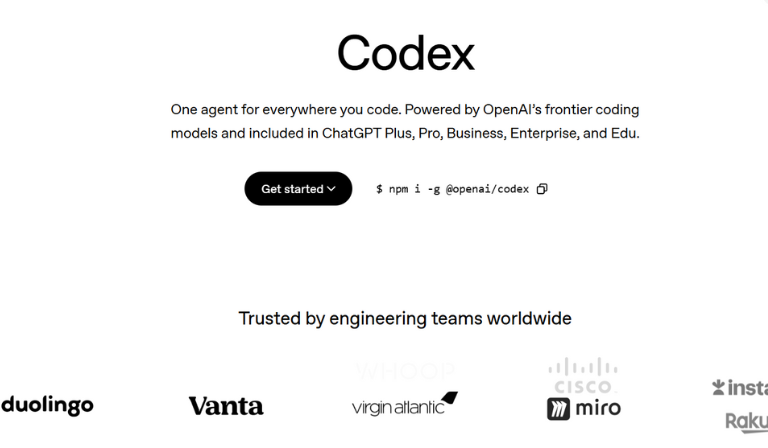
For businesses, this AI model acts as an AI coding assistant rather than a replacement for developers. It helps automate repetitive tasks, accelerate development cycles, reduce human errors, and support faster prototyping. Developers can use Codex to generate boilerplate code, build APIs, create scripts, debug logic, and integrate with existing systems.
In enterprise environments like Singapore—where speed, security, and scalability are critical—Codex is increasingly used as a productivity tool embedded into workflows, IDEs, and internal platforms, enabling teams to deliver software faster without compromising quality.
Why Singapore Businesses Should Care About OpenAI Codex
Singapore businesses operate in one of Asia’s most competitive and innovation-driven markets. With rising development costs, limited tech talent, and strict regulatory expectations, companies must build and ship software faster—without compromising quality, security, or compliance. OpenAI Codex directly addresses these pressures.
Key reasons Singapore companies should care about Codex:
- Faster software development: Codex converts natural language into working code, reducing time spent on repetitive tasks like boilerplate creation, API setup, script writing, and test generation.
- Lower development costs: By automating routine coding tasks, Codex reduces engineering hours and helps teams deliver more with fewer resources—critical in Singapore’s high-cost talent market.
- Rapid prototyping and innovation: Product teams can quickly test ideas, build MVPs, and validate features—especially useful for fintech, health tech, SaaS, and e-commerce sectors.
- Improved developer productivity: Developers can focus on system design, architecture, and business logic while Codex handles repetitive or predictable coding work.
- Alignment with Singapore’s Smart Nation and AI-first initiatives: Codex supports Singapore’s push toward AI adoption, automation, and digital resilience when implemented with proper governance.
- Enterprise scalability: Codex can be integrated into workflows, internal tools, and CI/CD pipelines, helping businesses scale faster without expanding teams aggressively.
For Singapore businesses, Codex is not just a developer tool—it is a strategic enabler that improves speed, efficiency, and innovation across the software lifecycle.
How Does Codex Work?
OpenAI Codex works by converting natural language instructions into executable code. Instead of manually writing every line, users describe what they want—such as “create a REST API endpoint” or “validate user input”—and Codex generates the corresponding code automatically.

At a high level, Codex functions through these core steps:
- Natural language understanding: Codex interprets human instructions written in plain English, understanding the intent, logic, and expected outcome.
- Code generation: It translates those instructions into working code across multiple programming languages such as Python, JavaScript, Java, SQL, and more.
- Context awareness: Codex can analyze existing codebases, comments, and dependencies to generate context-aware suggestions instead of isolated snippets.
- Code completion and refactoring: It can finish incomplete code, suggest optimizations, and restructure existing logic to improve readability and performance.
- Error detection and debugging support: Codex helps identify syntax errors, logic flaws, and inconsistencies, speeding up troubleshooting.
Behind the scenes, Codex is trained on a large dataset of public code, programming documentation, and software patterns. This enables it to recognize common structures such as authentication flows, database queries, API calls, and automation scripts.
In enterprise environments, Codex is typically integrated into:
- Developer IDEs (code editors)
- Internal tools and dashboards
- CI/CD pipelines
- Automation platforms
- Low-code or no-code systems
For Singapore businesses, this means Codex can act as a real-time coding assistant, helping teams build faster while maintaining consistency, documentation quality, and coding standards.
Benefits of Using Codex for Businesses
OpenAI Codex offers more than just faster coding—it enables businesses to transform how software is built, maintained, and scaled. For companies in fast-moving markets like Singapore, Codex delivers measurable operational and strategic advantages.
Key benefits include:
- Accelerated time-to-market: Codex automates repetitive coding tasks such as boilerplate generation, API creation, and script writing, enabling teams to release features and products faster.
- Higher developer productivity: Developers spend less time on routine coding and more time on architecture, logic, and problem-solving—leading to better-quality systems.
- Reduced development costs: By minimizing manual effort and shortening development cycles, Codex helps businesses achieve more with fewer engineering hours.
- Improved code consistency: Codex follows standardized patterns and structures, reducing inconsistencies across large codebases and improving maintainability.
- Faster prototyping and experimentation: Product teams can quickly test ideas, build MVPs, and validate new features—essential for innovation-driven sectors like fintech, healthtech, and SaaS.
- Scalable development workflows: Codex can be embedded into CI/CD pipelines, internal tools, and developer environments, making it easier to scale output without scaling headcount.
- Better documentation and readability: Codex can generate comments, summaries, and documentation, making systems easier to understand and maintain over time.
- Support for legacy modernization: Businesses can use Codex to refactor old code, migrate systems, and update outdated frameworks more efficiently.
For businesses, Codex is not just a productivity tool—it is a strategic accelerator that improves speed, reduces costs, and enables innovation across the entire software lifecycle.
Codex Use Cases in Singapore
OpenAI Codex is already being explored across multiple industries in Singapore, where speed, compliance, and scalability are critical. By automating routine development tasks and accelerating innovation, Codex helps businesses modernize systems while reducing operational overhead.
Below are key use cases by industry:
FinTech: Automating Compliance Scripts and Report Generation
Singapore’s fintech sector operates under strict regulatory frameworks such as MAS guidelines and PDPA. Codex helps teams move faster while maintaining governance.

Common applications include:
- Automatically generating compliance scripts and validation rules
- Creating data transformation pipelines for regulatory reporting
- Writing audit logs and monitoring workflows
- Building secure APIs for payment processing and KYC systems
- Automating unit tests for financial logic
This allows fintech teams to focus on product innovation while Codex handles repetitive coding tasks.
Healthcare: Building Secure Data Pipelines for Patient Analytics
Healthcare organizations in Singapore must ensure data security, accuracy, and traceability. Codex supports faster development of data infrastructure and analytics tools.
Use cases include:
- Generating ETL pipelines for patient data processing
- Creating dashboards for clinical insights
- Writing scripts for data anonymization and compliance
- Automating integrations between EMR systems and analytics platforms
- Building AI-assisted triage or monitoring tools
Codex helps healthcare teams prototype and deploy solutions faster while maintaining privacy and compliance standards.
Retail: Integrating AI Recommendation Engines
Singapore’s retail and e-commerce sector is highly competitive and data-driven. Codex enables rapid experimentation and personalization.
Typical applications:
- Writing backend logic for recommendation engines
- Automating inventory and pricing scripts
- Generating API connectors for CRM, ERP, and payment systems
- Creating A/B testing frameworks
- Building analytics dashboards for customer behavior
This helps retailers launch features faster and improve customer experiences.
Manufacturing: Creating IoT Scripts and Maintenance Dashboards
Manufacturers in Singapore increasingly rely on IoT, automation, and predictive maintenance. Codex simplifies development across these systems.
Key use cases:
- Writing scripts for IoT sensor data ingestion
- Generating predictive maintenance logic
- Creating monitoring dashboards
- Automating alerts and reporting workflows
- Integrating factory systems with cloud platforms
Codex reduces the time needed to build and iterate on these systems, improving operational efficiency.
Limitations and Challenges
While OpenAI Codex offers powerful capabilities, it is not a plug-and-play solution. Businesses—especially in regulated markets like Singapore—must understand its limitations before adopting it at scale.
Key challenges include:
- Not always 100% accurate: Codex can generate incorrect, incomplete, or inefficient code. Human review is always required, especially for mission-critical systems.
- Limited understanding of business logic: Codex understands programming patterns, not business intent. Without clear instructions, it may misinterpret complex domain rules.
- Security and compliance risks: Automatically generated code may contain vulnerabilities if not properly reviewed. For industries like fintech and healthcare, strict governance is essential.
- Data privacy concerns: Businesses must ensure proprietary code, credentials, and sensitive data are not unintentionally exposed when using AI-powered tools.
- Lack of architectural judgment: Codex can write code, but it cannot design scalable system architectures or make strategic technology decisions.
- Dependency on prompt quality: Poorly written prompts lead to poor outputs. Teams must learn how to communicate effectively with AI tools.
- Integration complexity: Embedding Codex into enterprise workflows, CI/CD pipelines, and internal systems requires experienced engineering and governance frameworks.
For Singapore businesses, the key takeaway is this: Codex should be treated as an AI assistant, not a replacement for developers. When paired with skilled engineers, security controls, and proper processes, its benefits far outweigh its risks.
Why Singapore Companies Choose Offshore AI Partners for Codex-Based Solutions
While OpenAI Codex can significantly accelerate development, successfully integrating it into enterprise systems requires more than just access to the tool. It demands strong engineering expertise, governance frameworks, security controls, and AI workflow design. This is why many Singapore companies choose to work with Vietnam offshore AI development partners for Codex-based solutions.
Key reasons include:
- Cost efficiency without sacrificing quality: Hiring and retaining senior AI engineers in Singapore is expensive. Offshore partners offer access to highly skilled talent at a more sustainable cost, helping businesses scale faster.
- Access to specialized AI and automation expertise: Codex works best when integrated into existing workflows, pipelines, and platforms. Offshore teams often specialize in AI-driven development, MLOps, API integration, and enterprise automation.
- Faster time-to-market: With dedicated teams working across time zones, development can continue around the clock—shortening release cycles and speeding up delivery.
- Scalable development capacity: Offshore partners allow businesses to quickly scale teams up or down based on project needs, without long-term hiring commitments.
- Established governance and QA processes: Reputable offshore partners implement structured review, testing, and security protocols—critical when working with AI-generated code.
- Support for legacy modernization: Many Singapore enterprises still run on legacy systems. Offshore teams can use Codex to refactor, migrate, and modernize systems more efficiently.
- Focus on core business strategy: By outsourcing execution, in-house teams can focus on product vision, compliance, and business growth instead of low-level coding tasks.
For Singapore businesses, offshore partnerships turn Codex from a standalone tool into a fully governed, enterprise-ready development accelerator—one that balances speed, cost, and quality.
How to Choose the Right Offshore AI Development Partner
Choosing the right offshore AI development partner is critical when working with tools like OpenAI Codex. While Codex can accelerate coding, it still requires strong human oversight, system design expertise, and enterprise-grade governance.

First, look for proven AI and automation experience. Your partner should have hands-on expertise in AI-assisted development, workflow automation, and system integration—not just traditional outsourcing.
Second, evaluate their enterprise engineering capabilities. Codex-generated code must fit into real-world architectures, including cloud platforms, microservices, CI/CD pipelines, and legacy systems.
Third, ensure strong security and compliance readiness. This is especially important for Singapore businesses operating under PDPA, MAS guidelines, and other regulatory frameworks.
Fourth, check whether they have a clear governance process for AI-generated code. This includes structured reviews, automated testing, and human validation before deployment.
Fifth, prioritize industry experience. A partner familiar with your domain—fintech, healthcare, retail, or manufacturing—can guide Codex outputs toward real business logic, not just syntactically correct code.
Finally, assess their communication, scalability, and long-term support model. The best partners function as an extension of your internal team, not just a vendor.
For Singapore companies, the right offshore partner turns Codex into a secure, scalable, and enterprise-ready accelerator rather than a risky experiment.
Why Partner with Kaopiz for Codex and AI Integration
Successfully adopting OpenAI Codex requires more than just technical execution. It demands strong governance, enterprise-grade security, and deep expertise in AI-driven workflows. Kaopiz helps Singapore businesses turn Codex from an experimental tool into a secure, scalable, and production-ready solution.
Key reasons companies choose Kaopiz as an AI development company in Singapore:
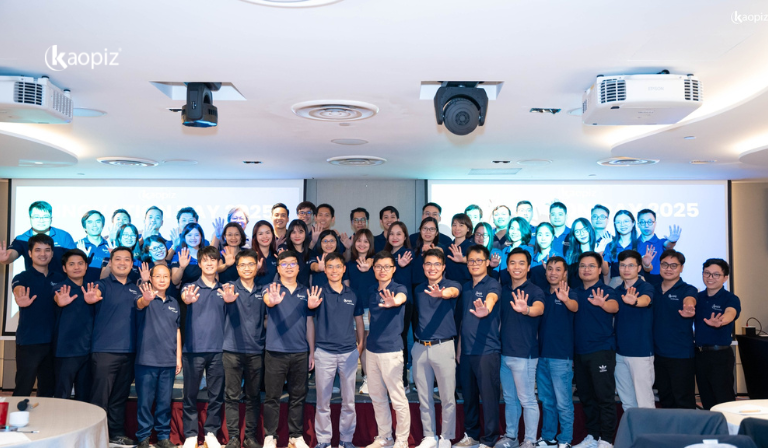
- Proven AI and enterprise development expertise: With 700+ engineers and 11+ years of global delivery experience, Kaopiz specializes in AI, cloud-native systems, and large-scale enterprise software.
- AI-first development workflows: We embed Codex into real engineering pipelines—CI/CD, internal tools, QA flows, and automation systems—so it enhances productivity without sacrificing quality.
- Strong security and compliance practices: Our teams follow structured review processes, data protection policies, and secure coding standards, essential for PDPA, MAS, and industry-specific regulations.
- Human-in-the-loop governance: Every AI-generated output is validated, tested, and reviewed by experienced engineers to ensure correctness, maintainability, and security.
- Seamless enterprise integration: We integrate Codex-generated code into existing platforms, APIs, cloud environments, and legacy systems.
- Cost-efficient offshore delivery model: Our offshore teams provide high-quality engineering at optimized costs, helping Singapore businesses scale faster.
- Long-term partnership mindset: We operate as an extension of your in-house team, providing continuous optimization, maintenance, and innovation.
For Singapore businesses, Kaopiz is not just a development vendor—we are a strategic AI and software innovation partner that enables safe, scalable, and enterprise-grade Codex adoption.
The Future of Codex and AI Coding Assistants (2026–2030 Predictions)
AI coding assistants like OpenAI Codex are evolving from simple code generators into intelligent development copilots. Instead of only writing snippets, future versions will help design system architecture, enforce coding standards, automate testing, and manage entire development workflows.
In the coming years, AI tool is expected to become more context-aware and enterprise-ready. It will better understand large codebases, business logic, and organizational rules—making it more reliable for complex, long-term projects.
Another key shift will be deeper integration into enterprise toolchains. Codex-like models will work natively inside IDEs, CI/CD pipelines, cloud platforms, and DevOps systems, enabling real-time code generation, validation, and optimization.
Security and governance will also improve. Future AI coding tools will include built-in compliance checks, vulnerability scanning, and policy enforcement—critical for regulated markets like Singapore.
Finally, AI assistants will reshape how teams collaborate. Developers will spend less time writing routine code and more time on design, strategy, and innovation, while AI handles repetitive execution.
For Singapore businesses, this means AI coding assistants will become a core part of the software development stack, not just a productivity tool.
Conclusion
OpenAI Codex is reshaping how software is built—enabling faster development, lower costs, and smarter automation. For Singapore businesses operating in competitive and highly regulated environments, Codex offers a powerful way to accelerate innovation without compromising quality.
However, Codex is most effective when implemented with the right governance, security controls, and enterprise integration strategies. This is why many companies choose to work with experienced offshore AI partners who can turn AI-generated code into production-ready systems.
With the right approach, Codex is not just a coding tool—it becomes a strategic accelerator for digital transformation. If your business is exploring AI-powered development, now is the time to adopt Codex responsibly, securely, and at scale.
FAQs
Trending Post

No Comments yet!