















AI vs Machine Learning: What’s the Difference and Which One Does Your Business Need?
Artificial Intelligence (AI) and Machine Learning (ML) are often used as if they mean the same thing. In reality, they are closely related — but not interchangeable. Understanding the difference is essential for businesses making technology investment decisions.
Machine Learning is a subset of AI. While AI refers to the broader concept of systems that simulate human intelligence, ML focuses specifically on algorithms that learn from data and improve over time. The distinction may sound technical, but it has real implications for strategy, cost, and implementation.
In this guide, we clarify the key differences between AI and Machine Learning, explore practical business use cases, and help you determine which approach best fits your organization’s goals.
Table of Contents
- AI vs Machine Learning — A Quick Definition
- AI vs Machine Learning: Key Differences Explained
- AI vs Machine Learning in Real-World Business Use Cases (Singapore Context)
- When Should a Company Choose AI vs Machine Learning?
- Why Partner with Kaopiz for AI and Machine Learning Solutions?
- Conclusion
- FAQs
AI vs Machine Learning — A Quick Definition
Before diving deeper, it’s important to clarify what each term actually means. Although they are closely connected, Artificial Intelligence and Machine Learning operate at different levels.
What Is Artificial Intelligence?
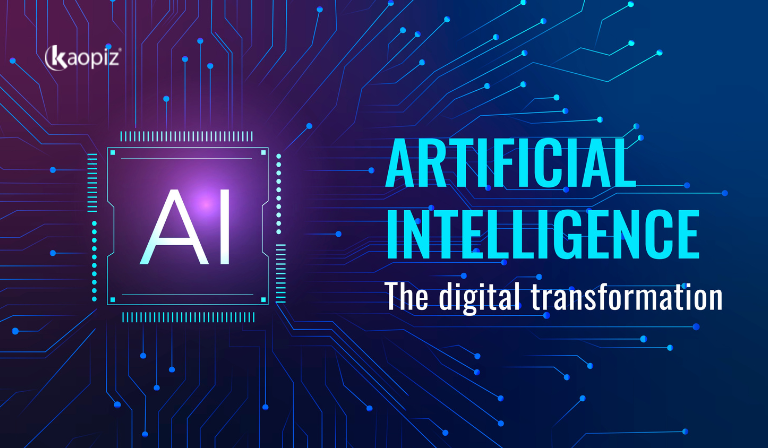
AI is the broader umbrella concept that refers to systems designed to simulate human intelligence. The goal of AI is to enable machines to perform tasks that typically require human reasoning, decision-making, perception, or language understanding.
AI can include:
- Rule-based systems (pre-programmed logic and decision trees)
- Machine Learning models
- Natural Language Processing (NLP)
- Computer Vision
- Robotics and intelligent automation systems
In essence, AI focuses on making machines “smart” — whether through predefined rules or learning mechanisms.
What Is Machine Learning?
Machine Learning is a subset of AI that enables systems to learn from data and improve performance over time without being explicitly programmed for every scenario.
Instead of relying solely on fixed rules, ML models:
- Analyze historical data
- Identify patterns
- Train algorithms
- Generate predictions or decisions based on new inputs
In other words, ML powers the “learning” capability within AI systems.
Key takeaway:
- AI is the broader concept of machines simulating human intelligence.
- Machine Learning is a subset of AI focused on learning from data.
- All ML is AI — but not all AI is Machine Learning.
AI vs Machine Learning: Key Differences Explained
Although AI and ML are closely connected, they serve different roles within a technology strategy. For businesses evaluating digital transformation initiatives, understanding these differences helps clarify scope, required resources, and expected outcomes.
Below are the key distinctions explained across five critical dimensions.
| Criteria | Artificial Intelligence (AI) | Machine Learning (ML) |
|---|---|---|
| Scope | Broader concept | Subset of AI |
| Approach | Rule-based + learning techniques | Data-driven models |
| Data Dependency | Optional | Mandatory |
| Primary Use Cases | Automation, reasoning, intelligent systems | Prediction, classification, pattern detection |
| Complexity Level | Strategic layer | Technical implementation layer |
Scope
Artificial Intelligence is the broader concept. It encompasses any technique that enables machines to mimic human intelligence — including reasoning, decision-making, perception, and language understanding. AI initiatives often align with long-term automation and innovation strategies.
Machine Learning is a subset of AI. It focuses specifically on enabling systems to learn from historical data and improve performance over time. ML typically solves targeted, data-driven problems rather than enterprise-wide transformation.
Approach
AI systems can combine rule-based logic (explicitly programmed instructions) with learning-based techniques. For example, a business process automation system may rely on predefined rules alongside predictive models.
Machine Learning relies purely on data-driven models. Instead of being explicitly programmed for every scenario, ML algorithms identify patterns in training data and use those patterns to generate predictions or classifications.
Data Dependency
AI does not always require large datasets. Rule-based AI systems can operate using structured logic and predefined workflows.

Machine Learning, however, is fundamentally dependent on data. The performance of ML models directly correlates with the quality, volume, and relevance of the training data.
Primary Use Cases
AI is commonly applied to:
- Intelligent automation
- Virtual assistants and chatbots
- Process orchestration
- Robotics and smart systems
Machine Learning is typically used for:
- Demand forecasting
- Fraud detection
- Customer segmentation
- Recommendation systems
- Predictive maintenance
Complexity Level
AI operates at a strategic layer, often shaping enterprise-wide transformation initiatives.
Machine Learning functions at a technical implementation layer, powering specific intelligent capabilities within a broader AI system.
AI vs Machine Learning in Real-World Business Use Cases (Singapore Context)
Understanding the difference between AI and Machine Learning becomes far more practical when viewed through real-world applications. In Singapore’s digitally advanced economy — shaped by initiatives such as the Smart Nation Singapore programme — organizations are not simply experimenting with AI; they are deploying it to drive measurable business and societal outcomes.
Below are examples of how AI and Machine Learning play distinct but complementary roles across key sectors.
Financial Services (Singapore Fintech Ecosystem)
As one of Asia’s leading financial hubs, Singapore’s fintech ecosystem relies heavily on data-driven technologies.
Fraud Detection (Machine Learning)
Machine Learning models analyze large volumes of transactional data to detect anomalies and suspicious behavior in real time. By learning from historical fraud patterns, ML systems continuously improve detection accuracy while reducing false positives. This makes ML particularly valuable for banks, digital payment providers, and insurance firms.
Chatbot Advisory & Intelligent Support (AI)
AI-powered virtual assistants support customers onboarding, financial product inquiries, and automated advisory services. While ML may power certain predictive elements within these systems, the broader AI framework integrates natural language processing, rule-based decision flows, and workflow automation to deliver a seamless customer experience.

In this sector, ML enhances risk intelligence, while AI enables end-to-end customer engagement.
Smart Manufacturing
Singapore’s advanced manufacturing sector increasingly integrates intelligent systems to improve efficiency and resilience.
Predictive Maintenance (Machine Learning)
ML models analyze sensor data from equipment to predict potential failures before they occur. By identifying subtle performance deviations, companies can reduce downtime, optimize maintenance schedules, and extend asset lifespan.
Intelligent Automation (AI Orchestration)
Beyond prediction, AI systems can coordinate automated workflows across production lines — integrating robotics, quality inspection systems, and supply chain data. This orchestration layer reflects the broader AI strategy, where multiple technologies work together to simulate decision-making at scale.
Here, ML solves targeted predictive problems, while AI shapes the overall intelligent production ecosystem.
Smart Nation & Public Sector
Singapore’s urban infrastructure initiatives rely on intelligent technologies to enhance efficiency and quality of life.
Computer Vision for Traffic Monitoring (Machine Learning + AI)
Deep learning models process video feeds to detect traffic congestion, accidents, or rule violations. These ML capabilities sit within larger AI systems that support automated alerts and response coordination.
Data-Driven Urban Planning (Machine Learning)
ML models analyze historical transport, demographic, and infrastructure data to forecast urban demand patterns. This enables more informed decisions in resource allocation and policy planning.
Across industries, the distinction becomes clear: Machine Learning delivers data-driven intelligence for specific use cases, while AI provides the broader architecture that integrates these capabilities into scalable, strategic systems. For Singapore enterprises, leveraging both effectively is key to long-term competitiveness.
When Should a Company Choose AI vs Machine Learning?
Understanding the theoretical differences between AI and Machine Learning is only the first step. The more important question for business leaders is: which approach should we invest in? The answer depends on your objectives, data maturity, and transformation roadmap.

At the decision-making stage, organizations must move beyond buzzwords and evaluate practical requirements — data availability, integration complexity, ROI expectations, and long-term strategy.
Choose Machine Learning If
- You have large, structured datasets: Machine Learning performs best when there is sufficient historical data available for training models. If your organization already collects transactional, operational, or behavioral data, ML can unlock predictive value from it.
- You need high prediction accuracy: ML is ideal for use cases where forecasting, classification, or pattern detection directly impacts business performance — such as demand forecasting, fraud detection, customer churn prediction, or dynamic pricing.
- You want measurable, short-to-mid-term ROI: Because ML projects typically focus on specific problems, they often produce quantifiable results. Improved accuracy, reduced losses, optimized inventory, or higher conversion rates can be directly measured and tied to financial outcomes.
Choose Broader AI Solutions If
- You need workflow automation across departments: If your goal is to automate decision flows, customer journeys, or operational processes, a broader AI architecture may be required. This can include rule-based systems, NLP, computer vision, and ML working together.
- You want multi-system orchestration: AI solutions are often designed to integrate multiple technologies, platforms, and data sources. This orchestration layer enables intelligent coordination rather than isolated prediction.
- You aim for long-term digital transformation: AI strategies typically align with enterprise-wide innovation goals. Rather than solving a single problem, they reshape how systems interact, how decisions are made, and how value is created.
Why Partner with Kaopiz for AI and Machine Learning Solutions?
Choosing between AI and Machine Learning is not just a technical decision — it’s a strategic one. The real challenge lies in translating business objectives into scalable, production-ready solutions. That’s where the right technology partner becomes critical.

With 12+ years of experience, 1,000+ completed projects, 1,000+ technology professionals, and 500+ global clients, Kaopiz brings both scale and execution capability to enterprise AI initiatives. Our team supports organizations from feasibility assessment to full-scale deployment, ensuring every solution aligns with measurable business outcomes.
From Feasibility to Scalable Deployment
We follow a structured, results-driven approach:
- Business problem definition and AI feasibility analysis
- Data assessment and architecture planning
- Machine Learning model development and validation
- System integration with enterprise platforms
- Deployment, monitoring, and performance optimization
Whether your objective is predictive analytics powered by Machine Learning or a broader AI-driven automation strategy, we focus on delivering secure, scalable, and production-ready systems — not just prototypes.
Built for Enterprise Growth
For companies operating in competitive markets such as Singapore, execution speed and cost efficiency are key. Kaopiz combines Agile delivery with strong engineering governance to ensure:
- Transparent collaboration and communication
- Cost-effective offshore development
- High-quality code standards and security compliance
- Seamless integration with cloud and enterprise ecosystems
Rather than choosing AI or Machine Learning in isolation, we help organizations identify the right mix — and implement it effectively to drive sustainable growth.
Conclusion
Artificial Intelligence and Machine Learning are related, but they serve different purposes. AI represents the broader strategy of building intelligent, automated systems, while Machine Learning focuses on data-driven models that generate predictions and insights.
The right choice depends on your business goals. If you need measurable, prediction-based outcomes, Machine Learning may be the starting point. If you aim for enterprise-wide automation and long-term transformation, a broader AI approach is more suitable.
In many cases, combining both delivers the strongest results — turning intelligent technology into real business value.
FAQs
- Is Machine Learning the Same As Artificial Intelligence?
- No. Machine Learning is a subset of Artificial Intelligence. AI is the broader concept of machines simulating human intelligence, while ML focuses specifically on algorithms that learn from data to make predictions or decisions. All Machine Learning is AI, but not all AI uses Machine Learning.
- Is AI Better han Machine Learning?
- Neither is “better” — they serve different purposes. Machine Learning is ideal for prediction-based tasks such as forecasting or fraud detection. AI, as a broader system, is more suitable for workflow automation, intelligent assistants, and multi-system orchestration. The right choice depends on your business objectives.
- Do You Need Large Amounts of Data to mplement AI?
- Not always. Rule-based AI systems can function without massive datasets. However, if your solution relies on Machine Learning, high-quality and sufficient data is essential for training accurate models.
- Which Is More Expensive to Implement: AI or Machine Learning?
- Costs vary depending on complexity, integration requirements, and infrastructure. Machine Learning projects can be cost-efficient when focused on specific use cases. Broader AI initiatives may require higher investment due to system orchestration, integration, and long-term transformation planning.
- Can Small and Medium-sized Businesses Benefit from AI or Machine Learning?
- Yes. SMEs can start with targeted Machine Learning use cases such as customer analytics or demand forecasting. As digital maturity grows, they can gradually expand into broader AI-driven automation strategies to scale operations efficiently.
Trending Post

No Comments yet!