












How to Approach Web E-commerce Development (2026 Guide)
In Singapore’s competitive e-commerce market, success is no longer determined by how fast you launch—but by how you approach web e-commerce development from the start. By 2026, rising development costs, higher customer expectations, and scalability demands mean that choosing the wrong approach can quickly limit growth.
Many businesses default to SaaS platforms for speed, while others invest in custom builds without a clear strategy. In reality, there is no one-size-fits-all solution. The right choice depends on your business model, growth plans, and long-term ROI.
This guide explains how to approach web e-commerce development in Singapore by comparing SaaS platforms, custom development, and headless architectures. It also outlines what a modern e-commerce platform needs in 2026 and how to make informed decisions before committing budget and resources.
Table of Contents
- What Is Web E-commerce Development?
- Why Web E-commerce Development Requires a Different Approach in Singapore
- Key Features of a Successful E-commerce Platform in 2026
- Web E-commerce Development Approaches: SaaS Platforms vs Custom vs Headless
- The 7-Step Web E-commerce Development Process (Designed to Reduce Risk)
- How Much Does Web E-commerce Development Cost in Singapore?
- How to Choose the Right Web E-commerce Development Partner in Singapore
- Why Singapore Businesses Choose Kaopiz for Web E-commerce Development
- Conclusion
- FAQs
What Is Web E-commerce Development?
Web e-commerce development is the process of designing, building, and optimizing a web-based platform that enables businesses to sell products or services online at scale. It goes far beyond setting up an online storefront or adding a checkout page.
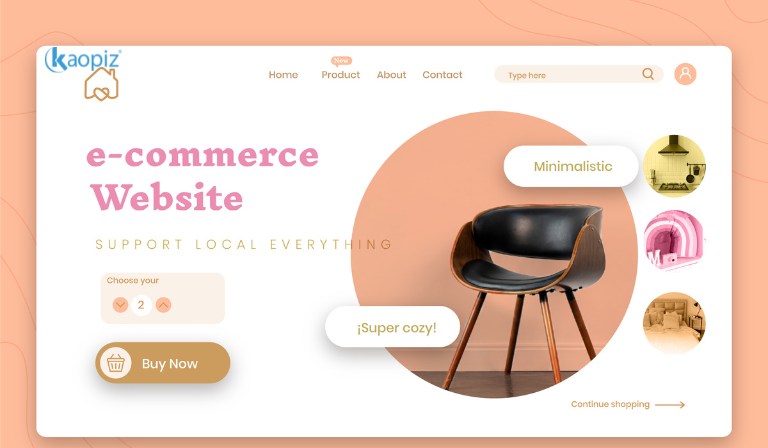
At a business level, web app e-commerce development combines technology, user experience, and system architecture to support the entire commercial workflow—product management, pricing logic, payments, order processing, customer data, and integrations with systems such as ERP, CRM, logistics, and analytics tools. A well-developed e-commerce website is not just functional; it is built to perform reliably under traffic, adapt to changing business needs, and protect sensitive customer data.
In mature markets like Singapore, e-commerce development must also account for mobile-first users, fast load times, security standards, and regulatory requirements such as data protection. As businesses grow, these platforms need to scale without driving exponential increases in cost or complexity.
Why Web E-commerce Development Requires a Different Approach in Singapore
Singapore’s e-commerce environment is more mature and competitive than many regional markets, which means approaches that work elsewhere often fall short here. Businesses must balance speed, cost, performance, and compliance from the very beginning—making strategic decisions in e-commerce development especially critical.
Key factors that shape e-commerce web design & development in Singapore include:
- High customer expectations: Users expect fast-loading pages, intuitive navigation, and seamless mobile-first experiences. Even small performance or UX issues can significantly impact conversion rates and brand trust.
- Higher development costs and talent constraints: In-house teams and local agencies often come with premium costs, while competition for experienced engineers remains strong. A poorly chosen development approach can quickly lead to budget overruns and limited scalability.
- Strict requirements for security and compliance: E-commerce platforms must support secure payment processing and align with data protection regulations. Security and compliance cannot be added later—they must be built into the system architecture from the start.
- The need for regional and long-term scalability: Many Singapore businesses plan to expand into Southeast Asia or global markets. E-commerce platforms must be flexible enough to support multiple currencies, integrations, and growing traffic without constant rework.
Because of these factors, web e-commerce development in Singapore requires a business-driven, long-term approach—one that focuses not only on launching quickly, but on building a platform that can perform reliably, adapt to change, and scale sustainably over time.
Key Features of a Successful E-commerce Platform in 2026
In 2026, successful e-commerce platforms must be built for performance, flexibility, and long-term growth—especially in competitive markets like Singapore. Basic storefront functionality is no longer enough.

Key features include:
- High performance and fast load times to support conversion rates and search visibility.
- Mobile-first, conversion-focused UX with streamlined navigation and checkout flows.
- Scalable, flexible architecture that supports new features, channels, and regional expansion without major rework.
- Seamless integrations with payment gateways, logistics, ERP, CRM, and analytics systems.
- Data ownership and actionable analytics to enable personalization and informed business decisions.
- Security and compliance by design, ensuring reliability and customer trust from day one.
These features ensure an e-commerce platform can compete effectively today while remaining adaptable to future growth.
Web E-commerce Development Approaches: SaaS Platforms vs Custom vs Headless
There is no single “best” way to build an e-commerce website—the right approach depends on your business goals, growth plans, and cost tolerance. The three most common approaches are SaaS platforms, custom e-commerce web development, and headless architectures, each with distinct trade-offs.
| Criteria | SaaS Platforms (Shopify, WooCommerce) | Custom Web E-commerce Development | Headless / Hybrid Architecture |
|---|---|---|---|
| Time to market | Very fast (days to weeks) | Medium to long (weeks to months) | Medium (faster than full custom) |
| Initial cost | Low upfront cost | Higher upfront investment | Medium to high |
| Long-term cost (TCO) | Increases as apps and usage grow | More predictable at scale | Optimized for growth at scale |
| Customization flexibility | Limited to platform constraints | Fully customizable | High flexibility (front-end & backend decoupled) |
| Scalability | Suitable for small to mid-scale | Strong scalability | Excellent for high traffic & omnichannel |
| Integration capability | Limited, app-dependent | Full control over integrations | API-first, integration-friendly |
| Data ownership | Platform-controlled | Full ownership | Full ownership |
| Performance optimization | Platform-dependent | Fully controllable | High-performance by design |
| Best suited for | MVPs, startups, simple B2C stores | B2B, complex workflows, long-term growth | High-growth, omnichannel, regional expansion |
This comparison helps businesses in Singapore evaluate which approach aligns best with their current needs while minimizing long-term risk as the platform scales.
SaaS Platforms (Shopify, WooCommerce): Speed First, Flexibility Later
SaaS platforms such as Shopify and WooCommerce are often the first choice for businesses launching an e-commerce website because they prioritize speed and simplicity. These platforms provide ready-made infrastructure, built-in hosting, and a wide ecosystem of themes and plugins, allowing businesses to go live quickly with minimal technical effort.
For Singapore businesses, SaaS platforms are well-suited when:
- Time-to-market is the top priority
- The business is launching an MVP or a simple B2C store
- Product catalogs, pricing rules, and workflows are relatively standard
- Internal technical resources are limited
However, the trade-off becomes more apparent as the business grows. Custom business logic, advanced integrations, or complex pricing and fulfillment rules are often constrained by the platform. Over time, reliance on third-party apps can increase operational costs and create dependencies that are difficult to manage.
In practice, SaaS platforms work best as short- to mid-term solutions. They enable fast validation and early revenue, but may require migration or architectural changes once flexibility, performance, or cost efficiency at scale becomes a priority.
Custom Web E-commerce Development: Control, Scalability, and Long-Term ROI
Custom web e-commerce development is designed for businesses that need full control over their platform and a system that can evolve alongside long-term growth. Instead of working within the constraints of a pre-built platform, custom development allows e-commerce functionality to be built around specific business models, workflows, and integration requirements.
This approach is particularly suitable for Singapore businesses when:
- The e-commerce model involves complex pricing, fulfillment, or approval workflows
- Deep integration with ERP, CRM, or internal systems is required
- Data ownership, performance tuning, and security are strategic priorities
- The platform is expected to scale regionally or support B2B operations
While custom development typically requires a higher upfront investment, it often delivers better ROI over time. Businesses avoid recurring platform fees, reduce dependency on third-party plugins, and gain the flexibility to optimize performance and features without platform limitations.
In mature markets like Singapore, custom e-commerce development is less about building everything from scratch and more about creating a scalable, future-ready revenue system—one that supports growth without forcing costly rework as business needs become more complex.
Headless & Hybrid Architectures: When Performance and Growth Matter
Headless and hybrid e-commerce architectures are increasingly adopted by businesses that prioritize performance, flexibility, and rapid scaling. In a headless setup, the frontend and backend are decoupled and connected through APIs, allowing teams to optimize each layer independently while delivering faster, more flexible user experiences.
This approach is especially relevant for Singapore businesses when:
- High traffic, peak loads, or complex user journeys demand superior performance
- The business operates across multiple channels (web, mobile, marketplaces, in-store)
- Frontend experience needs to evolve frequently without disrupting backend systems
- Regional or international expansion is part of the growth strategy
Hybrid architectures combine the stability of established platforms with the flexibility of custom or headless components. This allows businesses to move beyond platform limitations while avoiding the cost and risk of a full rebuild.
For companies focused on long-term growth, headless and hybrid approaches offer a balanced path forward—delivering enterprise-grade performance today while preserving the flexibility to adapt as technology, customer expectations, and business models continue to evolve.
The 7-Step Web E-commerce Development Process (Designed to Reduce Risk)
A structured development process is essential to avoid common e-commerce pitfalls such as budget overruns, scalability issues, and misaligned features. This 7-step approach focuses on risk reduction, clarity, and long-term performance, making it especially suitable for businesses operating in Singapore’s cost-sensitive and competitive market.
Step 1: Business Discovery & Goal Alignment
The foundation of a successful web development for e-commerce starts with understanding the business, not the technology. This step clarifies objectives, constraints, and success metrics before any design or development begins.

Key focus areas:
- Business model (B2C, B2B, marketplace)
- Target markets and growth plans
- Budget, timeline, and compliance requirements
- KPIs such as conversion rate, scalability, and operational efficiency
Outcome: Clear business requirements and aligned expectations.
Step 2: Platform & Architecture Selection
With goals defined, the next step is choosing the right development approach—SaaS, custom, or headless—based on long-term needs rather than short-term convenience.
Key considerations:
- Required flexibility and customization
- Integration complexity
- Expected traffic and future expansion
- Total cost of ownership
Outcome: A technology stack and architecture that supports current and future growth.
Step 3: UX/UI Design Focused on Conversion
Design is not just about aesthetics; it directly impacts revenue. This step translates business goals into user journeys that reduce friction and drive conversions.
Key focus areas:
- Mobile-first design
- Clear navigation and checkout flow
- Trust signals and usability best practices
- Performance-aware design decisions
Outcome: UX/UI designs optimized for conversion and user confidence.
Step 4: Core E-commerce Development
This is where the platform takes shape through the structured development of both frontend and backend components.
Key focus areas:
- Product, cart, checkout, and user management
- Backend logic and admin workflows
- Security and performance best practices
- Code quality and maintainability
Outcome: A functional, secure e-commerce platform aligned with the chosen architecture.
Step 5: Integration, Testing & Quality Assurance
Before launch, the platform must be validated under real-world conditions to ensure reliability and stability.

Key focus areas:
- Integration testing (payments, logistics, ERP, CRM)
- Performance and load testing
- Security and data protection checks
- Cross-device and cross-browser testing
Outcome: A production-ready system with minimized technical and operational risk.
Step 6: Deployment & Go-Live
A controlled launch ensures business continuity and reduces the risk of downtime or data issues.
Key focus areas:
- Cloud and hosting configuration
- Data migration (if applicable)
- Final pre-launch checks
- Monitoring and rollback readiness
Outcome: A stable, live e-commerce platform ready for customers.
Step 7: Post-Launch Optimization & Scaling
E-commerce website development Singapore does not end at launch. Continuous optimization is essential for sustained growth and competitiveness.
Key focus areas:
- Performance and UX improvements
- Feature enhancements based on data insights
- Infrastructure scaling as traffic grows
- Ongoing maintenance and support
Outcome: A scalable, future-ready e-commerce platform that evolves with the business.
How Much Does Web E-commerce Development Cost in Singapore?
Before comparing different delivery models, it helps to look at high-level cost benchmarks in the Singapore market. While actual budgets vary by scope and complexity, most e-commerce projects in Singapore fall within the following ranges:
- SGD 5,000 – 15,000 for basic, platform-based e-commerce websites
- SGD 20,000 – 40,000 for mid-range e-commerce platforms with custom UX and integrations
- SGD 50,000+ for advanced or enterprise-grade e-commerce systems
- 40–60% cost savings are commonly achieved using hybrid or offshore delivery models compared to fully local teams
| Cost Factor | In-House Team | Local Agency (Singapore) | Hybrid / Offshore Model |
|---|---|---|---|
| Typical upfront cost | SGD 20,000 – 40,000+ | SGD 6,000 – 25,000+ | SGD 15,000 – 30,000 |
| Advanced / scalable builds | SGD 50,000+ | SGD 25,000 – 50,000+ | SGD 20,000 – 35,000 |
| Ongoing monthly cost | High (salaries, benefits, tools) | Medium–High (retainers, change requests) | Medium (flexible team scaling) |
| Cost flexibility | Low (fixed overhead) | Medium | High |
| Time to market | Medium–Slow | Medium | Medium–Fast |
| Scalability cost impact | High (new hires needed) | High (rate increases) | Lower (scale team on demand) |
| Total cost of ownership (TCO) | Highest | High | Most cost-efficient long term |
| Best suited for | Large enterprises | SMEs with local budget | SMEs & scaling businesses |
These figures reflect typical e-commerce website development costs only and do not include ongoing expenses such as hosting, maintenance, feature enhancements, or scaling.
In-House Development Cost
Building an in-house e-commerce development team provides maximum control, but it is usually the most expensive option in Singapore due to high fixed costs.
Typical cost profile:
- Initial e-commerce build equivalent: SGD 20,000 – 40,000
- Advanced or scalable platforms: SGD 50,000+
- Ongoing monthly costs: salaries, benefits, infrastructure, and training
Because costs remain fixed regardless of workload, in-house development is generally viable only for enterprises with continuous, long-term development needs.
Local Agency Cost
Singapore-based agencies offer experienced teams and local market understanding, but at a premium price.
Typical cost profile:
- Basic e-commerce website: SGD 5,000 – 15,000
- Mid-range e-commerce with integrations: SGD 8,000 – 25,000
- Advanced or custom e-commerce platforms: SGD 25,000 – 50,000+
This model reduces hiring complexity but can become costly as customization and ongoing enhancements increase.
Hybrid / Offshore Model (40–60% Cost Optimization)
Hybrid and offshore models combine local project leadership with offshore engineering teams, significantly reducing development costs while maintaining quality.
Typical cost profile:
- Custom e-commerce platforms: SGD 15,000 – 30,000
- Cost reduction: approximately 40–60% compared to fully local builds
This approach is well-suited for SMEs and scaling businesses that require flexibility, customization, and long-term cost efficiency without committing to high fixed overheads.
How to Choose the Right Web E-commerce Development Partner in Singapore
Choosing the right e-commerce web development partner is often more important than choosing the technology itself. In Singapore’s high-cost and fast-moving market, the wrong partner can lead to budget overruns, limited scalability, and long-term technical debt. The following criteria can help businesses evaluate potential partners more effectively.
- Business understanding before technology: A strong partner should focus on your business model, growth plans, and operational constraints before recommending platforms or architectures. Be cautious of vendors who push a single solution without understanding your commercial objectives.
- Proven experience with the Singapore market: Singapore-based e-commerce projects often require higher standards for performance, security, and compliance. Partners with experience in this market are better equipped to anticipate regulatory requirements, user expectations, and regional expansion challenges.
- Transparent delivery and cost structure: Clear scoping, realistic timelines, and transparent pricing models are essential. A reliable partner should explain how costs evolve as features, traffic, or integrations increase—and how risks are managed throughout the project lifecycle.
- Scalability and long-term support capability: E-commerce platforms evolve continuously. The right partner should be able to support ongoing optimization, feature enhancements, and scaling without forcing frequent rebuilds or platform migrations.
- Clear communication and collaboration model: Effective communication, documentation, and project governance are critical, especially when working across time zones or hybrid teams. Look for partners who offer structured processes and consistent points of contact.
Ultimately, the best e-commerce web development company acts as a long-term technology advisor, not just a delivery vendor—helping your business make informed decisions as it grows and adapts in Singapore’s competitive e-commerce landscape.
Why Singapore Businesses Choose Kaopiz for Web E-commerce Development
Singapore businesses choose Kaopiz because we combine strategic e-commerce consulting, strong engineering capability, and measurable cost efficiency—without compromising quality or scalability.
- Singapore-focused, business-driven delivery: As a trusted software development companies, Kaopiz works with clients across Singapore and global markets, aligning e-commerce platforms with business KPIs such as conversion rate, performance, and scalability—not just feature checklists.
- Hybrid delivery model delivering 40–60% cost optimization: By combining local project management with offshore engineering teams, our e-commerce web developer typically helps businesses reduce development costs by 40–60% compared to fully local teams. This allows companies to invest more in scalability, UX, and long-term optimization rather than high fixed overhead.
- Proven scale and delivery capability: Kaopiz has 700+ software engineers, has delivered 1,000+ projects, and brings 11+ years of experience in building web and e-commerce systems for SMEs and enterprises. This scale allows us to assemble teams quickly and adapt as project requirements evolve.
- Scalable architectures built for growth: Whether using SaaS platforms, custom development, or headless architectures, Kaopiz designs systems that support regional expansion, high traffic, and complex integrations—reducing the risk of costly rebuilds as businesses grow beyond Singapore.
- Enterprise-grade standards and reliability: Kaopiz operates under ISO 9001 and ISO 27001 certifications and works with cloud platforms such as AWS (Advanced Consulting Partner) to ensure security, performance, and reliability across e-commerce deployments.
- Long-term partnership mindset: Many clients work with Kaopiz beyond initial launch, using us as an ongoing technology partner for continuous optimization, feature expansion, and system scaling, rather than a one-off development vendor.
For Singapore businesses seeking predictable costs, scalable technology, and a partner that understands both business and engineering, Kaopiz offers a practical and future-ready approach to web e-commerce development.
Conclusion
In Singapore’s competitive e-commerce market, success depends less on the tools you choose and more on how you approach web e-commerce development. By 2026, businesses must balance speed, cost, scalability, and long-term ROI from the start.
Whether using SaaS platforms, custom development, or headless architectures, the right approach is the one aligned with your business goals and growth plans. Making informed decisions early helps reduce risk, control costs, and build e-commerce platforms that can scale sustainably over time.
FAQs
- Is Shopify Enough for Growing Singapore Businesses?
- Shopify is often sufficient for early-stage or simple B2C e-commerce businesses that prioritize speed to market. However, as a business grows, limitations around customization, complex workflows, integrations, and rising app and transaction costs can make Shopify less suitable. Many growing Singapore businesses eventually outgrow SaaS platforms as operational and scalability needs increase.
- When Should I Move from SaaS to Custom E-commerce?
- You should consider moving when you need deeper system integrations, complex pricing or fulfillment logic, full data ownership, or better long-term cost control. This transition often happens once growth exposes platform limitations that impact performance, flexibility, or ROI.
- How Long Does E-commerce Development Take in Singapore?
- E-commerce development timelines vary by approach and complexity. SaaS-based projects can launch in 4–8 weeks, while custom or headless e-commerce platforms typically take 3–6 months. Larger or enterprise-grade systems may require longer timelines due to integrations, testing, and scalability requirements.
- How Much Does E-commerce Development Cost in 2026?
- In 2026, e-commerce development in Singapore typically ranges from SGD 6,000–15,000 for basic SaaS implementations, SGD 20,000–40,000 for custom e-commerce platforms, and SGD 15,000–30,000 for hybrid or offshore models. Final costs depend on features, integrations, and long-term scalability needs.
- Is Headless E-commerce Worth It?
- Headless e-commerce is worth considering if you prioritize performance, omnichannel experiences, and long-term scalability. While it requires higher upfront investment and technical planning, headless architectures often deliver better flexibility and performance for high-growth or regionally expanding Singapore businesses.
Trending Post

No Comments yet!