


Why Should Medical Organizations Invest in IoT in Healthcare Today?
Healthcare organizations are under increasing pressure to improve patient outcomes while controlling costs and optimizing operations. In this context, IoT in healthcare is gaining attention as a practical solution that enables real-time data, better decision-making, and more efficient care delivery. It is no longer just an emerging trend but a strategic investment for long-term growth.
This article explores why IoT is becoming essential today, how it is applied in real-world healthcare settings, and what measurable value it can bring. It also helps decision-makers understand when and how to adopt this technology to stay competitive in an increasingly digital healthcare environment.
Key Takeaways
- Core applications such as remote patient monitoring, smart hospitals, and AIoT are transforming both clinical outcomes and operational efficiency.
- The biggest benefits include improved patient outcomes, cost reduction (by 26%), and smarter decision-making, making IoT a high-ROI investment for healthcare providers.
- Key challenges such as data security, interoperability, and data overload must be addressed with strong governance, standardized systems, and AI-powered analytics.
- Successful implementation requires a clear roadmap, starting with high-impact use cases, ensuring infrastructure readiness, and scaling strategically.
- The future lies in AI integration, predictive analytics, and connected ecosystems, enabling more personalized and efficient care delivery.
Table of Contents
- What Is IoT in Healthcare and How Does It Work?
- Why Singapore Is Leading IoT in Healthcare Innovation
- Key Applications of IoT in Healthcare Transforming Patient Care
- Real-World IoT in Healthcare Case Studies
- 5 Powerful Benefits of IoT in Healthcare for Hospitals and Businesses
- Main Challenges of IoT in Healthcare (And How to Overcome Them)
- How to Successfully Implement IoT in Healthcare
- When Should Healthcare Organizations Invest in IoT?
- What’s Next for IoT in Healthcare in Singapore?
- Transform Your Healthcare System with Kaopiz’s IoT Solutions
- Conclusion
- FAQs
What Is IoT in Healthcare and How Does It Work?
For leaders, IoT in healthcare is not just a technical concept but a foundational layer of modern digital infrastructure. It enables organizations to connect devices, collect real-time data, and turn that data into actionable insights that improve both clinical and operational performance
Definition of IoT in Healthcare
At its core, this term refers to a network of connected medical devices, wearable health devices, and smart systems that continuously collect and exchange patient data. These devices capture critical health metrics such as heart rate, blood pressure, and oxygen levels, enabling real-time patient monitoring across both clinical and remote environments.

Instead of relying solely on periodic check-ups, healthcare solutions allow providers to access continuous data streams, supporting faster diagnosis and more personalized treatment. This shift plays a key role in digital health transformation, helping healthcare organizations improve care quality while optimizing resources.
How IoT Ecosystems Work in Modern Healthcare
A typical healthcare ecosystem operates through three main layers:
- Data Collection: Medical devices and sensors capture real-time patient and operational data, such as vital signs, movement, and equipment status.
- Data Transmission: Collected data is securely transmitted via connected networks (e.g., Wi-Fi, 5G) to cloud-based healthcare platforms for aggregation and storage.
- Data Intelligence & Insight: AI and healthcare analytics process the data to generate actionable insights, such as early risk detection or performance trends, delivered through dashboards or integrated systems (e.g., EMR/EHR).
By connecting devices, platforms, and analytics, healthcare systems support remote patient monitoring, improve hospital operations efficiency, and create a more proactive and scalable care model.
Why Singapore Is Leading IoT in Healthcare Innovation
Singapore has emerged as a key hub for innovation in Asia, driven by strong government support, advanced digital infrastructure, and a proactive approach to transformation. For decision-makers, the country represents a clear example of how the solutions can be scaled effectively across a national system to improve both efficiency and patient outcomes.
Rapid Growth of the IoT Healthcare Market
The adoption in Singapore is accelerating alongside global market growth. The global healthcare market is projected to reach nearly $600 billion by 2035, and Singapore is actively positioning itself within this expansion. Investments in digital health technologies, connected medical devices, and healthcare data platforms are increasing as providers seek to improve care delivery and reduce long-term costs.

Singapore’s ecosystem supports rapid deployment of smart healthcare systems, with strong collaboration between public institutions and private technology providers. This has enabled faster adoption of remote patient monitoring, telehealth, and AI-powered analytics, making the country one of the most advanced digital health markets in the region.
Why IoT Is Critical for Singapore’s Healthcare System
Singapore faces structural challenges that make this technology not just beneficial but essential, but essential to long-term sustainability.
- Aging population increasing demand for long-term and continuous care
- Rising chronic disease rates requiring ongoing monitoring and intervention
- Healthcare cost pressures driving the need for more efficient delivery models
- Healthcare systems enable a shift from reactive treatment to preventive, data-driven care.
The healthcare systems enable a shift from reactive treatment to preventive, data-driven care. By leveraging real-time monitoring and connected devices, providers can reduce unnecessary hospital admissions, better manage chronic conditions, and optimize resource utilization across the system.
Singapore’s Smart Nation and Digital Health Initiatives
Singapore’s leadership in healthcare is closely tied to its Smart Nation initiative, which prioritizes digital transformation across all sectors. Key national efforts include:
- Implementation of the National Electronic Health Record (NEHR) for unified patient data
- Expansion of telehealth and community-based care models
- Integration of AI, IoT, and healthcare data analytics into clinical workflows
These initiatives enable seamless data sharing, improve clinical decision-making, and support the development of a fully connected healthcare ecosystem.
Key Applications of IoT in Healthcare Transforming Patient Care
For healthcare organizations, the real value lies in how it is applied across care delivery. From developing healthcare app to optimizing hospital workflows, these applications enable more proactive and data-driven decisions. They not only improve patient outcomes but also help reduce costs and increase operational efficiency.
Remote Patient Monitoring
Remote patient monitoring is one of the most impactful applications, allowing providers to track patient vitals continuously outside hospital settings. Using wearable health devices and connected medical devices, data such as heart rate, blood pressure, and oxygen levels can be monitored in real time.
This enables earlier intervention when abnormalities are detected, helping reduce hospital readmissions and improve patient engagement. For healthcare providers, the solutions in remote monitoring also optimize resource allocation by shifting care from hospitals to home-based settings.
Chronic Disease Management
Managing chronic diseases becomes more efficient with IoT in healthcare technology, as it enables continuous tracking through connected health devices. Devices such as smart glucose monitors and blood pressure sensors provide consistent and accurate health data.
With the support of healthcare data analytics and AI in healthcare, providers can personalize treatment plans and respond quickly to changes in patient conditions. This leads to better long-term outcomes while reducing complications and overall treatment costs.
Smart Hospitals and Operations
IoT plays a critical role in building smart healthcare systems that improve hospital operations. Through sensors and connected infrastructure, hospitals can monitor equipment, track assets, and manage workflows more efficiently.
This reduces time spent locating devices, improves asset utilization, and minimizes operational inefficiencies. As a result, applications help enhance operational efficiency in hospitals while lowering unnecessary expenses.
Medication Management
Medication adherence is a persistent challenge that can be addressed with in healthcare solutions. Smart medication management systems use connected devices to send reminders and alerts to patients, ensuring they follow prescribed treatments.

These systems also integrate with healthcare data platforms to provide visibility into adherence patterns. This allows providers to intervene when necessary, improving patient safety and reducing medication-related risks.
Emergency Response
In emergency situations, IoT in healthcare applications enable faster detection and response through real-time data. Wearable health devices and sensors can identify critical events such as falls or abnormal heart activity and trigger immediate alerts.
This ensures quicker intervention by providers, which can significantly improve patient outcomes. By leveraging real-time monitoring and connected systems, this technology strengthens the ability to deliver timely and effective emergency care.
Connected Medical Devices and Diagnostics
Connected medical devices are a core pillar of IoT in healthcare, enabling more accurate and timely diagnostics. Smart imaging devices such as connected MRI, CT, and ultrasound systems can automatically capture, store, and transmit data to centralized platforms. This allows specialists to access imaging results instantly, even across different locations, improving collaboration and reducing diagnosis time.
In addition, real-time diagnostics allow continuous monitoring and immediate analysis of patient data. Devices can detect abnormalities and alert clinicians instantly, supporting faster clinical decisions. This not only enhances diagnostic accuracy but also reduces delays in treatment, which is critical in time-sensitive conditions.
AI-Powered IoT (AIoT) in Healthcare
The combination of IoT and AI in healthcare, often referred to as AIoT, is unlocking advanced capabilities for predictive and personalized care. Through predictive analytics, healthcare providers can analyze large volumes of data from connected medical devices to identify patterns and forecast potential health risks before they become critical.
Another key application is early disease detection, where AI models process real-time data to detect subtle changes in patient conditions. This enables earlier diagnosis of diseases such as cardiovascular conditions or diabetes. By integrating AIoT in systems, organizations can move toward more proactive, data-driven care, improving both patient outcomes and operational efficiency.
Real-World IoT in Healthcare Case Studies
To understand the real business impact, it is essential to look at how organizations are applying these technologies in practice. The following IoT healthcare case studies are based on real implementations, showing how the solutions deliver measurable improvements in efficiency, cost control, and patient outcomes.
IoT-Enabled Hearing Aid Control Application
Background
As IoT in healthcare continues to grow, medical device companies are integrating connected medical devices with smartphones to improve usability. In hearing care, this shift enables better accessibility and more personalized experiences, especially for elderly users who need simple and intuitive control.
Problem
The company had strong expertise in hearing aid technology but lacked experience in mobile app development and IoT healthcare applications. Key challenges included ensuring stable Bluetooth connectivity, minimizing latency, and designing a user-friendly interface suitable for elderly and hearing-impaired users.
Solution
A dedicated Android app was developed as part of an end-to-end IoT in healthcare solution. The system used Bluetooth Low Energy (BLE) to enable stable, real-time communication between devices. The UI/UX was optimized for accessibility, while extensive testing across multiple Android devices ensured high reliability and consistent performance.
Result
- Enabled easy control of hearing aid settings such as volume and sound modes via smartphone
- Added device tracking feature to reduce loss and improve convenience
- Increased user satisfaction and daily usability
- Strengthened product value through IoT in healthcare technology integration
IoT-Based Muscle Health Management System
Background
A healthcare provider aimed to build a comprehensive IoT in healthcare system for muscle health management. The goal was to enhance rehabilitation experiences and provide data-driven insights into muscle activity. The system needed to integrate training programs with real-time physiological data.

Problem
Manual processes caused inefficiencies, increased workload, and reduced service quality. Lack of scalability also made it difficult to expand services or onboard new centers. Moreover, limited customization restricted the ability to adapt workflows to specific patient and business needs.
Solution
Kaopiz developed a web and mobile platform as a unified IoT healthcare solution which enabled real-time tracking of muscle activity and training progress through connected systems. They built role-based features for operators, admins, and users to manage programs, appointments, and performance. The platform also integrated scheduling, reporting, and educational resources into a single ecosystem.
Result
- Streamlined operations and reduced reliance on manual processes
- Improved patient engagement through personalized training and progress tracking
- Enhanced scalability, allowing easier expansion across multiple locations
- Delivered a more efficient and data-driven smart healthcare system for both providers and users
These IoT in Healthcare case studies highlight the shift from experimentation to scalable, value-driven solutions. Organizations that act now can unlock measurable benefits of IoT in Healthcare, from improved patient outcomes to optimized operational efficiency.
5 Powerful Benefits of IoT in Healthcare for Hospitals and Businesses
For healthcare leaders, the true value of IoT in healthcare lies in its ability to deliver measurable business and clinical outcomes. By connecting devices, data, and systems, IoT healthcare solutions enable organizations to improve efficiency, reduce costs, and enhance patient care at scale. These benefits are not theoretical but already proven across modern smart healthcare systems.
Transforming Patient Outcomes
One of the most significant advantages is the impact on patient outcomes. Through real-time patient monitoring and connected medical devices, providers can detect health issues earlier and respond more quickly. This shift from reactive to proactive care helps reduce complications and improve recovery rates.
IoT in Healthcare, particularly through remote patient monitoring, is fundamentally improving how providers manage patient outcomes. According to Healthcare Dive, remote monitoring programs have been shown to reduce emergency room visits and hospital readmissions by 25%, while 38% say the technology results in fewer inpatient admissions, highlighting the impact of continuous, real-time patient data.
Boosting Operational Efficiency
IoT in healthcare technology plays a critical role in improving hospital operations. With IoT sensors and smart healthcare systems, hospitals can track assets, monitor workflows, and optimize resource utilization in real time, helping reduce inefficiencies and even cut patient wait times by up to 50%.
By automating routine processes and improving visibility across operations, IoT healthcare applications also support medication management systems that improve adherence rates by around 30%. As a result, healthcare providers can reduce manual workload, enhance care delivery, and maintain higher levels of operational performance.
Reducing Costs
Cost reduction is a key driver behind the adoption of IoT in healthcare solutions. By enabling remote patient monitoring and preventive care, healthcare organizations can significantly reduce hospital readmissions and unnecessary visits. This leads to lower treatment costs and better resource allocation.
In addition, Healthcare facilities using IoT technology report an average cost reduction of 26% in their operations. Over time, IoT healthcare systems deliver strong return on investment by lowering both clinical and administrative expenses.
Smarter Decision Making
Data is at the core of IoT in healthcare, and its ability to support data-driven decision making is a major advantage. By integrating healthcare data analytics and AI in healthcare, organizations can turn large volumes of data into actionable insights.
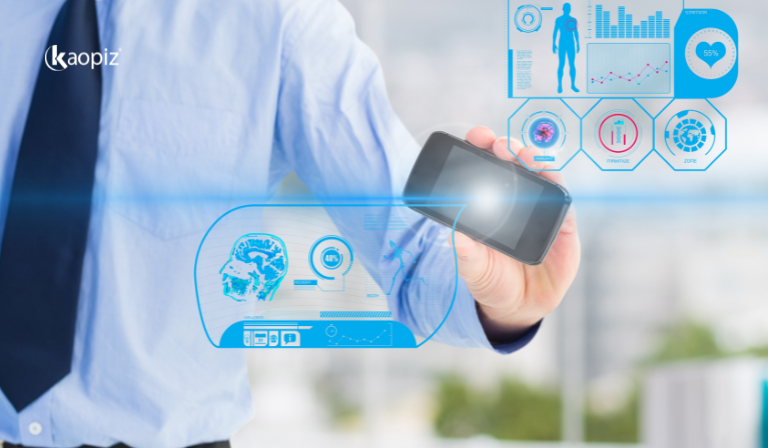
The adoption of AI-based clinical decision support systems in Germany resulted in a 30% reduction in medical errors. With access to real-time and historical data, healthcare leaders can make faster and more informed decisions across the entire organization.
Enhancing Patient Experience and Long-Term Engagement
IoT in healthcare applications also play a key role in improving patient experience. Through connected health devices and digital platforms, patients can stay more engaged with their care and receive timely support from providers.
Research shows that patients are highly satisfied with telemedicine services, with approximately 85% expressing satisfaction with their virtual healthcare experience. This not only improves patient satisfaction but also strengthens long-term engagement, which is essential for managing chronic conditions and achieving better health outcomes.
Main Challenges of IoT in Healthcare (And How to Overcome Them)
While IoT offers significant advantages, it also introduces complex challenges that healthcare organizations must address to ensure sustainable adoption. From securing sensitive data to integrating fragmented systems, these barriers can directly impact the effectiveness of IoT healthcare solutions. However, with the right strategies and technologies, these challenges can be mitigated to unlock the full value of IoT healthcare systems.
| Challenge in IoT in Healthcare | Impact on Healthcare Organizations | How to Overcome Effectively |
|---|---|---|
| Data Security and Patient Privacy Risks | Increased risk of data breaches due to large volumes of sensitive data transmitted by connected medical devices. Can lead to regulatory violations and reputational damage. | Implement end-to-end encryption, device authentication, and zero-trust security models. Ensure compliance with data protection regulations and strengthen patient data privacy frameworks. |
| Interoperability with Existing Healthcare Systems | Fragmented systems and lack of integration between IoT healthcare devices and EHR platforms reduce operational efficiency and limit data usability. | Adopt interoperability standards such as FHIR and HL7. Use APIs and middleware to enable seamless integration across smart healthcare systems. |
| Managing Data Overload with AI and Advanced Analytics | Massive data generated from IoT in healthcare applications can overwhelm systems, making it difficult to extract actionable insights. | Leverage AI in healthcare and advanced analytics to filter, process, and prioritize data. Enable automation to support faster and more accurate data-driven decision making. |
How to Successfully Implement IoT in Healthcare
Adopting IoT in healthcare is not just a technology upgrade but a strategic transformation that impacts operations, patient care, and long-term business growth. For hospitals and healthcare businesses, success depends on aligning IoT healthcare solutions with clear objectives, robust infrastructure, and scalable execution. The following steps outline a practical roadmap for implementing technology effectively.
Identify High-Impact Use Cases and Business Goals
The first step is to define clear business objectives and prioritize high-impact use cases. Rather than deploying technology broadly, organizations should focus on areas where IoT healthcare applications can deliver measurable value, such as remote patient monitoring, asset tracking, or chronic disease management.

Aligning use cases with strategic goals ensures that investments in IoT healthcare systems generate tangible outcomes. For example, reducing readmissions, improving patient outcomes, or optimizing operational efficiency should be clearly defined from the beginning to guide implementation.
Assess Infrastructure and Technology Readiness
Before deploying IoT in healthcare solutions, organizations must evaluate their existing infrastructure. This includes network capabilities, data storage systems, and integration readiness with Electronic Health Records and other platforms.
Budgeting is also critical to consider when developing a healthcare app. A detailed breakdown of healthcare app development cost analysis to understand cost factors, pricing models, and how to optimize ROI for your project.
A strong foundation is critical for supporting connected medical devices and real-time data transmission. Healthcare providers should also assess cloud capabilities and edge computing readiness to ensure that IoT healthcare technology can scale without performance issues or system bottlenecks.
Choose the Right IoT Solutions and Partners
Selecting the right vendors and technology partners is a key success factor in implementation. Not all IoT healthcare solutions are built the same, and choosing platforms that align with long-term goals is essential.
Organizations should prioritize partners with proven experience in smart healthcare systems, strong security capabilities, and the ability to integrate with existing infrastructure. Collaboration with the right providers helps reduce implementation risks and accelerates time to value for applications.
Ensure Security, Compliance, and Data Governance
Security and compliance must be embedded into every stage of technology deployment. With large volumes of sensitive data being transmitted, robust cybersecurity in healthcare is essential to protect against breaches and ensure patient trust.
Healthcare organizations should implement strict data governance frameworks, including encryption, access control, and continuous monitoring. Compliance with regulatory standards also ensures that patient data privacy is maintained while enabling safe and scalable use of healthcare systems.
Start Small and Scale Strategically
Healthcare organizations should start with a focused pilot, targeting high-impact use cases like remote patient monitoring or asset tracking. This allows them to validate effectiveness, measure ROI, and identify challenges while minimizing risks.
After proving value, they can scale by expanding across departments and integrating with existing systems such as EMR/EHR and cloud platforms. A phased approach ensures better control, interoperability, and long-term sustainability.
When Should Healthcare Organizations Invest in IoT?
Healthcare organizations should consider investing in IoT when there is a need to improve care delivery, enhance operational efficiency, or scale digital capabilities.

The following scenarios are strong indicators that adoption can deliver immediate and long-term value:
- Shift toward proactive and continuous care: Healthcare organizations should invest in this technology when they need to move beyond reactive treatment models. Expanding remote patient monitoring and improving chronic disease management require real-time data, which solutions can deliver effectively.
- Rising operational inefficiencies and cost pressure: When hospitals face challenges in asset tracking, workflow visibility, or resource utilization, it signals the need for healthcare applications. These solutions enable automation and real-time monitoring, helping reduce costs while improving operational efficiency.
- During digital transformation and system upgrades: The best time to adopt systems is alongside broader digital initiatives. Integrating IoT with cloud, healthcare data analytics, and AI in healthcare ensures scalability, better system integration, and long-term strategic value.
What’s Next for IoT in Healthcare in Singapore?
Before investing in IoT in healthcare, organizations should evaluate key factors such as:
- Business goals and priority use cases
- Infrastructure readiness and integration capability
- Data security and compliance requirements
- Budget flexibility and expected ROI
- Internal readiness and stakeholder alignment
This ensures that healthcare solutions are implemented with clear direction, strong governance, and long-term scalability.
Transform Your Healthcare System with Kaopiz’s IoT Solutions
With over 12 years of experience and 1,000+ successful projects across Singapore, Japan, the US, and other global markets, Kaopiz is a trusted technology partner for organizations. We help healthcare providers build intelligent ecosystems that connect medical devices, data, and operations, enabling better patient outcomes, higher efficiency, and scalable digital transformation.

Kaopiz delivers secure, scalable, and fully customized healthcare solutions tailored to the needs of hospitals, clinics, and healthcare businesses. As an ISO 27001 and ISO 9001 certified company and an AWS Advanced Consulting Partner, we ensure every healthcare system meets the highest standards of security, compliance, and performance.
Our expertise spans across connected medical devices, cloud platforms, healthcare data analytics, and AI in healthcare. We develop end-to-end solutions, from remote patient monitoring systems and smart hospital platforms to predictive analytics and workflow automation, helping organizations unlock the full potential of IoT in healthcare technology.
Why Partner with Kaopiz?
- Proven Experience: 1,000+ successful projects across healthcare, manufacturing, logistics, and enterprise systems, delivering real-world results with healthcare applications
- Global Reach with Singapore Market Expertise: Strong presence in Singapore with deep understanding of local regulations such as PDPA and healthcare compliance requirements
- Flexible Engagement Models: Dedicated teams, staff augmentation, or full-cycle development tailored to your strategy
- Fast and Transparent Delivery: Agile execution, clear communication, and rapid onboarding to accelerate time-to-market
- Long-Term Partnership Approach: Continuous support, system optimization, and innovation to ensure your systems remain future-ready
Whether you aim to enhance existing infrastructure or build a new smart system, Kaopiz empowers organizations in Singapore to turn IoT in healthcare into measurable business value with security, scalability, and efficiency at its core.
Conclusion
IoT in healthcare is no longer a future concept but a strategic necessity for modern healthcare systems. From enabling remote patient monitoring to optimizing hospital operations, the solutions are transforming how care is delivered and managed. For healthcare organizations, especially in Singapore, adopting this technology means improving patient outcomes, increasing efficiency, and building a scalable, data-driven ecosystem.
However, successful implementation requires more than just technology. It depends on clear business goals, strong infrastructure, and the right partners to ensure security, integration, and long-term value. As the healthcare industry continues to evolve, organizations that invest in technology today will be better positioned to lead in innovation, efficiency, and patient-centric care.
FAQs
- What Is IoT in Healthcare and Why Is It Important?
- This term refers to the use of connected medical devices and systems that collect and exchange data in real time. It is important because it enables continuous monitoring, improves clinical decision-making, and enhances overall patient care.
- What Are the Most Common Applications of IoT in Healthcare?
- Key applications include remote patient monitoring, chronic disease management, smart hospital systems, medication tracking, and emergency response solutions.
- Is IoT in Healthcare Secure?
- While technology introduces security risks, these can be mitigated through encryption, secure device authentication, and strong cybersecurity in healthcare practices to protect sensitive patient data.
- How Does IoT Reduce Healthcare Costs?
- The healthcare solutions reduce costs by enabling preventive care, minimizing hospital readmissions, optimizing resource utilization, and automating operational processes.
- When Should Healthcare Organizations Start Adopting IoT?
- Organizations should invest in healthcare systems when they need to improve efficiency, enhance patient outcomes, or undergo digital transformation, especially when infrastructure and strategic goals are aligned.
Trending Post



No Comments yet!