

10+ Digital Transformation Trends in Singapore (2026): What Businesses Need to Know
Working with technology leaders across Singapore, I’ve watched one question quietly disappear from boardroom conversations: “What are digital transformation trends in Singapore? Should we digitize?” In 2026, nobody asks that anymore. The question now is “How fast and which bets are worth making?”
The pressure is real. Singapore’s technology expenditure is projected to reach nearly S$28 billion in 2026, a 6% increase from the previous year. Yet organizations here report spending an average of S$18.9 million per AI initiative in 2025, with only 23% saying those investments delivered expected returns. Budget alone isn’t the answer. Knowing which trends actually move the needle is.
Below, I break down the 10+ digital transformation trends reshaping Singapore in 2026, what’s driving each one, and what your team should priorities right now.
Key Takeaways
- Singapore is one of Asia’s top digital transformation leaders, the digital economy hit S$128.1 billion in 2024, contributing 18.6% of GDP and growing at a CAGR of 12% since 2019.
- AI and agentic AI have moved from pilot to production: SME adoption tripled in one year, and Singapore launched the world’s first Agentic AI Governance Framework in January 2026.
- 10+ trends are reshaping how Singapore businesses operate in 2026, from cloud and cybersecurity to legacy modernisation, green IT, and workforce upskilling.
- Choosing the right digital transformation partner, local, offshore, or hybrid, is critical to closing the gap between ambition and measurable results.
What Is Digital Transformation? (And Why It Matters in 2026)
Digital transformation is the process of integrating digital technologies into all areas of a business, reshaping how organizations operate, delivering value to customers, and adapting to market demands. It goes beyond just adopting new tools; it’s about rethinking processes, empowering teams, and enabling innovation at every level.
In 2026, digital transformation is a strategic necessity. Customers expect seamless digital experiences; competitors are leveraging AI and automation, and industries are evolving faster than ever. Staying ahead means investing in smarter, faster, and more agile systems that can scale with changing demands. Here are the key reasons why Singapore businesses should know about digital transformation:
- Staying competitive: Businesses that embrace digital tools can adapt faster to market changes and outperform slower-moving competitors.
- Meeting customer expectations: In 2026, customers expect fast, seamless, and personalized digital experiences across all touchpoints.
- Boosting efficiency: Automation, cloud computing, and AI help streamline operations, reduce costs, and improve decision-making.
- Enabling innovation: Digital transformation opens new opportunities for product development, business models, and revenue streams.
- Improving data-driven decisions: Real-time analytics and business intelligence tools support smarter, faster decision-making.
- Supporting long-term resilience: Digitally mature businesses are better equipped to navigate economic shifts, disruptions, and customer behavior changes.
10 Key Digital Transformation Trends Shaping Singapore in 2026
Digital transformation trends in Singapore reflect the evolving technologies and strategies that help businesses optimize operations, improve customer experiences, and stay competitive in the digital-first world.
Artificial Intelligence and Machine Learning
Artificial Intelligence (AI) and Machine Learning (ML) are the top digital transformation trends reshaping industries in Singapore, and adoption has now reached full-scale deployment. IMDA’s Singapore Digital Economy Report 2025 found that AI adoption among SMEs tripled in a single year from 4.2% to 14.5%, while larger enterprises jumped from 44% to 62.5% in 2024. In Singapore, AI is no longer a competitive advantage; it is fast becoming a baseline expectation.
- Automated Decision-Making: AI systems process and analyze large datasets in real time, enabling faster and more accurate decisions across finance, logistics, and operations.
- Predictive Analytics: ML algorithms help businesses forecast demand, detect fraud, and anticipate customer behavior with significantly higher accuracy than traditional methods.
- Personalized Customer Experiences: AI enables hyper-personalization in marketing, product recommendations, and customer support, enhancing user satisfaction and long-term loyalty.
AI and ML are critical to driving innovation and competitiveness in Singapore. As the government accelerates support through the S$150 million Enterprise Compute Initiative and the National AI Impact Programme, these technologies will remain central to Singapore’s digital transformation journey in 2026 and beyond.
Agentic AI
If generative AI answers questions, agentic AI takes action. Agentic AI systems plan across multiple steps, make decisions, and execute tasks autonomously, without waiting for a human prompt at each stage. In Singapore, this shift from AI as assistant to AI as operator is already live, not theoretical.
- Autonomous Workflow Execution: AI agents handle multi-step processes end-to-end. DBS Bank and Mastercard completed Singapore’s first live agentic payment transaction in 2026, an AI agent that autonomously booked a ride and processed payment without a human confirmation step.
- Enterprise Process Automation: Unlike traditional RPA, agentic AI adapts to changing inputs. Singapore enterprises are applying agents to invoice processing, compliance checks, and IT helpdesk resolution, reducing both manual effort and processing time.
- Responsible Deployment by Design: In January 2026, Singapore’s IMDA launched the world’s first Model AI Governance Framework for Agentic AI, providing enterprises with structured guidance on deploying agents responsibly, with humans remaining ultimately accountable.
Agentic AI is no longer a trend to watch. For Singapore businesses building their 2026 digital roadmap, it is a capability to plan for now.
Cloud-First and Hybrid Cloud Strategies
Cloud adoption in Singapore continues to surge as businesses prioritize flexible, scalable, and cost-efficient IT solutions. A cloud-first mindset, paired with hybrid cloud strategies, is emerging as one of the key digital transformation trends 2026, empowering organizations to modernize operations, enhance agility, and strengthen business resilience.
- Cloud-First Approach: Organizations prioritize building and deploying applications in the cloud to maximize agility, scalability, and speed to market.
- Hybrid Cloud Flexibility: A mix of public and private cloud environments allows businesses to balance security, compliance, and performance.
- Cost and Resource Optimization: Cloud services help reduce infrastructure costs while enabling on-demand resource scaling.
Driven by government support and strong digital infrastructure, Singaporean businesses are adopting cloud-first and hybrid models to power innovation, support remote work, and future-proof their operations.
Blockchain Technology
Blockchain is evolving beyond cryptocurrency to become a core component of secure, transparent, and efficient digital systems. In Singapore, blockchain adoption is accelerating across finance, supply chain, and government services.

- Secure Transactions: Blockchain ensures tamper-proof records and reduces fraud in digital payments, contracts, and asset management.
- Smart Contracts: Automated agreements are carried out based on predefined conditions, improving trust and efficiency in business processes.
- Supply Chain Transparency: Real-time tracking of goods and materials enhances traceability, reduces counterfeiting, and improves compliance.
Supported by progressive regulation and initiatives like Project Ubin and IMDA’s Blockchain Challenge, Singapore is positioning itself as a global blockchain innovation hub, further driving digital transformation in 2026.
Legacy System Modernization
For many Singapore enterprises, the biggest blocker to digital transformation isn’t a lack of ambition; it’s the systems underneath. ERP platforms, core banking software, and insurance policy administration tools running for over a decade were never designed to support AI, real-time data, or cloud-native architectures. In 2026, modernising these systems has moved from a technical backlog item to a boardroom priority.
- AI Readiness Depends on It: Legacy systems create data silos and integration bottlenecks that prevent AI models from accessing the inputs they need. Organisations that skip modernisation find their AI investments underperform, not because the technology is wrong, but because the foundation isn’t ready.
- The Cost of Staying Still: Legacy maintenance consumes 60–80% of IT budgets in many organisations, including direct infrastructure costs and hidden costs such as productivity loss, downtime, and integration workarounds. Modernisation frees that spend for innovation.
- Government Support Reduces the Risk: Singapore’s PSG and EDG programmes offset 50–70% of qualifying modernisation costs, dramatically improving the payback calculation for mid-sized enterprises.
Legacy modernisation is rarely glamorous, but it is often the highest-ROI investment a Singapore business can make in 2026. The organisations pulling ahead on AI and cloud are, in most cases, the ones that did the infrastructure work first.
Real-Time Data and Business Intelligence Adoption
Data is the backbone of digital transformation trends, and in 2026, Singapore businesses are prioritizing real-time data access and advanced analytics to drive smarter, faster decisions.
- Real-Time Insights: Businesses use live data tools to respond instantly to market changes and customer needs.
- Advanced Business Intelligence (BI): Modern BI platforms turn raw data into actionable insights, helping companies optimize performance.
- Data-Driven Culture: Organizations are investing in data literacy to help teams at all levels make faster, evidence-based decisions.
Supported by Singapore’s robust digital infrastructure and emphasis on smart governance, real-time data adoption is helping companies across industries stay competitive and agile in a rapidly changing environment.
Low-Code/No-Code Development Platforms
Low-code and no-code platforms are revolutionizing how applications are built, empowering both technical and non-technical users to innovate faster. In Singapore, these tools are gaining traction as businesses seek rapid, cost-effective digital solutions.

- Faster App Development: These platforms allow businesses to create apps and workflows with minimal coding, dramatically shortening development time.
- Empowered Teams: Citizen developers, like business analysts and operations staff, can build internal tools without needing deep programming skills.
- Cost Savings: Reduces reliance on large development teams, making digital transformation more accessible to SMEs and startups.
As demand for agility and speed grows, low-code/no-code tools are the latest trends in digital transformation in Singapore, helping organizations launch solutions quickly and scale efficiently.
Edge Computing and IoT Integration
As Singapore moves toward smarter infrastructure and real-time services, edge computing and the Internet of Things (IoT) are becoming vital to digital transformation in Singapore in 2026.
- Faster Data Processing: Edge computing processes data closer to the source, reducing latency and enabling real-time decision-making for critical applications.
- Connected Devices: IoT integration across industries (e.g., logistics, healthcare, manufacturing) allows continuous monitoring, automation, and predictive maintenance.
- Smarter Cities and Businesses: From traffic systems to energy grids, IoT + edge technologies are supporting Singapore’s Smart Nation vision with more responsive, efficient operations.
Together, these technology trends in Singapore enhance speed, connectivity, and scalability, pushing businesses and government services toward a more intelligent, data-driven future.
Cybersecurity and Data Governance Focus
As digital services expand, so do cyber threats. In 2026, Singaporean businesses are prioritizing cybersecurity and data governance to protect systems, meet compliance, and build customer trust.

- AI-Powered Threat Detection: AI enables real-time identification and response to cyber risks, reducing potential damage.
- Zero-Trust Security: This model verifies every user and device, preventing unauthorized access, even from within the network.
- Strong Governance Practices: Companies are implementing clear policies for data handling, user access, and compliance with PDPA and global standards.
Cybersecurity and data governance are notable essential pillars of Singapore’s digital transformation, ensuring that growth and innovation remain secure, ethical, and resilient.
Green IT and Sustainable Tech
Sustainability is becoming a strategic priority of digital transformation in Singapore. In 2026, more businesses are turning to green IT to reduce their environmental impact while driving innovation.
- Energy-Efficient Infrastructure: Organizations are optimizing data centers and cloud usage to lower energy consumption.
- Sustainable Software Design: Developers are adopting coding practices that reduce resource usage and improve efficiency.
- Green Procurement and Recycling: Companies are prioritizing eco-friendly hardware, device lifecycle management, and e-waste reduction.
With strong government support for the Green Plan 2030, sustainable tech practices are not only good for the planet—they also align with evolving customer expectations and long-term business value.
Total Experience (TX)
Total Experience (TX) is emerging as one of the key digital transformation trends in Singapore, combining customer experience (CX), employee experience (EX), and user experience (UX) into a cohesive strategy. The goal: deliver seamless, personalized interactions across every touchpoint.

- Integrated Platforms: Businesses are unifying digital and physical channels, websites, mobile apps, in-store systems, into connected experiences.
- Personalized Interactions: AI and analytics are used to tailor engagement for both customers and employees, improving satisfaction and retention.
- Consistent Branding: A unified brand experience across all platforms reinforces trust and loyalty.
In 2026, organizations that embrace TX are better positioned to boost engagement, reduce friction, and create lasting value for both users and internal teams.
Workforce Upskilling and Digital Culture
Digital transformation in Singapore isn’t just about technology—it’s about people. In 2026, Singaporean businesses are focusing on upskilling their workforce and fostering a digital-first mindset to stay competitive and agile.
- Continuous Learning: Companies are investing in training programs for digital tools, data literacy, and emerging technologies like AI and automation.
- Digital-Ready Mindset: Encouraging experimentation, adaptability, and innovation across all levels of the organization.
- Cross-Functional Collaboration: Breaking down silos and promoting teamwork between tech and business units to accelerate transformation.
By nurturing a strong digital culture, businesses in Singapore are future-proofing their workforce, ensuring they can fully leverage new technologies and drive long-term success.
Examples of Digital Transformation in Singapore
Below are real-world digital transformation examples in Singapore that showcase how technology is reshaping operations and delivering measurable results.
Healthcare: Muscle Health Management IoT System
A Singapore-based medical device provider partnered with Kaopiz to transform its manual muscle health program into a smart, scalable digital system. The goal was to deliver better user experiences, enable data-driven decisions, and support expansion across new centers.

Client Challenges
- Manual Processes: Operators struggled with time-consuming admin work, which led to errors and inefficiency.
- Limited Scalability: The lack of a scalable platform made it difficult to expand services to new locations.
- Lack of Control: Relying on third-party tools restricts customization and flexibility.
Kaopiz’s Solution
We developed an integrated web and mobile application tailored for both program operators and end users.
- Web app for operators to manage clients, appointments, payments, and performance reports.
- Mobile app for users to book sessions, track progress, and access muscle health education.
Results
- 40% reduction in admin processing time through digitization of client management and scheduling.
- 60% increase in user engagement after launching the personalized mobile app.
- Real-time analytics enable better program optimization and decision-making.
- Cross-platform access improved convenience and service availability across web and mobile devices.
Financial Services: Virtual Banking & eKYC
Singapore’s financial services industry is at the forefront of digital transformation, driven by regulatory support and a tech-savvy population. Virtual banks and fintech companies are reshaping the customer experience by offering seamless, fully digital financial services.
Key Innovations Driving Change
- eKYC (Electronic Know Your Customer): Traditional face-to-face verification has been replaced with AI-powered eKYC systems that authenticate users through facial recognition, document scanning, and biometric data. This reduces onboarding time from days to minutes.
- AI Chatbots & Virtual Assistants: Financial institutions use AI to automate customer support, enabling 24/7 assistance and reducing operational costs.
- Blockchain for Secure Transactions: Some Singapore-based fintech startups leverage blockchain to ensure transparent, tamper-proof digital transactions, especially in cross-border payments and digital identity management.
Business Impact
- Faster onboarding and improved compliance with MAS regulations
- Reduced operational costs through automation
- Enhanced customer satisfaction and retention through personalized, real-time support
- Greater scalability and security across digital channels
What Capabilities Are Needed to Succeed in a Digital Transformation?
Digital transformation is not just about adopting new technology—it requires the right mix of capabilities across people, processes, and platforms. To succeed, businesses need to develop the following:
- Clear Digital Strategy & Vision: A well-defined roadmap aligned with business goals ensures digital efforts are focused, measurable, and impactful.
- Strong Leadership & Change Management: Transformation starts at the top. Leadership must drive the digital agenda, champion innovation, and manage organizational change effectively.
- Agile & Collaborative Culture: Cross-functional teams, fast decision-making, and a willingness to experiment are essential for adapting quickly and iterating at a scale.
- Modern Technology Infrastructure: Cloud platforms, APIs, cybersecurity, and scalable systems provide the technical foundation for transformation.
- Data Literacy & Analytics Capabilities: Organizations must capture, analyse, and act on data to drive smarter decisions and personalise experiences.
- Customer-Centric Mindset: Understanding user needs and delivering consistent, high-quality digital experiences across channels is key to long-term success.
- Workforce Skills & Upskilling Programs: Ongoing training in digital skills and new tools keeps employees productive and change-ready.
Why Singapore Is Leading Digital Transformation in Asia
Singapore has firmly established itself as a regional leader in digital transformation, thanks to its strategic focus on innovation, digitalization, workforce development, and sustainability. These pillars not only drive economic performance but also ensure long-term competitiveness in an increasingly digital global economy.

According to IMDA’s Singapore Digital Economy Report 2025, the digital economy expanded to S$128.1 billion in 2024, contributing 18.6% of national GDP, up from 14.9% in 2019. Between 2019 and 2024, the digital economy grew at a CAGR of 12%, significantly faster than the nominal GDP growth rate of 7.3% over the same period.
This growth is no accident. Key factors driving the digital transformation in Singapore include:
- Government Initiatives: Programs like Smart Nation, IMDA, and the SG Digital Office drive digital adoption, innovation, and workforce upskilling, backed by funding schemes such as PSG and EDG.
- Advanced Digital Infrastructure: With nationwide 5G, high-speed broadband, and top-tier data centers, Singapore provides the ideal foundation for digital businesses to grow and scale.
- Thriving Tech Ecosystem: A strong startup scene, supported by accelerators and global tech firms, fosters rapid innovation in AI, fintech, healthtech, and more.
- Business-Friendly Environment: Transparent regulations, strong IP laws, and ease of doing business attract global enterprises and support long-term digital investment.
How to Choose the Right Digital Transformation Partner in Singapore
In Singapore’s fast-paced tech environment, companies need partners who combine technical expertise with strategic thinking and local market understanding.
The following criteria can help you identify a reliable and strategic partner to drive your digital transformation forward with confidence.
Key Factors to Consider
When evaluating digital transformation partners, keep these essential criteria in mind:
- Technical Capabilities: Look for a partner experienced in the technologies shaping digital transformation—AI, cloud services, data analytics, IoT, cybersecurity, and more.
- Industry Experience: A proven track record in your industry means the partner understands your challenges, compliance requirements, and growth goals.
- Security & Compliance Standards: Ensure the partner adheres to standards like ISO 27001 and PDPA compliance, especially when handling sensitive data.
- Flexible Engagement Models: Choose partners who offer customizable solutions, such as offshore, onshore, or hybrid teams, to match your budget and timeline.
- Collaboration & Communication: A successful transformation requires constant communication. Select a partner who values transparency and proactive collaboration.
Local vs Offshore vs Hybrid Approach
Selecting a digital transformation partner in Singapore that aligns with your business goals, risk appetite, and growth strategy is essential for long-term success. To support your decision-making, here’s a quick breakdown of local, offshore, and hybrid engagement models:
- Local Teams offer in-person collaboration and deep market knowledge but often come with higher costs.
- Offshore Teams (e.g., Vietnam or India) are cost-effective and suitable for long-term or large-scale projects, but require strong communication processes.
- Hybrid Models combine both: local project oversight with offshore development—balancing quality, speed, and cost for Singapore-based businesses.
How Kaopiz Can Help with Your Digital Transformation Journey
Kaopiz is a trusted IT outsourcing partner for companies with delivery hub in Vietnam and offices in Japan and Singapore. We deliver custom digital solutions that are secure, scalable, and cost-effective. With 12+ years of experience supporting clients remotely and 1000+ staff, we understand how to drive transformation, even without being physically present.
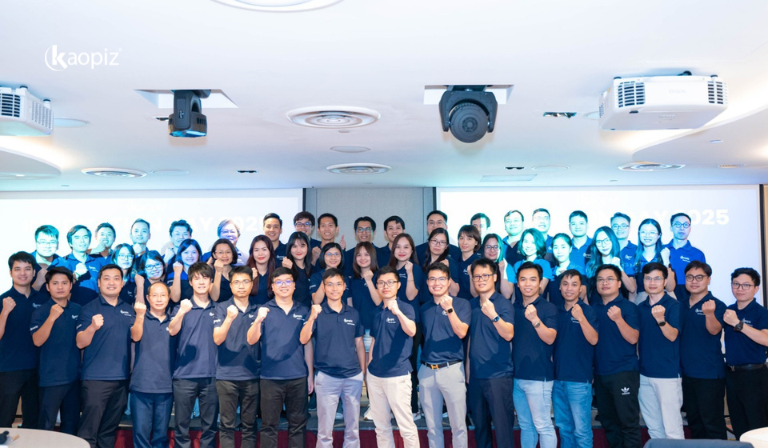
- Extensive Project Experience: Kaopiz has delivered 1,000+ successful projects for 500+ clients across Asia, the US, and Europe. From AI development to legacy modernisation, we bring cross-industry expertise and proven methodologies to every engagement.
- Offshore Delivery: Based in Vietnam, our team of 1,000+ professionals delivers high-quality development services at competitive rates. This makes Kaopiz an ideal partner for Singapore companies looking to maximise their digital investment.
- Comprehensive Services: From cloud adoption and AI development to enterprise web app development, we offer full-cycle digital transformation services.
- Security & Reliability: As an ISO 27001-certified provider and AWS Advanced Tier Services Partner, we prioritize data protection, compliance, and service quality.
- Client-Centric Approach: Our agile teams work closely with you to align technology with your goals, ensuring faster ROI and long-term success.
Whether you’re exploring new technologies or scaling digital initiatives, Kaopiz is a trusted partner for your journey in embracing digital transformation, industry trends, and transforming business.
Conclusion
Digital transformation in Singapore is evolving rapidly, driven by cutting-edge technologies, supportive government initiatives, and a strong digital ecosystem. As we enter 2026, trends like AI, cloud strategies, low-code platforms, and cybersecurity are no longer optional—they are essential for staying competitive.
To succeed in this environment, businesses must not only embrace new technologies but also invest in upskilling their workforce, strengthening data governance, and partnering with the right digital experts.
FAQs
What Are the 4 Pillars of Digital Transformation?
-
The four core pillars of digital transformation are:
- Technology – Adopting digital tools like AI, cloud, and IoT to modernise systems.
- Data – Leveraging real-time data and analytics for smarter decision-making.
- Processes – Streamlining operations through automation and innovation.
- People – Upskilling talent and fostering a digital-first culture to drive change.
What Risks Should Businesses Be Aware of in Digital Transformation?
-
Common risks include:
- Lack of clear strategy
- Poor change management and team alignment
- Cybersecurity vulnerabilities
- Choosing the wrong technology or partner
- Underestimating long-term maintenance and scaling needs
Proper planning, strong leadership, and choosing a reliable partner can mitigate these risks.
Is Outsourcing a Good Strategy for Digital Transformation in Singapore?
-
Yes. Outsourcing to trusted partners like Kaopiz can significantly reduce development costs while maintaining high quality. Offshore teams (e.g., in Vietnam) bring deep expertise, flexible engagement models, and scalability — making them a smart choice for Singaporean companies looking to innovate without overspending.
What Government Grants Support Digital Transformation in Singapore?
-
Singapore businesses can tap several government-backed programmes to fund their digital transformation. The Productivity Solutions Grant (PSG) covers up to 50% of pre-approved digital solutions, while the Enterprise Development Grant (EDG) supports larger transformation projects at up to 50–70% of qualifying costs. For AI adoption specifically, the S$150 million Enterprise Compute Initiative (ECI) provides cloud credits and AI consultancy, and the Enterprise Innovation Scheme offers 400% tax deductions on qualifying AI expenditures — capped at S$50,000 annually for 2027 and 2028.
How Long Does a Digital Transformation Project Typically Take in Singapore?
-
Most transformation roadmaps span 12 to 36 months in phased execution. A focused initiative — such as migrating a core system to cloud or deploying an AI-powered customer service layer — can deliver initial results within 3 to 6 months. Larger programmes involving legacy modernisation, enterprise-wide data governance, or multi-system integration typically run 18 to 36 months.
Author

Lucie Tran
Head of Growth of Kaopiz Global
Leave a Comment
Table of Contents
Don’t miss what’s next!
Thank you! Your form has been submitted successfully.

Pingback:10 Healthcare Software Development Trends in Singapore 2025