










Top 15 Mobile Application Technology Trends in Singapore (2026)
In 2026, mobile applications will move far beyond simple interfaces and convenience features. With Singapore pushing ahead under the Smart Nation agenda, mobile application technology trends—from AI-powered personalization to 5G-enabled real-time interactions—are rising faster than ever. Businesses that once saw mobile apps as “nice-to-have” now see them as a core driver of growth, customer engagement, and operational efficiency.
According to IMDA, over 92% of Singapore’s population uses smartphones daily, with mobile commerce, digital payments, and app-based services showing double-digit annual growth. This acceleration means the technologies shaping mobile apps today will determine which businesses stay relevant tomorrow.
In this article, we break down the top 15 mobile application technology trends in Singapore for 2026—covering AI, 5G, XR, cross-platform development, cloud-native architecture, mobile security, sustainability, and more. Each trend includes practical use cases, business impact, and strategic recommendations to help you choose the right technologies for your organization.
Table of Contents
- Market Overview: How Mobile Application Technology Is Shifting in Singapore
- Top 15 Mobile Application Technology Trends in 2026 (Singapore Edition)
- 1. Predictive UX and Hyper-Personalization
- 2. Generative AI for In-App Functionality
- 3. AI-Driven Security and Fraud Detection
- 4. 5G and Edge Computing: Enabling Real-Time Mobile
- 5. The Extended Reality (XR) Toolkit (AR/VR)
- 6. Internet of Things (IoT) Integration
- 7. Mobile Commerce (M-Commerce)
- 8. The Rise of Super Apps and Ecosystems
- 9. Wearable Technology Integration
- 10. Cross-Platform Excellence (Flutter & React Native)
- 11. Cloud-Native Architecture and Serverless Apps
- 12. Low-Code/No-Code for Rapid Prototyping
- 13. Privacy-First Design and Regulatory Compliance
- 14. Blockchain and Decentralized Identity (DID)
- 15. Sustainable Mobile Development (“Green Apps”)
- Strategic Adoption for Singapore Businesses in 2026
- Cost & Timeline for Mobile App Development in Singapore (2026 Update)
- Why Choose Kaopiz for Mobile App Development Projects in Singapore
- What Is the Future of Mobile Applications in 2026?
- Conclusion
- FAQs
Market Overview: How Mobile Application Technology Is Shifting in Singapore
Singapore’s mobile ecosystem is entering a high-acceleration phase as Smart Nation initiatives, rapid digital transformation, and evolving consumer expectations reshape how businesses adopt mobile technology. With AI, cloud, and mobile-first strategies becoming the default, the bar for mobile app performance and user experience is rising sharply.
Key shifts defining mobile app market Singapore in 2026 include:
- Mobile penetration has exceeded saturation level, reaching 165% in 2024, meaning many users maintain multiple mobile subscriptions.
- Smartphone ownership is nearly universal, with approximately 97% of residents using a smartphone.
- In early 2025, Singapore recorded 10.5 million mobile connections, equivalent to about 179% of the total population.
- Internet penetration reached 95.8%, ensuring nearly every Singaporean is online daily — a strong foundation for mobile-first digital consumption.
Smartphone access is nearly universal in Singapore. Internet connectivity is fast and reliable. Consumers now expect seamless, app-driven experiences across e-commerce, banking, transport, healthcare, and public services. This is accelerating demand for high-performance mobile apps powered by AI, 5G, IoT, AR/VR, and cloud-native architectures.
Top 15 Mobile Application Technology Trends in 2026 (Singapore Edition)
In 2026, the most influential mobile application technology trends cluster around four major pillars:
- Intelligence & Personalization – AI-powered apps enable predictive UX, real-time personalization, and smart automation across finance, healthcare, logistics, and retail.
- Immersive & Connected Experiences – 5G, AR/VR, IoT, and wearables push apps beyond screens with real-time, context-aware interactions.
- Efficient App Architecture & Delivery – Cross-platform, cloud-native, and low-code approaches reduce cost, speed up delivery, and improve scalability.
- Security, Trust & Compliance – Privacy-first design, blockchain identity, and ethical AI become critical under PDPA and MAS TRM requirements.
These 15 latest trends in mobile technology highlight where Singapore’s mobile innovation is heading.
| Category | Trend | What It Means for Singapore Businesses |
|---|---|---|
| AI & Personalization | Predictive UX & Hyper-Personalization | Apps that tailor content, recommendations, and journeys in real time using AI/ML. |
| Generative AI In-App Features | Chatbots, content creation, automation, and smarter user interactions. | |
| AI-Driven Security & Fraud Detection | Real-time anomaly detection for finance, e-commerce, and public services. | |
| Immersive & Connected Experiences | 5G + Edge Computing | Ultra-low latency enabling real-time apps, streaming, logistics tracking, and telehealth. |
| AR/VR & Extended Reality (XR) | Enhanced shopping, education, tourism, and training experiences. | |
| IoT Integration | Smart homes, healthcare devices, logistics sensors, and industrial automation. | |
| Super Apps & Ecosystems | Unified platforms combining payment, services, loyalty, and commerce. | |
| Wearable Tech Integration | Health tracking, productivity apps, and insurance wellness programs. | |
| Architecture & Development Efficiency | Cross-Platform (Flutter / React Native) | Lower cost and faster time to market with near-native performance. |
| Cloud-Native & Serverless Apps | Scalable systems with reduced operational overhead. | |
| Low-Code / No-Code | Rapid prototyping and faster iteration for enterprise teams. | |
| Security, Privacy & Sustainability | Mobile Commerce (M-Commerce) | Rapid growth of mobile payments, BNPL, and digital wallets. |
| Privacy-First & Regulatory Compliance | Designs aligned with PDPA, MAS TRM, and ISO security expectations. | |
| Blockchain & Decentralized Identity (DID) | More secure identity verification and data ownership models. | |
| Green & Sustainable Mobile Apps | Lower energy consumption with eco-focused UX and engineering. |
1. Predictive UX and Hyper-Personalization
Predictive UX is a key mobile application technology trend in Singapore, as users increasingly expect apps to “think ahead.” With 97% smartphone ownership and 95.8% internet penetration, personalization has become the default standard rather than a premium feature.
Moreover, AI and ML systems now analyze user behavior, preferences, and contextual signals. This enables proactive experiences. Apps can deliver tailored recommendations. Interfaces can adjust in real time. According to Salesforce’s State of the Connected Customer, 73% of customers expect companies to understand their individual needs. In Singapore’s competitive digital market, generic or multi-step journeys often lead to app abandonment.
For businesses in fintech, retail, mobility, and digital services, predictive mobile UX is driving higher user engagement. It reduces friction across user journeys. Hence, it also improves conversion rates. As personalization becomes standard in 2026, strong PDPA-compliant data practices are essential.
2. Generative AI for In-App Functionality
Generative AI is reshaping mobile app technology trends in Singapore by enabling dynamic, on-demand features rather than static, prebuilt interactions. As AI adoption accelerates under the Smart Nation agenda, more apps now integrate GenAI for content creation, smart assistance, and real-time personalization.

According to Singapore Digital Economy Report, 74% of Singapore businesses increased their AI investments, driving demand for in-app capabilities like conversational agents, automated onboarding, instant translation, and image/video generation. McKinsey also reports that 60% of consumers already use generative AI tools, making such features increasingly expected rather than optional.
For businesses, GenAI unlocks new value by reducing manual effort, personalizing experiences at scale, and enabling rapid feature innovation. However, it also heightens the need for secure model governance, dataset transparency, and PDPA-aligned data handling.
3. AI-Driven Security and Fraud Detection
As mobile apps and digital services surge in Singapore, security risks are rising sharply. The global average cost of a data breach reached USD 4.88 million in 2024, highlighting the financial impact of inadequate protection.
AI-driven security systems now monitor user behavior, biometrics, device fingerprints, and transaction patterns in real time — detecting anomalies such as impossible travel logins or unusual spending before they escalate. Organizations that use AI and automation detect and contain breaches about 100 days faster than those relying on traditional tools.
As a result, AI-powered fraud prevention is becoming essential for fintech, e-wallets, mobility platforms, and public-sector digital services in Singapore. These solutions help businesses meet PDPA and MAS TRM requirements. Adaptive authentication is now widely used. Continuous risk scoring is becoming standard. AI-enhanced KYC and AML checks improve security while reducing friction for legitimate users.
4. 5G and Edge Computing: Enabling Real-Time Mobile
Singapore’s 5G rollout is one of the outstanding mobile application technology trends that accelerating real-time mobile innovation. By 2025, Singapore is projected to achieve full 5G standalone (SA) coverage nationwide—one of the fastest national deployments globally. With 5G speeds up to 10× faster and latency dropping below 10 milliseconds, mobile apps can now power experiences that were previously impossible on 4G, including live AR navigation, instant payments, HD video analytics, and real-time remote operations.
Edge computing amplifies this shift by processing data closer to the user instead of relying on distant cloud servers. According to Ericsson’s Mobility Report 2024, edge-enabled systems can reduce latency another 20–40%, making apps more responsive and energy efficient. For Singapore businesses, this means smoother live streaming, faster mobile commerce, and more reliable AI-driven features such as on-device recommendations and fraud checks.
In sectors like logistics, fintech, healthcare, and smart city services, 5G + edge unlock a new class of ultra-responsive mobile applications: autonomous robots, remote diagnostics, smart transport, and real-time IoT dashboards. In 2026, businesses that adopt edge-optimized mobile architectures will gain a significant competitive advantage.
5. The Extended Reality (XR) Toolkit (AR/VR)
AR/VR adoption in Singapore is accelerating as mobile devices become powerful enough to deliver immersive experiences without specialized hardware. Globally, XR user penetration is projected to reach 54.1% in 2025 and 56.5% by 2029, driven by retail, education, and entertainment.
Businesses in Singapore are already applying AR/VR mobile apps for virtual product try-ons, 3D home visualization, interactive education modules, and tourism experiences aligned with Smart Nation and STB digital initiatives. Faster 5G networks further reduce latency, making real-time AR navigation and multiplayer experiences more reliable.
Modern XR toolkits — including ARCore, ARKit, spatial anchors, LiDAR scanning, and haptic feedback — allow developers to build lightweight yet highly interactive mobile experiences. For Singapore businesses, XR offers a competitive way to enhance engagement, shorten purchase journeys, and differentiate in crowded digital markets.
6. Internet of Things (IoT) Integration
IoT-enabled mobile applications are rapidly expanding in Singapore as consumers and enterprises embrace connected devices across homes, workplaces, and public services. Globally, IoT revenue is projected to grow from USD 21.4 billion in 2025 to over USD 40 billion by 2030, at a strong 14% CAGR. With Singapore’s near-universal smartphone and broadband usage, mobile apps naturally become the command center for connected ecosystems.
Across industries, IoT-powered apps enable real-time monitoring, automation, and predictive insights — from smart home systems and healthcare wearables to fleet management, logistics sensors, and retail automation. Singapore’s Smart Nation initiatives continue to accelerate IoT adoption in mobility, public infrastructure, and smart buildings.
As a result, IoT integration offers deeper customer engagement, operational visibility, and new recurring revenue models for businesses. In 2026, IoT-ready mobile apps using BLE, NFC, MQTT, and edge processing will be essential for delivering seamless user experiences and supporting data-driven operations.
7. Mobile Commerce (M-Commerce)
Singapore’s mobile-first retail environment continues to accelerate as consumers increasingly shift to app-based purchasing. In 2024, 73% of all e-commerce transactions in Singapore happened on mobile, and the AOV reached USD 137.4 — one of the highest in Southeast Asia. Over 50% of Singaporeans now shop online at least once a week, reflecting deeply embedded digital buying habits.
This surge in M-Commerce is driven by frictionless mobile experiences: biometric logins, one-tap checkout, instant PayNow/GrabPay payments, and AI-driven recommendations. With Singapore becoming a regional cross-border e-commerce hub, users are no longer confined to domestic platforms — they frequently shop across regional and global marketplaces.
For retailers, F&B brands, logistics companies, and digital platforms, mobile commerce is now the primary growth engine. In 2026, winning apps will pair fast mobile checkout with hyper-personalized offers, real-time delivery visibility, and localized CX designed for Singapore’s sophisticated and high-spending digital consumers.
8. The Rise of Super Apps and Ecosystems
Super apps are rapidly reshaping mobile application technology trends in Singapore as users gravitate toward unified platforms that combine payments, mobility, shopping, rewards, and lifestyle services in one ecosystem. Grab, Shopee, and WeChat-style models have set new expectations: Singaporeans increasingly prefer all-in-one apps over fragmented, single-purpose experiences, especially for everyday transactions.
The shift is backed by adoption data. According to Statista, over 70% of Southeast Asian consumers use at least one super app, and daily engagement levels are higher for super apps than standalone services. In Singapore specifically, the rise of e-wallets and mobility platforms is accelerating this ecosystem consolidation.
Super app integration offers access to massive user bases and built-in trust—but it also raises the bar for UX, speed, and interoperability. In 2026, winning mobile apps in Singapore will increasingly adopt super-app features such as multi-service dashboards, loyalty ecosystems, modular plug-ins, and cross-platform identity to stay competitive—or partner strategically with existing super apps to tap into their reach.
9. Wearable Technology Integration
Wearables are becoming one of the mobile application technology trends in Singapore, driven by rising adoption of smartwatches, fitness trackers, and health-monitoring devices. According to Statista, the wearables market in Singapore is projected to reach USD 267.6 Billion by 2033 —making Singapore one of the fastest-growing wearable economies in APAC.
This growth is reshaping how mobile applications are designed. Apps now integrate real-time data from wearables — heart rate, sleep quality, movement, location, payments — to deliver more personalized health, fitness, wellness, and productivity experiences. Features like hands-free notifications, gesture-based interactions, and micro-app experiences on watchOS and Wear OS are becoming standard expectations.
For Singaporean businesses in healthcare, insurance, fitness, fintech, and enterprise productivity, wearable integration creates powerful opportunities: proactive health analytics, usage-based insurance (UBI), biometric authentication, contactless payments, workplace safety monitoring, and more. As 2026 approaches, mobile apps that seamlessly sync with wearables will gain a competitive edge by offering richer, more contextual user experiences.
10. Cross-Platform Excellence (Flutter & React Native)
Cross-platform development is one of the mobile app latest trends and has become the preferred strategy for Singapore businesses aiming to deliver high-quality apps faster and more cost-effectively. With increasing pressure to launch products quickly, cross-platform mobile app development tools like Flutter and React Native now power a significant share of new mobile apps across fintech, e-commerce, logistics, and enterprise solutions.
According to Statista, 42% of developers worldwide use Flutter and 38% use React Native, making them the two most dominant cross-platform frameworks globally. Their appeal is clear: a unified codebase, consistent UI across iOS and Android, faster iteration cycles, and lower maintenance overhead — all critical advantages for Singapore’s competitive digital market.
Flutter is popular for building visually rich, high-performance apps, while React Native excels in ecosystem maturity and web-mobile synergy. For Singapore businesses facing rising development costs and tight talent availability, cross-platform development offers a scalable, future-proof way to ship modern apps without compromising on quality.
11. Cloud-Native Architecture and Serverless Apps
Cloud-native development is rapidly becoming the backbone of modern mobile applications in Singapore, as businesses shift toward scalable, resilient, and cost-efficient architectures. With over 90% of Singapore organizations adopting cloud services, mobile apps are now increasingly built using microservices, containerization (Docker/Kubernetes), and serverless backends.
Serverless architectures — such as AWS Lambda, Google Cloud Functions, and Azure Functions — allow apps to scale automatically based on usage, reducing infrastructure costs while improving performance. This is especially important for apps with unpredictable traffic patterns, such as e-commerce flash sales, transport bookings, and fintech transactions.
For Singapore businesses, cloud-native and serverless approaches enable faster deployment, easier updates, improved reliability, and lower operational overhead. Combined with strong regulatory alignment (MAS TRM, PDPA), these architectures help companies deliver secure, high-availability mobile apps built for long-term growth.
12. Low-Code/No-Code for Rapid Prototyping
Low-code and no-code platforms are becoming a strategic accelerator for Singapore businesses. They help teams validate ideas faster. They also reduce development time. Tools like Bubble, FlutterFlow, Retool, Mendix, and Power Apps allow teams to build functional prototypes or full applications with minimal engineering effort. This makes them ideal for early product validation and internal tools.

As a result, adoption is rising fast. According to Gartner, 70% of new enterprise applications will be built using low-code or no-code technologies by 2025, up from just 25% in 2020. This shift is largely driven by ongoing talent shortages, rising development costs, and the growing need for faster experimentation cycles across fintech, logistics, education, healthcare, and public services in Singapore.
Low-code mobile development helps businesses reduce time-to-market, enables rapid A/B testing, and empowers non-technical teams to participate in the product creation process. In 2026, many Singapore companies will use low-code/no-code for prototyping, MVPs, workflow automation, and internal dashboards, while combining it with traditional development for scalable, production-grade versions.
13. Privacy-First Design and Regulatory Compliance
Privacy-first design is no longer optional in Singapore’s mobile ecosystem — it is a core requirement. With stronger enforcement of the PDPA and updates to global standards like GDPR and ISO/IEC 27001, businesses must build mobile apps that protect user data by design, not by afterthought.
User trust depends on transparency. A Salesforce survey shows that 61% of consumers lose trust in companies that collect more data than necessary, driving demand for apps that minimize data collection, offer clear consent flows, and provide granular control over permissions.
Security-by-design practices — data minimization, on-device processing, end-to-end encryption, privacy-preserving analytics, and explicit consent UI — are becoming mandatory across fintech, healthcare, government services, and e-commerce. Singapore regulators also expect stronger compliance with MAS TRM, especially for apps handling payments, authentication, or financial transactions.
In 2026, privacy-first mobile apps will gain a competitive edge by reducing regulatory risks, improving user trust, and aligning with Singapore’s national push toward secure, responsible digital innovation.
14. Blockchain and Decentralized Identity (DID)
Blockchain adoption in Singapore is moving beyond crypto into practical, enterprise-grade mobile applications — especially in identity, payments, and data verification. According to the IMDA’s Digital Economy Report, over 70% of Singapore enterprises are exploring or piloting blockchain-based solutions, reflecting a shift toward more secure and transparent digital ecosystems.
Decentralized Identity (DID) is one of the mobile application technology trends. DID enables users to control their identity credentials without relying on centralized databases, reducing risks of data leaks and identity theft. For mobile apps handling authentication, KYC, or document verification, DID offers faster onboarding, tamper-proof credentials, and improved user privacy.
Industries like fintech, logistics, healthtech, and education are adopting blockchain-backed identity wallets, verifiable credentials, and decentralized access control. As Singapore accelerates its National Digital Identity roadmap, DID-aligned mobile experiences will become increasingly mainstream — allowing businesses to create more secure, frictionless user journeys.
15. Sustainable Mobile Development (“Green Apps”)
Sustainability is becoming a defining factor in Singapore’s digital strategy, pushing mobile apps to reduce energy use, carbon footprint, and resource consumption. According to the Singapore Green Plan 2030, businesses are expected to adopt greener digital practices, and users are increasingly favoring brands that demonstrate environmental responsibility — with 78% of consumers in APAC preferring sustainable digital products.
“Green Apps” focus on efficiency at every layer: optimized code that reduces CPU/GPU load, energy-aware UI design, lighter data transfers, and cloud infrastructure powered by renewable energy. Even small improvements matter — studies show that efficient app optimization can reduce energy usage by up to 20–30%, extending battery life and lowering overall environmental impact.
For Singapore businesses, sustainable mobile development is not just ESG compliance — it lowers infrastructure costs, improves performance on low-power devices, and aligns with government sustainability targets. As 2026 approaches, “green” engineering practices will become a competitive advantage, especially for large-scale consumer apps, logistics platforms, and digital public services.
Strategic Adoption for Singapore Businesses in 2026
As mobile technologies evolve rapidly, the real challenge for Singapore businesses in 2026 is not adopting every trend — but selecting the ones that create measurable impact. This section helps companies identify which innovations align with their industry, digital maturity, and customer expectations.
Which Mobile Technology Trends Should YOUR Business Adopt?
Not every trend will fit every organization. The right choice depends on your industry, digital readiness, regulatory environment, and customer expectations. Below is a simple decision guide to help Singapore businesses priorities:
| Industry | Recommended Mobile Tech Trends | Why These Trends Matter |
|---|---|---|
| Retail & E-commerce |
|
Singaporeans shop online frequently and expect fast, personalized, and immersive product experiences. |
| Financial Services / Fintech |
|
High regulatory requirements and rising fraud risks demand stronger security and trust-driven technologies. |
| Logistics, Smart Mobility & Public Services |
|
These sectors rely on real-time data, automation, and mission-critical performance. |
| Education & Training |
|
Growing demand for immersive, interactive, multi-device learning experiences in Singapore. |
| Healthcare & Wellness |
|
Supports personalized care models and Singapore’s HealthTech innovation roadmap. |
| Startups & SMEs |
|
Faster time-to-market and lower development costs for lean teams and early product validation. |
Expert tip: Choose technologies that directly improve your customer journey, operational efficiency, and regulatory compliance — not just those that follow global trends.
How to Choose the Right Mobile App Technology: Practical Checklist
Selecting the right technology stack is one of the most important decisions for any Singapore business investing in mobile apps. Whether you’re building in-house or partnering with a mobile app outsourcing provider, use this checklist to evaluate whether a trend or technology truly fits your goals:
1. Define the Business Objective
- Are you improving customer experience, automating operations, or launching a new digital offering?
- Each goal aligns with different technologies (e.g., AI for automation, cross-platform for rapid scale, XR for engagement).
2. Map User Expectations
- Do your users prioritize speed, personalization, automation, or convenience?
- Singaporean consumers increasingly expect one-tap flows, predictive features, and seamless onboarding.
3. Consider Security & Compliance
- Check alignment with PDPA, MAS TRM, and industry-specific rules.
- If you handle payments, identity, or sensitive data → prioritize AI-driven security, DID, and privacy-first design.
4. Evaluate Development Speed & Budget
- If speed is critical → use cross-platform (Flutter/React Native) or low-code.
- If performance or device-level features are essential → choose native.
5. Assess Scalability Requirements
- Will the app serve thousands or millions?
- Growth-oriented apps should consider cloud-native, serverless, and edge computing to reduce latency and cost.
6. Check Integration Needs
- Does your app need to connect with IoT devices, wearables, enterprise systems, or payment gateways?
- Choose technologies with reliable integration ecosystems.
7. Validate long-term maintainability
- Avoid niche frameworks with limited talent pools.
- Opt for well-supported, fast-evolving ecosystems (Flutter, React Native, AWS, Firebase, Azure, etc.).
8. Run a Proof of Concept (POC)
- Test feasibility before committing to full development.
- A 2–6 week POC can validate performance, UX, AI accuracy, or integration complexity.
Cost & Timeline for Mobile App Development in Singapore (2026 Update)
Mobile app costs in Singapore continue to vary widely depending on complexity, platform, and required integrations. As a general benchmark, most businesses can expect the following ranges in 2026:
- Basic MVP apps: SGD 10,000 – 30,000 (simple features, limited screens, minimal backend)
- Mid-complexity apps: SGD 30,000 – 80,000 (custom UI/UX, API integrations, payment gateways, analytics, admin portal)
- High-complexity / enterprise apps: SGD 80,000 – 200,000+ (AI features, IoT, multi-tenant architecture, real-time systems, high security)
In terms of delivery timeframes:
- MVP: 2–3 months
- Standard app: 4–6 months
- Enterprise-grade or multi-module apps: 6–12+ months
Timeline depends on scope clarity, number of integrations, cross-platform vs. native development, and whether advanced technologies like AI, XR, or blockchain are included.
Therefore, for the most accurate budget planning, businesses typically start with a structured discovery phase to finalize features, technical architecture, and a realistic roadmap.
Why Choose Kaopiz for Mobile App Development Projects in Singapore
As Singapore businesses accelerate digital transformation, choosing the right mobile app development partner is critical to building reliable, scalable, and future-ready mobile applications. Kaopiz combines 700+ engineers, 11+ years of delivery experience, and deep expertise in AI, cloud, and cross-platform technologies to help 250+ businesses turn concepts into high-performing products.
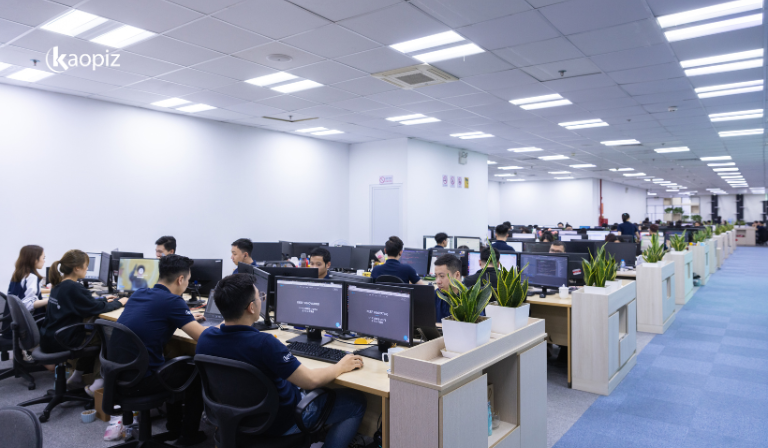
Moreover, we support the full lifecycle — from ideation and UX research to development, deployment, and long-term maintenance — ensuring speed, quality, and security at every stage.
What Sets Kaopiz Apart
- Strong presence in Singapore & APAC: We support clients across APAC, giving you access to regional insights and cost-efficient delivery.
- Proven cross-platform & AI engineering expertise: Our teams specialize in Flutter, React Native, Swift/Kotlin, Generative AI, predictive analytics, and cloud-native architectures.
- Enterprise-grade security & compliance: Kaopiz builds solutions aligned with PDPA, MAS TRM, and ISO-standard security practices — critical for fintech, healthcare, and government projects.
- Fast delivery with scalable talent: With a 700+ engineering team, we scale quickly, enabling businesses to fast-track MVPs, extend in-house teams, or build complete agile delivery squads.
- Cost-effective without compromising quality: Vietnam-based engineering allows clients to save 40–60% on development costs while maintaining world-class standards.
- Long-term partnership mindset: 98% of clients stay with Kaopiz for multi-year engagements — a testament to consistent quality, transparency, and reliable delivery.
Mr. Trinh Cong Huan, Chairman of Kaopiz Holdings shared: “We don’t walk ahead or behind — we walk together with our clients. This mindset defines our success in Japan and will continue shaping how we serve Singapore.”
Kaopiz Case Study: Cram School Application
A leading multi-branch cram school offering courses for students across different academic levels. The client required a unified mobile solution to modernize course registration, scheduling, and access to learning materials.
Key Challenges
- Managing hundreds of courses and schedules manually created operational bottlenecks.
- Students lacked a simple, mobile-friendly way to browse, apply, or change classes.
- Learning materials, attendance history, and previous class records were scattered across separate systems.
- No centralized method for tracking personal learning progress.
Kaopiz Solution
Kaopiz built a full-featured iOS and Android mobile application powered by a scalable modern architecture:
- Backend: Java Spring
- Frontend: Vue.js
- Database: MySQL
- Architecture: API-driven, modular, and optimized for high-volume course and schedule data
The platform delivers a seamless, intuitive experience for thousands of students.
Impact
- Streamlined course enrollment and scheduling management
- Enhanced student convenience with an all-in-one mobile app
- Centralized access to learning resources and study history
- Reduced administrative workload for staff
- A scalable digital foundation for future expansion and new services
What Is the Future of Mobile Applications in 2026?
Mobile app development trends in 2026 are shifting toward intelligent, hyper-connected, and sustainable digital ecosystems. Instead of static interfaces, apps will become AI-driven, predictive, and deeply integrated into users’ daily workflows.
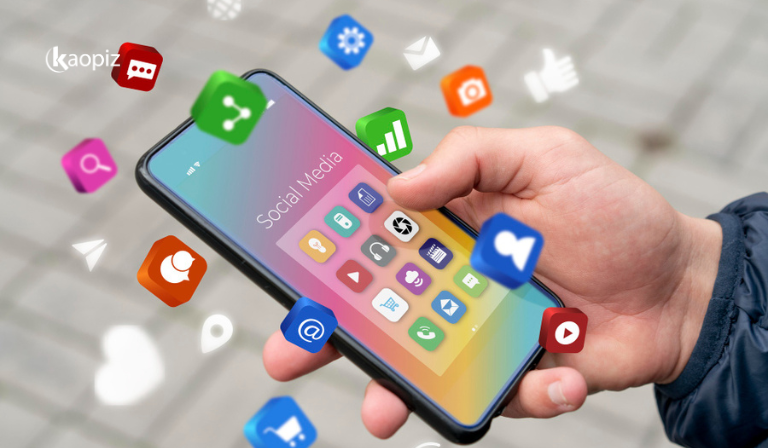
Key directions shaping the future technology in mobile phones:
- AI-native apps: Real-time personalization, generative features, conversational interfaces, and automated onboarding will become standard.
- Real-time performance: 5G + edge computing will enable instant interactions for fintech, logistics, telehealth, mobility, and AR/VR experiences.
- Faster development cycles: Cross-platform frameworks (Flutter, React Native), serverless backends, and low-code tools will cut build times by 30–50%.
- Stronger security: Expect stricter PDPA/MAS TRM requirements, AI-enhanced fraud detection, and adoption of decentralized identity (DID).
- Expanded ecosystems: Integration with wearables, IoT devices, and super-app models will accelerate.
- Sustainable tech: Green, battery-efficient, and lightweight mobile apps will gain preference as businesses pursue lower digital carbon footprints.
2026 mobile apps will be AI-powered, cloud-native, secure, interoperable, and sustainability-focused, enabling businesses to build smarter and scale faster.
Conclusion
To sum up, the mobile app landscape in Singapore is evolving faster than ever. It is shaped by AI, 5G, cloud-native architectures, immersive technologies, and rising expectations for security and personalization. For businesses, staying competitive in 2026 means adopting the right mobile application technology trends. Not every trend is relevant. The focus should be on technologies that match customer needs, regulatory requirements, and long-term digital goals.
Whether it’s predictive UX, generative AI, IoT integration, super-app ecosystems, or sustainable development, the future belongs to companies that innovate with purpose and build mobile experiences that are fast, intuitive, and trusted.
If your organization is exploring how to leverage these mobile application technology trends or planning your next mobile product, Kaopiz is ready to support you with end-to-end expertise — from strategy and UX to engineering and long-term maintenance.
FAQs
- What Is the Biggest Mobile App Trend in Singapore in 2026?
-
The biggest trend is AI-native mobile applications, especially:
- Predictive UX & hyper-personalization
- Generative AI features
- AI-driven security
- Which Industries in SG Benefit Most from Mobile App Innovation?
-
The industries with the fastest ROI include:
- Fintech & e-wallets – real-time payments, fraud detection
- Retail & e-commerce – personalization, AR shopping, m-commerce
- Healthcare – telemedicine, remote monitoring, AI triage
- Education – mobile learning, XR classes, digital platforms
- Logistics & mobility – IoT tracking, routing optimization
- How Much Does a Mobile App Cost in Singapore?
-
Typical costs range from:
- SGD 10,000–30,000 – basic MVP
- SGD 30,000–80,000 – mid-complexity app
- SGD 80,000–200,000+ – enterprise-level system
- Should I Choose Native or Cross-platform for My Business?
-
Choose native development if you need:
- Maximum performance
- Advanced device features (camera, sensors, AR/VR)
- High-security or financial-grade apps
- Faster development
- Lower cost
- Consistent UI across iOS and Android
- Easier maintenance
- How Long Does It Take to Build a Mobile App in 2026?
-
Typical timelines are:
- 2–3 months – MVP
- 4–6 months – standard app
- 6–12+ months – enterprise or multi-module app
Trending Post

No Comments yet!