












Web App Development Singapore: How to Build High-Performance Solutions at Half the Cost?
Web app development is now a critical investment for businesses in Singapore—but it often comes with a high price tag. Local talent costs, agency overheads, and long-term maintenance expenses can quickly push budgets beyond expectations.
The good news is that building a high-performance web application in Singapore doesn’t have to mean paying premium local costs. With the right delivery model, architecture decisions, and development strategy, businesses can reduce web app development costs by 40–60% while maintaining performance, security, and scalability.
In this guide, we explain why web app development costs are so high in Singapore, what truly drives those costs, and how companies can optimize budgets without cutting corners—from choosing the right technology stack to partnering with the right development team.
Table of Contents
- What Is Web App Development?
- Why Is Web App Development Essential for Singaporean Businesses Today?
- Web App Development Services in Singapore
- How Much Does Web App Development in Singapore Really Cost?
- When Cutting Web App Development Costs Makes Sense (And When It Doesn’t)
- Common Challenges of Web App Development in Singapore
- Choosing the Right Tech Stack for Your Scalable Web Application
- How to Choose the Right Web Application Development Partner in Singapore
- Why Partner with Kaopiz for Your Web App Journey?
- Top Web App Development Trends Shaping the Singapore Market
- Conclusion
- FAQs
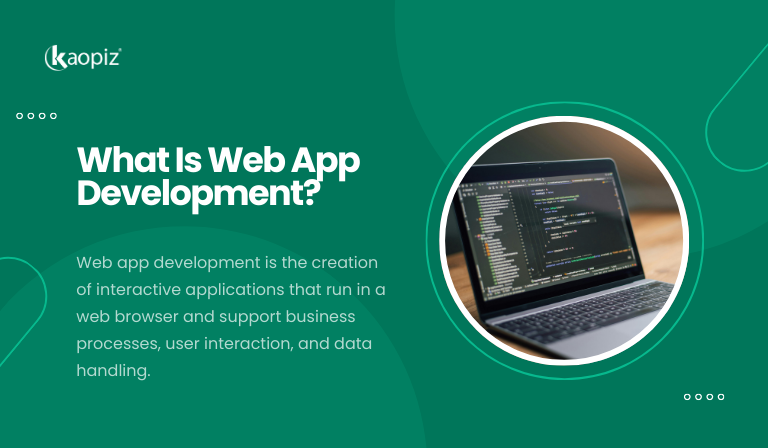
What Is Web App Development?
Web app development is the process of designing, building, and maintaining applications that run in a web browser rather than being installed on a user’s device. Unlike traditional websites, web applications are interactive, data-driven, and built to support real business workflows—from internal management systems and customer portals to full-scale SaaS platforms.
A well-built web app combines frontend interfaces (what users see and interact with) with backend systems that handle business logic, data processing, and integrations. This architecture allows web applications to scale easily, support multiple user roles, and evolve as business needs to change.
Web application development Singapore is not just a technical exercise—it is a long-term strategic investment. When planned correctly, a web application can automate manual processes, reduce operational costs, and support growth without requiring constant redevelopment. However, poor architecture or unclear requirements can quickly lead to performance issues and rising maintenance costs, making early design decisions critical to both performance and cost efficiency.
Why Is Web App Development Essential for Singaporean Businesses Today?
Singapore’s business environment is highly competitive, digital-first, and cost-sensitive. Companies are expected to move quickly, operate efficiently, and deliver reliable digital experiences—often with limited technical resources and high operating costs. Web app development has therefore become a core enabler of business efficiency and scalability, rather than a purely technical initiative.
Key reasons web app development is essential for Singaporean businesses include:
- Process automation and operational efficiency: Custom web applications help automate manual workflows, reduce reliance on fragmented tools, and centralize business operations such as customer management, reporting, and internal collaboration.
- Cost control in a high-expense market: With rising talent and operational costs in Singapore, web apps enable businesses to do more with leaner teams by improving productivity and minimizing long-term operational overhead.
- Scalability without rebuilding systems: Web applications are designed to scale across users, devices, and regions, allowing businesses to grow without repeatedly reinvesting in new systems.
- Seamless integration with existing platforms: Modern web apps integrate easily with ERP, CRM, payment gateways, and third-party services, ensuring data flows smoothly across the organization.
- Support for long-term digital transformation: As Singapore continues to position itself as a regional digital hub, web applications provide a flexible foundation for continuous improvement, innovation, and future technology adoption.
When built with the right architecture and development strategy, web applications help Singaporean businesses balance performance, scalability, and cost efficiency—making them essential in today’s fast-moving market.
Web App Development Services in Singapore
Web application development services in Singapore cover a wide range of business needs—from building new digital products to modernizing legacy systems. However, given the high cost of local development, the real value of these services lies not just in what is built, but in how efficiently it is delivered and scaled over time.
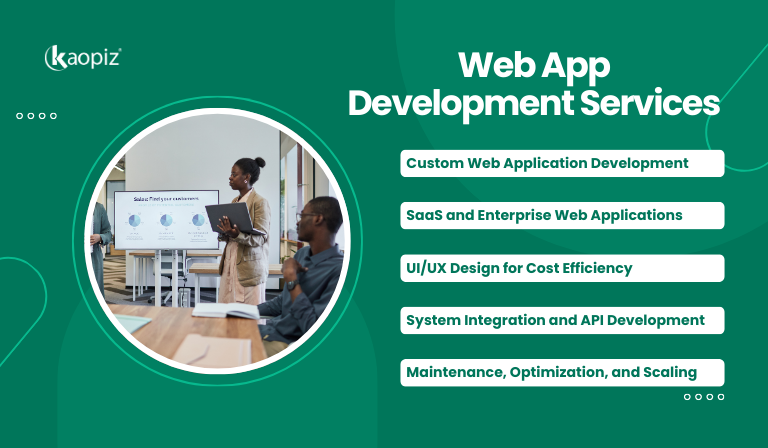
Well-structured web app development services should help businesses control costs while maintaining performance, security, and flexibility. Common service areas include:
- Custom Web Application Development: Tailored web apps designed around specific business workflows, user roles, and operational requirements. A clear scope and modular architecture help avoid unnecessary features that drive up development and maintenance costs.
- SaaS and Enterprise Web Applications: Scalable, multi-user platforms built to support growth without frequent rework. Proper planning at this stage reduces long-term costs by minimizing future redevelopment as user demand increases.
- UI/UX Design for Cost Efficiency: Thoughtful UI/UX design reduces user errors, shortens onboarding time, and prevents costly rework later in the development cycle. Good design decisions early on often translate into significant cost savings post-launch.
- System Integration and API Development: Connecting web applications with existing systems such as CRM, ERP, payment gateways, and third-party services to eliminate data silos and manual processes—both major sources of hidden operational costs.
- Maintenance, Optimization, and Scaling: Ongoing support services focused on performance optimization, security updates, and infrastructure efficiency. Proactive maintenance helps prevent expensive fixes and downtime as the application grows.
For Singaporean businesses, choosing web app development services that emphasize cost transparency, scalable architecture, and long-term efficiency is essential. When delivered with the right strategy, these services enable companies to build high-performance web applications while keeping development and operational costs under control.
How Much Does Web App Development in Singapore Really Cost?
Web app development costs in Singapore vary widely by delivery model, typically ranging from SGD 180,000–400,000+ for in-house teams, SGD 120,000–300,000+ with local agencies, and SGD 60,000–180,000+ using hybrid or offshore models. Understanding these benchmarks helps businesses identify where 40–60% cost savings are realistically achievable without sacrificing performance or scalability.
Why Web App Development Costs Are So High in Singapore
Web app development in Singapore delivers high quality, but it also comes with some of the highest costs in the region. Several structural factors drive these expenses.
- High developer salaries and talent shortages: A limited pool of experienced engineers pushes up salaries, recruitment costs, and retention expenses.
- Agency overhead and operational costs: Local agencies operate in a high-cost environment, and these overheads are often reflected in project pricing.
- Inefficiencies of in-house teams: In-house development requires long-term commitments, idle time between projects, and ongoing training costs.
- Over-engineering and unclear scope: Building overly complex solutions too early often leads to higher development and maintenance costs.
- Ongoing maintenance and compliance requirements: Security, performance, and regulatory needs add to the total cost over time.
Understanding these cost drivers is the first step toward choosing more cost-efficient development models without sacrificing quality.
Key Factors Affecting Web App Development Costs (2026 Update)
In 2026, web app development costs are shaped by both technical decisions and delivery models. Understanding these factors helps businesses control budgets without compromising performance or scalability.
- Project scope and complexity: The number of features, user roles, and system integrations directly affects development time and overall cost.
- UI/UX design requirements: Custom interfaces, advanced interactions, and accessibility standards increase effort but reduce costly rework later.
- Technology stack and architecture: Certain frameworks and architectures require more specialized skills and longer development cycles.
- Team structure and location: In-house teams and local agencies cost more than hybrid or offshore models due to salaries and overhead.
- Quality assurance and testing: Security, performance, and automated testing add upfront cost but prevent expensive issues post-launch.
- Compliance and security needs: Data protection, access control, and regulatory requirements increase complexity and long-term costs.
- Post-launch maintenance and scaling: Ongoing support, performance optimization, and infrastructure scaling contribute to the total cost of ownership.
💡 Insight: Most costs aren’t just about writing code — they reflect long-term reliability, performance, compliance, and scalability that drive business value. Understanding these will help you cut waste without sacrificing results.
Average Cost Ranges in Singapore
Web app development costs in Singapore vary widely depending on the delivery model, team structure, and project duration. While exact budgets depend on scope and complexity, the ranges below provide benchmarks commonly seen in the market for medium-complexity projects (3–6 months).
In-House Development Cost Range
Building an in-house development team in Singapore typically involves the highest total investment due to salaries, benefits, recruitment, and long-term overhead.
- Approximate range: SGD 180,000 – 400,000+ per project
- Costs include developer salaries, tech lead oversight, QA, tools, and idle time between phases.
- Best suited for companies with ongoing, long-term development needs and sufficient budget flexibility.
This model offers full control but creates high fixed costs that are difficult to scale down.
Local Agency Cost Range
Singapore-based agencies provide structured delivery and local expertise, but pricing reflects premium labor rates and agency overhead.
- Approximate range: SGD 120,000 – 300,000+ per project
- Costs vary based on feature complexity, integrations, security requirements, and support scope.
- Additional costs may arise from change requests or long-term maintenance agreements.
This approach reduces hiring effort but remains one of the most expensive delivery options.
Hybrid / Offshore Model (Where 40–60% Savings Come From)
A hybrid or offshore model combines local product ownership and communication with development teams in lower-cost regions, significantly reducing labor and overhead expenses.
- Approximate range: SGD 60,000 – 180,000+ per project
- Savings typically come from lower engineering costs, flexible team scaling, and reduced idle time.
- Quality and performance are maintained through clear architecture, QA processes, and active project management.
This model is where many Singapore businesses realistically achieve 40–60% cost savings compared to fully local approaches—without compromising scalability or reliability.
When Cutting Web App Development Costs Makes Sense (And When It Doesn’t)
Reducing web app development costs can be a smart business decision—but only when applied in the right context. Cost optimization is most effective when it focuses on efficiency, structure, and long-term value, not short-term savings at the expense of stability or security.

Understanding when to optimize costs and when to prioritize other factors helps businesses avoid false economies and costly mistakes.
When Cost Optimization Is the Right Strategy
Cost optimization makes sense in scenarios where flexibility, speed, and scalability are more important than heavy upfront investment.
- Early-stage products and MVPs: Startups and new product teams benefit from lean builds that validate ideas quickly without committing large budgets upfront.
- Internal systems and operational tools: Applications used for internal workflows, dashboards, or process automation can often be built efficiently without enterprise-level complexity.
- Scaling or enhancement phases: When an existing product needs new features or performance improvements, cost-efficient team models help scale development without inflating budgets.
- Businesses with limited in-house technical resources: Hybrid or offshore models reduce hiring and overhead costs while still providing access to experienced development teams.
In these cases, cost optimization improves time-to-market, budget control, and long-term sustainability.
When You Should Not Focus Only on Cost
There are situations where minimizing cost should not be the primary decision factor, as the risks outweigh potential savings.
- Mission-critical or revenue-core systems: Platforms that directly impact revenue, safety, or service continuity require maximum reliability and should not be built with cost as the sole priority.
- Highly regulated industries: Applications in sectors such as fintech, healthcare, or government must meet strict compliance, security, and audit requirements that demand deeper investment.
- Systems with complex security or data sensitivity needs: Projects involving sensitive personal or financial data require robust architecture, testing, and governance, which cannot be compromised.
- Projects with unclear or constantly changing requirements: When the scope is unstable, aggressive cost-cutting often leads to rework, delays, and higher total costs over time.
In these scenarios, quality, security, and long-term resilience should guide development decisions—cost optimization should support these goals, not undermine them.
Common Challenges of Web App Development in Singapore
While Singapore offers a strong digital ecosystem, building web applications in this market comes with several challenges that can directly impact cost, timelines, and long-term performance. Understanding these obstacles early helps businesses plan more effectively and avoid unnecessary overruns.
- High development and talent costs: Singapore’s competitive tech market drives up developer salaries and hiring expenses, making it difficult for companies to build or scale teams without significantly increasing budgets.
- Limited availability of senior technical talent: Experienced architects, DevOps engineers, and security specialists are in high demand, which can delay projects or force businesses to compromise on team composition.
- Scope creep and unclear requirements: Without clear planning, projects often expand beyond the original scope, leading to longer development cycles and higher-than-expected costs.
- Balancing speed with quality and security: Pressure to launch quickly can result in shortcuts that affect performance, scalability, or data protection—issues that are costly to fix later.
- Long-term maintenance and scalability challenges: Many web apps are built with short-term goals in mind, resulting in higher maintenance costs and limited ability to scale as the business grows.
Addressing these challenges requires more than technical expertise—it calls for clear scope definition, cost-aware architecture, and the right development partner to balance performance, security, and budget constraints effectively.
Choosing the Right Tech Stack for Your Scalable Web Application
Selecting the right tech stack is one of the most important decisions in web app development—because it directly affects performance, scalability, maintenance effort, and long-term cost. In Singapore’s high-cost environment, the wrong technology choices can lock businesses into expensive rebuilds and rising operational overhead.
A scalable web application should be designed to grow with your business without constant rework. Key considerations include:
- Avoiding over-engineered solutions: Using complex frameworks or microservices too early can increase development time and maintenance costs. A lean, well-structured architecture is often more cost-effective in the early and growth stages.
- Choosing technologies with strong ecosystem support: Popular frameworks and web app platforms benefit from mature tooling, community support, and available talent—reducing development risk and hiring costs over time.
- Designing for scalability from the start: The right stack allows you to scale users, features, and data volume without rebuilding core components, helping control future development expenses.
- Cloud-native and modular architecture: Leveraging cloud services and modular design enables flexible scaling and pay-as-you-grow infrastructure, avoiding unnecessary upfront investment.
- Balancing performance, security, and cost: A good tech stack supports fast response times and strong security while remaining practical to maintain within budget constraints.
For Singaporean businesses, the best tech stack is not the newest or most complex—it is the one that aligns with business goals, supports sustainable growth, and keeps long-term costs predictable. Choosing wisely at this stage can be the difference between a scalable asset and a costly technical burden.
How to Choose the Right Web Application Development Partner in Singapore
Choosing the right development partner is a strategic decision that directly affects cost control, delivery speed, and long-term success. In Singapore’s high-cost market, the right partner should help you build efficiently—without compromising performance, security, or scalability.
Key criteria to evaluate a web application development company include:
- Cost transparency and pricing model: Look for clear estimates, defined scopes, and pricing models that explain where your budget goes. Avoid partners who rely on vague ranges or frequent change requests to drive up costs.
- Experience with scalable, cost-efficient delivery models: Partners experienced in hybrid or offshore delivery can help reduce costs while maintaining quality through proven processes, timezone overlap, and strong communication.
- Architecture and planning capability: A strong partner challenges requirements, prioritizes features, and designs scalable architectures early—preventing over-engineering and costly rework later.
- Quality assurance and security practices: Reliable partners embed testing, performance checks, and security controls into the development process rather than treating them as add-ons.
- Communication and collaboration standards: Clear ownership, regular updates, and direct access to technical leads are essential—especially when teams are distributed.
- Track record and relevant experience: Past projects, case studies, and references demonstrate the partner’s ability to deliver similar solutions within budget and timeline constraints.
Ultimately, the right web application development partner in Singapore is not just a vendor who writes code, but a long-term collaborator who understands your business goals, manages costs proactively, and builds solutions that scale without unnecessary expense.
Why Partner with Kaopiz for Your Web App Journey?
Building a successful application in Singapore requires more than technical execution—it demands a web app development company that can control costs, deliver consistently, and scale efficiently. Kaopiz brings 11+ years of delivery experience, a team of 700+ engineers, and a track record of 1,000+ projects across startups, SMEs, and enterprises—helping businesses build web apps that perform reliably without inflating budgets.

Why “Cost by Half” Is Possible with Kaopiz
Achieving 40–60% cost savings is the result of delivery optimization—not shortcuts.
As a trusted software development company in Singapore, Kaopiz enables this through:
- Hybrid delivery models that reduce labor costs by 30–50% compared to fully local teams
- Architecture-first planning that cuts rework and scope creep by up to 20–30%
- Flexible team scaling, reducing idle capacity costs by 15–25% over a project lifecycle
- Cloud-native design, lowering infrastructure and maintenance costs by 20–40% over time
Compared to in-house or local-agency models, these levers combine to deliver half-cost outcomes while preserving performance, security, and scalability.
Get a realistic estimate and see how much you could save—no obligation, no sales pressure.
Our Agile Web Development Process
Kaopiz follows an Agile development process designed to control cost, reduce risk, and deliver value early.
- Discovery & planning: Requirements are clarified early, with a strong focus on scope prioritization and cost validation.
- Iterative development: Work is delivered in short sprints with regular demos, allowing continuous feedback and preventing costly late-stage changes.
- Continuous testing & quality assurance: Performance, security, and usability are tested throughout the project—not just at the end.
- Ongoing optimization: After launch, the application is monitored and optimized to support scaling without unexpected cost increases.
This Agile approach ensures transparency, predictable budgets, and steady progress—making it easier for businesses to build high-performance web applications without overspending.
Our Success Story: AI-Powered Shopping Prediction Web App
A retail and e-commerce company partnered with Kaopiz to build an AI-powered web application capable of predicting consumer shopping trends and supporting data-driven decision-making. The goal was to replace manual trend analysis with an automated, scalable solution that could transform unstructured customer input into actionable insights.
Business Challenges
The client struggled with fragmented, unstructured shopping data that made consumer behavior difficult to analyze. Trend analysis was largely manual, leading to inefficiencies and delayed insights, and the lack of clear visual dashboards further slowed data-driven decision-making.
Our Solution
Kaopiz designed and developed a user-friendly AI-powered web application that analyzes user-entered phrases to predict shopping needs and emerging trends.
Key features included:
- An AI-driven data analysis engine to process consumer behavior and generate predictive insights
- Real-time graphical visualizations to display trend popularity and forecasting results clearly
- A user management system to support access control and personalized experiences
- Cloud-based deployment on AWS, ensuring scalability, security, and reliable performance as data volumes grow
Results & Impact
- Enabled real-time, data-driven analysis of shopping trends
- Reduced reliance on manual analysis, improving operational efficiency
- Provided clear visual insights that supported faster and more informed decision-making
- Delivered a scalable solution without excessive infrastructure costs through cloud-native architecture
This project demonstrates how Kaopiz helps businesses build high-performance, AI-powered web applications that deliver advanced functionality while remaining cost-efficient and scalable—a practical example of achieving better outcomes without unnecessary development overhead.
Top Web App Development Trends Shaping the Singapore Market
Web app development trends in Singapore are increasingly shaped by one priority: building scalable, high-performance applications while controlling rising development and operating costs. The following trends are gaining traction because they help businesses deliver more value without inflating budgets.
- AI-assisted development and automation: AI tools are being used to accelerate coding, testing, and data analysis, helping teams reduce development time and manual effort while improving accuracy.
- Modular and reusable architectures: Businesses are adopting modular designs that allow features to be reused and extended over time, minimizing redevelopment costs as applications scale.
- Cloud-native and serverless adoption: Cloud-native architectures enable pay-as-you-go infrastructure, allowing companies to scale resources efficiently without large upfront investments.
- API-first and integration-ready systems: Modern web apps are built with integration in mind, reducing future costs when connecting to CRM, ERP, payment platforms, or third-party services.
- Security-by-design approaches: Embedding security early in development helps avoid expensive fixes later, especially important in Singapore’s compliance-driven environment.
- Data-driven UX optimization: Using analytics to refine user flows reduces rework and improves adoption, lowering long-term support and maintenance costs.
Together, these trends reflect a clear shift in Singapore’s market: web applications are no longer just about features, but about efficiency, scalability, and sustainable cost management. Businesses that align with these trends are better positioned to achieve high performance without excessive development spend.
Conclusion
Web app development in Singapore does not have to come with prohibitive costs. While local talent shortages and high operating expenses continue to push budgets upward, businesses that take a strategic, cost-aware approach can still build high-performance, scalable web applications without overspending.
As this guide has shown, the key lies in understanding what truly drives development costs—delivery models, architecture decisions, and long-term maintenance—not simply hourly rates. By choosing the right technology stack, optimizing scope early, and working with web developers Singapore experienced in hybrid and offshore delivery, businesses can realistically achieve 40–60% cost savings while maintaining quality, security, and reliability.
Ultimately, cost optimization is not about cutting corners. It is about building smarter. With the right strategy and the right partner, web applications can become a sustainable growth asset—delivering strong performance today and controlled costs well into the future.
FAQs
- How Long Does a Web App Project Take?
- Most web app projects take 3–6 months, depending on scope, integrations, and complexity. MVPs or internal tools can be delivered faster, while enterprise-grade systems typically require longer planning and testing phases.
- What Industries Benefit Most from Web Applications?
- Web applications are widely used across retail, e-commerce, logistics, fintech, healthcare, education, and professional services. Any industry that relies on data, workflows, or customer interaction can benefit from scalable web-based systems.
- How Do You Avoid Hidden Costs?
- Hidden costs are minimized through clear scope definition, transparent pricing models, early architecture planning, and iterative delivery. Regular reviews and Agile milestones help identify risks early, preventing costly rework later.
- How Does Kaopiz Ensure Web App Quality?
- Through a combination of Agile methodology, ISTQB-certified QA testing, and continuous feedback, Kaopiz ensures each application meets global performance and reliability standards.
- Can Kaopiz Migrate Legacy Systems to Modern Web Apps?
- Yes. Kaopiz specializes in system modernization and cloud migration using AWS, Azure, and other modern cloud platforms.
Trending Post


No Comments yet!