
How Hotels in Singapore Are Using AI in Hospitality to Drive Revenue & Personalization
In today’s highly competitive landscape, AI in hospitality is no longer just a trend but a strategic necessity for hotels aiming to scale both guest experience and revenue. From automated guest interactions to intelligent pricing decisions, AI is reshaping how hospitality businesses operate behind the scenes.
However, many leaders still struggle to understand what AI actually looks like in real operations, beyond the buzzwords. So, how does AI truly work in practice, and what does it take to turn data into measurable business outcomes?
Key takeaways:
- AI in hospitality is a strategic growth driver, not just a technology trend, enabling hotels to scale revenue, optimize operations, and enhance guest experience simultaneously
- The most impactful AI use cases in hospitality industry include chatbots, personalization, dynamic pricing, and predictive maintenance, all of which directly contribute to ROI
- The biggest failures in AI in hotel industry come from poor strategy, not technology, including unclear use cases, lack of integration, and unrealistic expectations
- A structured implementation approach is critical, starting with high-impact use cases, validating through pilots, and scaling based on proven results
- AI in the hospitality industry is evolving toward agentic and autonomous systems, where AI can make real-time decisions across pricing, marketing, and operations
- Markets like Singapore are accelerating adoption of AI, driven by high labor costs and increasing demand for personalized experiences
What Is AI in Hospitality and How It Actually Works in Real Operations
It’s important to go beyond surface-level use cases and look at how AI is defined, why it is becoming a competitive advantage, and how it actually works in day-to-day hotel operations.
Definition
AI in the hospitality industry refers to the use of machine learning, data analytics, and automation technologies to enhance guest experiences, optimize operations, and drive revenue growth. Today, artificial intelligence in hotel industry environments is applied across multiple touchpoints, from front-desk interactions to backend revenue systems.
Instead of relying on manual processes, hotels can leverage AI technology in hospitality industry ecosystems to process large volumes of guest and operational data, enabling faster and more accurate decision-making through scalable solutions.
Why AI in Hospitality Is Becoming a Competitive Advantage
The AI market in the hospitality industry has experienced rapid and exponential growth in recent years. It is projected to increase from $0.23 billion in 2025 to $0.37 billion in 2026, reflecting an impressive compound annual growth rate (CAGR) of 57.6%.

This strong growth has been driven by several key factors, including the digital transformation of hospitality operations, the expansion of online travel platforms, and a growing emphasis on enhancing customer experience. In addition, the rise of data-driven decision-making and the early adoption of automation technologies have played a significant role in accelerating AI adoption across the industry.
In markets like Singapore, where operational costs are high and customer expectations are constantly rising, AI in the hospitality industry has become a key differentiator. Businesses adopting AI strategies are able to deliver personalized, seamless experiences while maintaining efficiency—something traditional systems struggle to achieve.
How It Actually Works in Real Operations
At its core, AI use in the hospitality industry operates through a continuous cycle of data collection, model training, prediction, and automation. Data from booking systems, CRM platforms, and guest interactions is analyzed to identify patterns and predict behaviors, forming the foundation of advanced use cases such as dynamic pricing and personalized recommendations.
These insights are then used to automate actions like upselling or optimizing staff schedules, and with the rise of agentic AI in the hospitality industry, systems can increasingly make autonomous decisions in real time. However, alongside these advantages, leaders must also consider the disadvantages, particularly around data dependency, integration complexity, and implementation cost.
Key Benefits of AI in Hospitality for Business Leaders
As AI in hospitality continues to evolve, its value goes far beyond operational automation. The real impact lies in how AI directly influences revenue growth, cost efficiency, guest satisfaction, and strategic decision-making.
Boosting Revenue and RevPAR by Up to 20%
One of the most compelling benefits of AI is its direct impact on revenue growth. By leveraging AI use cases in the hospitality industry such as dynamic pricing and intelligent upselling, hotels can optimize room rates in real time based on demand, seasonality, and competitor data.
AI-driven revenue management systems can increase RevPAR by up to 20%, especially when integrated with scalable platforms built through a strong web app development process. This transforms AI from a cost center into a measurable profit driver.
Enhancing Guest Experience Through Hyper-Personalization
In today’s experience-driven economy, AI enables hotels to move beyond basic segmentation into real-time personalization. By analyzing guest behavior, preferences, and booking history, AI can recommend tailored services, room upgrades, and curated experiences.
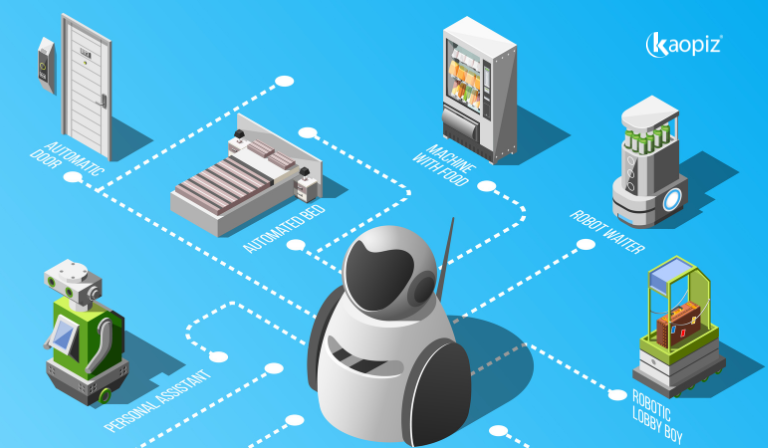
With this capability, AI allows businesses to deliver tailored recommendations, personalized offers, and seamless interactions. This not only improves satisfaction but also increases guest loyalty and lifetime value, turning experience into a long-term competitive advantage.
Reducing Operational Costs at Scale
Another key advantage of AI use in hospitality industry is its ability to automate complex and repetitive operational processes. From workforce scheduling to inventory control and energy management, AI reduces manual workload while improving overall efficiency.
This is especially valuable in markets with high labor costs, where scaling operations traditionally requires increasing headcount. By leveraging AI hospitality solutions, businesses can maintain service quality while significantly reducing operational expenses and improving margin performance.
Turning Data into Strategic Decision-Making
Data is one of the most valuable assets, but its true power lies in how it is used. Technology transforms raw data into actionable insights, enabling leaders to move from descriptive reporting to predictive and prescriptive decision-making.
Through advanced analytics, AI use cases in the hospitality industry allow businesses to forecast demand, optimize marketing strategies, and identify emerging trends earlier. This empowers companies to make faster, more informed decisions and align operations with long-term growth objectives.
Main AI Applications in Hospitality That Drive Real Business Impact
To fully understand the value of AI, business leaders need to look beyond theory and focus on where AI actually creates measurable impact. The following AI use cases are not just emerging trends, but proven applications already driving revenue, efficiency, and guest satisfaction across leading hotel brands globally.
AI Chatbots & Virtual Assistants
One of the most widely adopted AI applications in the hotel industry is chatbots and virtual assistants, enabling 24/7 guest interaction without increasing staffing costs. These systems handle common requests such as booking inquiries, check-in information, and service requests, significantly improving response time and operational efficiency.
A real-life example is Marriott International, which has implemented AI-powered chatbots to support customer service across digital channels. This allows them to maintain consistent guest communication at scale while freeing up human staff to focus on higher-value interactions.
Personalization with AI
Personalization is at the core of AI in the hospitality industry, where AI analyzes guest data to deliver tailored experiences in real time. From customized room preferences to targeted offers, hotels can create more relevant and engaging guest journeys.
For example, Hilton uses AI-driven systems to personalize guest experiences through its digital platforms. By leveraging behavioral data, Hilton enhances customer engagement and increases repeat bookings, demonstrating the true benefits of AI in the hospitality industry.
Dynamic Pricing & Revenue Management with AI
Dynamic pricing is one of the most powerful AI use cases in the hospitality industry, allowing hotels to adjust room rates based on demand, seasonality, and competitor activity. This ensures optimal pricing at any given time, directly impacting revenue performance.
A strong example is Accor, which uses advanced AI-driven revenue management systems to optimize pricing strategies across its global portfolio. This enables more accurate forecasting and improved RevPAR through data-driven decisions.
Operational Efficiency
AI plays a critical role in improving operational efficiency by automating backend processes such as staff scheduling, inventory management, and energy optimization. This helps reduce costs while maintaining service quality, especially in high-cost markets.
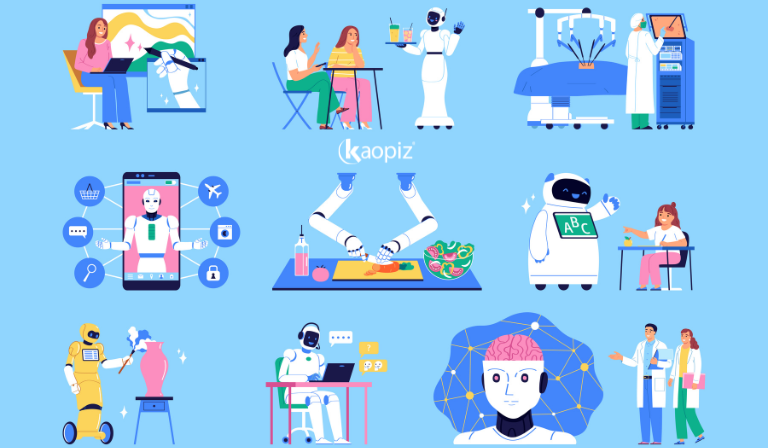
For instance, InterContinental Hotels Group leverages AI to streamline operations and improve resource allocation across properties. This demonstrates how AI hospitality solutions can drive efficiency at scale without compromising guest experience.
Facial Recognition & AI Security
Facial recognition is an emerging AI technology in the hospitality industry that enhances both security and guest convenience. It enables faster check-in processes and creates a frictionless experience while ensuring higher levels of identity verification.
A notable example is Alibaba Group through its FlyZoo Hotel concept, where facial recognition is used for check-in, room access, and payments. This showcases how AI in tourism and hospitality is redefining the guest journey toward a fully contactless experience.
Predictive Maintenance
Predictive maintenance has emerged as a critical, high-ROI application of AI in the hospitality sector. By leveraging IoT sensors and machine learning to analyze real-time usage patterns, hotels can identify potential mechanical failures before they disrupt the guest experience.
A leading example is the Siemens Building X platform, an AI-powered suite that allows hotel groups like the H Hotels Collection to monitor critical HVAC and energy systems autonomously. These solutions have been shown to reduce energy consumption by up to 30% and increase net operating income by 10% by preemptively flagging maintenance needs. This proactive approach minimizes costly operational downtime and significantly extends the lifespan of expensive building assets.
Why Many AI in Hospitality Projects Fail (And How to Avoid It)
Many projects fail to deliver expected ROI. The issue is rarely the technology itself, but rather misalignment in strategy, data readiness, and execution. Understanding these common pitfalls is critical for enterprises aiming to turn AI into a real competitive advantage.
| Common Failure | What Happens | Impact | How to Avoid |
|---|---|---|---|
| No Clear Use Case | AI is adopted as a trend, without being tied to business goals | Wasted budget and unclear ROI | Start with high-impact use cases such as pricing or personalization |
| Poor Data Quality | Data is fragmented, inconsistent, or unclean across systems | Inaccurate predictions and unreliable outputs | Build a strong data foundation and integrate key systems early |
| Over Expectation | Leaders expect instant results from AI in the hotel industry | Project abandonment before real value is realized | Treat AI as a long-term capability, not a quick fix |
| Lack of Integration | AI is not connected to core systems like PMS or CRM | Insights cannot be applied in real operations | Prioritize scalable, integrable solutions from the start |
| Weak Change Management | Teams resist AI or do not understand how to use it | Low adoption and limited business impact | Train teams and build a data-driven culture |
| Wrong Vendor Choice | The vendor lacks hospitality or AI domain expertise | Poor performance and limited scalability | Choose partners with both hospitality and AI experience |
| No KPI Tracking | There are no clear success metrics in place | The business cannot prove AI’s value | Define KPIs such as RevPAR and cost savings early |
| Scaling Too Early | AI is expanded before the pilot is validated | Resource waste and avoidable complexity | Follow a pilot → validate → scale approach |
To avoid these pitfalls, businesses need a structured and strategic approach rather than ad-hoc implementation. The next step is understanding how to successfully deploy AI in hospitality in a way that delivers measurable and scalable business outcomes.
How to Successfully Implement AI in Hospitality
To successfully implement AI, organizations need a structured, business-driven approach rather than isolated experimentation. The goal is to turn AI into a scalable capability that delivers measurable impact across revenue, operations, and guest experience.

- Identify high-impact use cases first: Prioritize areas where AI in the hotel industry can deliver immediate value such as dynamic pricing, guest personalization, or AI chatbots. Avoid trying to apply AI across all operations at once, and instead focus on quick wins that prove ROI early.
- Assess your data readiness and system landscape: Effective AI use in the hospitality industry depends heavily on data quality and integration. Ensure your PMS, CRM, and booking systems can provide clean, unified, and real-time data to support AI-driven decisions.
- Select the right AI solutions and technologies: Choose AI hospitality solutions that align with your strategic goals, whether it is revenue management systems, personalization engines, or operational automation tools. Flexibility and scalability should be key decision criteria.
- Start with pilot projects before scaling: Test AI use cases in the hospitality industry through controlled pilots to validate performance and ROI. This reduces risk, allows for optimization, and builds internal confidence before broader deployment.
- Build or partner strategically: Decide whether to develop in-house capabilities or collaborate with external experts in AI in tourism and hospitality. For many businesses, especially in competitive markets, partnering can accelerate implementation and reduce execution complexity.
- Establish governance and human oversight: Maintain control over AI outputs by implementing clear governance frameworks. This includes data security, compliance, and ensuring alignment with business objectives.
By following this structured approach, businesses can move from experimentation to execution, transforming AI into a long-term competitive advantage that drives both efficiency and growth.
Build Scalable AI in Hospitality Solutions with Kaopiz
To fully unlock the value of AI in hospitality, businesses need more than just tools. They need a partner that understands both AI technologies and the operational realities of the hospitality industry. Kaopiz delivers tailored, scalable solutions that help hotels and hospitality businesses turn AI into measurable business outcomes.
Kaopiz combines strong expertise in AI in the hospitality industry with deep experience in building web and mobile platforms, enabling seamless integration with PMS, CRM, and booking systems. This ensures that AI is not just implemented, but embedded into real operations to drive revenue, efficiency, and guest satisfaction.
Why Kaopiz stands out in AI in Hospitality:
- 12+ years of experience, 1,000+ projects delivered, and a large team of AI, data, and cloud engineers, ensuring both technical depth and proven execution
- Strong presence in Singapore and Vietnam, enabling cost-efficient delivery with up to 40–60% savings while maintaining high quality standards
- Extensive experience building AI hospitality solutions tailored to real business needs, not just generic implementations
- End-to-end AI in-hotel industry solutions including chatbots, personalization engines, predictive analytics, and AI-driven automation
- Advanced capabilities in Generative AI, computer vision, and NLP for use cases like virtual assistants, facial recognition, and voice AI
- Scalable cloud and data infrastructure (AWS, Azure) to support long-term growth in AI in tourism and hospitality industry
- MVP-first approach to validate AI use cases in hospitality industry, reduce risk, and prove ROI early
- Flexible engagement models combined with strong focus on scalability, integration, and long-term value
- Partnership-driven mindset to continuously optimize and expand AI use in hospitality industry as business needs evolve
By partnering with Kaopiz, hospitality businesses can build AI in hospitality solutions that are not only innovative but also practical, scalable, and aligned with real business outcomes.
The Future of AI in Hospitality (2026-2030)
The industry is entering a phase where AI is no longer just a support tool but a core driver of growth, efficiency, and competitive advantage. The following trends will define how AI in hospitality industry transforms over the next few years:
- Agentic AI → execution: Moves from insights to action, automatically adjusts pricing, inventory, and campaigns in real time.
- Hyper-personalization: Real-time, context-aware guest experiences based on behavior, preferences, and intent.
- End-to-end automation: AI embedded across operations, from front desk to back office, for leaner efficiency.
- Unified AI ecosystem: Integrated PMS, CRM, and third-party data create a single source of truth for smarter decisions.
- AI as co-pilot: Supports leaders with predictive insights and real-time recommendations for better decisions.
- Faster adoption in key markets: Regions like Singapore are accelerating AI use, gaining efficiency and CX advantages.
These trends show that the future of AI is not just about technology, but about building intelligent, adaptive systems that continuously optimize business performance at scale.
Conclusion
AI in hospitality is no longer a future concept but a present-day competitive necessity. From boosting revenue through dynamic pricing to enhancing guest experience with personalization and optimizing operations at scale, AI is transforming how businesses create value and stay competitive.
For enterprises, the real opportunity lies not just in adopting AI, but in implementing it strategically. Success depends on choosing the right use cases, building a strong data foundation, and scaling solutions that deliver measurable ROI across the organization.
FAQs
- What Is AI in Hospitality and How Is It Used in Real Operations?
- AI in hospitality refers to the use of artificial intelligence technologies such as machine learning, automation, and data analytics to improve guest experience, optimize operations, and increase revenue. In practice, it is used for chatbots, dynamic pricing, personalization, and operational automation across hotels and hospitality businesses.
- What Are the Key Benefits of AI in the Hospitality Industry?
- The main benefits of AI in hospitality industry include increased revenue through smarter pricing, enhanced guest experience via personalization, reduced operational costs through automation, and better decision-making using real-time data insights.
- What Are the Most Common AI Use Cases in Hospitality?
- Popular AI use cases in hospitality industry include AI chatbots for customer service, recommendation systems for personalization, dynamic pricing engines, predictive maintenance, and facial recognition for seamless check-in experiences.
- What Challenges Do Businesses Face When Implementing AI in Hospitality?
- Common challenges in AI in hotel industry include poor data quality, lack of system integration, unclear ROI, and internal resistance to change. Without a clear strategy and proper data foundation, AI projects often fail to deliver expected results.
- How Can Hotels Successfully Implement AI in Hospitality?
- To succeed with AI in the hospitality industry, businesses should start with high-impact use cases, ensure data readiness, run pilot projects, and scale gradually. Partnering with experienced providers can also help reduce risks and accelerate implementation.
Author

Leo Nguyen
Chief Executive Officer of Kaopiz Global
Table of Contents
Don’t miss what’s next!
Thank you! Your form has been submitted successfully.