

How Much Does It Cost to Hire Developers in Singapore vs Vietnam (2026)
The cost to hire developers in Singapore vs Vietnam has become a critical consideration for companies building digital products in 2026. With developer salaries in Singapore reaching $4,000–$12,000+ per month and ongoing talent shortages, many businesses are facing increasing pressure to optimize costs without slowing down development.
At the same time, Vietnam has emerged as a leading offshore destination, offering 40–60% cost savings, a rapidly growing talent pool, and the ability to scale teams quickly. But beyond the price difference, the real question is: which option delivers the best balance of cost, quality, and speed for your business?
In this guide, we break down the cost to hire developers in Singapore vs Vietnam, including salary benchmarks, hidden costs, trade-offs, and hiring models—so you can make a confident, data-driven decision.
Key Takeaways:
- The cost to hire developers in Singapore vs Vietnam ranges from $3,000 – $12,000+ vs $900 – $4,500 per month, making Singapore significantly more expensive across all experience levels.
- Hiring in Vietnam can deliver 40–60% cost savings, helping businesses optimize budgets without sacrificing development capacity.
- Beyond salaries, hidden costs of 20–40% in Singapore, such as recruitment, infrastructure, and management, can significantly increase total expenses.
- Hiring timelines differ greatly, with Singapore taking 4–12 weeks, while Vietnam enables faster onboarding in just 1–3 weeks.
- In terms of strengths, Singapore excels in specialized and leadership roles, while Vietnam is ideal for cost-efficient scaling and long-term development teams.
Developer Hiring Cost in Singapore vs Vietnam (Detailed Comparison)
Hiring developers in Singapore can cost $3,000–$12,000+ per month, while in Vietnam, similar roles typically range from $900–$4,500+ per month, depending on experience and specialization. Below is a detailed breakdown cost to hire developers in Singapore vs Vietnam to help you compare costs across roles, levels, and engagement models.
Average Salary Comparison by Role & Level
To accurately compare the cost to hire developers in Singapore vs Vietnam, it’s essential to break down salaries by both experience level and role complexity. While both markets offer strong engineering talent, the difference in software developer salaries between Vietnam and Singapore is significant due to variations in cost of living, talent supply, and market demand.
Then, how much does a developer cost? Below is a benchmark of typical monthly software developer salaries in Vietnam and Singapore in 2026:
| Level | Singapore (Monthly) | Vietnam (Monthly) |
|---|---|---|
| Junior (0–2 years) | $3,000 – $5,000 | $900 – $1,300 |
| Mid-level (2–5 years) | $5,000 – $8,500 | $1,500 – $2,500 |
| Senior (5+ years) | $8,500 – $12,000+ | $2,800 – $4,500+ |
Key insights:
- Companies hiring in Singapore typically pay 2–3x more than in Vietnam across all levels.
- The gap widens at the senior level, where experienced engineers in Singapore command premium salaries due to intense competition and limited talent supply.
- Vietnam has rapidly developed a strong mid-to-senior talent pool, especially in areas like web, mobile, and cloud development, making it a cost-efficient alternative for scaling teams.
In addition to experience level, salaries also vary by specialization. For example:
- AI/ML engineers, DevOps specialists, and cybersecurity experts tend to earn higher-than-average salaries in both markets.
- Frontend and backend developers are more widely available, especially in Vietnam, which helps keep costs more competitive.
It’s important to note that these figures represent base salary only. In Singapore, the total cost can increase significantly when factoring in CPF contributions, bonuses, insurance, and office expenses. In contrast, hiring in Vietnam, particularly through offshore or dedicated team models, often bundles cost to hire a web developer into a more predictable monthly rate.
Hourly & Monthly Rates Breakdown
Beyond base salaries, many companies, especially in Singapore, evaluate developers based on hourly or monthly rates, particularly when working with contractors, agencies, or offshore teams. Understanding these pricing structures is essential to compare the true cost of hiring developers in Singapore vs Vietnam.
Based on market benchmarks from recruitment platforms and salary aggregators:
- Developers cost per hour in Singapore typically charge around $55–$65/hour on average for software engineering roles
- In contrast, Vietnam offers significantly lower cost structures, with total monthly salaries commonly ranging from ~$1,100 to $3,500 depending on experience
| Engagement Type | Singapore (Hourly) | Vietnam (Hourly) | Singapore (Monthly) | Vietnam (Monthly) |
|---|---|---|---|---|
| Freelance / Contract | $40 – $100+ | $15 – $35 | $6,000 – $15,000+ | $2,000 – $5,000 |
| Agency / Vendor | $60 – $150+ | $20 – $50 | $8,000 – $20,000+ | $3,000 – $8,000 |
| Dedicated Team (ODC) | $50 – $120 | $18 – $40 | $7,000 – $16,000 | $2,500 – $6,000 |
Key insights:
- Offshore vendors in Vietnam typically offer bundled monthly rates, which may include management, QA, and infrastructure support, making budgeting more predictable.
- Freelancers in both markets can appear cheaper upfront, but often come with higher variability in quality, availability, and long-term reliability.
Another important factor is billing efficiency:
- In Singapore, companies often pay for full-time employment regardless of workload fluctuations.
- In Vietnam’s offshore model, businesses can scale hours or team size more flexibly, optimizing cost based on actual project needs.
For example: A mid-level developer in Singapore may cost ~$6,750/month on average, but total cost can exceed $9,000–$11,000 when including benefits and overhead. Meanwhile, a similarly skilled developer in Vietnam may cost $2,000–$3,000/month all-in, offering a significant cost advantage.
The Hidden Costs Most Companies Overlook
When comparing the cost to hire developers in Singapore vs Vietnam, many businesses focus only on salary or hourly rates. However, in reality, these figures often represent just 60–80% of the total cost. The remaining hidden costs, from recruitment to ongoing operations, can significantly impact your budget and ROI.
Understanding these factors is critical to making an informed hiring decision, especially for companies looking to scale efficiently.
Hiring & Recruitment Costs
Hiring developers, particularly in a competitive market like Singapore, comes with substantial upfront and ongoing expenses.
- Recruitment agency fees: Typically range from 15–25% of annual salary per hire
- Time-to-hire: Can take 4–12 weeks, delaying project timelines
- Internal HR costs: Screening, interviews, and coordination require dedicated resources
- Opportunity cost: Delays in hiring can slow down product development and time-to-market
In contrast, offshore models in Vietnam often provide ready-to-deploy developers, reducing both hiring time and associated costs.
Skip lengthy hiring cycles and unpredictable recruitment costs. With Kaopiz’s dedicated development team model, you can access pre-vetted, ready-to-deploy engineers in as little as 1–2 weeks, without agency fees or heavy HR overhead.
Infrastructure & Benefits
Beyond salaries, companies must also account for the cost of maintaining a productive working environment.
- Office space & utilities: Particularly high in Singapore
- Equipment & software: Laptops, licenses, development tools
- Employee benefits: CPF contributions, insurance, bonuses, paid leave
- Compliance costs: Legal, payroll, and administrative overhead
These expenses can add 20–30% on top of base salary in Singapore, significantly increasing the total cost per developer.
With offshore teams in Vietnam, many of these costs are typically bundled into a fixed monthly rate, offering better cost predictability.
Management & Productivity Cost
Even after hiring, the true cost of a developer depends heavily on how effectively the team is managed and how quickly they can deliver value.

- Onboarding & ramp-up time: New hires may take weeks or months to reach full productivity
- Management overhead: Project managers, team leads, and coordination efforts
- Productivity gaps: Skill mismatch, communication inefficiencies, or lack of process
- Attrition & replacement: High turnover can lead to repeated hiring and onboarding costs
In Singapore, where salaries are higher, these inefficiencies become more expensive.
Meanwhile, structured offshore models, such as dedicated development teams, often include built-in management, standardized processes, and replacement policies, helping reduce productivity loss and stabilize long-term costs.
Singapore vs Vietnam: Cost vs Quality Trade-Off
When evaluating countries to hire developers, the decision goes beyond cost alone. Businesses must balance technical quality, collaboration efficiency, and the ability to scale. Singapore and Vietnam each offer distinct advantages, and understanding these trade-offs is key to choosing the right strategy for your product and growth stage.
Talent Quality & Skill Level
Singapore offers a highly mature tech ecosystem with strong expertise in areas such as fintech, enterprise systems, and solution architecture. Developers here often bring deep domain knowledge and experience working in complex, regulated environments. However, this level of expertise comes at a premium, and the talent pool is relatively limited.
Vietnam, by contrast, has built a large and fast-growing engineering workforce, supported by a steady pipeline of over 50,000 IT graduates annually. Developers are particularly strong in web, mobile, cloud, and emerging AI technologies, with many having experience working on international projects.
Communication & Collaboration
Working with Singapore-based teams offers the advantage of real-time communication, cultural alignment, and minimal language barriers, making collaboration straightforward, especially for stakeholders who require frequent in-person interaction.
In Vietnam, communication has improved significantly in recent years. Many developers are comfortable working in English and are familiar with Agile workflows, including daily stand-ups, sprint planning, and remote collaboration tools like Jira, Slack, and Zoom.
Speed & Scalability
One of the biggest challenges in Singapore is the limited talent pool and high competition, which can extend hiring timelines to several weeks or even months. According to the ManpowerGroup Talent Shortage Survey 2025, 77% of employers in the Asia Pacific region report difficulty finding skilled talent, significantly higher than 45% in 2014 and above the global average of 74%. As a result, scaling a team quickly—especially for fast-moving projects—can be both costly and operationally challenging.

Vietnam offers a clear advantage in speed and scalability. With a large pool of available developers and a well-established outsourcing ecosystem, companies can:
- Onboard developers in a shorter timeframe
- Scale teams up or down based on project needs
- Access diverse skill sets without long recruitment cycles
Additionally, established offshore providers streamline the process further by offering ready-to-deploy teams, reducing the time required for sourcing, screening, and onboarding.
When to Hire in Singapore vs When to Outsource to Vietnam
Choosing between Singapore and Vietnam ultimately depends on your business priorities, project requirements, and growth stage. While Singapore offers proximity and specialized expertise, Vietnam provides a more scalable and cost-efficient approach. The key is aligning your hiring strategy with what your business needs most at a given time.
Choose Singapore If
- You need on-site collaboration or frequent stakeholder interaction: Ideal for roles that require close coordination with business teams, leadership, or clients.
- You are hiring for highly specialized or leadership positions: Roles such as solution architects, tech leads, or domain experts in regulated industries (e.g., fintech, healthcare).
- Your project requires deep local market knowledge: Especially relevant for products tailored to Singapore users, compliance requirements, or local integrations.
- Budget is less of a constraint than speed of decision-making on-site: You are willing to pay a premium for proximity, convenience, and immediate alignment.
Choose Vietnam If
- You want to optimize development costs without compromising quality: Vietnam offers 40–60% cost savings while maintaining strong engineering capabilities.
- You need to scale your development team quickly and flexibly: Ideal for startups and growing companies that need to ramp up resources fast.
- You are building or iterating on digital products (MVP, SaaS, platforms): Vietnam teams are well-suited for Agile development and continuous delivery.
- You prefer predictable, all-in cost models: Offshore or dedicated team setups often bundle infrastructure, management, and operational costs.
- You are open to remote or hybrid collaboration models: With the right processes, distributed teams can deliver efficiently across time zones.
Best Hiring Models to Optimize Cost
Choosing the right hiring model is just as important as choosing the right location. Each approach, in-house, freelancers, or offshore development teams, comes with different cost structures, levels of control, and scalability. Understanding these differences helps businesses optimize both budget and delivery efficiency.
In-house Hiring
Building an in-house team in Singapore offers the highest level of control, alignment, and long-term stability. Developers work closely with internal stakeholders, making communication seamless and decision-making faster.

However, this model is also the most expensive:
- High base salaries and rising market rates
- Additional costs such as CPF contributions, benefits, office space, and equipment
- Longer time-to-hire, especially for mid-to-senior roles
In-house hiring is best suited for:
- Core product ownership
- Strategic or leadership roles
- Companies with sufficient budget and long-term hiring plans
Freelancers
Freelancers provide a flexible option for short-term or specialized tasks, often with lower upfront costs compared to full-time hires.
Advantages include:
- No long-term commitment
- Faster onboarding for small tasks
- Access to niche skills on demand
However, there are trade-offs:
- Inconsistent availability and quality
- Limited accountability for long-term outcomes
- Higher coordination and management effort
- Potential risks in security and knowledge continuity
Freelancers are most effective for:
- Small projects or one-off tasks
- Rapid prototyping
- Supplementing an existing team
Offshore Development Center (ODC)
An ODC is a dedicated team model where developers are based in a cost-efficient location like Vietnam but work as an extension of your internal team.
This model offers the best balance between cost, control, and scalability:
- 40–60% cost savings compared to Singapore
- Access to a large, scalable talent pool
- Faster hiring and onboarding
- Predictable monthly costs (often all-inclusive)
- Structured processes with built-in management and QA
Unlike freelancers, ODC teams provide long-term commitment and team stability, while still offering flexibility to scale resources up or down.
ODC is ideal for:
- Startups building and scaling products
- SaaS companies with continuous development needs
- Enterprises expanding digital capabilities
Key takeaway:
- In-house → Maximum control, highest cost
- Freelancers → Flexible, but less reliable for long-term projects
- ODC → Best balance of cost efficiency, scalability, and consistent delivery
Why Singapore Companies Choose Vietnam for Software Development
As development costs continue to rise and competition for talent intensifies in Singapore, more companies are turning to Vietnam as a strategic destination for software development. Beyond cost savings, Vietnam offers a compelling combination of technical capability, scalability, and long-term value, making it an increasingly popular choice for startups, SMEs, and enterprises alike.

- Significant Cost Advantage: Companies can achieve 40–60% cost savings compared to hiring locally in Singapore, not just in salaries but also in recruitment and operational expenses. This allows businesses to extend runway and allocate budget more strategically.
- Strong and Growing Talent Pool: Vietnam produces over 50,000 IT graduates annually, creating a deep and expanding pool of developers. Many engineers are experienced in global projects and modern tech stacks such as cloud, mobile, and AI.
- Faster Hiring and Scalability: Compared to Singapore’s competitive hiring market, Vietnam enables faster onboarding and easier team scaling. Companies can quickly ramp resources up or down based on project needs without long recruitment cycles.
- Mature Outsourcing Ecosystem: Vietnam has become a well-established outsourcing hub with proven delivery models, Agile processes, and experienced vendors. This helps reduce management overhead and ensures consistent development quality.
- Strong Collaboration with Singapore Market: Vietnam teams are increasingly aligned with Singapore business practices, with good English proficiency and familiarity with Agile workflows. Time zone compatibility also supports smooth, real-time collaboration.
Why Choose Kaopiz as Your Offshore Development Partner
Choosing the right offshore partner is critical to ensuring not just cost savings, but also consistent quality, smooth collaboration, and long-term scalability. At Kaopiz, we combine technical expertise with a Singapore-focused delivery approach to help businesses build and scale high-performing development teams with confidence.
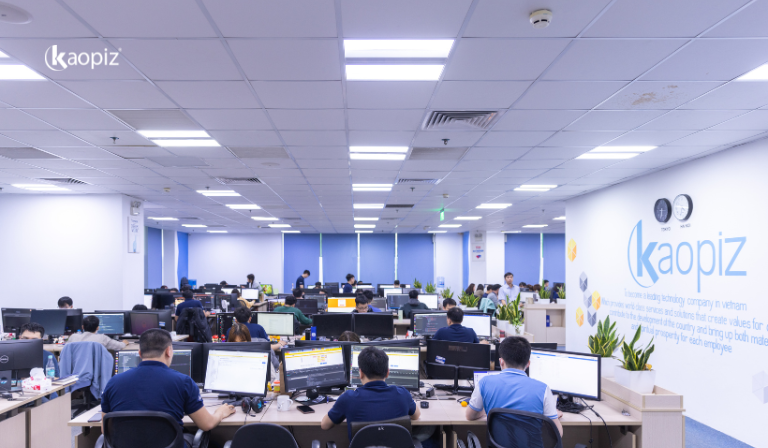
- 1,000+ Engineers with Proven Expertise: With a large in-house team and experience across industries such as fintech, healthcare, logistics, and education, Kaopiz delivers reliable, production-ready solutions tailored to business needs. Our engineers are experienced in modern tech stacks, from web and mobile to AI and cloud.
- Cost-Efficient Without Compromising Quality: By leveraging our offshore model in Vietnam, we help Singapore companies achieve up to 60% cost savings while maintaining high development standards. Our structured processes ensure quality, security, and performance at every stage.
- Fast Team Setup & Scalable Delivery: We provide ready-to-deploy developers within 1–2 weeks, enabling you to start quickly and scale your team as your project grows. Whether you need a single developer or a full dedicated team, we adapt to your timeline and requirements.
- Singapore-Focused Communication & Workflow: Our teams are experienced in working with Singapore clients, ensuring clear English communication, Agile collaboration, and aligned working hours (GMT+7). This minimizes friction and keeps projects moving efficiently.
- Enterprise-Grade Security & Quality Standards: Kaopiz is ISO 27001 and ISO 9001 certified, with established DevOps and quality assurance processes. We prioritize data security, code quality, and long-term maintainability in every project.
- Flexible Engagement Models (ODC, Dedicated Team, Staff Augmentation): We offer flexible hiring models tailored to your needs, with a strong focus on ODC, the optimal balance between cost control, scalability, and long-term collaboration.
“The company has proven to be a very dependable and motivated partner for development and engineering. They have a really robust and qualified team spanning across all of the different disciplines of software engineering. They managed to do this in record time—recruiting the appropriate team and scaling it as needed. They are a very dependable partner for entrepreneurs to realize their aspirations and bring them to market.” – Ariel Geifman, Founder of Felix AI
Whether you’re building an MVP or expanding an enterprise system, Kaopiz helps you reduce hiring costs, accelerate delivery, and scale with confidence.
Conclusion
When evaluating the cost to hire developers in Singapore vs Vietnam, it’s clear that the difference goes far beyond base salaries. Singapore offers strong local expertise and proximity, but at a significantly higher cost and with longer hiring timelines. Vietnam, in contrast, provides a more cost-efficient alternative with 40–60% savings, a rapidly growing talent pool, and greater scalability for development teams.
For many businesses, the optimal strategy is not choosing one over the other, but combining both—leveraging Singapore for strategic roles while using Vietnam to scale execution. This approach allows companies to balance cost, quality, and speed, which are essential for building and growing digital products effectively.
FAQs
- Is Hiring Developers in Vietnam Lower Quality Than Singapore?
- Not necessarily. While Singapore has strong expertise in specialized and leadership roles, Vietnam offers a large pool of skilled mid-to-senior developers with experience in global projects. With the right partner and processes, companies can achieve high-quality outcomes at a lower cost.
- Why Is Hiring Developers in Singapore More Expensive?
- Hiring in Singapore is more expensive due to: higher cost of living, limited talent supply and strong competition, and dditional costs such as CPF contributions, benefits, and office overhead. These factors increase the total cost beyond base salary.
- How Much Can Companies Save by Outsourcing to Vietnam?
- Most companies can save 40–60% when outsourcing development to Vietnam. The savings come not only from lower salaries but also from reduced recruitment, infrastructure, and operational costs.
- What Is the Best Hiring Model to Optimize Cost?
-
For long-term projects, the Offshore Development Center (ODC) or dedicated team model is often the most cost-effective. It provides:
- Predictable monthly costs
- Scalable team size
- Better control compared to freelancers
- How Long Does It Take to Hire Developers in Singapore vs Vietnam?
- In Singapore, hiring can take 4–12 weeks or longer due to competition and talent shortages. In Vietnam, especially through offshore partners, companies can often onboard developers in 1–3 weeks, significantly reducing time-to-hire.
Author

Lucie Tran
Head of Growth of Kaopiz Global
Table of Contents
Don’t miss what’s next!
Thank you! Your form has been submitted successfully.