
Software Developer Salary in Singapore: Salary Benchmarks in 2026
Software developer salary in Singapore remains one of the most searched and discussed topics in the tech market as we move into 2026. Known as a leading digital and financial hub in Asia, Singapore continues to offer highly competitive compensation for software developers—but the real numbers, ranges, and drivers behind those salaries are often misunderstood.
In 2026, average software developer salaries in Singapore typically range from SGD 4,500–6,000 per month for junior roles to SGD 10,000–15,000+ per month for senior and lead positions, translating to annual packages from SGD 55,000 to well over SGD 180,000, depending on experience, specialization, and industry. These figures remain elevated due to persistent talent shortages, rising demand for AI, cloud, and fintech expertise, and Singapore’s role as a regional headquarters for global tech and financial institutions.
This article provides a data-backed breakdown of software developer salary benchmarks in Singapore for 2026, explains the market forces behind these trends, and offers practical insights for both developers planning their careers and employers evaluating sustainable ways to build high-performing engineering teams.
Key Takeaways
- Junior developers earn SGD 4,000 – 6,000/month; seniors earn SGD 10,000 – 15,000+
- Data/AI and cloud engineers command the highest premiums across all specializations
- True employer cost is 17–20% above base salary after CPF and benefits
- Vietnam and Malaysia offer comparable technical quality at 60–75% lower cost
- Hybrid teams (local leads + offshore delivery) are the most cost-efficient model in 2026
Average Software Developer Salary in Singapore (Overview)
The average salary for software developer in Singapore remains among the highest in Asia, reflecting the city-state’s position as a regional technology, finance, and innovation hub. In 2026, market data from recruitment platforms and employer surveys shows that software developers in Singapore typically earn between SGD 6,000 and SGD 8,500 per month, depending on role, experience, and industry. This places the average annual salary in the range of SGD 75,000 to SGD 110,000, before bonuses and other benefits.
Looking at the median salary offers a clearer picture of what most developers actually earn. Median monthly compensation for software developers in Singapore sits around SGD 6,800–7,200, indicating a strong mid-level talent market, while senior and specialized roles pull the average upward. Roles often labeled as software engineer salary Singapore in job listings generally fall within the same range, with terminology varying by company rather than compensation structure.

It is also important to distinguish between advertised salary and the total cost of employment. Job postings usually highlight base pay, but employers often incur additional costs such as CPF contributions, bonuses, insurance, training, and compliance requirements. For developers, advertised figures may not fully reflect take-home pay after taxes and mandatory contributions. For companies, this gap can significantly affect long-term hiring budgets, especially as teams scale.
Overall, Singapore’s software developer salaries remain high in 2026 due to continued talent shortages, strong demand for digital transformation, and the growing influence of AI, cloud computing, and fintech across industries. Understanding the headline numbers is the first step—interpreting what they mean in real hiring and career contexts requires a deeper look.
These figures vary significantly by experience level and skill set—explored below.
Average Software Developer Salary in Singapore by Experience Level
The average software developer Singapore salary varies significantly by experience level, as responsibilities, autonomy, and business impact increase over time. Breaking salaries down by experience provides a clearer and more practical benchmark for both career planning and hiring decisions.
| Experience Level | Typical Monthly Salary (SGD) | Approx. Annual Salary (SGD) | Market Notes |
|---|---|---|---|
| Junior (0–2 years) | 4,000 – 6,000 | 50,000 – 72,000 | Entry-level roles; strong focus on fundamentals and learning speed |
| Mid-Level (2–5 years) | 6,500 – 9,500 | 80,000 – 115,000 | Most competitive segment; high demand and faster salary growth |
| Senior & Lead (5+ years) | 10,000 – 15,000+ | 120,000 – 180,000+ | Scarce talent; compensation tied to technical leadership and impact |
This experience-based view highlights why salary expectations and hiring costs can differ dramatically within the same “software developer” title.
Junior Software Developer Salary in Singapore (0 – 2 Years)
Junior software developers in Singapore typically fall into the 0–2 years of experience range and are often recent graduates or early-career professionals transitioning into full-time engineering roles. In 2026, junior developer salaries in Singapore generally range from SGD 4,000 to 6,000 per month, translating to approximately SGD 50,000–72,000 annually, depending on company size, industry, and technical foundation.
At this stage, compensation is influenced less by deep specialization and more by fundamental skills and growth potential. Employers evaluate junior developers on their ability to learn quickly, write clean code, and collaborate effectively within engineering teams.
Recent graduates from local universities (NUS, NTU, SMU) with strong internship backgrounds tend to land at the upper end of this range, particularly at MNCs and well-funded startups. In Kaopiz’s experience working with Singapore-based engineering teams, junior developers hired locally often require 3 – 6 months of onboarding before contributing independently, a cost factor that is frequently overlooked in salary comparisons.
Typical characteristics of junior developer roles include:
- Working on clearly scoped tasks such as feature enhancements, bug fixes, and basic testing
- Developing core skills in one or more programming languages or frameworks
- Receiving close guidance from senior developers or tech leads
- Limited responsibility for system design or architecture decisions
Because employers invest time in training and onboarding, salary growth is typically gradual in the first 1–2 years, with faster increases once developers progress to mid-level roles.
Mid-Level Developer Salary in Singapore (2 – 5 Years)
Mid-level software developers in Singapore typically have 2–5 years of professional experience and represent the most competitive segment of the talent market. In 2026, mid-level developer salaries in Singapore generally range from SGD 6,500 to 9,500 per month, or approximately SGD 80,000–115,000 annually, depending on technical depth, industry, and company scale.

At this stage, developers are expected to work with a higher degree of autonomy and contribute meaningfully to product development. Compensation is closely tied to hands-on experience, problem-solving ability, and the capacity to deliver production-ready code with minimal supervision. Mid-level developers often bridge the gap between junior engineers and senior team members, making them particularly valuable—and difficult to retain—in Singapore’s competitive hiring market.
Typical characteristics of mid-level developer roles include:
- Owning features or modules from development through deployment
- Writing clean, scalable code and participating in code reviews
- Collaborating closely with product managers, designers, and QA teams
- Mentoring junior developers on best practices and workflows
Because demand for experienced developers continues to outpace supply, mid-level professionals often see faster salary growth compared to entry-level roles, especially when they build expertise in high-demand areas such as cloud platforms, data engineering, or fintech systems.
Senior & Lead Software Developer Salary in Singapore (5+ Years)
Senior and lead software developers in Singapore typically have 5 or more years of professional experience and play a critical role in driving technical direction and delivery quality. In 2026, senior and lead developer salaries in Singapore commonly range from SGD 10,000 to 15,000+ per month, translating to SGD 120,000–180,000+ annually, with compensation varying based on specialization, leadership scope, and industry.
At this level, salaries are influenced not only by technical expertise but also by decision-making responsibility and business impact. Senior and lead developers are expected to design scalable architectures, solve complex technical challenges, and ensure systems meet performance, security, and reliability requirements. Their ability to balance hands-on coding with technical leadership significantly affects compensation.
Typical characteristics of senior and lead developer roles include:
- Designing system architecture and making key technical decisions
- Leading code reviews and setting engineering standards
- Mentoring and guiding junior and mid-level developers
- Collaborating with stakeholders on technical feasibility and long-term planning
Because experienced technical leaders are in short supply, especially in areas such as cloud-native systems, AI, and fintech platforms, competition for senior talent remains intense. As a result, salary ceilings at this level are high, and many companies face increasing challenges in scaling engineering teams sustainably using only local senior hires.
Software Developer Salary in Singapore by Programming Language
Language specialization is a significant salary driver that most overview articles ignore. Java developers, Python engineers, and C++ specialists command noticeably different rates than general web developers, and understanding these gaps helps both developers position themselves and hiring managers budget accurately.
| Language / Stack | Monthly Salary (SGD) | Demand Level | Common Roles |
|---|---|---|---|
| Java | 7,000 – 12,000 | Very High | Backend, enterprise, fintech |
| Python | 7,500 – 13,000+ | Very High | Data eng, ML, backend APIs |
| C++ / C | 7,000 – 12,500 | High | Systems, embedded, gaming |
| .NET / C# | 6,500 – 11,000 | High | Enterprise, financial systems |
| Node.js | 6,000 – 10,000 | High | Full-stack, microservices |
| React / Vue / Angular | 5,500 – 9,000 | Moderate–High | Frontend, web applications |
| Go (Golang) | 8,000 – 13,000+ | Growing | Cloud-native, high-throughput systems |
Java developer salary in Singapore ranges from SGD 7,000 – 12,000/month for experienced developers, driven by strong demand in banking and enterprise software. C++ developers command similar rates (SGD 7,000 – 12,500) due to their use in performance-critical systems. Python and data engineering specialists are the fastest-growing segment, with salaries now frequently exceeding those of Java developers at senior levels.
Software Developer Salary in Singapore by Tech Stack & Specialization
Beyond experience level, software developer salaries in Singapore vary significantly by tech stack and specialization, as certain skills deliver higher business value and are harder to source locally. In 2026, companies continue to pay a premium for developers who can support scalability, security, and innovation.
High-Demand Tech Stacks (Higher Salary Range)
Developers with these skills typically command above-average salaries due to strong demand and limited supply:
- Cloud & DevOps (AWS, Azure, GCP, Kubernetes, CI/CD)
- Backend & System Engineering (Java, .NET, Node.js, microservices)
- Data & AI (Data Engineering, Machine Learning, Analytics)
- Fintech & High-Compliance Systems (payments, security, high-availability platforms)
Common Tech Stacks (Moderate Salary Range)
These skills are widely used and offer stable compensation, with salary growth driven by experience and impact:
- Frontend Development (React, Angular, Vue)
- General Full-Stack Development
- Mobile App Development (iOS, Android, cross-platform frameworks)
Approximate Salary Comparison by Specialization
| Specialization | Typical Monthly Salary (SGD) | Market Insight |
|---|---|---|
| Frontend Developer | 5,500 – 8,000 | Strong demand, competitive talent pool |
| Backend / Full-Stack Developer | 6,500 – 10,000 | Higher value due to system ownership |
| Cloud / DevOps Engineer | 8,000 – 12,000+ | Critical for scalability and reliability |
| Data / AI Engineer | 8,500 – 13,000+ | Scarce skills with high business impact |
| Fintech / Domain Specialist | 9,000 – 15,000+ | Premium driven by regulation & complexity |
In Singapore’s tech market, salary progression is driven less by job title and more by specialization depth and business relevance. Developers who combine strong technical skills with domain expertise or cross-functional capabilities consistently achieve the highest compensation.
Looking to hire developers? Explore flexible hiring models that give you access to specialized talent without the cost pressure.
Software Developer Salary Trends: 2024 vs 2026
Salaries have continued rising across all categories, with Data/AI engineers seeing the sharpest increase (+13 – 17%). This outpaces general inflation and reflects the structural shift in demand driven by enterprise AI adoption across Singapore’s financial and logistics sectors.
| Role | 2024 (SGD/mo) | 2026 (SGD/mo) | Change |
|---|---|---|---|
| Junior Developer | 3,800 – 5,500 | 4,000 – 6,000 | +5–9% |
| Mid-Level Developer | 6,000 – 8,500 | 6,500 – 9,500 | +8–12% |
| Senior Developer | 9,000 – 13,000 | 10,000 – 15,000+ | +11–15% |
| Cloud / DevOps Engineer | 7,500 – 11,000 | 8,000 – 12,000+ | +7–9% |
| Data / AI Engineer | 7,500 – 11,500 | 8,500 – 13,000+ | +13–17% |
What Is the True Employer Cost of a Software Developer in Singapore?
Advertised salaries tell only part of the story. For employers, the real cost of hiring a software developer in Singapore includes the 17% CPF (Central Provident Fund) employer contribution on top of the gross salary, plus benefits such as health insurance, annual leave encashment, and equipment allowances. The table below shows the true monthly cost for three typical roles.
| Scenario | Base Salary (SGD/mo) | True Employer Cost (SGD/mo) |
|---|---|---|
| Junior Developer | 5,000 | ~5,850 (+17% CPF + benefits est.) |
| Mid-Level Developer | 8,000 | ~9,360 (+17% CPF + benefits est.) |
| Senior Developer | 13,000 | ~15,210 (+17% CPF + benefits est.) |
* CPF employer rate for employees ≤55 yrs: 17% of gross salary (capped at SGD 6,800/mo contribution ceiling as of 2026)
A senior developer advertised at SGD 13,000/month actually costs an employer approximately SGD 15,200 – 16,000/month when CPF and standard benefits are included. Over a 12-month period, that gap amounts to SGD 26,000 – 36,000 more than the base salary figure suggests. This calculation is one of the strongest practical arguments for exploring hybrid or offshore models for non-core engineering roles.
What Factors Influence Software Developer Salaries in Singapore?
Software developer salaries in Singapore are shaped by more than just job titles, with compensation varying widely based on skills, business needs, and market conditions. Understanding these factors helps explain why developers with similar roles can earn very different salaries.
Key factors influencing salary levels include:
- Experience depth and real-world impact – Developers who can work independently and solve complex problems typically earn more than those with similar tenure but limited exposure.
- Technical specialization and skill scarcity – High-demand skills such as cloud, DevOps, data engineering, AI, and fintech systems command premium salaries.
- Industry and domain complexity – Sectors like fintech, healthcare, and enterprise software often offer higher pay due to regulatory and technical demands.
- Company size and hiring model – Large enterprises and well-funded startups usually pay more, while smaller firms may trade salary for flexibility or growth opportunities.
- Local hiring costs and market demand – CPF contributions, benefits, and ongoing talent shortages continue to push salaries higher in Singapore.
These factors highlight why salary benchmarks should be viewed as ranges—and why total employment cost often matters more than base pay alone.
How Does Singapore Developer Salary Compare to Other APAC Markets?
Understanding Singapore’s salary position within the broader region is essential context for any hiring or outsourcing decision. The table below compares mid-level and senior developer monthly rates across five APAC markets, converted to USD for comparability.
| Market | Mid-Level Dev (USD/mo) | Senior Dev (USD/mo) | Key Advantage |
|---|---|---|---|
| Singapore | 4,800 – 7,000 | 7,400 – 11,100+ | Proximity, regulation, English |
| Vietnam | 1,200 – 2,500 | 2,500 – 4,000 | Cost, strong talent pipeline |
| Malaysia | 2,000 – 3,500 | 3,500 – 5,500 | Cultural alignment, nearshore |
| Philippines | 1,500 – 2,800 | 2,800 – 4,500 | English fluency, time zone overlap |
| Indonesia | 1,200 – 2,200 | 2,200 – 3,800 | Large talent pool, growing ecosystem |
Singapore developers earn 2 – 5x more than equivalent talent in Vietnam or the Philippines, depending on seniority. The gap widens at senior levels. This differential, not any quality difference, is the primary driver behind the growth of hybrid development models among Singapore-headquartered companies.
Is the Software Developer Salary in Singapore Worth the Cost?
Whether the web developer salary in Singapore is worth the cost depends largely on perspective and business context. From a talent standpoint, Singapore offers access to highly skilled developers, strong English proficiency, and a mature technology ecosystem. For roles requiring close collaboration with business stakeholders, regulatory compliance, or rapid decision-making, hiring locally can deliver clear value.

However, these benefits come at a premium. High base salaries, combined with employer CPF contributions, benefits, and rising operational costs, mean that the total cost of employing a software developer in Singapore is significantly higher than in many other APAC markets. As teams scale, these costs can quickly become a constraint—particularly for startups and fast-growing companies.
For many organizations, the question is no longer whether Singapore developers are capable, but whether hiring exclusively locally is sustainable in the long term. Companies increasingly weigh productivity, time-to-market, and scalability against salary levels, leading them to explore alternative hiring models for non-core or scalable engineering work.
In practice, the salary may be worth the cost for strategic or leadership roles, while a blended approach—combining local expertise with offshore or hybrid teams—often delivers a better balance between quality, speed, and cost efficiency.
A Smarter Alternative: Offshore & Hybrid Development Teams for Singapore Companies
As software developer salaries in Singapore continue to rise, many companies are reassessing not just who they hire, but how they structure their development teams. Relying solely on local hiring often means absorbing high salaries, long-term headcount commitments, and extended time-to-hire, costs that compound quickly as teams scale.
Offshore and hybrid development models offer a more cost-efficient way to access engineering talent without sacrificing delivery quality. When executed properly, these models help companies optimize total development costs, including salaries, recruitment overhead, onboarding time, and long-term employment risk. Offshore development today is no longer about low-cost outsourcing; it is about strategic resource allocation and flexibility. Countries such as Vietnam, in particular, have developed strong engineering ecosystems with mature delivery standards and extensive experience supporting global clients.
A hybrid development model combines the strengths of both approaches. Core roles, such as product owners, architects, or project managers, remain in Singapore to ensure close alignment with business objectives and stakeholders. At the same time, offshore teams handle development, testing, and ongoing maintenance, allowing companies to scale output while keeping costs predictable and under control.
This approach is especially effective for companies looking to:
- Scale development capacity without inflating fixed salary costs
- Allocate budget based on role impact rather than location
- Access specialized skills that are scarce or expensive locally
- Reduce hiring risk while maintaining delivery speed and quality
For many Singapore companies, offshore and hybrid teams provide a practical way to remain competitive—enabling sustainable growth and innovation without being constrained by rising local salary levels.
How Kaopiz Helps Singapore Companies Optimize Development Costs
As a trusted software development company in Singapore, Kaopiz helps businesses build and scale engineering teams without being locked into high local salary structures. Instead of a one-size-fits-all outsourcing model, Kaopiz offers flexible delivery approaches designed to balance cost, quality, and long-term scalability.
How Kaopiz creates cost-efficient development teams:
- Hybrid & dedicated team models: Keep strategic roles such as product owners or architects in Singapore, while offshore engineers handle development and delivery, reducing overall hiring costs without losing control.
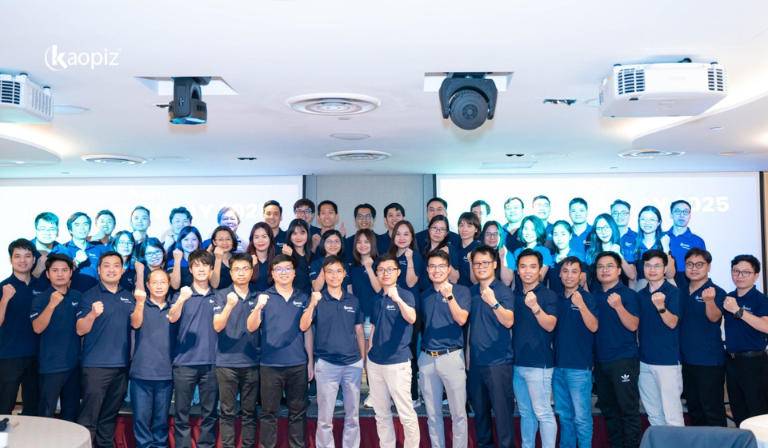
- Access to a large, skilled talent pool: Leverage nearly 1000 experienced engineers across cloud, data, AI, fintech, and enterprise systems, avoiding delays and premiums associated with scarce local talent.
- Scalable team sizing: Quickly scale teams up or down based on project needs, eliminating the fixed costs and risks of long-term local headcount.
- Quality-first delivery processes: Proven workflows, clear communication, and experience with Singapore-based clients ensure consistent output and predictable timelines.
- Cost optimization without quality trade-offs (typical savings of 40 – 60%): Focus on delivering measurable business outcomes while maintaining engineering standards and budget efficiency.
By combining technical expertise with flexible engagement models, Kaopiz enables Singapore companies to sustain growth, accelerate delivery, and optimize development costs in a highly competitive talent market.
Conclusion
Software developer salaries in Singapore remain among the highest in Asia in 2026, driven by strong demand, talent shortages, and the growing importance of technologies such as cloud, AI, and fintech. While these salaries reflect the quality and maturity of Singapore’s tech ecosystem, they also present real challenges for companies looking to scale efficiently and sustainably.
For many organizations, the key question is no longer whether to hire local talent, but how to balance capability, cost, and long-term growth. Understanding salary benchmarks, the factors behind them, and the true cost of employment enables better hiring decisions—whether for strategic in-house roles or larger development teams.
By combining local leadership with offshore or hybrid delivery models, companies can maintain high engineering standards while keeping costs under control. This approach allows Singapore businesses to stay competitive, innovate faster, and build resilient technology teams in an increasingly demanding market.
FAQs
- Is Singapore Still Attractive for Software Developers in 2026?
-
Yes. Singapore remains highly attractive due to strong demand for tech talent, competitive salaries, and exposure to complex, high-impact projects in fintech, AI, cloud, and enterprise systems. While competition is intense, experienced developers with in-demand skills continue to see solid career growth and compensation. - How to Negotiate a Higher Salary in the Singaporean Tech Market?
-
Successful negotiation focuses on demonstrated impact, not just years of experience. Highlight measurable results, specialization in high-demand skills (cloud, data, AI), and your ability to deliver independently or lead teams—these factors carry more weight than job titles alone. - How Does Singapore Compare to Vietnam or Other APAC Markets?
-
Singapore offers higher salaries and proximity to decision-makers, but at a significantly higher total employment cost. Vietnam and other APAC markets provide strong technical talent at lower costs, making them attractive for offshore or hybrid models when scalability and budget efficiency are priorities. - Should Startups Hire Locally or Outsource Development?
-
Early-stage startups often benefit from outsourcing or hybrid teams to control costs and scale quickly. Local hiring is usually more suitable for core leadership or product roles that require close business alignment. - What Is the Most Cost-Effective Hiring Model for Singapore Companies?
-
For most companies, a hybrid model is the most cost-effective—keeping key roles onshore while leveraging offshore teams for development and delivery. This approach balances quality, speed, and cost without the long-term burden of fully local teams.
Author

Lucie Tran
Head of Growth of Kaopiz Global
Table of Contents
Don’t miss what’s next!
Thank you! Your form has been submitted successfully.