
ODC vs. Fixed-Price Contract: Which Outsourcing Model Is Right for Your Business in Singapore?
Choosing the right outsourcing model is a critical decision that can directly impact your project’s cost, timeline, and overall success. For many businesses, especially in Singapore, the two most common options are ODC Vs. Fixed-Price Contract, each offering distinct advantages depending on your needs.
However, the challenge is not just understanding how these models work, but knowing which one fits your specific business scenario. While Fixed-Price provides predictability and simplicity, ODC offers flexibility and scalability for long-term growth. This article goes beyond basic comparisons to help you evaluate the real trade-offs and choose the most effective approach for your project.
Key Takeaways
- Fixed-Price is best for well-defined, short-term projects. It offers predictable costs and minimal management effort, ideal for MVPs or clearly scoped deliverables.
- ODC is ideal for long-term, evolving products. It provides flexibility, scalability, and greater control over development.
- Understanding trade-offs is crucial for decision-making. Key factors include cost structure, flexibility, control, and scalability.
- A hybrid approach can deliver the best of both models. Many businesses combine Fixed-Price for initial phases and ODC for scaling.
- Expert guidance helps reduce risk and improve outcomes. Consulting with experienced outsourcing partners can ensure you select the right model from the start.
What Is an ODC Model
Before comparing ODC Vs. Fixed-Price Contract, it’s important to understand what an Offshore Development Center is and its benefits and risks.
What Is ODC
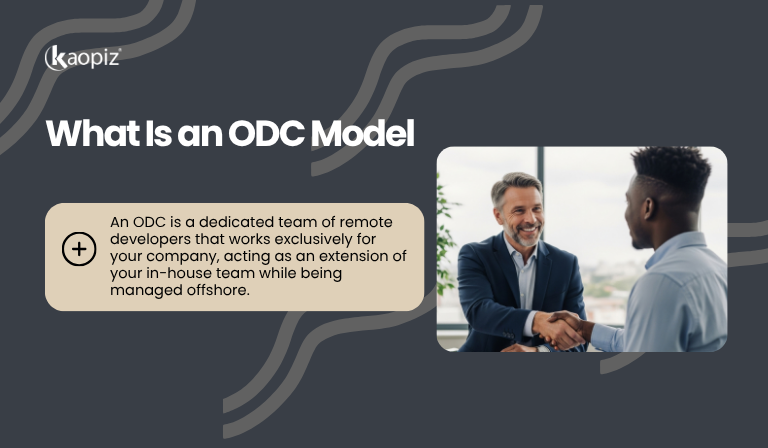
An Offshore Development Center (ODC) is a dedicated team of software engineers, designers, and QA specialists located in another country (often a cost-efficient region like Vietnam) who work exclusively for your company as an extension of your in-house team. Unlike project-based outsourcing, an ODC operates under your direction, following your processes, tools, and priorities, while the vendor handles recruitment, infrastructure, HR, and administrative support.
In practice, an ODC gives businesses the ability to build a long-term, scalable development team without the overhead of setting up a local office. This model is commonly used by companies in markets like Singapore to access high-quality engineering talent, maintain greater control over development, and support continuous product growth and iteration.
Key Advantages of ODC
An ODC offers several strategic benefits for businesses looking to scale development efficiently, especially in high-cost markets like Singapore:
- High Flexibility and Scalability: Easily scale your team up or down based on project needs, without long-term hiring constraints.
- Greater Control Over Development: Manage the team directly, prioritize tasks in real time, and align development with your business goals.
- Long-Term Cost Efficiency: Avoid hidden buffers in fixed contracts and optimize costs over time as your product evolves.
- Access to Global Talent: Tap into a wider pool of skilled engineers beyond local market limitations and talent shortages.
- Faster Time-to-Market for Iterations: A dedicated team familiar with your product enables quicker releases and continuous improvement.
- Stronger Product Ownership and Continuity: Build long-term knowledge within the team, leading to better quality, consistency, and fewer errors.
Risks of the ODC Outsourcing Model
While an ODC offers strong flexibility and control, it also comes with certain risks that businesses should be aware of before choosing this model:
- Requires Strong Internal Management: Since the team operates under your direction, you need capable project management to ensure productivity and alignment.
- Cost Can Increase Without Proper Control: Without clear priorities and monitoring, ongoing development may lead to longer timelines and higher overall costs.
- Longer Setup and Onboarding Time: Building a dedicated team, aligning processes, and transferring knowledge can take time at the beginning.
- Communication and Time Zone Challenges: Working with offshore teams may introduce delays or misunderstandings if communication is not well structured.
- Dependency on Vendor for Team Stability: Team retention and performance still depend on the vendor’s hiring and HR capabilities.
- Not Ideal for Short-Term or Fixed-Scope Projects: For small, clearly defined projects, an ODC may be less efficient compared to simpler engagement models like fixed-price.
What Is a Fixed-Price Contract
Understanding the pros and cons of Fixed-Price Contract is essential for making informed outsourcing decisions.
What Is Fixed-Price
A Fixed-Price contract is an outsourcing model where the project scope, timeline, and cost are defined and agreed upon upfront before development begins. In this model, the vendor takes full responsibility for delivering the project based on pre-defined requirements, with minimal involvement required from the client during execution.
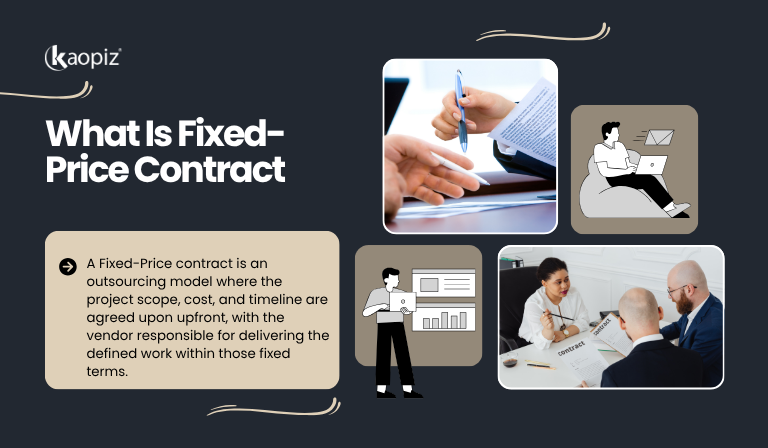
Fixed-price contracts are commonly used for well-defined, short-term projects where requirements are stable and unlikely to change. This approach provides clarity and predictability, making it a popular choice for businesses that need strict budget control and a clear delivery timeline.
Key Advantages of Fixed-Price
This model offers several benefits for businesses that prioritize cost certainty and minimal management involvement.
- Predictable Budget and Timeline: Costs and deadlines are agreed in advance, helping businesses plan finances and resources with confidence.
- Minimal Management Effort Required: The vendor handles project execution, reducing the need for constant client involvement.
- Clear Scope and Deliverables: Well-defined requirements ensure both parties have aligned expectations from the start.
- Lower Risk for Small, Fixed Projects: Ideal for MVPs or simple applications where features and outcomes are clearly outlined.
- Faster Project Kickoff: With scope finalized early, development can begin quickly without ongoing planning iterations.
Risks of Fixed-Price Contract
Despite its predictability, the Fixed-Price model also comes with limitations that can impact project flexibility and outcomes.
- Limited Flexibility for Changes: Any changes to scope typically require formal change requests, increasing cost and time.
- Hidden Cost Buffers in Pricing: Vendors may include additional margins to cover risks, making initial pricing less transparent.
- Risk of Scope Misalignment: If requirements are not clearly defined from the start, the final product may not meet expectations.
- Less Control Over Development Process: Clients have limited visibility into day-to-day progress compared to models like ODC.
- Potential Quality Trade-offs: Vendors may prioritize staying within budget and timeline over optimizing quality or innovation.
- Not Suitable for Evolving Projects: Projects with changing requirements can become costly and inefficient under this model.
ODC vs. Fixed-Price: The Real Business Trade-offs
Choosing between ODC Vs. Fixed-Price Contract is not just about features, it’s about the trade-offs that directly affect your project’s flexibility, risk, and business outcomes.
| Criteria | ODC | Fixed-Price Contract |
|---|---|---|
| Predictability vs. Flexibility | Highly flexible; scope and priorities can evolve over time | Highly predictable; scope, budget, and timeline are fixed upfront |
| Control vs. Convenience | Full control over team, processes, and priorities | Vendor manages delivery; minimal client involvement required |
| Short-Term Speed vs. Long-Term Scalability | Slower initial setup but ideal for long-term scaling | Faster project kickoff and delivery for short-term goals |
| Cost Structure vs. Cost Risk | Variable cost based on team size and duration; optimized for long-term efficiency | Fixed upfront cost; risk of additional charges for scope changes |
| Best Fit by Project Type | Long-term, evolving projects (e.g., SaaS, product development, scaling) | Short-term, well-defined projects (e.g., MVPs, specific features) |
Predictability vs. Flexibility
One of the biggest differences between Fixed Price vs ODC Model lies in how they balance predictability and flexibility.
In a Fixed-Price contract, predictability is the main advantage. The scope, budget, and timeline are defined upfront, allowing businesses to plan with confidence and avoid unexpected costs. However, this structure also makes the model rigid—any change in requirements typically requires formal change requests, which can increase both cost and delivery time.
In contrast, an ODC model offers a high level of flexibility. Since the team works under your direction, you can continuously adjust priorities, add new features, or refine requirements as your product evolves. This makes ODC particularly suitable for long-term or iterative development. The trade-off, however, is that costs and timelines may be less predictable, especially if the project scope is not well controlled.
Key takeaways:
- If you need budget certainty and a fixed scope, Fixed Priceis the better fit.
- If you need adaptability and continuous improvement, ODC provides greater long-term value.
Control vs. Convenience
Another key difference between ODC and Fixed-Price models is the balance between control and convenience.
With an ODC model, you retain full control over the development process. The team works as an extension of your in-house staff, allowing you to assign tasks, adjust priorities, and oversee progress in real time. This level of control ensures better alignment with your product vision and business goals, but it also requires active involvement and management from your side.

In contrast, a Fixed-Price contract offers greater convenience. The vendor takes responsibility for delivering the project based on agreed requirements, minimizing the need for your day-to-day involvement. While this reduces management effort, it also limits your visibility and control over how the work is executed.
Key takeaways:
- If you want hands-on control and continuous alignment, ODC is the better choice.
- If you prefer a hands-off approach with minimal management effort, Fixed-Price provides more convenience.
Short-Term Speed vs. Long-Term Scalability
The choice between ODC Vs. Fixed-Price Contract also depends on whether your priority is quick delivery in the short term or sustainable growth over the long term.
A Fixed-Price model is typically faster to start and execute. With clearly defined requirements and a structured plan, vendors can begin development immediately and focus on delivering within a set timeline. This makes it ideal for projects with tight deadlines or well-scoped deliverables, such as MVPs or feature-specific builds.
On the other hand, an ODC model is designed for long-term scalability. While it may take more time to set up initially, such as onboarding the team and aligning processes, it becomes more efficient over time. A dedicated team that understands your product can continuously develop, iterate, and scale your solution as your business grows.
Key takeaways:
- If your goal is fast delivery for a defined project, Fixed-Price offers better short-term speed.
- If you are building a product that evolves and scales over time, ODC provides stronger long-term value.
Cost Structure vs. Cost Risk
Another critical factor to consider is how each model handles cost structure and the risks associated with it.
In a Fixed-Price contract, the cost structure is clearly defined upfront, giving businesses a high level of budget predictability. This makes financial planning easier, especially for projects with strict budgets. However, this predictability often comes with hidden cost risks—vendors may include buffer margins to cover uncertainties, and any changes in scope can lead to additional charges through change requests.
However, an ODC model offers a more flexible cost structure, typically based on monthly team rates. While this means costs can vary depending on project duration and team size, it often results in better cost efficiency over the long term, especially for evolving projects. The main risk lies in cost control; without proper management and prioritization, timelines may extend and increase the total investment.
Key takeaways:
- If you prioritize cost certainty and upfront budgeting, Fixed-Price is more suitable.
- If you aim for long-term cost optimization and flexibility, ODC can deliver better overall value.
Best Fit by Project Type
Choosing Fixed-Price Outsourcing Model or ODC ultimately depends on the type, scope, and lifecycle of your project.
A Fixed-Price model is best suited for projects with clearly defined requirements and limited scope, such as MVP development, proof-of-concept solutions, or standalone features. When the deliverables, timeline, and budget are predictable from the start, this model provides a structured and low-risk approach.
In contrast, an ODC model is ideal for long-term, evolving projects that require continuous development and iteration. This includes SaaS platforms, digital transformation initiatives, or products expected to scale over time. With a dedicated team, businesses can adapt quickly to changing requirements and maintain steady progress.
Key takeaways:
- Use Fixed-Price for short-term, well-defined projects with clear outcomes.
- Choose ODC for complex, long-term products that require flexibility and ongoing development.
When to Choose ODC vs. Fixed-Price Contract (Decision Framework)
Choosing between Fixed Price Vs. ODC is not about which model is better overall—it’s about which one fits your project’s nature, constraints, and long-term goals. By evaluating factors such as scope clarity, timeline, budget flexibility, and internal capabilities, you can determine the most suitable approach for your business.
Choose ODC If
- Your requirements are evolving or not fully defined: You expect frequent changes, iterations, or ongoing feature development.
- You are building a long-term product: Ideal for SaaS platforms, digital products, or systems that require continuous improvement.
- You need full control over the development process: You want to directly manage the team, priorities, and workflows.
- You have internal technical leadership or project management: Your team can guide, coordinate, and monitor offshore developers effectively.
- You want to scale your development capacity over time: Easily expand or reduce team size based on business needs.
Choose Fixed-Price If
- Your project scope is clearly defined from the start: Requirements, features, and deliverables are stable and unlikely to change.
- You have a fixed budget and strict deadline: You need cost certainty and predictable delivery timelines.
- You prefer minimal involvement in day-to-day development: The vendor handles execution, allowing you to focus on other priorities.
- You are building a short-term project or MVP: Suitable for proof-of-concept, pilot projects, or one-time development.
- You want to reduce management complexity: No need to manage a development team directly.
Real-World Scenarios (Singapore Businesses)
For companies in Singapore, where operating costs are high and speed-to-market is critical, choosing the right outsourcing model can significantly impact both cost efficiency and product success. Below are common scenarios to help you determine which model fits your business stage and objectives.
Startup Building MVP
For startups developing an MVP, the priority is usually speed, cost control, and validating the idea quickly.
A Fixed-Price model is often the better choice in this stage because:
- The scope is relatively clear (core features only)
- Budget is limited and needs to be tightly controlled
- The goal is fast delivery to test the market
With a fixed scope and timeline, startups can launch quickly without worrying about ongoing resource management.
Scaling SaaS product
Once a product gains traction, the focus shifts to continuous development, feature expansion, and performance optimization.

At this stage, an ODC model becomes more suitable because:
- Requirements evolve based on user feedback
- New features and integrations are added regularly
- A dedicated team ensures consistency and faster iteration
An ODC allows businesses to build a long-term development capability without the overhead of hiring locally.
Best fit: ODC for flexibility, scalability, and continuous product growth.
Enterprise Digital Transformation
For enterprises undergoing digital transformation, projects are typically complex, long-term, and involve multiple phases and stakeholders.
In this case, many organizations adopt a hybrid approach (ODC + Fixed-Price):
- Fixed-Price for well-defined modules or initial phases
- ODC for ongoing development, system integration, and scaling
This combination balances predictability and flexibility, allowing enterprises to manage risks while maintaining long-term agility.
Best fit: Hybrid model to handle complexity, scale, and evolving business needs.
Common Mistakes When Choosing the Wrong Model
Choosing the wrong outsourcing model is one of the most common reasons software projects go over budget, miss deadlines, or fail to deliver expected outcomes. Many businesses focus only on cost or speed, without fully considering how the model aligns with their project nature and long-term goals.
Below are some of the most common outsourcing mistakes to avoid:
- Choosing Fixed-Price for Evolving Projects: Fixed-Price works best for stable requirements, but applying it to projects that require frequent changes often leads to costly change requests and delays.
- Underestimating ODC Management Requirements: While ODC offers flexibility and control, it also requires strong internal leadership. Without proper management, productivity and alignment can suffer.
- Focusing Only on Initial Cost Instead of Total Cost: A lower upfront price in Fixed-Price contracts may seem attractive, but hidden costs from scope changes or inefficiencies can increase the overall budget.
- Ignoring Project Complexity and Timeline: Complex, long-term projects often require flexibility, while simple, short-term tasks benefit from structure. Misalignment here can lead to inefficiencies.
- Overlooking Communication and Collaboration Needs: ODC requires continuous collaboration, while Fixed-Price limits interaction. Choosing the wrong model can create gaps in communication and expectations.
- Selecting a Model Based on Vendor Preference, Not Business Needs: Some vendors may push a specific model that suits their operations. Businesses should instead focus on what best fits their project requirements and goals.
Key takeaway: There is no one-size-fits-all solution; the right model depends on your project scope, team capability, and long-term strategy. Making an informed choice early can save significant time, cost, and risk down the line.
How to Choose the Right Outsourcing Model (Expert Advice)
Selecting the right outsourcing model requires more than comparing features—it involves aligning the model with your project’s scope, internal capabilities, and long-term business goals. The right choice will help you optimize cost, improve delivery efficiency, and reduce risks throughout the development lifecycle.
Key Questions to Ask Before Deciding
Before choosing between ODC and Fixed-Price, consider the following:
- How clearly defined is your project scope? If your requirements are stable and unlikely to change, a Fixed-Price model may be more suitable. If not, ODC offers better flexibility.
- What is your budget flexibility? Fixed-Price provides upfront cost certainty, while ODC allows more flexible spending over time.
- Do you have internal technical leadership? ODC requires active management and coordination. Without internal expertise, Fixed-Price may be easier to manage.
- Is this a short-term project or a long-term product? Short-term initiatives often benefit from Fixed-Price, while long-term development is better suited for ODC.
- How important is speed vs. adaptability? If speed is critical and scope is fixed, go with Fixed-Price. If continuous improvement is key, ODC is the better option.
Expert Tip: Consider a Hybrid Approach
In many real-world cases, the best solution is not choosing one model over the other—but combining both strategically.
For example:
- Use Fixed-Price for initial phases such as MVP development or clearly defined modules
- Transition to an ODC model for ongoing development, scaling, and feature expansion
This hybrid approach allows businesses to balance predictability and flexibility, reducing risk while maintaining long-term agility.
Why Singapore Businesses Choose Kaopiz as a Trusted IT Outsourcing Company
For businesses in Singapore, choosing the right outsourcing partner goes beyond cost—it requires a team that understands local expectations, communicates effectively, and delivers consistently. With high operational costs and strong competition for tech talent, Singapore companies increasingly rely on offshore partners who can provide both quality and scalability.
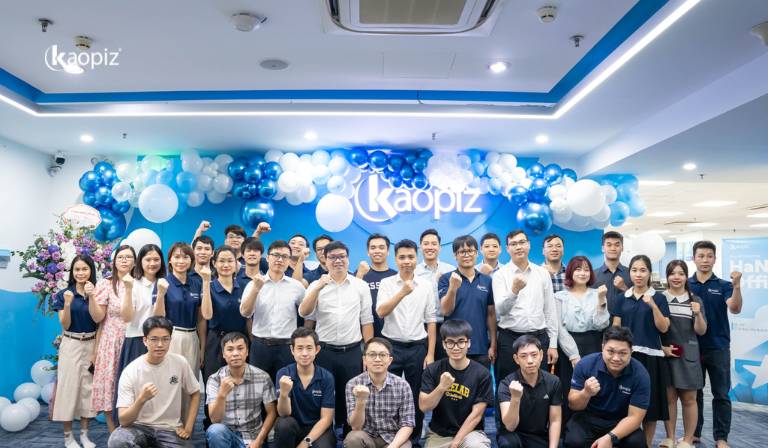
At Kaopiz, we act as a trusted IT outsourcing partner, helping businesses not only execute projects but also make the right strategic decisions—from selecting the most suitable engagement model to scaling development efficiently over time. Our approach focuses on long-term value, flexibility, and alignment with each client’s business goals.
- Proven experience with global and Singapore clients: With 12+ years of experience and 1,000+ engineers, we have successfully delivered 1000+ projects across Singapore and international markets, ensuring high standards in both quality and communication.
- Flexible engagement models tailored to your needs: We support ODC, Fixed-Price, and hybrid models, helping you choose the most suitable approach based on your project scope, timeline, and long-term objectives.
- Strong technical expertise and scalable teams: Our engineers specialize in modern technologies such as cloud, AI, and enterprise systems, with the ability to scale teams quickly as your business grows.
- Cost efficiency without compromising quality: By leveraging offshore development in Vietnam, we help reduce costs by 40–60% while maintaining strong engineering practices and quality assurance.
- Transparent communication and reliable delivery: We follow agile processes with clear reporting and ensure smooth collaboration through time zone alignment with Singapore-based teams.
- Long-term partnership and continuous support: Beyond project delivery, we support clients throughout their product lifecycle, from initial development to scaling and ongoing optimization.
Talk to Kaopiz experts today and get a tailored recommendation based on your specific needs, timeline, and budget. We help you evaluate your requirements and suggest the most effective approach, whether it’s ODC, Fixed-Price, or a hybrid model.
Conclusion
Choosing between an ODC Vs. Fixed-Price Contract is not about finding a universally better model—it’s about selecting the one that best aligns with your project’s scope, timeline, and long-term goals. While Fixed-Price offers predictability and simplicity for well-defined projects, ODC provides the flexibility and scalability needed for continuous development and evolving products.
For businesses in Singapore, where efficiency and speed-to-market are critical, making the right decision early can significantly impact both cost and success. By understanding the trade-offs and evaluating your specific needs, you can choose a model that supports not just delivery, but sustainable growth.
FAQs
- Which Is More Cost-effective: ODC or Fixed-Price?
- It depends on your project scope and duration. Fixed-Price is more cost-effective for short-term, well-defined projects. ODC tends to deliver better value for long-term projects with evolving requirements, as it avoids repeated change request costs.
- Can I Switch from Fixed-Price to ODC Later?
- Yes, many businesses start with a Fixed-Price model (e.g., MVP) and transition to ODC for scaling. This approach allows you to combine predictability in the early stage with flexibility for long-term growth.
- How Do I Manage an ODC Team Effectively?
- To manage an ODC successfully, you should have: clear product roadmap and priorities, strong communication processes, a dedicated project manager or technical lead. This ensures alignment, productivity, and long-term efficiency.
- Which Model Is Better for Long-term Product Development?
- For long-term and evolving products, ODC is generally the better choice. It allows continuous development, faster iteration, and better scalability as your business grows.
- Can I Use Both ODC and Fixed-Price Together?
- Yes, many companies adopt a hybrid approach: use Fixed-Price for well-defined modules or initial phases, and use ODC for ongoing development and scaling. This helps balance cost predictability and flexibility.
Author

Lucie Tran
Head of Growth of Kaopiz Global
Table of Contents
Don’t miss what’s next!
Thank you! Your form has been submitted successfully.