















Offshore Software Development Rates: Cost Guide for 2026
As Singapore companies accelerate digital transformation, the pressure to deliver high-quality software faster—and at a sustainable cost—has never been greater. Local engineering talent is limited and expensive, pushing many organizations to explore offshore teams as a strategic way to scale. However, before choosing a destination or vendor, businesses need a clear understanding of offshore software development rates and how they compare across countries.
This guide provides a practical, Singapore-focused offshore development cost breakdown, cost drivers, hidden expenses, and the real savings companies can expect. You also see why Vietnam has become one of the most attractive offshore destinations for Singapore enterprises seeking a strong balance of cost, quality, and reliability. Let’s explore the numbers and insights that matter most.
Table of Contents
- Singapore Market Context — Why Offshore Development Is Surging
- Onshore vs Offshore Rates: Singapore Cost Comparison (2026)
- Offshore Software Development Rates by Region (Updated 2026)
- Offshore Software Development Rates by Role (Detailed Breakdown)
- Rates by Technology Stack
- Country Outsourcing Cost Comparison: Vietnam vs India vs Philippines
- Factors That Influence Offshore Software Development Rates
- Hidden Costs Singapore Companies Often Miss
- How to Calculate Offshore Development Cost for Your Project
- Why Kaopiz Offers One of the Best Offshore Rates in Singapore
- Conclusion
- FAQs
Singapore Market Context — Why Offshore Development Is Surging
Singapore’s digital economy is expanding rapidly, but the cost and availability of local engineering talent have become major constraints. Companies across finance, healthcare, logistics, and retail are increasingly turning to offshore software development as a strategic way to scale efficiently while maintaining delivery speed and quality.

Rising engineering talent costs & salary benchmarks:
- Senior developers commonly earn SGD 7,000–14,000 per month, with specialized roles such as cloud, DevOps, or AI engineers reaching even higher compensation ranges.
- When including CPF, bonuses, office overhead, and retention costs, the actual expense of hiring locally becomes difficult for many SMEs and even large tech teams to justify.
Talent shortage in key roles (AI, cloud, full-stack):
- Despite active government initiatives, Singapore still faces a structural shortage of experienced developers, especially in fast-growing fields like AI, cloud engineering, blockchain, and cybersecurity.
- Hiring cycles are long, competition is intense, and senior engineers often receive multiple offers, making local recruitment slow and unpredictable.
Pressure to reduce costs while accelerating digital delivery:
- Businesses are expected to ship products faster, modernize legacy systems, and adopt new technologies—often with tighter budgets.
- Offshore teams offer predictable, scalable resourcing models that help companies deliver more without increasing fixed payroll or operational costs.
Offshore outsourcing is becoming the default model:
- Startups, SMEs, and MNCs increasingly rely on offshore partners to fill skill gaps, extend engineering capacity, and maintain velocity.
- Companies gain access to broader talent pools, reduce delivery risks, and scale development teams up or down based on project demands—making offshore teams a core part of modern tech operations in Singapore.
Onshore vs Offshore Rates: Singapore Cost Comparison (2026)
Before choosing where to build or scale your engineering team, it’s crucial to understand how onshore and offshore software development rates compare for Singapore businesses.
Onshore Developer Rates in Singapore
Singapore’s local tech talent commands some of the highest compensation in the region. Contract developers typically charge SGD 60–120 per hour, depending on experience and tech stack. Senior specialists in AI, cloud, or DevOps may charge SGD 150/hour or more, especially for short-term engagements.
Fully Loaded Cost of Local Hires
Beyond salary, companies must account for CPF contributions, bonuses, medical insurance, equipment, office space, and HR overhead. These additional costs can raise the actual monthly expense of a senior engineer to SGD 10,000–18,000, making onshore scaling prohibitively expensive for many organizations.
Offshore Rate Comparison (Vietnam vs India vs Philippines vs Eastern Europe)
Offshore markets provide significant cost advantages while offering access to large and diverse talent pools:
| Region / Country | Typical Hourly Rate (USD) | Strengths |
|---|---|---|
| Vietnam | 18–45/hr | Strong engineering discipline, good English proficiency, excellent cost–quality balance. |
| India | 20–40/hr | Very large talent pool, but quality consistency varies across vendors and regions. |
| Philippines | 18–35/hr | Excellent communication skills; ideal for web, support-heavy, and blended delivery teams. |
| Eastern Europe | 40–80/hr | High-quality engineers with strong product mindset; higher cost but strong technical depth. |
Cost Savings for Singapore Companies When Hiring Offshore
By offshoring part or all of their engineering work, Singapore companies typically save 40–60% on offshore software development costs. Vietnam delivers the highest ROI due to competitive rates, time-zone compatibility, and strong delivery standards shaped by years of working with demanding markets like Japan and Singapore.
Offshore Software Development Rates by Region (Updated 2026)
Offshore development rates by country vary based on the level of talent maturity, language capabilities, and market demand. For Singapore companies, understanding these country-level differences helps ensure a better fit in cost, communication, and delivery quality.
| Country | Region | Typical Hourly Rate (USD) | Notes for Singapore Companies |
|---|---|---|---|
| Vietnam | Southeast Asia | 18–45/hr | Best cost–quality balance; strong engineering discipline; excellent for long-term teams. |
| Philippines | Southeast Asia | 18–35/hr | Exceptional communication; ideal for support-heavy and customer-facing work. |
| Indonesia | Southeast Asia | 15–30/hr | Rapidly growing talent pool; good option for junior–mid roles. |
| India | South Asia | 20–40/hr | Massive talent pool; broad tech coverage; requires vendor quality filtering. |
| Bangladesh | South Asia | 15–28/hr | Competitive pricing; improving talent maturity; vendor consistency varies. |
| Pakistan | South Asia | 15–28/hr | Strong full-stack talent; good English; best suited for web/mobile. |
| Ukraine | Eastern Europe | 35–70/hr | High engineering depth; strong in complex backend & AI/ML. |
| Poland | Eastern Europe | 45–80/hr | EU-quality engineering; premium pricing. |
| Romania | Eastern Europe | 35–65/hr | Mature outsourcing ecosystem; reliable senior talent. |
| Brazil | LATAM | 40–70/hr | Strong engineering culture; time-zone misalignment for SG. |
| Argentina | LATAM | 35–60/hr | Good product development talent; mid–senior skills. |
| Mexico | LATAM | 40–75/hr | Excellent for US nearshore; less cost-effective for SG. |
| United States | North America | 80–180/hr | High-end benchmark; not used for cost savings. |
| Canada | North America | 70–150/hr | Strong enterprise engineering; premium cost. |
| United Kingdom | Western Europe | 70–140/hr | High-quality engineering and processes; expensive for SG offshoring. |
| Germany | Western Europe | 80–150/hr | Excellent technical depth; highest cost band. |
| Netherlands | Western Europe | 75–140/hr | Strong design & engineering culture; not cost-efficient for SG. |
Southeast Asia (Vietnam, Philippines, Indonesia)
Southeast Asia remains the most strategically advantageous region for Singapore thanks to shared time zones, cultural compatibility, and strong English proficiency. Vietnam continues to lead the region with high engineering discipline and consistent delivery standards, especially for enterprise systems, AI, cloud, and mobile app development.
Key highlights:
- Rates typically range from USD 18–45/hr, depending on seniority and tech stack.
- Vietnam provides the best overall balance of cost, quality, and reliability for Singapore companies.
- The Philippines excels in communication-heavy, customer-facing, and support-driven development roles.
- Indonesia’s talent pool is expanding rapidly, offering competitive pricing for junior to mid-level roles.
South Asia (India, Bangladesh, Pakistan)
South Asia remains one of the world’s most established outsourcing hubs, known for vast talent availability and competitive rates. India dominates the region in scale and technical diversity, while Bangladesh and Pakistan provide compelling alternatives for cost-sensitive projects.

Key highlights:
- Rates commonly fall between USD 15–35/hr.
- India offers the broadest skill coverage—from legacy modernization to advanced AI and DevOps.
- Bangladesh and Pakistan deliver strong value at lower price points but require careful vendor evaluation for consistency.
- Larger time-zone gaps can impact real-time collaboration with Singapore.
Eastern Europe (Ukraine, Poland, Romania)
Eastern Europe is widely recognized for deep engineering expertise, strong problem-solving abilities, and a product-focused mindset. While more expensive than Asian markets, the region offers exceptional talent for complex backend systems, cybersecurity, data engineering, and AI/ML projects.
Key highlights:
- Rates generally range from USD 30–80/hr, depending on technology and seniority.
- Ukraine and Poland remain top choices for highly skilled technical specialists.
- English proficiency is strong, but the time-zone difference requires structured collaboration.
- Often chosen for high-complexity, R&D-heavy, or enterprise-grade projects.
LATAM (Brazil, Argentina, Mexico)
Latin America is a strong outsourcing destination for North American companies due to time-zone alignment and solid English proficiency. For Singapore, the region offers capable mid-to-senior talent but at higher costs compared to Asia.
Key highlights:
- Rates typically fall between USD 35–75/hr.
- Strong engineering talent, especially in full-stack, mobile, cloud, and DevOps roles.
- Collaboration with Singapore requires flexible scheduling due to major time differences.
- Less cost-effective compared to Southeast Asia for most SG-based teams.
North America & Western Europe
North America and Western Europe represent the top end of the global cost spectrum. While engineering quality and process maturity are excellent, their rates make them impractical for offshore outsourcing—serving instead as benchmarks to understand potential cost savings.
Key highlights:
- Rates typically range from USD 70–180/hr, depending on seniority and specialization.
- Used primarily for niche expertise or high-security, high-regulation projects.
- Not suitable for cost-optimization goals due to premium pricing.
Offshore Software Development Rates by Role (Detailed Breakdown)
Offshore software development rates vary not only by region but also by role, seniority, and specialization. For Singapore companies evaluating project budgets or building long-term offshore teams, understanding the offshore software development cost differences by job function is essential. Below is a detailed 2026 breakdown of the most common roles of offshore developer hourly rates.
| Role | Typical Hourly Rate (USD) | Description / Notes |
|---|---|---|
| Junior Developer | 15–25/hr | 1–2 years’ experience; handles simple features, maintenance tasks, UI updates. |
| Mid-level Developer | 25–40/hr | 3–5 years’ experience; capable of delivering full features and stable production code. |
| Senior Developer | 35–55/hr | 5–8+ years’ experience; strong technical depth; handles complex modules and integrations. |
| Lead Developer / Tech Lead | 45–70/hr | Oversees technical direction, code quality, and architecture-level decisions. |
| Project Manager (PM) | 30–55/hr | Manages scope, timelines, stakeholders, risks, and overall delivery. |
| Business Analyst (BA) | 25–45/hr | Defines requirements, creates specifications, aligns stakeholders. |
| Bridge System Engineer (BrSE) | 30–55/hr | Bilingual communication + technical expertise; crucial for SG/Japan markets. |
| UX/UI Designer | 25–45/hr | Designs wireframes, UI, and user flows for web/mobile applications. |
| Manual QA Tester | 15–30/hr | Conducts functional, regression, and exploratory testing. |
| Automation QA Engineer | 30–50/hr | Builds automated test scripts using Selenium, Cypress, Appium, etc. |
| DevOps Engineer | 35–60/hr | Expert in CI/CD pipelines, cloud infrastructure, Docker/K8s, and monitoring. |
| AI/ML Engineer | 40–75/hr | Works on machine learning models, computer vision, NLP, and LLM integrations. |
| Solution Architect | 50–90/hr | Defines system architecture, cloud strategy, and high-level technical roadmap. |
| High-Seniority Technical Lead | 45–80/hr | Oversees large systems, mentors engineers, ensures performance and scalability. |
Developer Rates by Seniority (Junior / Mid / Senior / Lead)
The cost of hiring offshore developers in Singapore is primarily influenced by years of experience, domain exposure, and proficiency in modern tech stacks (React, Vue, Node.js, Java, .NET, Flutter, etc.).
- Junior Developer: USD 15–25/hr. Typically 1–2 years of experience; suitable for implementation tasks and simpler modules.
- Mid-level Developer: USD 25–40/hr. 3–5 years of experience; capable of handling full features, integrations, and production-level work.
- Senior Developer: USD 35–55/hr. 5–8+ years of experience; strong architectural understanding, performance optimization, and mentoring.
- Lead Developer / Tech Lead: USD 45–70/hr. Oversees technical direction, code quality, and complex system decisions; ideal for scaling teams.
PM, BA, BrSE, UX/UI Designer Rates
Non-engineering roles are critical for communication, requirements clarity, and product usability, especially for Singapore companies working with offshore teams.

- Project Manager (PM): USD 30–55/hr. Manages scope, timelines, communication, risk, and delivery.
- Business Analyst (BA): USD 25–45/hr. Handles requirements gathering, documentation, and stakeholder alignment.
- Bridge System Engineer (BrSE): USD 30–55/hr. Essential for Japan and Singapore markets; bilingual communication + technical understanding.
- UX/UI Designer: USD 25–45/hr. Provides wireframes, interface design, and user experience flows.
QA & Automation Tester Rates
Quality assurance roles ensure product stability and reduce rework—important for offshore setups.
- Manual QA Tester: USD 15–30/hr. Suitable for functional, regression, and exploratory testing.
- Automation QA Engineer: USD 30–50/hr. Skilled in Selenium, Cypress, Appium, or Playwright; reduces long-term testing costs.
DevOps Engineer Rates
DevOps engineers remain highly sought after as companies accelerate cloud adoption and rely on modern CI/CD pipelines. Typical offshore rates range from USD 35–60/hr, with higher pricing for engineers skilled in AWS, Azure, GCP, Docker, Kubernetes, Terraform, automated pipelines, and monitoring tools.
AI/ML Engineer Rates
AI and machine learning engineers command premium rates due to their specialised expertise. Typical offshore pricing ranges from USD 40–75/hr, reflecting their advanced skills in model development, computer vision, natural language processing, LLM integration, and data engineering required for modern AI-driven applications.
Solution Architect & Technical Lead
These senior-level roles shape system design, technology decisions, scalability planning, and overall technical strategy.
- Solution Architect: USD 50–90/hr. Defines architecture, integration patterns, cloud strategy, and technical roadmap.
- Technical Lead (High Seniority): USD 45–80/hr. Oversees complex modules, mentors’ teams, and ensures high coding standards and performance.
Rates by Technology Stack
Offshore software development rates can vary significantly depending on the technology stack involved. More modern, specialized, or enterprise-grade technologies typically command higher hourly rates due to talent scarcity and technical complexity. Below is a breakdown of the most common stacks Singapore companies outsourcing in 2026.
| Technology Stack | Typical Hourly Rate (USD) | Notes / Use Cases |
|---|---|---|
| React / Vue (Frontend) | 20–45/hr | Ideal for dashboards, web apps, portals, and modern UI/UX projects; strong offshore talent availability. |
| Node.js / Laravel (Backend) | 22–45/hr | Suitable for APIs, backend services, SaaS platforms, and high-traffic web systems. |
| Flutter (Cross-Platform Mobile) | 25–45/hr | Cost-efficient alternative to native; fast development for iOS + Android with one codebase. |
| iOS / Android (Native Mobile) | 30–55/hr | Higher rates due to specialised expertise and device-specific performance requirements. |
| AI / ML / Computer Vision | 40–75/hr | Required for predictive analytics, NLP, LLM integration, image recognition, and automation intelligence. |
| DevOps / Cloud (AWS, Azure, GCP) | 35–60/hr | Expertise in CI/CD, Kubernetes, Docker, Terraform, cloud security, and multi-cloud architecture. |
| .NET / Java (Enterprise Systems) | 30–60/hr | Used for large-scale enterprise systems, ERP integration, and secure backend platforms. |
| SAP Integration | 45–75/hr | Premium due to niche skill sets and enterprise-grade complexity. |
| Automation & RPA (UiPath, AA, Power Automate) | 30–55/hr | Ideal for workflow automation, bot development, and business process optimisation. |
| Low-Code / No-Code (OutSystems, Mendix, Power Apps) | 30–50/hr | Accelerates development for internal tools, workflows, and enterprise apps. |
Country Outsourcing Cost Comparison: Vietnam vs India vs Philippines
Choosing the right offshore destination is one of the most important decisions for Singapore companies planning to scale development. While nearshore software development typically refers to locations close to the client country, for Singapore, this often includes Southeast Asian partners like Vietnam and the Philippines due to shared time-zone advantages.
Cost Comparison
Below is a detailed offshore development pricing comparison to help Singapore businesses evaluate which market best fits their needs.
| Criteria | Vietnam | India | Philippines |
|---|---|---|---|
| Typical Hourly Rate (USD) | 18–45/hr | 20–40/hr | 18–35/hr |
| Cost–Quality Balance | Best overall balance; strong mid–senior talent | Varies widely; excellent top-tier talent but inconsistent across vendors | Good for support & frontend; engineering depth improving |
| Engineering Discipline | Strong QA discipline influenced by Japan; clean, structured code | Broad talent pool; quality can vary significantly | Good for web & app projects; less depth in complex backend |
| English Proficiency | Good among PMs, BrSEs, senior devs | Very strong; widely fluent | Excellent; among the best in Asia |
| Time-Zone Alignment with SG | Perfect (1 hour difference) | 2.5–3.5 hours behind; workable | Perfect (same time-zone) |
| Communication Style | Clear, structured, process-driven | Direct, expressive, globally oriented | Warm, customer-oriented, relationship-driven |
| Project Reliability & Stability | High reliability; low senior turnover; strong vendor maturity | Depends on vendor; turnover can be higher | Reliable for support; engineering project maturity still growing |
| Best Use Cases | Complex systems, enterprise apps, AI/ML, mobile, long-term teams | Large-scale builds, legacy modernization, diverse tech stacks | Support roles, customer-facing apps, BPO + dev hybrid |
| Overall Fit for Singapore | Excellent – best cost–quality ratio + ideal timezone | Good – strong talent but varies in consistency | Good – excellent communication but smaller senior talent pool |
Why Vietnam Is Emerging as Asia’s #1 Offshore Destination for Singapore
Vietnam has become one of the best offshore software development countries for Singapore companies thanks to its mix of strong engineering quality, competitive pricing, and cultural compatibility. It offers one of the best environments for scaling tech teams without compromising delivery standards.
- Exceptional cost–quality balance: Vietnam’s rates of USD 18–45/hr deliver engineering quality comparable to higher-cost regions, making it ideal for Singapore companies seeking affordability with reliability.
- Strong engineering discipline influenced by Japan: Years of collaboration with Japan have resulted in structured processes, solid documentation, and rigorous QA—ensuring consistent, high-quality delivery.
- Close time-zone and real-time collaboration: With no or minimal time difference, Vietnam enables seamless daily standups, real-time reviews, and faster sprint cycles—unlike South Asia or Eastern Europe.
- High cultural compatibility: Vietnamese engineers share a structured, respectful working style that aligns well with Singapore’s expectations for clarity, discipline, and professionalism.
- Deep and growing senior talent pool: Vietnam now offers strong expertise in AI/ML, cloud engineering, mobile development, enterprise systems, and DevOps—supporting both innovation and modernization projects.
- Lower turnover and better team stability: Compared to many offshore markets, Vietnam experiences lower attrition among mid-senior engineers, ensuring smoother long-term execution and knowledge continuity.
- Rapidly growing IT ecosystem: Government investment in ICT education and tech hubs continues to expand Vietnam’s talent pipeline, strengthening its position as Asia’s rising technology powerhouse.
Factors That Influence Offshore Software Development Rates
Offshore software development rates are shaped by multiple factors—including talent maturity, project complexity, and economic conditions in each market. Understanding these variables helps Singapore companies set realistic budgets and choose the right outsourcing strategy.

- Skill level + tech expertise: Rates increase for senior engineers and specialists with advanced skills in AI/ML, DevOps, cybersecurity, or cloud architecture. Common stacks like React or Node.js are more affordable due to wider talent availability.
- Project complexity & domain knowledge: Complex systems, enterprise integrations, or AI-driven applications require higher-level expertise. Industries like fintech, healthcare, and logistics also demand domain-specific knowledge, which pushes rates upward.
- Developer availability in each region: Countries with abundant mid–senior talent maintain competitive rates, while markets with limited senior resources—such as Eastern Europe or LATAM—see higher pricing. Niche skills remain globally scarce.
- Engagement model: Dedicated teams offer the most cost-efficient blended rates, while T&M follows role-based hourly pricing. Fixed-price projects include risk buffers, making their effective hourly rate higher.
- Duration: long-term vs short-term: Long-term engagements benefit from better pricing and more efficient ramp-ups. Short-term, urgent, or ad-hoc work often commands higher hourly rates due to increased resource allocation.
- Communication overhead and management cost: Time-zone gaps, unclear requirements, or low English proficiency increase coordination costs. Regions like Vietnam and the Philippines offer smoother communication and lower overhead for Singapore companies.
- Market stability: Economic conditions influence offshore pricing. Stable markets maintain consistent rates, while regions experiencing inflation or rising tech salaries may see year-over-year cost increases.
Hidden Costs Singapore Companies Often Miss
Many Singapore companies underestimate several hidden costs of offshore outsourcing that can quietly increase total project budgets if not managed well.
- Rework from unclear requirements: Vague or shifting requirements often lead to rework, adding extra development hours and delaying delivery.
- Misaligned expectations between SG & offshore vendor: Different interpretations of scope or quality can cause gaps that require extra clarification and fixes.
- Knowledge transfer cost between teams: Offshore teams need time to understand your systems and business logic, increasing onboarding effort.
- PDPA compliance requirements: Data protection rules may require secure environments, restricted access, or anonymized data, adding setup costs.
- Vendor onboarding ramp-up: New vendors need time to align with your processes, coding standards, and workflow before hitting full productivity.
- Time-zone inefficiencies (if not SEA region): Limited overlap with India, Eastern Europe, or LATAM can slow response times and stretch delivery cycles.
How to Calculate Offshore Development Cost for Your Project
Estimating offshore development costs requires a structured approach to ensure budgets are realistic and aligned with delivery expectations. Here is a simple, practical method that Singapore companies understand how to reduce offshore development costs and calculate project costs accurately.
- Define scope & features: List the core features, user journeys, and integrations. Clear scope reduces rework and improves estimate accuracy.
- Break down tasks & man-hours: Convert each feature into smaller tasks and estimate the development, QA, and design hours required.
- Apply hourly rates by role: Multiply estimated hours by the hourly rate for each role (developer, QA, PM, designer, etc.) to get the feature cost.
- Add PM/BA/QA overhead: Include 15–25% extra effort for project management, analysis, and testing to ensure smooth delivery.
- Add buffer (10–20%): Add a contingency buffer for refinement, minor changes, or technical unknowns to avoid budget overruns.
Why Kaopiz Offers One of the Best Offshore Rates in Singapore
With 11+ years of experience, Kaopiz provides a rare combination of competitive pricing, high engineering quality, and proven delivery standards—making us one of the strongest offshore software development partners for Singapore companies.
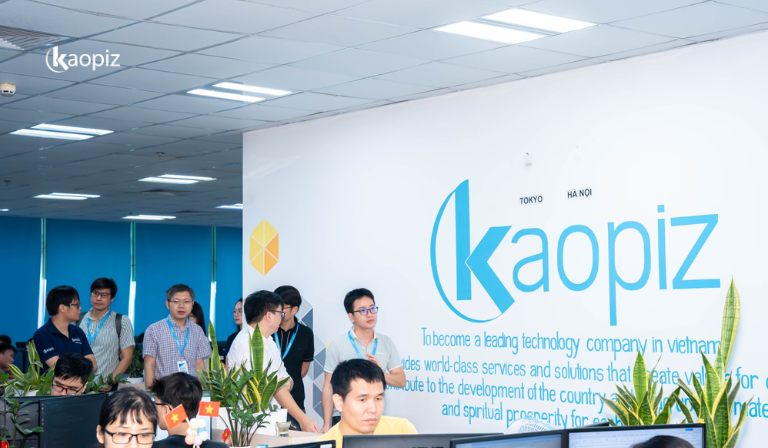
- Vietnam-based cost advantage with enterprise-grade quality: Kaopiz leverages Vietnam’s competitive rates while maintaining engineering standards shaped by 11+ years serving 200+ global clients.
- Strong mid–senior engineering talent: Our teams include 700+ senior developers, cloud engineers, AI/ML specialists, and DevOps experts who deliver consistent, high-quality output at rates far lower than Singapore’s local market.
- Bilingual PMs and Bridge Engineers for Singapore collaboration: Kaopiz provides English- and Japanese-proficient PMs and BrSEs to ensure clear communication, faster decision-making, and smoother project coordination.
- Stable, long-term offshore teams: With low attrition and strong internal training programs, Kaopiz maintains team continuity—reducing onboarding costs and knowledge loss for Singapore clients.
- High delivery discipline and Agile maturity: Our engineering culture prioritizes clean code, QA rigor, proper documentation, and predictable sprint delivery—minimizing hidden costs and rework.
- Flexible engagement models tailored to Singapore companies: Whether you need a dedicated team, full outsourcing, or a hybrid model, Kaopiz provides transparent pricing and efficient team scaling.
- Proven track record across multiple industries: We have delivered solutions in fintech, healthcare, logistics, retail, manufacturing, and AI—giving Singapore clients confidence in domain expertise.
Kaopiz combines affordability with reliability, making it a strategic offshore partner for Singapore businesses seeking to scale quickly, efficiently, and sustainably.
Conclusion
Offshore development has become a strategic advantage for Singapore companies aiming to scale quickly while managing rising local talent costs. By understanding offshore software development rates across regions, roles, and tech stacks, businesses can plan smarter budgets and select the right partners with confidence.
Vietnam now stands out as the strongest offshore destination for Singapore thanks to its competitive pricing, disciplined engineering culture, and seamless time-zone alignment. With a proven track record in delivering high-quality projects, Kaopiz offers one of the best cost–quality ratios in the region.
For Singapore companies planning their next digital initiative, partnering with Kaopiz provides a reliable, scalable, and efficient path to building high-performing software teams.
FAQs
- What Is the Typical Offshore Developer Hourly Rate?
- Offshore developer rates generally range from USD 18–45/hr in Southeast Asia, USD 20–40/hr in South Asia, and USD 35–80/hr in Eastern Europe. Rates depend on seniority, tech stack, and project complexity.
- Does Offshore Development Really Save Money for Singapore Companies?
- Yes. Singapore companies typically save 40–60% compared to hiring locally. Offshore teams reduce salary, overhead, and infrastructure costs while providing access to larger talent pools.
- How Much Does a Vietnam Offshore Team Cost?
- Vietnam teams typically cost USD 18–45/hr per developer. A full agile team (PM, devs, QA) can range from USD 12,000–25,000 per month, depending on size and seniority.
- Which Country Is the Cheapest?
- South Asian countries such as India, Bangladesh, and Pakistan generally offer the lowest hourly rates. However, quality and consistency vary more widely and require careful vendor selection.
- Is Vietnam Cheaper Than India?
- Vietnam is slightly higher in price than India on average, but it offers a stronger cost–quality balance, lower communication overhead, and better time-zone alignment for Singapore companies.
- What Roles Should I Hire Offshore?
- Common offshore roles include developers, QA testers, DevOps engineers, UX/UI designers, business analysts, and project managers. Many Singapore companies offshore development and QA while keeping product management in-house.
- How Long Does It Take to Start with an Offshore Team?
- Most offshore teams can be onboarded within 1–3 weeks, depending on team size and required skill sets. Dedicated teams or specialized roles may take slightly longer for sourcing and alignment.
3 Replies to “Offshore Software Development Rates: Cost Guide for 2026”
Leave a Comment
Trending Post



Pingback:Transforming Elections result with E-Voting platform | Kaopiz Holdings | Kaopiz | Software Development
Pingback:Onshore vs Offshore: Which Is Right for Your Business in 2025?
Pingback:Offshore Development Center: What It Is, & How to Set Up in 2025