














Software Developer vs Software Engineer: Key Differences in 2026
In Singapore’s fast-moving tech market, the terms software developer vs software engineer is often used interchangeably—but in practice, they represent different roles with different business impacts. This confusion can lead to costly hiring mistakes, mismatched expectations, and software systems that struggle to scale over time.
As digital transformation accelerates across fintech, healthcare, logistics, and enterprise platforms in 2026, Singapore companies are under increasing pressure to hire the right technical talent quickly and cost-effectively. Should you bring in a software developer to build features and deliver fast? Or do you need a software engineer who can design robust architectures, ensure scalability, and support long-term growth?
In this guide, we break down the key differences between software developer vs software engineer, from responsibilities and skill sets to salary expectations in Singapore. You also learn when to hire each role, how local hiring compares to offshore teams, and how businesses can scale development efficiently without compromising quality.
Table of Contents
- Understanding Software Developer vs Software Engineer
- Software Developer vs Software Engineer: Core Differences Explained
- Software Engineer vs Software Developer Salary in Singapore
- Business Use Cases: When to Hire a Developer vs. an Engineer?
- Hiring in Singapore vs Offshore Software Engineers: Cost & Scalability
- How Kaopiz Helps Singapore Companies Hire the Right Software Engineers
- Conclusion
- FAQs
Understanding Software Developer vs Software Engineer
Although the terms software engineer vs software developer are often used interchangeably, they reflect different approaches to building software. Understanding how these roles differ in mindset, responsibility, and scope is essential for making the right hiring and career decisions, especially in Singapore’s competitive tech market.
What Is a Software Engineer?
A software engineer is a technology professional who applies engineering principles to design, develop, test, and maintain scalable and secure software systems. Rather than focusing only on writing code, software engineers are responsible for building systems that support long-term business growth.
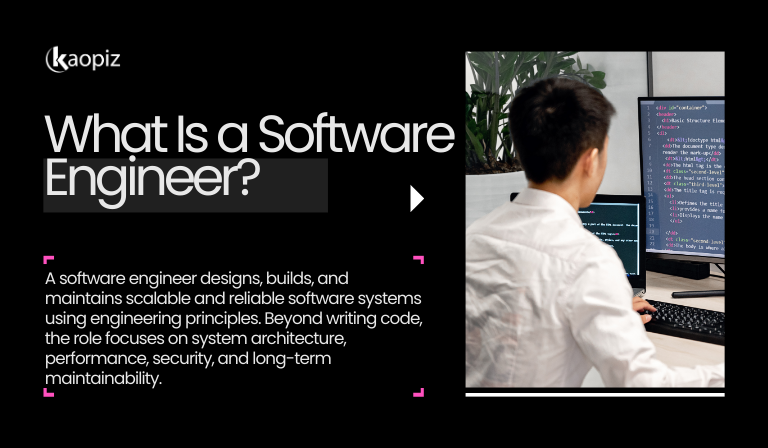
In practice, software engineers think beyond individual features. They work on system architecture, technology selection, performance optimization, and risk management, ensuring applications can scale as users, data, and integrations grow. This makes the role especially important for enterprise platforms and regulated industries such as fintech, healthcare, and logistics in Singapore.
Throughout the software development lifecycle, software engineers collaborate closely with product, design, and DevOps teams. Their technical decisions directly affect maintainability, scalability, and total cost of ownership, which is why companies rely on them for core systems and long-term products rather than short-term feature delivery.
What Is a Software Developer?
A software developer is a technology professional who focuses on building, implementing, and maintaining software features based on defined requirements and specifications. Their primary responsibility is to translate designs and functional needs into working, user-facing applications.
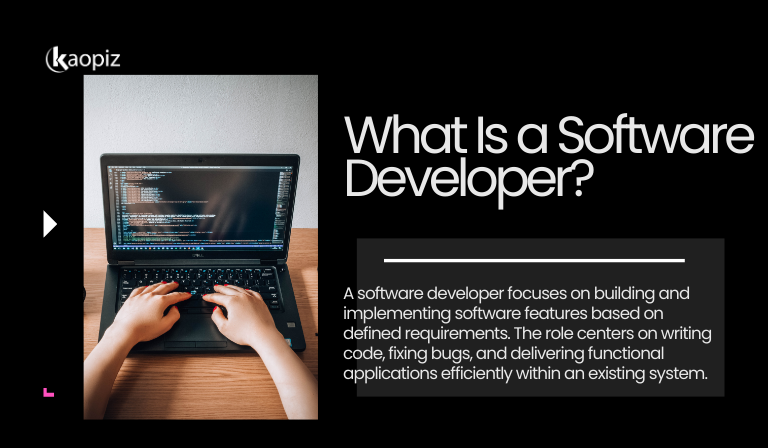
Software developers typically work closely with product managers and designers to deliver features efficiently, using specific programming languages, frameworks, and tools. They are often deeply involved in coding, debugging, and improving existing functionality, ensuring that applications perform as expected and meet user requirements.
In business contexts, software developers are well-suited for feature development, MVP builds, and short- to mid-term projects where speed and execution are priorities. Companies commonly rely on software developers when system architecture is already defined, and the focus is on delivering functionality quickly and cost-effectively.
Software Developer vs Software Engineer: Core Differences Explained
While both roles work on building software, software developers and software engineers differ significantly in scope, mindset, and responsibility. Understanding these core differences between software developer vs software engineer helps businesses in Singapore choose the right talent—and helps professionals align their skills with the right career path.
| Aspect | Software Developer | Software Engineer |
|---|---|---|
| Scope of Work & Responsibilities | Focuses on implementing features, writing, and maintaining code based on predefined requirements and designs. | Responsible for designing software systems, defining technical architecture, and ensuring long-term system reliability. |
| Technical Skills vs Engineering Mindset | Strong in specific programming languages, frameworks, and development tools to deliver functionality efficiently. | Applies engineering principles, system thinking, and technical trade-offs to solve complex problems at scale. |
| Role in the Software Development Lifecycle (SDLC) | Primarily involved in the development and implementation phases of the SDLC. | Involved throughout the entire SDLC—from requirement analysis and system design to deployment and optimization. |
| Level of Ownership & Decision-Making | Executes tasks based on given specifications and technical direction. | Owns key technical decisions and is accountable for system design, quality, and long-term maintainability. |
| Impact on Scalability, Performance & Security | Optimizes individual features and components for functionality and usability. | Designs systems with scalability, performance, and security built in from the start to support long-term growth. |
Scope of Work & Responsibilities
The scope of work is one of the most visible differences between a software developer vs engineer, as the breadth and depth of responsibility vary significantly.
A software developer focuses on implementing features and writing code based on predefined requirements. Typical responsibilities include building user-facing functionality, fixing bugs, and enhancing existing features within an established system.
A software engineer, by contrast, is responsible for the overall technical design and stability of the system. Beyond coding, engineers define architecture, make key technical decisions, and ensure the software can scale, perform reliably, and remain maintainable over time—making the role essential for long-term and enterprise-level products.
Technical Skills vs Engineering Mindset
A key difference between software engineer and software developer lies in how they approach problem-solving.

A software developer typically focuses on technical skills, such as proficiency in specific programming languages, frameworks, and development tools. Their goal is to implement features efficiently and ensure the code functions as expected within the given requirements.
A software engineer, however, applies an engineering mindset. Beyond coding skills, engineers evaluate technical trade-offs, design systems holistically, and consider factors such as scalability, performance, security, and maintainability. This broader perspective allows them to solve complex problems and build software that remains reliable as systems and business needs grow.
Role in the Software Development Lifecycle
Software developers and software engineers contribute to the SDLC at different levels of involvement.
A software developer is mainly engaged during the development and implementation phases, where the focus is on writing code, integrating components, and delivering features according to specifications.
A software engineer participates across the entire SDLC, from translating business requirements into system architecture to overseeing development, deployment, and ongoing optimization. This end-to-end involvement ensures the software remains scalable, maintainable, and aligned with long-term business objectives.
Level of Ownership & Decision-Making
The level of ownership and decision-making authority differs significantly between web developer vs software engineer.
A software developer typically works within an established technical framework, executing tasks based on defined requirements and architectural guidelines. While developers may suggest improvements, final technical decisions usually sit outside their scope.
A software engineer, in contrast, holds end-to-end technical ownership. Engineers make key architectural and technology decisions, assess risks, and take responsibility for system quality, performance, and long-term maintainability—especially in complex or enterprise-level projects.
Impact on Scalability, Performance & Security
The difference between full stack software developer vs software engineer becomes most apparent when systems need to scale or operate under high demands.

A software developer typically focuses on optimizing individual features to ensure functionality and a smooth user experience within the existing system. Their impact on scalability and security is usually limited to the components they work on.
A software engineer, however, designs software with scalability, performance, and security built in from the start. Engineers anticipate growth, handle system load, manage data integrity, and implement security best practices, ensuring the platform can support long-term usage, high traffic, and evolving business requirements.
Software Developer vs Software Engineer Salary in Singapore
Across all experience levels in Singapore, software engineers consistently earn higher salaries than software developers. Software developers typically earn SGD 4,000–10,000+ per month, while software engineers earn SGD 5,000–14,000+, with the gap widening as seniority increases due to greater system and architectural responsibilities.
| Level | Software Developer (SGD / month) | Software Engineer (SGD / month) |
|---|---|---|
| Junior | 4,000 – 6,000 | 5,000 – 7,000 |
| Mid-level | 6,000 – 8,000 | 7,500 – 10,000 |
| Senior | 8,000 – 10,000+ | 10,000 – 14,000+ |
Notes:
- Salary ranges vary depending on industry, company size, and technical specialization.
- Software engineers typically earn more at senior levels due to responsibilities around system architecture, scalability, and security.
- For many Singapore businesses, this widening salary gap is a key reason to consider offshore or hybrid hiring models for experienced engineers.
Business Use Cases: When to Hire a Developer vs. an Engineer?
Hiring software developer vs software engineer depends on project complexity, timeline, and long-term goals. While both roles are essential, selecting the right one at the right time helps businesses control costs, speed up delivery, and avoid technical debt.
When to Choose a Software Developer
A software developer is the right choice when the project scope is well defined and the focus is on speed and execution. Developers are ideal for tasks such as:
- Building MVPs or proof-of-concept applications
- Developing or extending user-facing features
- Enhancing existing systems with clear technical direction
- Short- to mid-term projects where architecture is already in place
For Singapore businesses aiming to launch quickly or validate ideas, software developers offer a cost-effective way to deliver functionality without overengineering.
When to Choose a Software Engineer
A software engineer is essential when projects involve complex systems or long-term scalability. Engineers are best suited for situations such as:
- Designing core platforms or enterprise systems
- Handling high-traffic, data-intensive, or regulated applications
- Making architectural decisions and managing technical risk
- Building products intended to scale and evolve over time
For companies investing in mission-critical or long-term products, software engineers provide the technical foundation needed to ensure stability, performance, and future growth.
Need to move fast? Kaopiz helps Singapore businesses hire experienced software developers within 48 hours, enabling rapid development without long hiring cycles. Our flexible hiring models let you scale your team quickly while maintaining quality and control.
Hiring in Singapore vs Offshore Software Engineers: Cost & Scalability
Hiring software engineers in Singapore offers strong technical quality and close collaboration, but it also comes with high costs and limited talent availability. As demand for experienced engineers continues to rise, many companies face long hiring cycles and escalating salaries—especially for senior and specialized roles.

Offshore software engineers provide a cost-effective and scalable alternative. By hiring offshore, businesses can access a larger talent pool, reduce development costs, and scale teams quickly without the overhead of local recruitment, office space, and long-term employment commitments.
However, successful offshore hiring depends on choosing the right delivery model and partner. Team as a service must align with communication, time zones, technical standards, and quality control. When managed well, offshore software engineers can deliver the same level of performance and reliability as local hires—while offering significantly better scalability.
For Singapore businesses balancing speed, cost, and quality, a hybrid approach—combining local leadership with offshore engineering teams—is increasingly becoming the preferred model for sustainable growth.
How Kaopiz Helps Singapore Companies Hire the Right Software Engineers
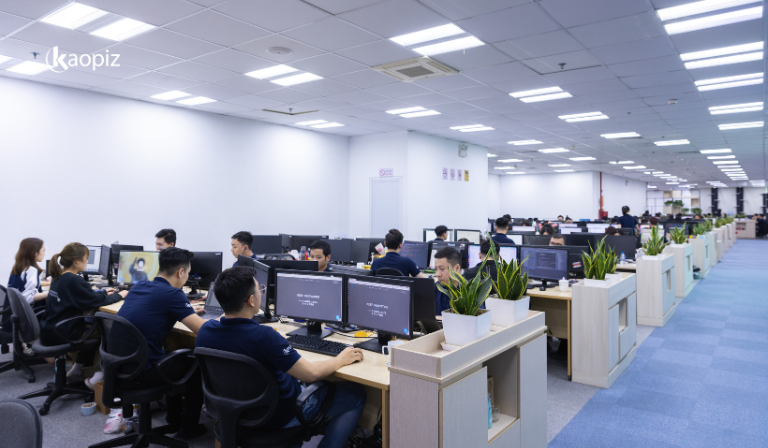
Hiring experienced software engineers in Singapore is increasingly challenging due to high costs, long recruitment cycles, and intense competition for talent. As a leading software companies in Singapore, Kaopiz helps businesses overcome these barriers by providing engineering-ready software engineers who can contribute from day one.
With over 11 years of experience delivering software solutions for global clients, Kaopiz specializes in building teams that go beyond coding to support scalable, secure, and enterprise-grade systems. Our 700+ engineers have hands-on experience across fintech, healthcare, logistics, education, and other regulated or high-growth industries.
Why Singapore Companies Choose Kaopiz:
- Engineering-first talent: Our software engineers are selected for system design expertise, scalability thinking, and long-term technical ownership—not just coding ability.
- Proven global delivery experience: We have successfully delivered 1,000+ projects for clients across Singapore, Japan, Europe, and other international markets.
- Seamless collaboration with Singapore teams: Engineers work in English, follow agile practices, and align with Singapore time zones for smooth daily communication.
- Flexible hiring models: Choose from staff augmentation, dedicated engineering teams, or project-based delivery to match your business needs and growth stage.
- Strong delivery governance & quality control: Each engagement is supported by technical leads and delivery managers to ensure consistency, transparency, and high engineering standards.
By partnering with Kaopiz, Singapore companies gain access to reliable software engineers who can scale with their business—without the overhead and risk of local hiring.
Conclusion
Although software developer vs software engineer is often confused, the difference is critical for Singapore businesses. Developers excel at fast feature delivery, while engineers provide the system-level expertise needed for scalability and long-term success.
Choosing the right role helps control costs and avoid technical debt. With engineering-first teams and flexible hiring models, Kaopiz enables companies to scale efficiently without the complexity of local hiring.
FAQs
- Is Software Engineer Better Than Software Developer in Singapore?
- A software engineer is not necessarily “better”, but the role is often better suited for complex and long-term systems. In Singapore, software engineers typically earn higher salaries and take on greater responsibility for architecture, scalability, and security, while software developers are ideal for feature delivery and shorter-term needs.
- Can Offshore Engineers Replace Local Developers?
- Offshore engineers can effectively complement or partially replace local developers when managed properly. Many Singapore companies adopt a hybrid model, retaining local leadership while leveraging offshore engineers to reduce costs and scale faster without compromising quality.
- How Do I Know Which Role My Project Needs?
- If your project focuses on fast delivery, MVPs, or feature enhancements, a software developer is usually sufficient. If it involves system design, scalability, performance, or long-term growth, you will likely need a software engineer. A technical assessment early on helps avoid costly misalignment later.
- How AI and Emerging Technologies Are Reshaping Software Careers?
- AI, cloud-native architectures, and automation are reshaping software roles in Singapore. Routine development tasks are increasingly assisted by AI tools, shifting demand toward professionals who can design systems, make architectural decisions, and integrate complex technologies. As a result, software engineers with strong problem-solving and system-level skills are becoming even more valuable.
- Which Industries and Companies Are Hiring Software Professionals?
- In Singapore, demand remains strong across fintech, healthcare, logistics, e-commerce, SaaS, and enterprise platforms. Large enterprises and regulated industries tend to prioritize software engineers for system reliability and compliance, while startups and SMEs often hire software developers to accelerate product development and time to market.
Trending Post


No Comments yet!