




Top 15 Software Development Methodologies (2026 Update)
Software development is evolving rapidly, and choosing the right methodology can make or break a project—especially for fast-moving markets like Singapore. The way a team plans, builds, tests, and delivers software has a direct impact on cost, speed, quality, and collaboration across onshore and offshore teams.
This 2026 guide breaks down the top 15 software development methodologies, explaining how each model works, when to use it, and how it compares to others. You also get practical insights from Kaopiz’s experience delivering projects for Singapore companies, helping you decide which methodology best fits your next software initiative.
Let’s dive into the approaches shaping modern software development.
Table of Contents
- What Are Software Development Methodologies?
- Why Software Development Methodologies Matter
- Top 15 Software Development Methodologies (2026 Update)
- Waterfall Model
- V-Model
- Agile Methodology
- Scrum Framework
- Kanban Method
- Extreme Programming (XP)
- Lean Software Development
- Spiral Model
- DevOps Methodology
- Iterative & Incremental Model
- Rapid Application Development (RAD)
- Feature-Driven Development (FDD)
- Scaled Agile Framework (SAFe)
- Dynamic Systems Development Method (DSDM)
- Hybrid Agile–Waterfall (Wagile)
- Comparing the Most Popular Methodologies
- Software Development Process (SDLC Overview)
- How to Choose the Right Software Development Methodology
- How Offshore Software Teams Adapt Methodologies
- Why Kaopiz Is a Trusted Software Development Partner for Singapore Companies
- Trends Shaping Software Development Methodologies in 2026
- Conclusion
- FAQs
What Are Software Development Methodologies?
Software development methodologies are structured frameworks that guide how teams plan, build, test, and deliver software. Instead of approaching development in an ad-hoc way, methodologies provide a clear, repeatable process that helps teams stay aligned, reduce risks, and deliver predictable results.
At their core, these methodologies define:
- How work is planned (e.g., sequential vs. iterative)
- How teams collaborate (roles, ceremonies, responsibilities)
- How software development requirements are managed (fixed vs. evolving)
- How quality is ensured (testing strategies, validation steps)
- How progress is measured (sprints, prototypes, milestones)
While each methodology—Agile, Waterfall, Scrum, DevOps, and others—has its own strengths and weaknesses, all share the same goal: to deliver reliable, high-quality software in the most efficient and predictable way possible.
It’s also important to distinguish methodologies from the software development life cycle (SDLC).
- SDLC defines what stages every software project goes through: requirements → design → development → testing → deployment → maintenance.
- Methodologies define how those stages are executed.
In other words, SDLC is the what, and methodologies are the how.
Why Software Development Methodologies Matter
Software development methodologies provide structure and consistency, helping teams deliver software more efficiently and reliably. The right approach reduces risks, improves communication, and creates alignment across all stakeholders—especially when onshore and offshore teams need to work as one.
- Predictability & Risk Reduction: Clear processes make planning, estimation, and issue management more accurate, reducing surprises during development.
- Higher Quality Outcomes: Standardized steps for requirements, coding, and testing lead to more stable, maintainable software.
- Faster Delivery & Better Adaptability: Iterative approaches like Agile and DevOps enable quicker releases, continuous feedback, and faster response to changing requirements.
- Strong Alignment for Distributed Teams: Defined ceremonies and documentation improve coordination between Singapore clients and offshore development teams.
- More Control Over Cost & Resources: A disciplined methodology reduces rework, improves estimation, and helps teams stay within budget.
Top 15 Software Development Methodologies (2026 Update)
To help you evaluate the options, here are the top 15 methodologies for software development that continue to shape how modern teams plan, build, and deliver software in 2026.
Waterfall Model
The Waterfall Model is one of the earliest and most traditional software development methodologies. It follows a strictly linear, sequential process where each phase must be completed before the next begins.
With clearly defined stages—requirements → design → development → testing → deployment—it provides a structured, documentation-heavy approach ideal for environments where predictability matters.
When It Works Best:
- Projects with clear, stable requirements
- Minimal change environments
- Government, manufacturing, or compliance-driven systems
Advantages:
- Easy to understand and manage
- Strong documentation at every stage
- Predictable scope, timeline, and budget
Limitations:
- Inflexible when requirements evolve
- Late-stage issues can be expensive to fix
- Limited early user feedback
The Waterfall Model remains valuable for tightly controlled environments, but most modern teams prefer more adaptive methodologies for dynamic or fast-changing projects.
V-Model
The V-Model is an evolution of the Waterfall Model that places a strong emphasis on testing and validation at every stage of development. It is structured in a V-shaped sequence: the left side represents planning and design activities, while the right side mirrors these phases with corresponding testing activities. This ensures that for every requirement or design decision, there is a predefined method of verification.
Because testing is planned early, teams can detect gaps much sooner compared to traditional Waterfall, making the V-Model ideal for projects where quality, compliance, and traceability are critical.
When It Works Best:
- Projects requiring strict documentation and traceability
- Systems where failure is costly or dangerous (e.g., healthcare, aviation, finance)
- Projects with stable, well-defined requirements
Advantages:
- Strong alignment between requirements, design, and testing
- Early detection of requirement or design flaws
- Highly structured and easy to audit
Limitations:
- Very rigid; not suitable for evolving requirements
- Changes late in the process are costly to accommodate
- Limited flexibility for iterative improvements
The V-Model is best suited for safety-critical or regulatory environments where precision and validation are non-negotiable. However, for fast-paced or innovative-driven projects, more adaptive models like Agile or Scrum are typically preferred.
Agile Methodology
Agile is one of the most widely adopted software development methods today. Unlike linear models such as Waterfall, Agile is iterative, flexible, and highly collaborative, allowing teams to deliver software in small, incremental releases. This approach enables rapid adaptation to changing requirements and continuous feedback throughout the project lifecycle.
Agile prioritizes working software, close customer involvement, and cross-functional teamwork. Development is broken into short cycles—typically 1–4 weeks—called iterations or sprints, where teams plan, build, test, and review features continuously.
When It Works Best:
- Projects with evolving or unclear requirements
- Products that benefit from early user feedback
- Fast-paced environments where priorities shift frequently
- Startups, SaaS products, or innovation-focused teams
Advantages:
- Highly flexible and responsive to change
- Faster delivery through incremental releases
- Early visibility into progress
- Better collaboration between stakeholders and developers
Limitations:
- Requires active stakeholder involvement
- Scope changes can impact budget or timeline
- Teams need experience with Agile practices to succeed
- Documentation may be lighter compared to traditional models
Agile methodology is ideal for modern, dynamic software projects where adaptability is key. Its iterative nature ensures continuous improvement, making it a strong choice for both in-house and offshore development teams.
Scrum Framework
Scrum is one of the most widely adopted Agile frameworks, designed to help teams deliver value in short, iterative cycles known as sprints. Instead of planning everything up front, Scrum breaks work into small increments, enabling continuous feedback, faster releases, and better alignment with changing business needs.
A Scrum team typically includes a Product Owner, Scrum Master, and Development Team, each responsible for ensuring clarity, removing obstacles, and delivering usable product increments at the end of every sprint.
When It Works Best:
- Projects with evolving or unclear requirements
- Teams that can commit to frequent collaboration and ceremonies
- Products requiring continuous iteration and user feedback
Advantages:
- Highly adaptive and flexible
- Continuous delivery of incremental value
- Strong focus on transparency and team communication
Limitations:
- Requires discipline and Scrum-trained team members
- Unclear product ownership can cause sprint failures
- Harder to use for fixed-scope, fixed-budget projects
Scrum remains one of the most effective methodologies for modern digital products, startups, and innovation-driven teams—especially when rapid iteration and customer-centric development are priorities.
Kanban Method
The Kanban Method is a visual, flow-based software development approach that focuses on continuous delivery, flexibility, and minimizing work-in-progress (WIP).
Instead of working in fixed-length sprints (like Scrum), Kanban teams manage tasks on a board, pulling new work only when capacity is available. This makes Kanban highly adaptable and ideal for teams needing steady, predictable throughput.

When It Works Best:
- Continuous improvement and maintenance projects
- Teams with frequently changing priorities
- Operations, support, or DevOps teams
- Projects requiring flexibility rather than fixed iteration cycles
Advantages:
- Highly flexible with no required iterations or ceremonies
- Excellent visibility through Kanban boards
- Reduces overload by limiting work-in-progress
- Continuous delivery and fast cycle time
Limitations:
- Can become chaotic without discipline
- Lack of time-boxing may reduce pressure to deliver
- Not ideal for large, complex projects needing structured planning
The Kanban Method remains one of the simplest yet most effective ways to improve workflow efficiency, making it especially valuable for support teams, long-running products, and environments where priorities shift often.
Extreme Programming (XP)
Extreme Programming (XP) is an Agile software development methodology that emphasizes high-quality code, rapid feedback loops, and close collaboration between developers and customers. XP is built around disciplined engineering practices, with a strong focus on improving software quality while responding quickly to changing requirements.
XP promotes continuous improvement through short development cycles, frequent releases, and constant communication. Its engineering-centric approach makes it especially effective for teams building complex or highly technical products.
When It Works Best:
- Projects with frequently changing or unclear requirements
- Environments that require very high code quality
- Teams working on complex systems where defects are expensive
- Small to medium-sized development teams with strong collaboration
Advantages:
- High code quality due to TDD, refactoring, and pair programming
- Rapid response to changing requirements
- Frequent releases ensure early feedback
- Strong team alignment through constant communication
Limitations:
- Requires highly disciplined developers
- Pair programming can be resource-intensive
- Can be difficult for non-technical stakeholders to follow
Extreme Programming is a powerful methodology for teams that prioritize code quality and rapid adaptation. While it requires more engineering rigor than most Agile methods, its practices can significantly reduce bugs, improve maintainability, and accelerate delivery when applied correctly.
Lean Software Development
Lean Software Development is an Agile-inspired methodology that focuses on eliminating waste, optimizing workflow efficiency, and delivering value to users as quickly as possible. Adapted from Toyota’s Lean manufacturing principles, it emphasizes continuous improvement, fast iteration, and a strong culture of learning.
Lean encourages teams to streamline processes, reduce unnecessary work, and focus only on activities that directly contribute to customer value.
When It Works Best:
- Projects requiring rapid delivery and frequent iteration
- Startups or product teams validating features quickly
- Environments where resources must be used efficiently
- Teams committed to continuous improvement and experimentation
Advantages:
- Faster delivery through reduced waste
- Strong focus on customer value and feedback
- Encourages autonomous, high-performing teams
- Supports continuous learning and improvement
Limitations:
- Requires disciplined teams to avoid cutting essential work
- Hard to scale without strong leadership alignment
- Risk of under-documentation if not properly managed
- Success depends heavily on team maturity and mindset
Lean Software Development is ideal for teams aiming to maximize efficiency and deliver value quickly, especially in dynamic environments where speed, adaptability, and customer feedback drive product success.
Spiral Model
The Spiral Model combines elements of both iterative development and the structured approach of Waterfall. Introduced by Barry Boehm, it focuses heavily on risk analysis, making it one of the most suitable software development models for projects with high uncertainty or complexity.
The model progresses through repeated cycles—or “spirals”—each consisting of four stages: planning, risk assessment, development, and evaluation.
When It Works Best:
- Large, complex, or mission-critical projects
- Systems with significant technical or financial risks
- Projects requiring continuous refinement through multiple prototypes
Advantages:
- Strong emphasis on identifying and reducing risk early
- Flexible and iterative, with room to incorporate new insights
- Encourages regular client involvement and validation
Limitations:
- Can be costly due to repeated cycles and evaluations
- Requires experienced teams to conduct meaningful risk analysis
- Not ideal for small projects with tight budgets
Despite its complexity, the Spiral Model remains valuable for high-risk initiatives where careful planning, ongoing evaluation, and iterative learning are essential for ensuring project success.
DevOps Methodology
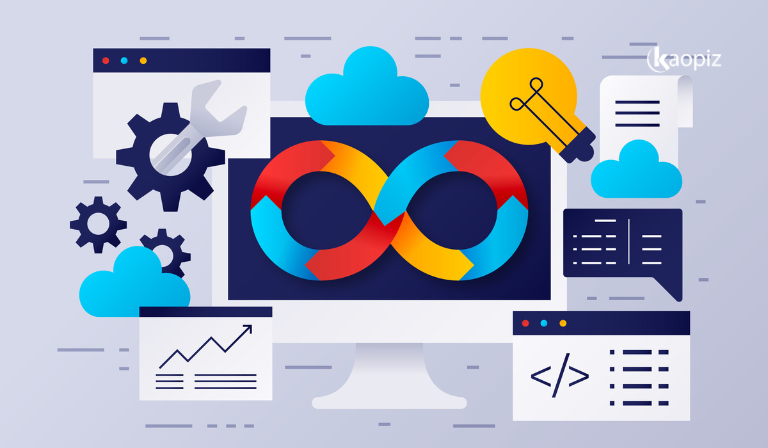
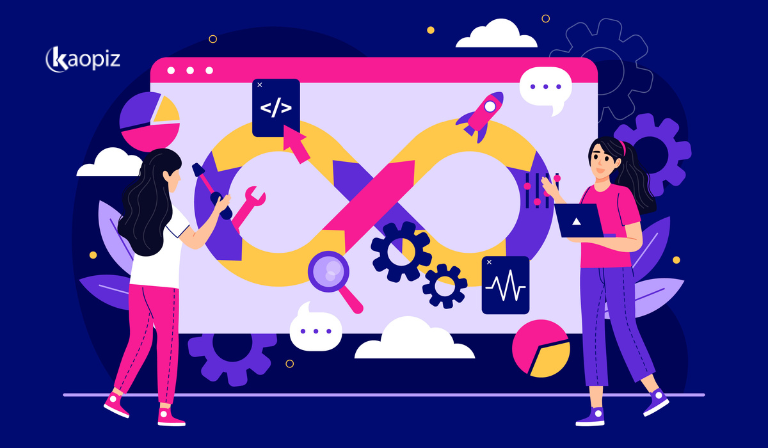
DevOps is a modern software development methodology that integrates development (Dev) and operations (Ops) to improve collaboration, speed, and reliability throughout the entire software delivery lifecycle. Instead of treating development and operations as separate teams, DevOps brings them together through automation, continuous integration, continuous delivery, and shared accountability.
At its core, DevOps focuses on creating a seamless pipeline where code is planned, built, tested, deployed, and monitored with minimal friction. This is achieved through practices like CI/CD, automated testing, infrastructure as code (IaC), and real-time monitoring — enabling teams to release features faster and more safely.
When It Works Best:
- Cloud-native applications and modern SaaS platforms
- Projects requiring frequent updates or continuous deployment
- Teams aiming to reduce downtime and accelerate innovation
- Large-scale systems where stability and automation are critical
Advantages:
- Faster release cycles through automation and CI/CD
- Higher system reliability and fewer deployment failures
- Better collaboration between developers, QA, and operations teams
- Enhanced observability through logging, monitoring, and alerting
Limitations:
- Requires strong tooling, process maturity, and cultural change
- May require significant investment in automation and infrastructure
- Not ideal for small teams without DevOps expertise
- Complex to adopt if legacy systems are deeply entrenched
DevOps has become a core methodology for enterprises shifting toward cloud, automation, and continuous delivery. For teams seeking rapid iteration and stable operations, DevOps provides the foundation for speed, quality, and resilience — especially when combined with Agile practices.
Iterative & Incremental Model
The Iterative & Incremental Model combines two powerful concepts: building software in small increments while continuously refining and improving the product through repeated iterations. Instead of delivering the entire system at once, development is broken into manageable segments—each adding functionality and each improved over multiple cycles.
This approach allows teams to gradually enhance the product, incorporate feedback early, and reduce the risks associated with large, one-time releases.
When It Works Best:
- Projects where the final requirements are evolving but the core system is understood
- Long-term products that need continuous enhancement
- Teams that require early working versions for stakeholder validation
- Medium to large applications with modular architectures
Advantages:
- Faster release of initial working software
- Flexibility to adjust features based on ongoing feedback
- Reduced overall risk thanks to smaller, controlled iterations
- Clear visibility for stakeholders throughout the project timeline
Limitations:
- Requires experienced planning to structure increments effectively
- Iterations may expand scope if not managed tightly
- Documentation can lag behind rapid cycles if not enforced
The Iterative & Incremental Model remains one of the most balanced approaches—combining the stability of planned development with the adaptability needed for modern software projects. It is especially effective for teams that value early delivery and continuous refinement.
Rapid Application Development (RAD)
Rapid Application Development (RAD) is a methodology that focuses on speed, prototyping, and user involvement. Instead of spending long periods on planning and documentation, RAD emphasizes quick iterations and continuous feedback to rapidly refine the product. Working prototypes are delivered early and often, allowing users to validate functionality long before the final release.
RAD works best when teams need to build applications quickly and can collaborate closely with stakeholders throughout the process.
When It Works Best:
- Projects requiring fast delivery
- Applications that benefit from frequent user feedback
- Teams with access to skilled developers and decision-makers
- Systems where requirements can evolve through prototypes
Advantages:
- Extremely fast development cycles
- Early visibility of functional prototypes
- High user involvement ensures better alignment
- Flexible approach to changing requirements
Limitations:
- Requires highly skilled, cross-functional teams
- Heavy reliance on continuous user participation
- Less effective for large, complex, or heavily regulated projects
- May sacrifice documentation for speed
RAD is ideal for organizations that value rapid experimentation and iterative refinement. When executed well, it can dramatically shorten time-to-market and deliver a product that more closely fits user expectations.
Feature-Driven Development (FDD)
Feature-Driven Development is an Agile-inspired methodology that focuses on delivering software through short, feature-centric development cycles. Instead of planning work around sprints or tasks, FDD organizes development around discrete, user-valuable features—each small enough to be designed, built, and delivered quickly.
This model relies heavily on domain modeling, feature lists, and iterative progress tracking, making it particularly effective for large, long-term projects where structure and scalability matter.
When It Works Best:
- Large or enterprise-level applications
- Products with well-defined domains and clear feature breakdowns
- Long-term projects requiring consistent progress monitoring
- Teams that benefit from strong architectural governance
Advantages:
- Highly structured and scalable for big teams
- Clear progress visibility through feature completion
- Strong focus on domain understanding and design quality
- Predictable delivery due to small, manageable feature units
Limitations:
- Relies on deep domain knowledge up front
- Less flexible than Scrum or Kanban in rapidly changing environments
- Requires mature design capabilities and strong leadership (Chief Programmer, Class Owners)
FDD works best when teams need the balance of Agile adaptability and structured engineering discipline, especially in long-running projects where maintaining architectural integrity is essential.
Scaled Agile Framework (SAFe)
The Scaled Agile Framework (SAFe) is one of the most widely adopted approaches for implementing Agile across large, multi-team, or enterprise-level organizations. Unlike traditional Agile, which focuses on individual teams, SAFe provides a structured system for aligning multiple teams around shared goals, synchronized planning, and coordinated delivery.
SAFe combines principles from Agile, Lean, and DevOps, offering clear guidance on team roles, ceremonies, workflows, governance, and value stream management. It is especially useful for companies with complex systems, cross-functional teams, or long-term digital transformation programs.
When It Works Best:
- Large-scale or enterprise software development
- Organizations with many Agile teams working on interconnected systems
- Companies adopting long-term digital transformation or modernization programs
Advantages:
- Strong alignment between business strategy and technical execution
- Predictable, synchronized planning via Program Increments (PIs)
- Encourages shared delivery goals across departments
- Designed for large, distributed, or cross-border teams
Limitations:
- More complex and heavyweight compared to standard Agile
- Requires significant training, coordination, and cultural change
- Can be overkill for small- or mid-size projects
SAFe continues to gain global adoption as enterprises seek to scale Agile beyond individual teams. While powerful, it is most effective when backed by strong leadership support and mature Agile practices.
Dynamic Systems Development Method (DSDM)
The Dynamic Systems Development Method (DSDM) is one of the earliest and most structured Agile frameworks, designed to address the limitations of traditional waterfall-style projects. Unlike lightweight Agile methods, DSDM provides a comprehensive, end-to-end project delivery framework with clear governance, roles, documentation standards, and quality controls — making it suitable for larger or more regulated organizations.
DSDM is built on eight core principles, including frequent delivery, active user involvement, iterative development, and integrated testing. The approach emphasizes business value, ensuring that teams continually prioritize the features that bring the highest ROI.
When It Works Best:
- Projects requiring Agile flexibility with formal governance
- Organizations that need structured documentation and clear decision-making
- Medium to large-scale enterprise projects
- Teams that need strong stakeholder involvement
Advantages:
- Clear governance and well-defined roles
- Prioritization model (MoSCoW) ensurs what matters most gets delivered
- Strong alignment between business and technical team
- Integrated testing reduces late-stage risks
Limitations:
- Requires high discipline and mature teams
- Heavy stakeholder involvement may be difficult to maintain
- More complex than lighter Agile frameworks like Scrum or Kanban
DSDM is ideal for teams that want the adaptability of Agile but still require structure and control. Its balance between flexibility and governance makes it a popular choice for enterprise-level digital transformation projects where alignment and predictability are crucial.
Hybrid Agile–Waterfall (Wagile)
Hybrid Agile–Waterfall, commonly known as Wagile, blends the structured planning of Waterfall with the iterative flexibility of Agile.
Instead of choosing one approach, teams combine both: Waterfall for high-level phases and Agile sprints for development and testing. This creates a practical middle ground, especially for organizations transitioning from traditional processes to modern Agile practices.
When It Works Best:
- Projects with fixed high-level scope but evolving technical details
- Teams needing documentation and approval gates (e.g., enterprise environments)
- Organizations shifting gradually from Waterfall to Agile
- Projects delivered by onshore–offshore teams that require planning discipline + iterative development
Advantages:
- Clear upfront planning with flexibility during development
- Better alignment with stakeholders who need documentation and visibility
- Reduced risk compared to pure Waterfall
- Faster delivery of working increments through Agile sprints
Limitations:
- Requires strong coordination to avoid process conflicts
- Can become “Waterfall with sprints” if not managed properly
- Inconsistent expectations if stakeholders misunderstand which parts follow Agile
- Teams need maturity in both frameworks
Hybrid Agile–Waterfall remains one of the most realistic approaches for large companies — especially in Singapore — who must balance governance requirements with modern iterative development practices. It’s also highly suitable for cross-border teams that require a predictable structure without sacrificing agility.
Comparing the Most Popular Methodologies
With so many types of software development methodologies available, choosing the right one can feel overwhelming. Each approach offers different levels of flexibility, documentation, speed, and risk tolerance. The best way to decide is to understand how these methodologies stack up against one another in real project scenarios.
Below is a comparison of SDLC models in 2026, helping you see at a glance which ones fit different project types, team structures, and business needs.
| Methodology | Delivery Speed | Flexibility | Documentation Level | Best For | Limitations |
|---|---|---|---|---|---|
| Waterfall | Slow | Low | High | Fixed-scope, stable requirements | Not adaptable to change |
| V-Model | Slow | Low | Very High | Compliance, safety-critical systems | Rigid, costly to change |
| Agile | Fast | High | Medium | Evolving requirements, product teams | Needs active stakeholder involvement |
| Scrum | Fast | High | Medium | Iterative feature delivery | Requires disciplined team roles |
| Kanban | Continuous | High | Low–Medium | Maintenance, ongoing product ops | Harder to forecast timeline |
| XP | Fast | High | Medium | High-quality engineering teams | Requires strong technical maturity |
| Lean | Fast | High | Low | Startups, rapid iteration | Needs tight scope control |
| Spiral | Medium | Medium | High | Large, high-risk projects | Complex and resource-heavy |
| Iterative & Incremental | Medium–Fast | High | Medium | Mid-size evolving products | Needs stable vision to avoid scope creep |
| DevOps | Very Fast | High | Medium | Cloud-native, continuous delivery | Requires automation investment |
| RAD | Very Fast | High | Low | Prototypes, quick MVPs | Needs highly engaged users |
| FDD | Medium | Medium | Medium | Feature-centric product teams | Less ideal for rapid pivots |
| SAFe | Medium | Medium | High | Large enterprises scaling Agile | Heavy framework; overhead cost |
| DSDM | Medium | High | Medium | Projects needing time-boxing | Requires frequent user participation |
| Hybrid (Wagile) | Medium | Medium | Medium–High | Fixed scope + Agile delivery blend | May create confusion if poorly managed |
Software Development Process (SDLC Overview)
The Software Development Life Cycle outlines the core stages every software project follows, regardless of which methodology is used. While methodologies define how teams work, SDLC defines what steps must happen from start to finish.
- Requirement Analysis: Gather and clarify business needs, user expectations, and technical constraints to define what the system must achieve.
- System & Architecture Design: Create the technical blueprint—system architecture, UI/UX designs, database structure, and technology choices.
- Development: Engineers write code, implement features, and integrate components based on the planned design.
- Testing & Quality Assurance: Verify that the system works as intended through functional tests, integration tests, performance tests, and bug fixes.
- Deployment: Release the software to production environments, ensuring smooth rollout and minimal downtime.
- Maintenance & Continuous Improvements: Monitor performance, fix issues, and release enhancements as user needs evolve.
This streamlined SDLC overview helps readers understand the universal flow underlying all software development methodologies.
How to Choose the Right Software Development Methodology
Selecting the right system development methods is not about following trends—it’s about choosing an approach that fits your project’s goals, constraints, and team dynamics. The best methodology depends on how clear your requirements are, how fast you need to move, and how your teams are structured.
- Requirement Clarity: If requirements are fixed and well-defined, structured models like Waterfall or V-Model fit best. For evolving or uncertain requirements, Agile or Iterative approaches allow flexibility.
- Project Size & Complexity: Large, multi-team or multi-year projects benefit from SAFe, V-Model, or Hybrid models. Smaller or mid-size product teams often succeed with Scrum, Kanban, or XP.
- Stakeholder Availability: Agile needs consistent stakeholder involvement and rapid feedback. If decision-makers are busy or unavailable, choose models with heavier upfront planning.
- Timeline & Budget Constraints: Predictable timelines suit Waterfall or Hybrid Agile–Waterfall. If speed and early releases matter more, Agile, DevOps, or RAD provide faster iteration cycles.
- Team Structure (Onshore/Offshore): Distributed or offshore teams need clear ceremonies, documentation, and handover processes—Hybrid Agile or Scrum with strong governance works best.
- Compliance & Risk Level: Regulated industries (finance, healthcare, government) benefit from V-Model or Spiral due to strict validation and documentation requirements.
- Team Maturity & Skill Sets: Advanced engineering teams can adopt XP, DevOps, or Lean practices. Less mature teams may need the structure of Scrum or Waterfall.
How Offshore Software Teams Adapt Methodologies
Offshore development adds unique challenges—time zones, communication styles, and differing levels of documentation maturity. Because of this, successful offshore teams don’t just “follow” a methodology; they adapt it to ensure alignment across borders.
- Stronger Emphasis on Documentation: Offshore teams refine user stories, acceptance criteria, and technical specs more thoroughly to prevent miscommunication and reduce back-and-forth across time zones.
- Clearer Communication Rituals: Daily standups, weekly sprint reviews, and well-structured retrospectives become essential. Offshore teams often record demos to ensure no key stakeholder misses important updates.
- Hybrid Agile Approaches: Many offshore projects blend Agile flexibility with Waterfall-like predictability to suit Singapore clients that need clear cost/time boundaries.
- Tools That Bridge Distance: Jira, Confluence, Notion, Miro, GitHub, and automated CI/CD pipelines help maintain transparency and real-time visibility.
Why Kaopiz Is a Trusted Software Development Partner for Singapore Companies
Kaopiz has become a preferred software development partner for Singapore enterprises and SMEs due to our ability to deliver predictable results while maintaining agility and transparency.

- Deep Expertise Across Modern Methodologies: From Agile and Scrum to DevOps and hybrid models, Kaopiz tailors processes to each project’s complexity, compliance needs, and business goals.
- Proven Track Record in Cross-Border Delivery: With over 11 years serving to 200+ clients in Singapore, Japan, and APAC, we understand how to structure workflows that overcome offshore communication and coordination challenges.
- Dedicated BA & Scrum Master Support: Kaopiz assigns bilingual BAs and trained Scrum Masters to ensure smooth requirement clarification, backlog grooming, and stakeholder communication.
- Strong Engineering Culture: Our teams follow disciplined QA, CI/CD, code review, and DevOps practices—resulting in higher quality, lower risk, and faster release cycles.
- Transparency & Predictable Execution: Clients get full visibility into velocity, progress, risks, and quality metrics through dashboards, sprint reports, and continuous demos.
Trends Shaping Software Development Methodologies in 2026
The landscape of software methodologies continues to evolve, driven by advances in AI, automation, and distributed work.
- AI-Assisted Development Becomes Mainstream: AI agents accelerate coding, testing, documentation, and refactoring—reshaping how teams plan and execute development cycles.
- DevSecOps Takes Priority: Security shifts “left,” with automated security testing, SAST/DAST, and compliance checks integrated throughout CI/CD pipelines.
- Hybrid Methodologies Gain More Adoption: Companies increasingly mix Agile flexibility with Waterfall predictability to balance speed with governance—especially in regulated industries.
- Large Enterprises Scale Agile with SAFe & LeSS: More organizations adopt structured Agile-at-scale frameworks to manage multi-team collaboration across large, complex systems.
- Rising Adoption of MLOps for AI Projects: As AI systems grow, MLOps introduces new standards for model training, monitoring, and continuous deployment.
Conclusion
Software development methodologies continue to evolve as teams demand faster delivery, higher quality, and better alignment across distributed environments. While no single methodology works for every project, understanding the strengths, limitations, and ideal use cases of each approach helps teams make smarter decisions. Whether you choose Agile, DevOps, V-Model, or a hybrid method, the key is selecting a framework that matches your project goals, team structure, technical complexity, and level of requirement stability.
For Singapore companies working with offshore teams, a well-chosen methodology becomes even more critical—it ensures clarity, communication, and predictable outcomes. With deep expertise across multiple methodologies, Kaopiz helps organizations deliver software efficiently and confidently.
FAQs
- What Is the Best Software Development Methodology?
- There is no universal “best” methodology. Agile works well for evolving requirements, Waterfall suits fixed-scope projects, and DevOps is ideal for rapid, continuous releases. The right choice depends on your project’s complexity, risk tolerance, and stakeholder involvement.
- Is Agile Always Better Than Waterfall?
- Not necessarily. Agile is flexible and iterative, while Waterfall provides stronger structure and predictability. Waterfall is still preferred in compliance-heavy industries, fixed-budget work, or environments with stable, well-documented requirements.
- What Methodology Do Singapore Companies Prefer?
- Most Singapore technology teams use Agile or Hybrid Agile due to fast-paced business demands. However, industries such as finance, healthcare, and government still rely on Waterfall or V-Model for documentation and compliance.
- Can Offshore Teams Work with Agile/Scrum?
- Yes. Agile works very well with offshore teams when ceremonies, communication channels, and documentation are clearly defined. Many Singapore companies use Agile with Vietnam developers through Scrum Masters, daily standups, sprint planning, and retrospectives.
- How Much Documentation Does Agile Require?
- Agile still requires documentation—just at the level needed for effective collaboration. User stories, acceptance criteria, technical notes, and sprint artifacts remain essential, especially in distributed onshore–offshore teams.
3 Replies to “Top 15 Software Development Methodologies (2026 Update)”
Leave a Comment
Trending Post

Pingback:Manufacturing Software: Benefits, Features, and Key Types
Pingback:Quality Control vs Quality Assurance: What's the Differences [2025]
Pingback:Software Project Management: Tools & Best Practices [2025 Guide]