
Time and Materials Contract: A Governance Guide for Evolving Software Projects
In my experience working with Australian businesses on software development and digital transformation projects, one of the biggest challenges is not choosing the right technology but choosing the right commercial model. A Time and Materials Contract often delivers better outcomes when project requirements are expected to evolve.
Unlike a fixed price agreement, a Time and Materials Contract allows teams to adapt to changing priorities while maintaining delivery momentum. This flexibility is particularly valuable for AI initiatives, web applications, mobile apps, and Agile product development, where new requirements frequently emerge throughout the project.
This guide explains how a Time and Materials Contract works, when it outperforms other engagement models, and how Australian businesses at every decision-making level, from engineering leads to the C-suite, can balance flexibility, transparency, and cost control to maximize long term project success.
Key Takeaways
- A Time and Materials Contract is ideal for projects with evolving requirements, Agile workflows, and continuous product development.
- Unlike Fixed Price contracts, it allows teams to adapt to changing priorities without renegotiating the entire agreement.
- Clients pay for the actual time and approved project expenses, providing greater transparency into development costs.
- Features such as Not to Exceed (NTE) limits and maximum labour hours help balance flexibility with budget control.
- AI and other high-uncertainty projects benefit most, because scope often can’t be fully defined before development starts.
- Different stakeholders care about different things under T&M: engineering leads watch velocity and technical debt, executives watch budget defensibility, procurement watches reporting discipline.
- Success depends on strong governance, including sprint planning, backlog prioritisation, KPI tracking, and regular stakeholder communication.
What Is a Time and Materials Contract and Why Is It Popular in Australia?
As Australian businesses continue investing in AI, cloud, and custom software, many projects begin with evolving requirements rather than a fully defined scope. In these situations, choosing a flexible engagement model is often more valuable than locking in a fixed budget from day one.
A Time and Materials Contract is a pricing model where clients pay for the actual time spent by the development team and the approved project expenses required to complete the work. Unlike fixed price agreements, it allows priorities, features, and delivery plans to evolve without renegotiating the entire contract whenever business needs change.

This approach has become increasingly popular for Agile software development because it enables faster decision making, continuous product improvement, and closer collaboration between clients and engineering teams. Rather than treating change as a project risk, it turns changing requirements into a manageable part of the delivery process.
For Australian enterprises, this flexibility is especially valuable when building AI solutions, digital platforms, or customer facing applications where user feedback and market conditions can quickly reshape the product roadmap. The focus shifts from delivering a predefined scope to delivering the highest business value within the available budget and timeline.
Time and Materials Contract vs Fixed Price vs Cost Plus: Which Model Fits Your Project?
Choosing the right commercial model is about more than comparing costs. It determines how your team manages changing requirements, allocates risk, and delivers value throughout the project lifecycle. Understanding the differences between these pricing models helps Australian businesses select an approach that aligns with both technical complexity and business objectives.
If you are still comparing these two pricing models, our guide on Time and Materials vs Fixed Price explores their differences in greater detail, including risk allocation, cost control, and the best use cases for each engagement model.
Time and Materials vs Fixed Price: Flexibility or Cost Certainty?
A Time and Materials Contract is ideal when project requirements are expected to evolve. Teams can adjust priorities, refine features, and respond to feedback without renegotiating the entire agreement, making it a natural fit for Agile product development.
A Fixed Price contract works best when the scope is clearly defined from the start. While it offers greater budget certainty, frequent requirement changes can increase costs and slow down delivery due to formal change requests.
Time and Materials vs Cost Plus: Understanding Risk Allocation
Both models reimburse actual project costs, but they allocate financial risk differently. A T&M model uses pre agreed labor rates, giving clients better visibility into development costs while maintaining flexibility throughout the project.
Cost Plus contracts reimburse all eligible expenses and then add a separate management fee or profit margin. This approach is more common for highly unpredictable projects but requires closer financial oversight.
Which Contract Model Works Best for Agile Software Development?
Agile projects rely on continuous iteration, customer feedback, and changing priorities. A flexible engagement model allows development teams to adapt quickly without disrupting delivery or delaying product releases.
For web applications, mobile apps, SaaS platforms, and AI solutions, many businesses prefer T&M because it supports continuous improvement while keeping stakeholders involved throughout every sprint.
Decision Matrix: Choosing the Right Pricing Model for Australian Enterprises
| Criteria | Time and Materials | Fixed Price | Cost Plus |
|---|---|---|---|
| Scope | Flexible | Fixed | Highly flexible |
| Budget certainty | Medium | High | Low |
| Change management | Easy | Limited | Flexible |
| Risk ownership | Shared | Supplier | Client |
| Best for | Agile & evolving projects | Well defined projects | Complex, uncertain work |
A simple way to choose the right model is to assess how likely your requirements are to change. If your roadmap is still evolving, a flexible pricing model often delivers greater long term value than locking every deliverable into a fixed scope on day one.
Why AI and Evolving-Scope Projects Need a Time and Materials Contract
AI features rarely follow a predictable build path. A model that performs well in testing can behave differently in production, and a chatbot that seemed simple to scope often needs several rounds of tuning and retraining before it’s genuinely usable. This is exactly the uncertainty a Fixed Price contract struggles to absorb.
Under a fixed scope agreement, every discovery becomes a change request, each needing a new estimate and sign-off, often pausing delivery while both sides renegotiate. For AI work, that cycle can repeat several times before the feature is ready, eroding the cost certainty a fixed price was meant to provide.
A Time and Materials Contract removes that friction. Teams can prototype, test with real users, and refine the model without renegotiating scope every time a finding changes the plan. This isn’t unique to AI: web platforms in user testing and apps iterating on early feedback follow the same pattern of scope firming up gradually rather than being knowable upfront.
Consider a typical scenario. A business commits to an AI recommendation feature under a fixed price quote. Three weeks in, testing shows the model needs more training data and a different integration approach. Under Fixed Price, this triggers a change order and a delay. Under Time and Materials, with an NTE ceiling already in place, the team adjusts the sprint plan and keeps working, with the extra effort simply reflected in the next sprint report.
This is why a growing share of AI work in Australia is delivered under T&M: the model is built for discovery itself, not for executing a plan fixed before anyone knew what the AI would need.
How a Time and Materials Contract Affects Different Stakeholders
A Time and Materials Contract touches different parts of a business in different ways, and the concerns of an engineering lead are not the same as the concerns of a CFO or a procurement manager. Understanding these perspectives helps every stakeholder evaluate the model on the terms that matter most to their role.
For Engineering Managers and Tech Leads
Engineering leaders evaluating T&M are usually less worried about the hourly rate and more worried about whether flexible scope will quietly erode delivery quality. Without discipline, a team billing by time and adjusting scope continuously can drift into rework, unclear ownership, or accumulating technical debt that never gets addressed because there’s always a new priority in front of it.
The practical safeguard is treating velocity and code quality as tracked metrics, not assumptions. Sprint velocity, defect rates, and a visible backlog of technical debt items should appear in the same reporting cadence as budget and hours. When these are tracked consistently, an Engineering Manager can confirm that flexibility is being used to build the right thing, not to avoid planning.
For C-Level Executives
At the executive level, the core question is usually how to defend an open-ended cost model to a board or finance function that prefers fixed numbers. This is where an NTE ceiling becomes more than a budget control. It becomes the number that gets presented upward, giving the business a defensible cap even while the underlying scope stays flexible.
The other executive concern is the health of the vendor relationship over time, not just the current project. A T&M engagement that runs across multiple releases or years shifts the relationship from a one-off delivery to an ongoing partnership. Executives should evaluate a T&M partner on how well that partner performs over a full product lifecycle, not only on the outcome of the first engagement.
For Procurement and Project Managers
Procurement and PM stakeholders are typically the most familiar with T&M mechanics already, and their focus sits on reporting discipline and contractual clarity. Detailed timesheets, itemized expenses, and sprint-level reporting are what make a T&M engagement auditable, and their absence is usually the first sign that a vendor relationship needs closer oversight.
For this group, the practical governance tools already covered in this guide, such as NTE limits, labor caps, and defined labor categories, are the primary levers for keeping a flexible engagement accountable without sacrificing the adaptability that makes T&M valuable in the first place.
How Does a Time and Materials Contract Work? Understanding the Core Components
A successful Time and Materials Contract is built on more than hourly billing. To balance flexibility with financial control, both parties need a clear understanding of how labor, expenses, reporting, and budget safeguards are structured from the outset. When these components are defined properly, the engagement becomes significantly easier to manage as project requirements evolve.
Loaded Labor Rates: What Are You Really Paying For?
Loaded labor rates represent the agreed hourly or daily cost for each role involved in the project. Rather than covering salary alone, these rates typically include employee compensation, overhead, administrative expenses, infrastructure, and the supplier’s operating margin. This allows clients to understand the full cost of each resource without unexpected charges later in the engagement.
For software development projects, defining labor categories upfront also improves cost transparency and resource planning. According to the U.S. Federal Acquisition Regulation (FAR) on Time and Materials Contracts, fixed hourly rates should be clearly established for each labor category, providing a transparent foundation for billing and project governance.
Material Costs, Expenses, and Contractor Markups
In software projects, “materials” generally refer to approved project expenses rather than physical goods. These may include cloud infrastructure, third party APIs, software licences, testing platforms, or business travel that directly supports project delivery.
To avoid disputes, organizations should agree in advance on which expenses are reimbursable and how they will be documented. Transparent expense policies ensure clients only pay for verified project costs while giving suppliers sufficient flexibility to deliver efficiently.
Not to Exceed (NTE): Controlling Budget Without Losing Flexibility
One common misconception is that flexible contracts automatically lead to unlimited spending. In reality, many organizations include a Not to Exceed (NTE) clause that establishes a maximum project budget while still allowing priorities and scope to evolve within that limit.
An NTE provides financial protection without sacrificing Agile delivery. Instead of renegotiating every requirement change, both parties can continue delivering value while monitoring spending against an agreed budget ceiling.
Maximum Labor Hours and Resource Allocation
Many projects also define a maximum number of billable hours for each sprint, milestone, or project phase. This creates clear expectations around resource allocation and encourages both parties to review priorities before additional effort is approved.
Rather than limiting productivity, labor caps improve planning discipline and help engineering teams focus on the highest value features first. This is especially effective for long term product development where requirements continue to evolve.
Why Transparent Reporting Matters More Than Hourly Rates
The success of a flexible engagement depends less on hourly rates and more on how progress is measured and communicated. Detailed sprint reports, timesheets, completed deliverables, backlog updates, and budget tracking give stakeholders confidence that resources are being used effectively.
The Australian Government’s contract guidance recommends clearly documenting responsibilities, payment terms, deliverables, and dispute resolution processes before work begins. Combined with regular reporting, these practices create stronger governance and reduce misunderstandings throughout the project lifecycle.
The Biggest Challenges of a Time and Materials Contract and How to Manage Them
While a Time and Materials Contract offers greater flexibility than traditional pricing models, it also requires stronger governance to keep projects on track. Without clear planning, transparent reporting, and regular communication, businesses may face budget overruns, shifting priorities, or reduced visibility into project progress. The good news is that these risks can be effectively managed with the right delivery framework.
| Challenge | Business Impact | Best Practice |
|---|---|---|
| Budget overruns | Higher than expected project costs | Set sprint budgets and define a Not to Exceed (NTE) limit |
| Scope creep | Continuous expansion of requirements | Prioritize the product backlog and approve changes regularly |
| Limited visibility | Difficult to track delivery progress | Provide weekly reports and sprint reviews |
| Low productivity | Reduced delivery efficiency | Monitor team velocity and measurable KPIs |
| Misaligned priorities | Features with low business value | Involve Product Owners in planning and prioritization |
With regular sprint planning, transparent reporting, and shared accountability between the client and delivery team, organizations can maintain cost control while still benefiting from the flexibility that makes this engagement model so effective for modern software development.
How to Choose the Right Time and Materials Contract Partner in Australia
Selecting the right partner is just as important as choosing the right pricing model. Beyond competitive rates, businesses should look for a provider that combines technical expertise, transparent governance, and proven delivery experience to ensure projects remain flexible, efficient, and aligned with business goals.
When evaluating a potential partner, consider whether they offer:
- Proven experience in software development, digital transformation, and IT outsourcing.
- Transparent pricing, detailed timesheets, and regular sprint based reporting.
- Strong Agile delivery practices with clear project governance and stakeholder communication.
- Scalable engineering teams covering AI, cloud, web, mobile, QA, and DevOps.
- Time zone alignment and responsive collaboration with Australian businesses.
- International security standards such as ISO 27001 and ISO 9001.
- A partnership approach focused on delivering measurable business outcomes, not just development hours.
A successful Time and Materials Contract depends not only on a flexible commercial model but also on the partner’s ability to deliver with transparency, accountability, and technical excellence.
With extensive experience supporting Australian businesses, Kaopiz combines Agile delivery, strong governance, and scalable engineering capabilities to help organizations maximize the value of every development investment.
Why Kaopiz Is a Trusted Time and Materials Contract Partner for Australian Businesses
A successful Time and Materials Contract requires more than flexible billing. It depends on a partner that can provide transparent governance, consistent delivery, and the technical capability to adapt as business priorities evolve.
With over 12 years of experience in software development and IT outsourcing, Kaopiz helps Australian businesses maximize flexibility while maintaining visibility and control throughout the project lifecycle.
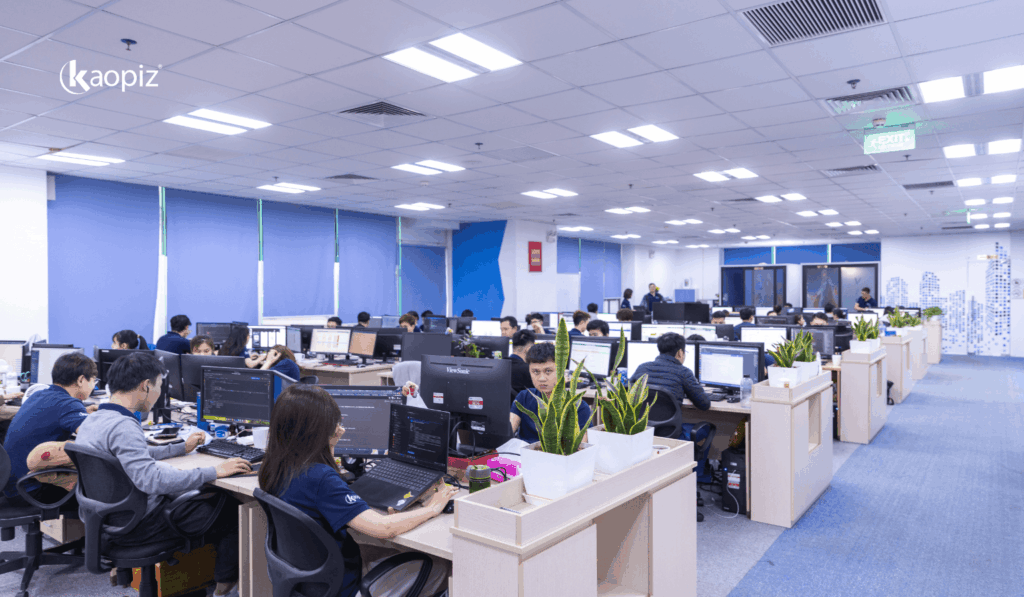
What makes Kaopiz a trusted outsourcing partner for Australian businesses:
- 12+ years of software development and IT outsourcing experience, supporting businesses across Australia, Japan, Singapore, and the US.
- 1,000+ successful projects delivered, from MVPs and SaaS platforms to enterprise systems, AI solutions, and digital transformation initiatives.
- Nearly 1,000 experienced engineers with expertise in AI, cloud, web, mobile, DevOps, QA, cybersecurity, and enterprise software.
- Transparent Time and Materials delivery, including detailed timesheets, sprint reports, backlog reviews, and regular budget tracking to ensure complete cost visibility.
- Strong Agile governance, with dedicated Project Managers, sprint planning, measurable KPIs, and continuous stakeholder communication throughout every stage of delivery.
- Scalable engagement models that allow teams to quickly expand or adjust resources as project priorities and business needs change.
- Australia friendly collaboration, with minimal time zone differences that enable real time communication, faster feedback cycles, and more efficient decision making.
- Enterprise grade security and quality standards, backed by internationally recognized certifications including ISO 27001 and ISO 9001.
- A long term partnership approach, helping businesses optimize delivery, reduce project risks, and continuously improve products instead of simply providing development resources.
“Kaopiz quickly became an extension of our own team rather than just another outsourcing vendor. Their transparent reporting, proactive communication, and ability to adapt to changing priorities gave us the flexibility we needed while maintaining full visibility over budget and delivery. Throughout the engagement, we always felt confident that every development hour was contributing to meaningful business outcomes.”
Ready to scope your next project? Talk to our team about whether a Time and Materials engagement fits your roadmap.
Conclusion
Choosing the right pricing model can have a significant impact on the success of a software project. While a Time and Materials Contract may not be suitable for every engagement, it offers the flexibility, transparency, and adaptability needed for projects where requirements, especially AI-driven ones, are expected to evolve.
The value of T&M also compounds over time. A partner who governs a flexible engagement well on one project builds the reporting discipline and working rhythm that make every subsequent project faster to start and easier to trust, which is where the long term business value ultimately comes from.
FAQs
- Is a Time and Materials Contract Suitable for Small Software Projects?
- Yes. It can be a good choice for small projects if the scope is still evolving or requirements are likely to change. However, if the deliverables are clearly defined from the start, a Fixed Price contract may be more cost effective.
- Can a Time and Materials Contract Include a Fixed Budget?
- Yes. Many businesses use a Not to Exceed (NTE) budget or milestone based spending limits to maintain cost control while still benefiting from the flexibility of a T&M engagement.
- How Do Clients Track Progress in a Time and Materials Project?
- Progress is typically monitored through sprint reviews, timesheets, backlog updates, burn down charts, and regular project reports. These provide visibility into both delivery progress and budget consumption.
- Who Is Responsible for Managing Scope Changes?
- Both the client and the delivery partner share responsibility. Product Owners, Project Managers, and engineering teams work together to prioritize new requirements and ensure changes align with business objectives and available budgets.
- When Should a Business Choose a Time and Materials Contract Over a Fixed Price Model?
- A T&M model is generally the better choice when project requirements are uncertain, innovation is a priority, or continuous product improvement is expected. Fixed Price contracts are more suitable for projects with a stable scope and clearly defined deliverables.
Author

Lucie Tran
Head of Growth of Kaopiz Global
Table of Contents
Don’t miss what’s next!
Thank you! Your form has been submitted successfully.