
IT Outsourcing Models Explained: Common Types & Benefits for Australian Businesses in 2026
An Australian CTO told me last year that the most consequential decision he made in her first offshore engagement was not which vendor he chose, but which model he chose. He selected a fixed-price contract for a product with evolving AI features. Six months later, he was renegotiating the scope every two weeks, and the vendor had quietly shifted from building the right product to completing the agreed specification. The delivery landed on time. The product was commercially wrong.
IT outsourcing is not a single category. It spans three independent decisions: where work is delivered, how the team is structured, and how the vendor is compensated. The combination of those three decisions shapes delivery outcomes more reliably than any individual vendor quality.
According to Deloitte’s Global Outsourcing Survey, 30 to 40% of outsourcing engagements fail to deliver expected value, and structural model misalignment, not vendor incompetence, is the leading cause. This guide maps IT outsourcing models across all three dimensions and gives CTOs, product leaders, and engineering managers the decision logic to choose the right combination for their specific context.
Key Takeaways
- IT outsourcing models span three dimensions, location, engagement structure, and pricing, and the combination matters more than any single choice.
- Staff augmentation scales headcount under your management; a dedicated team scales product capability under vendor management, never use them interchangeably.
- Fixed price fits stable, well-defined scope; Time & Materials fits AI, SaaS, and digital transformation where requirements continuously evolve.
- Outcome-based pricing aligns vendor incentives with business results, but only works for mature products with measurable, attributable KPIs.
- The right outsourcing model at MVP stage is rarely the right one at scale, revisit the model at every major product transition.
What Are IT Outsourcing Models and Why Do They Matter?
IT outsourcing models are the structural frameworks that govern how technology work is delivered, managed, and compensated across an external vendor relationship. They determine team ownership culture, communication norms, risk distribution, and the cost control mechanisms that shape day-to-day delivery.

Australia’s IT services market ris expected to reach $38.34 billion in 2026. Australia needs 1 million tech workers but faces a shortage of 260,000 skilled professionals, with the scarcity most acute in cybersecurity, AI engineering, and cloud architecture. As the market grows, so does the pressure to find alternative delivery models. Outsourcing mitigates wage inflation and helps maintain delivery timelines, especially for regulated industries that cannot delay transformation programs.
For Australian technology companies building AI products, SaaS platforms, and enterprise software in 2026, the combination of a constrained local talent market and expanding model options makes getting the outsourcing decision right more consequential than ever.
Understanding the Three Core Categories of IT Outsourcing Models
Every IT outsourcing engagement involves three key decisions: the engagement model (staff augmentation, dedicated team, project-based, ODC, managed IT services, or Build-operate-transfer), the location model (onshore, nearshore, or offshore), and the pricing model (fixed price, time and materials, or outcome-based).
While many businesses evaluate these factors separately, successful outsourcing depends on how well all three align with the project’s goals, complexity, and delivery requirements. Most outsourcing challenges arise not from the individual choices themselves, but from a mismatch between these decisions and the actual project context.
Why Australian Businesses Are Re-Evaluating Their Outsourcing Strategies
Technology companies are increasingly rethinking traditional outsourcing models as local engineering salaries continue to rise and product development cycles become shorter. At the same time, the rapid adoption of AI, cloud technologies, and digital transformation initiatives has increased pressure to deliver products faster without compromising quality or scalability.
At the same time, Vietnam has evolved beyond a low-cost outsourcing destination, developing strong capabilities in AI, cloud-native development, and modern software engineering. As a result, outsourcing decisions today are no longer driven solely by labor cost differences. Companies that evaluate outsourcing through the lens of talent quality, delivery efficiency, and long-term business value are more likely to achieve successful outcomes.
6 Engagement-Based IT Outsourcing Models: Which Delivery Structure Fits Your Business?
The engagement model defines how the vendor team is structured, how it relates to the client organization, and how knowledge, ownership, and execution risk are distributed. Of the three outsourcing dimensions, this one has the highest day-to-day impact on delivery outcomes. Six primary engagement models cover the full range of outsourcing relationships.
Staff Augmentation
Staff augmentation allows businesses to integrate external specialists directly into their existing teams, helping fill skill gaps, accelerate delivery, and expand development capacity without increasing permanent headcount. The external engineers work under the client’s management processes, tools, and technical leadership, making the model highly flexible and easy to deploy.

This approach is particularly valuable when organizations need niche expertise, cloud engineering, AI development, cybersecurity, DevOps, or enterprise software architecture. New talent can be added quickly. Businesses respond faster to changing project requirements without the delays associated with hiring full-time employees.
Best use cases include:
- Short-term projects with urgent delivery timelines
- Temporary skill shortages within internal teams
- Access to specialized technical expertise
- Scaling development capacity during peak workloads
Dedicated Team
A dedicated team consists of a group of developers, QA engineers, designers, and technical specialists who work exclusively on a client’s product over an extended period. Unlike staff augmentation, the vendor takes responsibility for team structure, recruitment, retention, and operational management while the client retains strategic product control.
The dedicated team model is often considered the closest alternative to building an internal development department. Over time, team members develop deep knowledge of the product, business domain, and technical architecture — resulting in stronger continuity and improved delivery efficiency.
Key advantages include:
- Long-term knowledge retention
- Stable engineering capacity
- Lower management overhead for clients
- Greater alignment with evolving product roadmaps
Project-Based Outsourcing
Project-based outsourcing transfers responsibility for delivering a defined project to an external vendor. The vendor manages staffing, execution, timelines, and delivery outcomes, while the client focuses primarily on defining requirements and approving milestones.
This model is best suited to projects with clear objectives, fixed deliverables, and predictable timelines. Examples include platform migrations, system integrations, mobile applications, proof-of-concept development, or modernization initiatives with well-defined scope.
Organizations often choose project-based outsourcing because it offers:
- Predictable budgeting
- Clearly defined deliverables
- Reduced management involvement
- Vendor accountability for outcomes
Offshore Development Center (ODC)
An Offshore Development Center (ODC) represents the most strategic and long-term outsourcing model. Rather than outsourcing individual projects, businesses establish a dedicated offshore engineering capability that functions as an extension of their internal technology organization.
An ODC can include software engineers, QA specialists, DevOps engineers, product managers, business analysts, and support staff working exclusively for one client. Over time, the center develops deep institutional knowledge, technical expertise, and operational maturity that closely mirrors an in-house team.
Key benefits include:
- Maximum knowledge retention
- Long-term engineering continuity
- Highly scalable development capacity
- Lower costs compared with building equivalent onshore teams
Managed IT Services
Managed IT services transfers ongoing operational responsibility for defined IT functions to an external provider. Rather than completing a project and stepping back, the MSP assumes accountability for service delivery, system performance, and support outcomes under a structured SLA framework.
This model is best suited to organizations that need continuous IT coverage, predictable costs, and access to specialized expertise without expanding internal headcount. Common use cases include cloud and infrastructure management, cybersecurity operations, help desk support, and disaster recovery.
Key benefits include:
- Predictable monthly operating costs
- 24/7 monitoring and incident response
- Access to a broad pool of specialists
- Reduced burden on internal IT teams
Build-Operate-Transfer (BOT)
The Build-Operate-Transfer model follows three distinct phases. In the build phase, the vendor establishes a dedicated team, sets up infrastructure, and implements processes aligned to the client’s requirements. For the operation phase, the vendor manages day-to-day operations, performance, and team development over an agreed period. In the transfer phase, full ownership of the team, processes, and infrastructure is handed back to the client.
This model is best suited to organizations that want the speed and cost efficiency of outsourcing in the short term while retaining the option to bring operations fully in-house over time. It is particularly common for organizations building an offshore engineering center or long-term delivery capability in a new market.
Key benefits include:
- Faster team setup without direct hiring overhead
- Vendor-managed operations during the growth phase
- Full ownership and control at the point of transfer
- A clear path from outsourcing to an internal capability
Location-Based IT Outsourcing Models: Which Geography Delivers the Best Business Value?
Location is the first dimension of the IT outsourcing model decision. It determines the operating environment for the entire engagement: how communication flows, how quickly blockers resolve, what regulatory frameworks apply, and what the real cost-to-quality ratio looks like across the full lifecycle rather than just the headline rate.
For Australian technology companies, the location decision carries particular weight. The combination of high local engineering costs, a competitive domestic hiring market, and strong time zone options in Southeast Asia makes geographic model selection a genuinely strategic choice.
Onshore Outsourcing
Onshore outsourcing places vendors within Australia, engaging local technology firms or contractors operating under Australian jurisdiction. The model provides the highest alignment across every operational dimension, real-time communication, shared cultural context, full Australian Privacy Act compliance, and easy access to in-person collaboration when complex decisions require it.
The constraint is cost. A senior full-stack developer in Sydney or Melbourne commands one of the highest engineering salaries in the Asia-Pacific region. Rates typically run three to four times the equivalent in Vietnam. Onshore outsourcing works well for engagements where regulatory sensitivity, data sovereignty, or stakeholder proximity genuinely justifies the premium.
For most product development work, it functions best as a strategic complement to a nearshore delivery core, an Australia-based solution architect or product owner bridging in-house leadership with an offshore engineering team.
Nearshore Outsourcing
For Australian businesses, nearshore outsourcing most commonly means partnering with Vietnam, where the UTC+7 timezone sits 3–4 hours behind Australia’s eastern states (AEST). This overlap is operationally significant: teams share enough working hours for daily standups, sprint reviews, and real-time escalations without requiring after-hours commitment from either side, a structural advantage that longer-distance offshore destinations cannot replicate.
Beyond timezone alignment, Vietnam offers development costs 40–60% lower than Australian equivalents and a growing talent pool with strong capabilities in React, Node.js, Flutter, cloud-native development, and AI/ML engineering, supported by more than 50,000 IT graduates annually, according to the Vietnam Ministry of Information and Communications. Moreover, for Australian companies, the nearshore model consistently delivers faster project execution, lower coordination overhead, and more effective long-term partnerships than purely cost-driven offshore alternatives.
Offshore Outsourcing
Offshore outsourcing routes work to geographically distant talent markets, Eastern Europe, South Asia, and Latin America for Australian companies seeking options beyond Southeast Asia. The model delivers maximum cost reduction but introduces structural challenges that require active management.

The primary challenge is timezone displacement. An engagement with Eastern European or Latin American vendors operates across an eight to fourteen-hour gap from Australia’s eastern states, making synchronous collaboration structurally difficult and often impossible within standard working hours.
A clarification that takes 20 minutes synchronously can take 36 hours asynchronously — a friction tax that accumulates into two to three weeks of effective delivery delay over a full year of engagement. South Asian vendors operating from India offer a better timezone fit at UTC+5:30, sitting roughly 4.5 hours behind AEST, though the overlap window remains narrower than Vietnam and the coordination overhead higher. For a detailed cost mapping of how these gaps compound, the hidden costs in offshore software development resource provides a practical framework Australian technology leaders use before selecting a geographic model.
3 Pricing Models in IT Outsourcing: Understanding Cost, Flexibility, and Risk
Pricing format is the third dimension of the IT outsourcing model decision and the one with the most direct impact on vendor incentive alignment. The pricing model determines how vendor compensation is calculated, which party bears the risk of scope change, and whether the vendor’s financial interests align with or oppose the client’s product interests. Three primary models govern the market, each suited to fundamentally different project contexts.
Fixed Price Model
The fixed price model sets a predetermined total cost for a clearly defined scope before the project begins. The client pays a fixed amount for agreed deliverables. Any scope change requires formal renegotiation and additional cost adjustments. This offers strong budget certainty and cost predictability, which is why procurement and finance teams tend to favor it.
The model works best for projects with stable, well-defined requirements, system integrations, data migrations, or small prototypes with clear acceptance criteria. Its main limitation, however, is inflexibility. When requirements evolve during development, changes trigger renegotiation and increased costs. This makes fixed price poorly suited to iterative product development environments.
Time and Materials Model
Time and Materials (T&M) pricing charges clients based on actual hours worked and resources used at pre-agreed rates. The client pays for real delivery effort regardless of how requirements evolve, while the vendor is compensated for the work delivered rather than a fixed scope. This makes the model highly flexible and well-suited to product development environments where requirements change continuously, especially in agile delivery settings.
Moreover, it is commonly used in SaaS development, AI products, and digital transformation projects where iteration speed and adaptability are critical. However, the main limitation is budget uncertainty. Because costs scale with time and effort, strong cost control mechanisms are needed, such as sprint-based planning, time tracking, and regular burn-rate reviews, to avoid overspending while still preserving flexibility.
Outcome-Based Pricing
Outcome-based pricing ties vendor payment to measurable business outcomes such as KPIs, uptime, or performance improvements instead of hours worked or outputs delivered. In doing so, it aligns vendor incentives directly with client goals, for example improving conversion rates or system reliability, and is increasingly used by mature companies with strong data capabilities.

However, it requires a clear measurement framework, including agreed baselines, attribution rules, and KPIs that the vendor can realistically influence. Without this, disputes over causality can arise. As a result, the model is less suitable for early-stage products but becomes more effective as systems, data, and analytics maturity improve.
How to Choose the Right IT Outsourcing Model for Your Business
Three input variables determine the right model combination for any technology engagement. Use the decision matrix below as a starting point and revisit it at each significant product stage transition.
- Scope clarity: High scope clarity favors fixed price and project-based engagements. Low scope clarity, typical of AI products, SaaS builds, and digital transformation, requires T&M pricing and a dedicated team that can absorb requirement evolution without renegotiation.
- Project duration: Short-term, bounded initiatives suit project-based or staff augmentation models. Long-term product builds require dedicated teams or an ODC to preserve architectural knowledge and maintain delivery continuity across multiple quarters.
- Team maturity: A strong in-house team with clear direction can absorb individual staff augmentation hires. A company without in-house engineering depth needs a vendor-managed dedicated team that brings its own management structure and product ownership culture.
| Scenario | Scope Clarity | Duration | Recommended Combination |
|---|---|---|---|
| Scale-up building product MVP | Low–Medium | 6–12 months | Nearshore / Dedicated Team / T&M |
| Enterprise filling skill gap | Medium | 3–6 months | Nearshore / Staff Aug / T&M |
| Defined compliance or integration tool | High | < 6 months | Nearshore / Project-Based / Fixed Price |
| AI product, fast iteration | Low | 12–36 months | Nearshore / Dedicated Team / T&M with sprint budgets |
| Large-scale multi-year engineering | High (at scale) | 24+ months | Nearshore / ODC / T&M or Outcome-Based |
Common Mistakes Companies Make When Selecting IT Outsourcing Models
The most damaging outsourcing mistakes are not technical failures, but structural decisions made at the engagement model stage. These choices often create misaligned incentives and operational friction that even strong delivery discipline cannot fully resolve. Across Australian technology projects, four recurring patterns consistently lead to inefficiencies in cost, speed, and collaboration.
- Applying fixed-price contracts to evolving product contexts (AI, SaaS, digital transformation), where changing requirements turn necessary iteration into costly renegotiation.
- Using staff augmentation for product development that actually requires a dedicated team, leading to fragmented ownership and loss of architectural continuity.
- Selecting offshore vendors primarily based on low hourly rates, which often hides trade-offs in quality, velocity, and long-term delivery stability.
- Treating the initial engagement model as permanent, rather than adjusting it as the product moves from MVP to scale.
These are structural issues, not tactical ones — and they compound over time if not addressed early.
Why Vietnam Has Become a Strategic Offshore Destination for Australia Companies
Vietnam has become a preferred nearshore outsourcing destination for Australian businesses. Over a decade of sustained investment in technology education, digital infrastructure, and software delivery capability has made it one of the strongest engineering talent markets in Southeast Asia.
| Advantage Factor | Why It Matters for Australian Companies |
|---|---|
| Timezone: UTC+7 | 3–4 hours behind Australia’s eastern states (AEST); meaningful daily overlap for standups, sprint reviews, and escalations without requiring night shifts |
| Cost Efficiency | Senior developers cost 60–70% less than Australian equivalents, with no meaningful trade-off in technical output quality on modern stacks |
| Talent Pipeline | 50,000+ IT graduates annually; strong depth in AI/ML, cloud-native development, React, Node.js, Flutter, and enterprise Java |
| English Communication | Senior engineers fluent in English from sustained engagement with Australian, Singaporean, and Japanese clients across long-term delivery relationships |
| Delivery Track Record | 10+ years of Australia–Vietnam delivery history across fintech, healthtech, logistics, and enterprise software; established agile delivery alignment |
| Regulatory Compatibility | Experienced vendors operate with Australian Privacy Act–aligned data handling practices, individual NDAs, and IP assignment clauses as standard contract inclusions |
Why Australian Businesses Partner with Kaopiz for Flexible IT Outsourcing Models
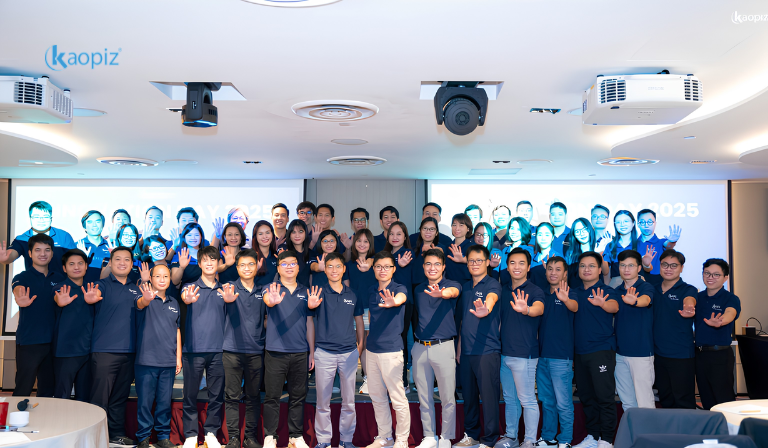
With over 12 years of experience, 1,000+ engineers, and more than 1,000 projects delivered for clients in Singapore, Japan, Australia, and the US, Kaopiz works with technology companies in Australia at the model selection stage, not just the delivery stage. Most offshore vendors answer the question “how much does it cost?” Kaopiz answers “which model combination actually fits your situation?”, and then builds the team and process to execute it.
What sets Kaopiz apart for Australian outsourcing engagements:
- Model-first advisory: Every engagement begins with a structured model selection discussion covering project stage, scope clarity, team maturity, and budget flexibility. If staff augmentation is the right fit and a dedicated team is not, we say so before the contract is signed.
- Vietnam nearshore advantage: UTC+7 timezone alignment provides 3–4 hours of daily overlap with Australia’s eastern states, giving teams enough synchronous time for standups, sprint reviews, and real-time escalations without requiring after-hours commitment from either side.
- Full engagement model range: From IT staff augmentation for specific capability gaps through dedicated product teams to structured Offshore Development Centers for multi-year engineering operations, with clear transition pathways between models as product stage evolves.
- Named senior allocations: Contractual commitment to which senior engineers stay on the engagement, including allocation percentage, engagement duration, and replacement-quality conditions, we do not run a staffing-rotation model on dedicated engagements.
- Australian Privacy Act and IP protection: Engagement frameworks aligned with Australian Privacy Act requirements, including individual NDAs, role-based access controls, and explicit IP assignment clauses included as standard in every contract.
If you are evaluating IT outsourcing models for an upcoming project and want a direct conversation about which combination fits your situation, schedule a 1-on-1 consultation with Kaopiz’s Australian engagement leads.
Conclusion
IT outsourcing models are a strategic decision, not a procurement detail. They directly shape delivery speed, cost structure, team ownership, and vendor accountability. The three key dimensions, location, engagement structure, and pricing, interact in ways that compound over time. The right combination accelerates product development. The wrong one creates structural inefficiencies that no amount of execution discipline can fix.
For Australian businesses, choosing the right outsourcing model before contract signing is one of the highest-leverage decisions in the engagement. Moreover, the frameworks in this guide help structure that decision, comparing models, matching them to the company stage and project type, and applying practical decision matrices to reach the right combination.
FAQs
- What Are the Main IT Outsourcing Models?
- IT outsourcing models are generally categorized across three dimensions: location, engagement structure, and pricing. Common options include onshore, nearshore, and offshore outsourcing; staff augmentation, dedicated teams, project-based outsourcing, and ODCs; as well as fixed-price, Time and Materials, and outcome-based pricing models.
- What Is the Difference between Staff Augmentation and a Dedicated Team?
- Staff augmentation allows businesses to add external specialists to their existing teams while retaining full management responsibility. A dedicated team, on the other hand, is a vendor-managed group that works exclusively on the client’s product, providing greater continuity, knowledge retention, and long-term scalability.
- Which IT Outsourcing Model Is Best for AI and SaaS Projects?
- Dedicated teams combined with Time and Materials pricing are often the most effective option for AI and SaaS projects. These products typically evolve over time, making flexibility, ongoing collaboration, and long-term technical knowledge critical to success.
- Why Do Australian Companies Prefer Vietnam for IT Outsourcing?
- Vietnam has become a leading outsourcing destination for Australian businesses due to its strong technical talent pool, competitive costs, timezone compatibility, and extensive experience delivering software projects for regional and global companies.
- What Is an Offshore Development Center (ODC)?
- An Offshore Development Center is a dedicated remote engineering operation built specifically for one organization. It is best suited for companies with long-term development requirements, multiple product initiatives, or plans to scale engineering capacity over several years.
- How Can Businesses Avoid Common IT Outsourcing Mistakes?
- Businesses should carefully evaluate engagement models, select pricing structures that match project requirements, and regularly review their outsourcing strategy as products and business priorities evolve. Focusing solely on cost rather than long-term value is one of the most common outsourcing mistakes.
Author

Lucie Tran
Head of Growth of Kaopiz Global
Table of Contents
Don’t miss what’s next!
Thank you! Your form has been submitted successfully.