
We’ve shipped AI agents into production for enterprise clients across Australia, Singapore, and Japan, and the pattern is always the same. The agent performs beautifully in the demo. Then it meets a real customer, an ambiguous prompt, or a tool that returns an unexpected error, and the cracks show. AI agent testing is the discipline that closes that gap between “it works in the sandbox” and “it works reliably at scale.”
Traditional QA was never built for this. It assumes a fixed input produces a fixed, correct output. AI agents reason, retrieve information, call tools, and make decisions that vary by context, so the same prompt can produce two different but equally valid responses. Testing them requires evaluating the entire decision process, not just the final answer.
In this guide, we walk through how we test AI agents before they reach production: the layered framework we use, why LLM-as-a-judge has become the backbone of scalable evaluation, and how Australian enterprises can build a testing strategy that satisfies both engineering standards and the country’s emerging AI governance requirements.
Key Takeaways
- AI agent testing evaluates how an agent reasons, retrieves information, and calls tools, not just whether its final output looks correct.
- Traditional QA fails here because agent behaviour is probabilistic. The same prompt can produce two different but equally valid answers.
- A reliable framework has four layers: component testing, trajectory tracking, LLM-as-a-judge evaluation, and adversarial red teaming.
- LLM-as-a-judge scales evaluation using explicit rubrics and a golden dataset, but it needs human review and cross-checking to catch blind spots and drift.
- Testing has to run continuously, in development and in production, not just once before launch, because agent performance shifts as models and business data change.
What Is AI Agent Testing and Why Does It Matter for Australian Enterprises?
AI agent testing is the process of validating how an autonomous AI system reasons, retrieves information, selects tools, and completes tasks, not just whether its final output looks correct. It sits closer to behavioral science than to conventional software QA, because the object under test is a system that can reach the right outcome through several different, sometimes unpredictable, paths.

As Australian businesses move from AI pilots to production deployments, this distinction matters commercially, not just technically. An agent handling customer service, claims triage, or internal operations makes decisions that directly affect revenue, compliance exposure, and customer trust. IBM frames agent evaluation as a way to confirm that a system avoids unsafe behavior, produces verifiable outputs, and resists manipulation or misuse, alongside meeting functional quality and cost targets.
Testing before production reduces the single biggest risk in agentic AI: shipping a system that looked correct in a demo but fails unpredictably once it meets real users. That’s the outcome every enterprise stakeholder actually cares about, whether they sit in engineering, risk, or the executive team.
Why Traditional QA Fails for AI Agent Testing
Traditional QA was built for deterministic software: given input A, the system should always return output B. That assumption breaks down completely with AI agents, which is why organizations that try to test agents with conventional scripts and fixed assertions consistently under-detect failures.
Deterministic Software vs Probabilistic AI Systems
Traditional applications follow predefined business rules, making them relatively straightforward to test with fixed inputs and expected results. AI agents, however, generate responses based on probabilities, meaning the same prompt may lead to different but equally valid outcomes depending on context, retrieved knowledge, and reasoning.
This shift fundamentally changes the objective of testing. Instead of verifying whether an output matches exactly, AI agent testing focuses on whether the agent consistently reaches accurate, reliable, and contextually appropriate decisions that align with business objectives.
Why Fixed Assertions Cannot Measure AI Reasoning
Conventional QA relies on assertions that compare actual outputs against predefined expectations. While this works well for traditional software, it cannot fully evaluate an AI agent’s reasoning process, tool selection, or ability to adapt when presented with new information.

Modern AI agent testing therefore measures the quality of reasoning rather than exact wording. The objective is to determine whether the agent follows logical decision paths, retrieves the right information, selects appropriate tools, and successfully completes the intended task.
From Pass or Fail to Confidence Scores and Behavioral Evaluation
AI agents rarely fit into a simple pass or fail model. Instead, organizations increasingly evaluate performance using confidence scores, semantic similarity, task completion rates, behavioral consistency, and other quality metrics that better reflect real world performance.
This approach enables teams to monitor reliability across thousands of interactions rather than relying on isolated test cases. Continuous behavioral evaluation also makes it easier to identify performance degradation before it affects business operations.
The AI Agent Testing Framework: Four Layers We Use
We evaluate every enterprise AI agent across four layers, run together rather than as a single end-of-cycle gate. Each layer catches a different class of failure, and skipping any one of them leaves a blind spot that tends to surface in production instead of in QA.
- Component testing: validating memory, tools, APIs, and retrieval systems in isolation.
- Trajectory tracking: verifying the sequence of reasoning steps and tool calls, not just the final answer.
- LLM-as-a-judge evaluation: using a separate model to score accuracy, relevance, and business alignment at scale.
- Adversarial red teaming: stress-testing the agent against prompt injection, jailbreak attempts, and edge cases.
The first two layers are largely mechanical: they confirm the plumbing works. The third layer is where most organizations struggle, because it requires judging quality at a volume no human review team can sustain. That’s the layer we go deepest on below.
Component Validation: Memory, Tools, APIs, and Retrieval
Every agent depends on components working together correctly: memory that persists context, tools that execute actions, APIs that return data, and retrieval systems that surface relevant knowledge. Testing each in isolation, before they’re wired into the full agent, catches failures early and makes debugging dramatically faster. A component test might confirm a search tool handles a rate-limit error gracefully, or that a retrieval step returns current information rather than stale cached results.
Trajectory Tracking: Verifying Multi-Step Reasoning
Trajectory tests examine whether an agent follows a coherent, logical path across every step of a task, not only whether it lands on the right final answer. This distinction matters because an agent can reach a correct outcome through a flawed process, one that will fail differently the next time conditions change slightly. Reviewing the reasoning chain, tool selection order, and intermediate outputs shows exactly where a workflow is fragile, which is far more useful for improving prompts and orchestration logic than a single pass/fail result.
LLM-as-a-Judge in Practice: A Practical Framework for Scalable Evaluation
This is the layer that makes AI agent testing viable at enterprise scale, and it’s also the layer most teams implement poorly. LLM-as-a-judge means using a separate language model, prompted with clear evaluation criteria, to score an agent’s responses the way a trained human reviewer would, but at a volume and speed no human team can match.
How LLM-as-a-Judge Works
The pattern is straightforward in concept: the agent produces a response, and a second model (the “judge”) receives that response along with the original query, relevant context, and a rubric describing what a good answer looks like. The judge then returns a score, a pass/fail verdict, or both, typically with a short written justification. The value comes from consistency: the same rubric applied the same way across thousands of interactions, which is something human reviewers cannot sustain without drift.

Reliable agent evaluation combines this automated judging with deterministic checks and targeted human review, rather than relying on any single method alone. We treat LLM-as-a-judge as the layer that scales evaluation, not the layer that replaces human judgment entirely.
Building the Golden Dataset
Before a judge model can score anything meaningfully, it needs a reference point. The starting point is a curated set of examples, typically in the range of twenty to fifty scenarios, that define what success actually looks like for the specific agent and use case. This “golden dataset” should include both scenarios where the agent should act and scenarios where it should refuse or escalate to a human.
For a claims-processing agent, that means covering both a straightforward approval and an edge case that falls outside policy and should be declined. Skipping the refusal cases is one of the most common gaps we see: teams test what the agent should do far more thoroughly than what it should decline to do.
Writing Judge Rubrics That Actually Work
A vague rubric produces vague scores. The rubric an evaluation model applies needs to state, in explicit terms, what dimensions matter: factual accuracy against a trusted source, whether the agent selected the correct tool, whether its final response adheres to its assigned task and system instructions, and whether it stayed within brand voice or compliance boundaries.
Microsoft’s Foundry evaluation documentation recommends a rubric evaluator as the primary measure for agent quality precisely because it lets teams express the exact criteria that matter for their use case rather than relying on a generic, one-size-fits-all score.
A judge model is only as reliable as the rubric it’s given. Generic “was this a good answer” prompting produces inconsistent, low-signal scores. Specific, weighted criteria produce judgments a team can actually act on.
Common Failure Modes of LLM-as-a-Judge
LLM-as-a-judge is powerful, but it is not infallible, and treating it as a black box invites new risks.
- Circular evaluation. If the judge model shares blind spots or biases with the agent it’s evaluating, it may consistently miss the same category of error. Cross-checking judge output against execution artifacts (logs, retrieved documents, tool call records) rather than relying purely on the judge’s own reasoning helps catch this.
- Reward hacking on style over substance. Judge models can be swayed by confident, well-formatted answers that are substantively wrong. Rubrics that explicitly separate factual grounding from fluency reduce this risk.
- False failures from rigid step-checking. Penalizing an agent for reaching a correct outcome via a different, still-valid route creates noise. Custom evaluators that verify end-state rather than exact path tend to produce more trustworthy signal.
- Drift over time. A judge model’s calibration can shift as the underlying model updates. Periodic human-reviewed audits of a sample of judge decisions keep this in check.
Combining LLM-as-a-Judge With Human Review
We never treat automated judging as a full replacement for human review, particularly for subjective qualities like tone, cultural appropriateness, and nuanced business judgment. The practical model we recommend: let LLM-as-a-judge handle the volume, routine scoring across every production interaction or every automated test run, and route a sampled subset, along with every low-confidence or disputed score, to human reviewers. This keeps evaluation both scalable and trustworthy, and it gives engineering teams an early-warning signal without requiring a human to read every transcript.
“The agent that passes every demo and fails in week three of production isn’t a bad agent. It’s an agent nobody tested against the paths it wasn’t supposed to take.” — Ethan Cao, CTO, Kaopiz
Adversarial Red Teaming: Preventing Prompt Injection and Unsafe Behavior
Enterprise agents must be tested against inputs designed to break them, not just inputs designed to demonstrate normal use. Adversarial red teaming deliberately challenges an agent with prompt injection attempts, jailbreaks, misleading instructions, and edge cases to see how it behaves under pressure.
This should run continuously rather than as a one-time pre-launch checkpoint, because new attack patterns emerge constantly and an agent’s guardrails can degrade as the underlying model or its tool integrations change. Evaluation platforms increasingly ship dedicated red-teaming capability precisely because security testing has become inseparable from quality testing for agentic systems.
Traditional Automation vs AI Agent Testing: Which Approach Is Right?
As enterprises adopt AI across software development and business operations, many leaders ask whether traditional automation is still enough. The reality is that both approaches solve different problems.
Traditional automation remains highly effective for predictable workflows, while AI Agent Testing is designed to evaluate systems that learn, reason, and make dynamic decisions. Understanding when to use each approach is key to building a scalable quality assurance strategy.
| Criteria | Traditional Automation | AI Agent Testing |
|---|---|---|
| System behaviour | Deterministic with predictable outputs | Probabilistic with dynamic reasoning and responses |
| Testing approach | Fixed rules and predefined assertions | Behavioral evaluation based on context and intent |
| Adaptability | Scripts require manual updates after changes | AI agents can adapt to changing interfaces and workflows |
| Validation focus | Functional correctness | Reasoning quality, task completion, safety, and reliability |
| Maintenance effort | High for frequently changing applications | Lower through self healing and continuous evaluation |
| Best suited for | Stable business processes and regression testing | AI powered applications, LLMs, RAG, and autonomous agents |
For most Australian enterprises, the goal is not to replace traditional automation but to complement it with AI Agent Testing. Conventional QA continues to play a vital role in validating business logic and application stability, while AI specific testing ensures intelligent systems remain reliable, secure, and aligned with business objectives throughout their lifecycle.
Common AI Agent Testing Challenges and How to Overcome Them
While AI agents offer significant business value, testing them introduces challenges that traditional QA was never designed to address. Because AI systems continuously interpret context, reason through tasks, and interact with external tools, organizations need a testing strategy that goes beyond functional validation. Recognizing these challenges early helps reduce deployment risks and improve long term AI reliability.
| Challenge | Business Impact | Recommended Approach |
|---|---|---|
| Hallucinations and inaccurate responses | Incorrect recommendations and reduced user trust | Validate responses with trusted knowledge sources and human review |
| Prompt injection and security attacks | Data leakage and unsafe behavior | Perform adversarial testing and implement input validation |
| Tool calling failures | Broken workflows and incomplete task execution | Test API integrations, permissions, and fallback mechanisms |
| Memory and context drift | Inconsistent responses across long conversations | Continuously evaluate memory retrieval and context management |
| Lack of production monitoring | Undetected performance degradation over time | Track quality metrics and monitor AI behavior continuously |
Hallucinations and Inaccurate Responses
AI agents can occasionally generate responses that sound convincing but are factually incorrect or unsupported by reliable data. These hallucinations become particularly risky in enterprise environments where inaccurate information can affect business decisions and customer trust.
To minimize this risk, organizations should validate AI outputs against trusted knowledge sources, regularly evaluate response quality, and combine automated testing with human review for high impact use cases.
Prompt Injection and Security Attacks
Prompt injection remains one of the most significant security risks for AI applications. Malicious prompts can manipulate an agent into revealing sensitive information, bypassing safety controls, or performing unintended actions.
Regular adversarial testing helps organizations identify these vulnerabilities before deployment. Security should be integrated into the overall AI agent testing strategy rather than treated as a final compliance check.
Tool Calling Failures
Enterprise AI agents often depend on APIs, databases, and third-party services to complete tasks. If an agent selects the wrong tool or receives unexpected API responses, the entire workflow may fail even when the reasoning process is correct.
Testing should therefore validate not only the final output but also every tool call, integration point, and fallback mechanism. This improves workflow reliability and reduces operational disruptions.
Memory and Context Drift
As conversations become longer or workflows grow more complex, AI agents may gradually lose important context or retrieve outdated information. This often leads to inconsistent responses and reduced task accuracy over time.
Continuous evaluation of memory retrieval, context management, and knowledge updates helps maintain consistent performance across extended interactions and evolving business environments.
Lack of Production Monitoring
Many organizations stop testing once an AI application is deployed, assuming the agent will continue performing as expected. In reality, user behavior, business data, and external systems constantly change, affecting AI performance over time.
Continuous monitoring allows teams to track quality metrics, identify performance degradation early, and refine AI agents before small issues become larger operational or customer experience problems.
How to Build Your AI Agent Testing Strategy
There’s no universal template. The right strategy depends on the agent’s risk profile, architecture, and how much of the business depends on it functioning correctly. When we scope a testing strategy for a client, we work through the same sequence every time:
- Define the business objective first. Is the agent improving customer experience, automating an internal workflow, or supporting a regulated decision? The testing bar should match the stakes.
- Assess the risk level honestly. Customer-facing and regulated-industry agents warrant far more rigorous adversarial testing and governance documentation than a low-risk internal tool.
- Map the architecture before choosing evaluators. An LLM-as-a-judge rubric built for a single-turn Q&A agent won’t capture failure modes in a multi-agent workflow with several tool calls.
- Build continuous evaluation into your development pipeline, not just pre-launch. Agent performance shifts as models update and business data changes; a one-time test suite goes stale fast.
- Keep humans in the loop deliberately. Automation handles volume; experienced engineers and domain experts still make the final call on ambiguous or high-stakes cases.
Why Kaopiz Is Your Trusted Partner for Enterprise AI Agent Testing
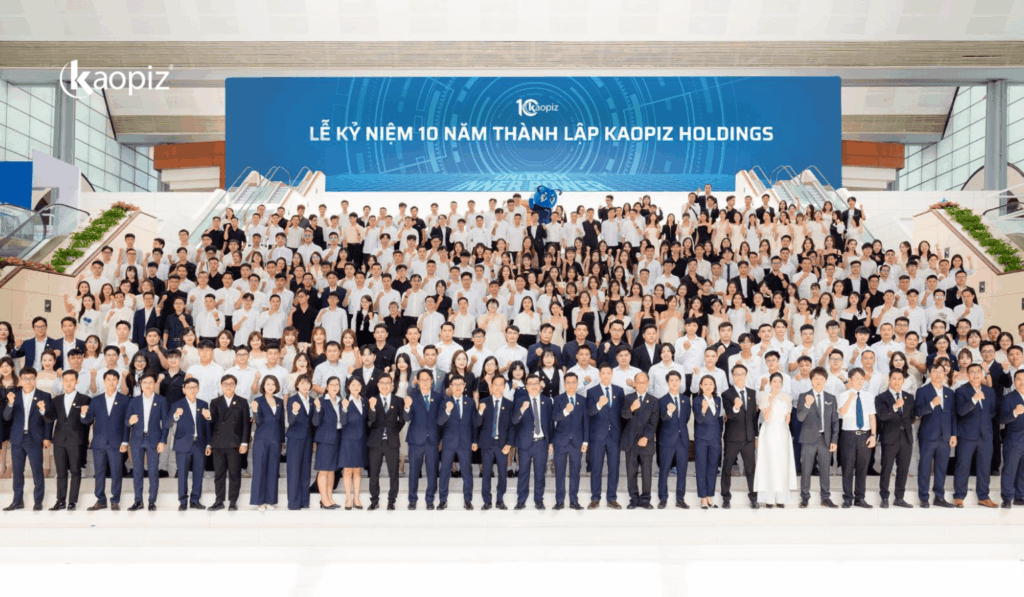
Building reliable AI agents requires more than choosing the right model. It demands a partner with deep expertise in AI engineering, software quality assurance, enterprise architecture, and production deployment. With over 12 years of experience delivering software solutions for global clients, Kaopiz helps Australian businesses validate, optimize, and scale AI powered applications with confidence.
What makes Kaopiz a trusted AI agent development testing partner for Australian businesses:
- End to End AI Engineering Expertise: From AI strategy and agent development to testing, deployment, and optimization, Kaopiz supports the entire AI lifecycle with experienced engineers and solution architects.
- Comprehensive AI Agent Testing Framework: We validate every stage of an AI agent’s workflow, including reasoning quality, tool orchestration, API integrations, retrieval systems, security, and business outcomes to ensure production readiness.
- Strong QA and Enterprise Software Experience: With nearly 1,000 professionals across AI, web, mobile, cloud, QA, and enterprise software, we combine traditional quality engineering with modern AI evaluation practices.
- Built for Enterprise AI Governance: Our delivery approach incorporates continuous evaluation, transparent reporting, security best practices, and measurable KPIs, helping organizations deploy trustworthy AI solutions with confidence.
- Flexible Engagement Models: Whether you require AI consulting, a dedicated engineering team, QA specialists, or end to end software delivery, Kaopiz provides scalable engagement models that adapt to your business objectives.
- Trusted by Global Businesses, Ready for Australia: Having delivered more than 1,000 projects across Australia, Singapore, and Japan, Kaopiz understands the governance, collaboration, and delivery standards expected by enterprise organizations.
Whether you are building your first AI powered application or scaling autonomous AI agents across your business, Kaopiz provides the technical expertise, governance framework, and delivery capability to help you deploy AI systems that are reliable, secure, and ready for production.
Conclusion
AI agent testing isn’t a single test suite you run once before launch. It’s a layered discipline: component validation to catch broken plumbing, trajectory tracking to verify reasoning, LLM-as-a-judge evaluation to score quality at scale, and adversarial red teaming to confirm the agent holds up under pressure. Layer these correctly, and organizations catch the failures that traditional QA was never designed to see.
For Australian enterprises, the stakes are compounding: customer trust, operational reliability, and an AI governance landscape that’s moving from voluntary guidance toward mandatory standards within the same year this article was published. Investing in a structured, continuous testing strategy now is what lets a business scale AI agents with confidence instead of finding out where they break after a customer already has.
FAQs
- What Is the Difference Between AI Agent Testing and LLM Evaluation?
- LLM evaluation assesses the quality of a language model’s individual responses. AI agent testing evaluates the entire system: reasoning, memory, tool use, workflow execution, security, and task completion across multi-step interactions in real environments.
- When Should AI Agent Testing Start in the Development Lifecycle?
- As early as the design stage, and continuously after deployment. Waiting until pre-launch misses the chance to catch reasoning and tool-integration issues while they’re still cheap to fix.
- What Is LLM-as-a-Judge and Why Is It Different from a Simple Pass/Fail Test?
- LLM-as-a-judge uses a separate model, guided by an explicit rubric, to score agent responses at scale. Unlike a pass/fail assertion, it can evaluate accuracy, relevance, and business alignment across variation in valid answers, which fixed test cases can’t do.
- What Metrics Matter Most When Evaluating AI Agents?
- Beyond raw accuracy: task completion rate, reasoning quality, tool call success, latency, and business outcome alignment. A single accuracy number hides where and why an agent actually fails.
- How Does AI Agent Testing Fit into Australia’s AI Governance Requirements?
- Continuous testing and monitoring is one of the six essential practices in the National AI Centre’s Guidance for AI Adoption, and documented testing coverage is likely to become part of the compliance evidence organizations need as Australia moves toward mandatory AI standards.
Author

Table of Contents
Don’t miss what’s next!
Thank you! Your form has been submitted successfully.