
7 Common Mistakes When Hiring Offshore Development Teams: The Singapore Leader’s Guide
A Singapore SaaS founder once told me, six months into a stalled offshore engagement, that his team had not failed at building software. They had failed at hiring the partner who would build it. Common mistakes when hiring offshore development teams, such as the technical debt, the missed releases, the engineers who answered Slack messages with one-line replies — none of those were the real problem. The real problem was a procurement decision made in three weeks, based mostly on hourly rates and a polished sales pitch.
That conversation is not unusual. As Singapore enterprises increasingly extend their engineering capability into Vietnam, the Philippines, and other APAC markets, the gap between a confident vendor presentation and twelve months of disappointing delivery has become the single most expensive blind spot in technology procurement.
This guide breaks down the 7 common mistakes when hiring offshore development teams, the offshore team challenges that quietly erode product outcomes, and the practical decisions Singapore tech leaders can make to avoid them.
Key Takeaways
- Hourly rate is the most misleading filter in offshore vendor selection. Total cost of ownership across 18 to 24 months is the only honest comparison.
- CV screening alone is insufficient. Every offshore hire should pass a live coding assessment, pair-programming session, and behavioural interview before being confirmed.
- Timezone overlap is a contractual requirement, not a preference. Singapore companies should require 2 to 4 hours of daily synchronous overlap as a minimum engagement condition.
- The wrong engagement model creates friction that execution cannot fix. Staff augmentation, dedicated teams, and fixed-price contracts serve different project profiles and are not interchangeable.
- Vague scope produces technically compliant but commercially useless software. Outcome-based specifications with measurable acceptance criteria are non-negotiable.
- Offshore engineers treated as outsiders deliver like outsiders. Integrated onboarding with product context, documentation access, and an in-house buddy directly improves retention and ownership culture.
- Security and IP protection must be built into the contract from day one. Individual NDAs, explicit IP assignment, and PDPA-aligned data handling are baseline requirements, not optional add-ons.
Why Offshore Hiring Mistakes Cost Singapore Businesses More Than Expected
Offshore development has become a strategic growth model for Singapore enterprises, not just a cost-saving option. With Singapore’s IT services market projected to reach $65.80 billion by 2030, more companies are relying on offshore engineering partners. However, many outsourcing projects still fail due to recurring mistakes in communication, hiring, onboarding, and delivery management.
The Hidden Cost Iceberg of Offshore Outsourcing Failure
The visible cost of an offshore engagement is the monthly invoice. The hidden cost is everything else. Deloitte’s Global Outsourcing Survey consistently finds that 30 to 40% of outsourcing engagements fail to deliver expected value, and the dominant cause is not vendor incompetence but misaligned vendor selection.

The damage compounds across three layers. Rework is the most visible: when code quality slips, internal engineers spend cycles refactoring rather than building. Attrition is the next layer, with replacement onboarding consuming another four to six weeks per engineer lost. Opportunity loss is the deepest layer and the hardest to recover, covering the deals not closed, the features not shipped, and the market position quietly handed to a faster competitor.
Why Singapore’s 2026 Market Punishes These Mistakes Faster
Singapore’s tech market in 2026 is unforgiving of slow delivery. The Singapore IMDA Smart Nation agenda, AI adoption pressure, and tightening local engineering salaries have compressed product cycles to a degree that punishes any outsourcing model, introducing friction. A 12-month MVP acceptable in 2022 is now overtaken by competitors in five months.
For Singapore scale-ups, the second cost of a failed offshore engagement is momentum. Switching vendors mid-product takes three to four months of disrupted velocity, and the institutional knowledge held by the departing team is rarely transferred cleanly. Companies that get vendor selection right the first time gain a compounding advantage that companies on their second or third offshore partner struggle to close.
What Are the Most Common Mistakes When Hiring Offshore Development Teams?
Across hundreds of offshore engagements observed by industry analysts and consultancy firms, six failure patterns appear repeatedly. They are not exotic or industry-specific; they are common, predictable, and well-documented. Understanding them in detail is the difference between repeating them and avoiding them.
| Common Mistake | The Fix |
|---|---|
| Prioritizing the lowest cost over quality | Evaluate total cost of ownership across 18 to 24 months, not hourly rate |
| Skipping rigorous technical and cultural vetting | Live coding plus proctored pair programming and behavioral interview for every hire |
| Ignoring timezone overlap and communication discipline | Contractually require 2 to 4 hours of daily overlap with Singapore working hours |
| Choosing the Wrong Offshore Hiring Model | Matching the model to project timeline, scope clarity, and ownership needs |
| Defining project scope and objectives too loosely | Outcome-based specifications with KPIs, user stories, and measurable acceptance criteria |
| Treating offshore engineers as outsiders | Product context briefing, in-house buddy, and equal documentation access from day one |
| Overlooking security, compliance, and IP protection | Enforced VPN, individual NDAs, explicit IP assignment, and quarterly security audits |
Mistake 1: Prioritizing the Lowest Cost Over Long-Term Quality
Selecting an offshore partner primarily on hourly rate is the single most common and most expensive mistake Singapore buyers make. The logic feels rational during procurement: a vendor quoting $18/hour appears to deliver 40% better value than a vendor quoting $30/hour. Twelve months later, the math reverses sharply once rework, attrition replacement, and missed deadlines are accounted for.
How To Fix It:
- Evaluate total cost of ownership across 18 to 24 months, not just hourly rate
- Request attrition rates, team continuity guarantees, and named senior allocations from every shortlisted vendor
- Compare value across ownership culture, technical depth, and replacement quality clauses, not just price
- Treat hourly rate as one input among many, never as the primary filter
One counterintuitive pattern: by month nine, the cheapest vendor on a shortlist rarely stays the cheapest. Change orders, rework, and senior rotation quietly close the rate gap, which is why TCO is the only honest comparison.
Mistake 2: Skipping Rigorous Technical and Cultural Vetting
Trusting the vendor’s pre-vetted CV pool without applying independent technical assessment is the next most common mistake. CVs in competitive outsourcing markets are increasingly optimized for keyword matching, and a senior backend engineer on paper is sometimes a mid-level engineer with a strong CV writer. Cultural vetting is even more overlooked, yet communication style and willingness to flag problems early vary significantly across markets.
How To Fix It:
- Require a take-home assignment paired with a proctored live coding session for every offshore hire
- Run a structured behavioral interview, probing how the candidate handles unclear requirements, disagreement, and missed estimates
- Test communication style, autonomy, and willingness to flag problems early, not just technical depth
- Apply the same vetting process to every engineer, regardless of seniority, including senior pre-sales picks
Mistake 3: Ignoring Timezone Overlap and Communication Discipline
Communication failure is the most visible offshore team challenge, but also the most preventable. The root cause is rarely language proficiency. Engagements that rely entirely on asynchronous communication accumulate a friction tax that compounds: a clarification that takes 20 minutes synchronously can take 36 hours async, translating into two to three weeks of delivery delay over a year.

How To Fix It:
- Make 2 to 4 hours of daily overlap with Singapore working hours a contractual minimum, not a best effort target
- Prioritize UTC+7 offshore locations, such as Vietnam, to eliminate the async friction tax entirely
- Use overlap hours for standups, sprint planning, demos, and synchronous unblockers
- Document communication norms early: when to escalate, how to flag uncertainty, how disagreement is expressed
Mistake 4: Choosing the Wrong Offshore Hiring Model
Even with rigorous vendor selection, the project fails if the wrong hiring engagement model is applied. Staff augmentation, dedicated teams, ODC, and fixed-price contracts are not interchangeable, and forcing a project into the wrong model creates friction that execution discipline cannot fix.
How To Fix It:
- Match the engagement model to project timeline, scope clarity, and ownership needs before discussing vendors
- Use staff augmentation for short engagements with a clear scope, typically under 9 months
- Use a dedicated team or ODC for long-term product builds beyond 12 months that need institutional knowledge
- Use fixed price contracts only for well-bound deliverables with frozen requirements
Mistake 5: Defining the Project Scope and Objectives Too Loosely
A vague scope is one of the main reasons offshore engagements deliver products that technically meet specifications but fail business expectations. In many projects, the buyer holds an internal product vision that is never fully documented, while the offshore team builds only against the written requirements. The gap often appears during sprint reviews, when correction costs are already significantly higher.
How To Fix It:
- Document outcomes and measurable acceptance criteria instead of just listing features
- Specify performance expectations such as load time, response time, and accuracy thresholds
- Include user stories with explicit personas, edge cases, and success conditions
- Run a scope alignment workshop before sprint 1 and revisit it at every sprint review
Mistake 6: Treating Offshore Engineers as Outsiders During Onboarding
Onboarding failure is the mistake that most directly affects engineering retention and product ownership culture. When offshore engineers are treated as external resources rather than integrated team members, three predictable consequences follow. Productivity drops, ownership erodes, and attrition accelerates. The phrase ‘code monkey’ captures the dynamic exactly: an engineer who is told what to build but never told why.
How To Fix It:
- Provide a product context briefing covering the customer, business model, and product vision
- Give offshore engineers equal documentation access as in-house engineers from day one
- Assign a clearly named in-house buddy responsible for questions during the first 30 to 60 days
- Include offshore engineers in company-wide standups, demos, and all-hands meetings
Mistake 7: Overlooking Security, Compliance, and Intellectual Property
Security and compliance are offshore team challenges that often remain invisible until a serious incident occurs. For Singapore companies handling personal data, the Personal Data Protection Commission enforces PDPA obligations even when offshore vendors manage systems or data externally. Security failures can lead to regulatory penalties, customer trust issues, and long-term reputational damage.
How To Fix It:
- Enforce VPN access with multi-factor authentication for every engineer on the engagement
- Require individual NDAs signed by every offshore engineer, not just the vendor entity
- Specify explicit IP assignment clauses that survive contract termination
- Run quarterly security audits and align with PDPA, MAS, and IMDA requirements for regulated sectors
Why Do These Offshore Team Challenges Keep Repeating Across Singapore Enterprises?
If the common mistakes when hiring offshore development teams are already well known, the real question is why they continue to be repeated across Singapore enterprises. Many offshore projects appear successful during the first few months but begin struggling later because important operational risks remain hidden beneath positive sprint reports and delivery metrics.
The Velocity Theatre Trap: When Dashboards Mask the Real Problem
Velocity Theatre happens when sprint dashboards show strong progress while underlying product quality quietly declines. Vendors focused heavily on visible delivery often prioritise ticket completion over testing, refactoring, and architectural maintenance, allowing technical debt to accumulate over time.
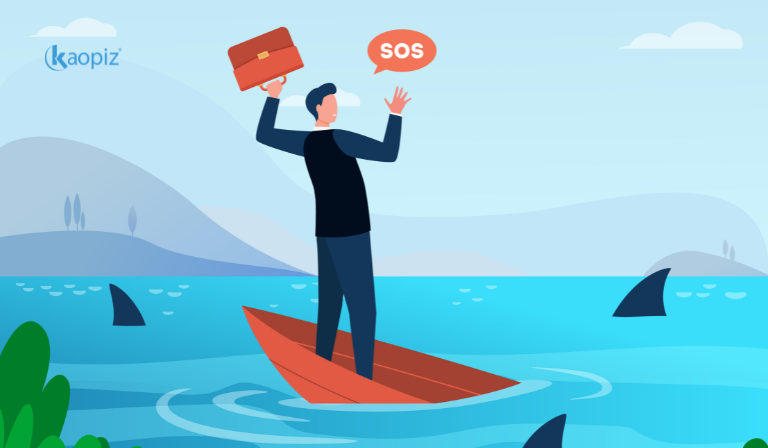
By later sprints, bug rates increase, regressions appear more frequently, and feature delivery slows because unresolved technical debt begins affecting the system. Strong offshore management should track quality metrics such as test coverage, code review quality, regression rates, and refactoring effort alongside sprint velocity from the beginning.
The 90-Day A-Team Drift: Why Your Best Engineers Quietly Disappear
A Team Drift happens when the senior engineers who impressed the client during pre-sales are gradually replaced after the offshore engagement stabilizes. Vendors often move their strongest engineers onto new sales opportunities, leaving existing projects managed by more mid-level teams with lower ownership and architectural depth. Many companies only notice the decline in delivery quality several months later.
To reduce this risk, Singapore companies should define key senior engineers directly in the engagement contract, including allocation percentage, engagement duration, and replacement conditions. Vendors willing to commit to these terms usually operate with a stronger long-term partnership mindset rather than a purely transactional staffing model.
How Can Singapore Tech Leaders Solve Problems with Offshore Development Engagements?
Avoiding the common mistakes when hiring offshore development teams comes down to a small number of practical disciplines that, applied consistently, transform offshore engagement outcomes. None of them is expensive. All of them require intentional design rather than default execution. The five disciplines below form a working playbook for Singapore tech leaders.

- Define outcomes and KPIs, not just roles and headcount: Set measurable KPIs like sprint velocity, deployment frequency, and defect resolution time before discussing team size. Evaluate vendors based on outcomes, not staffing assumptions.
- Build mandatory overlap hours and cultural awareness into the contract: Require 2 to 4 hours of overlap with Singapore working hours and align communication norms through brief cultural workshops. This reduces collaboration friction early.
- Validate technical skills with live, proctored assessments: Combine take-home tasks with live coding and pair-programming sessions to verify real problem-solving ability and confirm authorship.
- Adopt agile methodologies for transparent delivery: Use Scrum or Kanban with short sprints, shared backlogs, daily standups, and demo reviews to catch misalignment early and improve visibility.
- Treat onboarding like a product, not a checklist: Structured onboarding with product context, documentation access, and buddy support consistently improves offshore team performance across future sprints.
Choose Kaopiz to Avoid Common Mistakes When Hiring Offshore Development Teams
Avoiding the common mistakes when hiring offshore development teams is straightforward in principle and difficult in practice. With over 12 years of experience delivering dedicated development teams to Singapore, Japan, Australia, and the US, Kaopiz works with Singapore enterprises that have either learned the cost of these mistakes the hard way or want to avoid learning it at all.
Kaopiz operates on a transparent staffing model with named senior allocations and replacement-quality guarantees written into every contract. Our Vietnam IT outsourcing model delivers consistent UTC+7 overlap with Singapore, and in my experience, the engagements that succeed are the ones where the partner accepts contractual accountability for outcomes and treats the engagement as a long-term product partnership.
What Sets Kaopiz Apart for Singapore Offshore Engagements
- Rigorous technical vetting: every engineer goes through a live coding assessment, system design interview, and behavioural screening before being assigned to a Singapore engagement
- Named senior allocation: contractual commitment to which senior engineers stay on the engagement and how rotation is handled if it becomes necessary
- Flexible engagement models: from IT staff augmentation for specific capability gaps to a full offshore development center for long-term product ownership
- Singapore-aligned operations: UTC+7 timezone, English working language, and onboarding practices designed for direct integration with Singapore in-house teams, building on our experience with IT team augmentation for Singapore enterprises
- PDPA and IP protection: contractual frameworks aligned with Singapore data protection requirements, including individual NDAs, role-based access, and explicit IP assignment
- Honest fit assessment: if a dedicated team or staff augmentation is not the right model for your situation, we tell you before the engagement starts, not after
If you are evaluating offshore partners and want a clear-eyed view of the fit, scope, and engagement model that would actually work for your team, schedule a one-on-one consultation with our Singapore engagement leads. No commitment, no procurement pressure, just a straight conversation about what your team needs and whether we are the right partner to deliver it.
Our Case Studies
The clearest way to evaluate any offshore partner is by looking at what they have actually shipped. Two recent Kaopiz case studies illustrate how the disciplines covered in this guide, rigorous technical vetting, named senior allocation, partnership culture, and outcome-based delivery, translate into measurable product outcomes for clients in regulated and emerging-technology markets.
Tablet-Based Learning Platform for SPRIX
SPRIX, a Japanese system integrator serving elementary and junior high schools, partnered with Kaopiz to modernise a legacy learning platform that struggled with scalability during peak testing periods and lacked flexible content editing for educators. The engagement required deep technical depth across mobile, backend, and cloud infrastructure, alongside operational stability under high concurrent student loads.
Kaopiz redesigned the system into reusable subject modules, built robust AWS infrastructure, ran performance testing with JMeter, and delivered over 60 management functions across multi-device support for PC, iPad, and Android tablets. The resulting platform handles simultaneous student access without downtime, enables real-time progress visualisation, and scales flexibly per school. Read the full case study on the Tablet-Based Learning Platform portfolio page.
Felix AI Agentic AI EdTech Platform
Felix AI required a development partner capable of building an Agentic AI application across iOS, AI/ML, and backend engineering, in a market where few teams have hands-on experience with autonomous AI frameworks. After evaluating multiple firms, founder Ariel Geifman selected Kaopiz for the combination of full-stack expertise, goal-oriented work ethic, and flexibility on quality standards.
The Kaopiz team delivered a production-ready Agentic AI platform in record time, navigated EdTech safety and compliance requirements, and now serves as Felix AI’s core long-term development team. In Ariel’s own words, Kaopiz proved to be a dependable partner. The full success story is available on the Kaopiz Felix AI case study.
Conclusion
The common mistakes when hiring offshore development teams are predictable, well-documented, and entirely avoidable. They cost Singapore enterprises millions every year, not because the mistakes themselves are subtle, but because the procurement decisions that produce them are made faster than the diligence required to prevent them.
The shift from transactional vendor selection to strategic partner selection is the single largest lever available to Singapore tech leaders in 2026. Offshore development, done correctly, is one of the highest-leverage capabilities available to a Singapore enterprise; done incorrectly, it is one of the most expensive. The difference is the discipline applied before the contract is signed and the partnership culture maintained after.
FAQs
- What Is the Most Common Mistake When Hiring Offshore Development Teams?
- The biggest mistake is choosing vendors mainly based on hourly rates. Lower-cost teams often bring higher attrition, weaker quality control, and more rework, which increases long-term costs and delays delivery.
- How Can Singapore Companies Overcome Timezone Challenges With Offshore Teams?
- Require at least 2 to 4 hours of daily overlap with Singapore working hours for meetings and sprint collaboration. Vietnam teams naturally fit Singapore’s UTC+7 timezone, reducing coordination friction.
- How Do I Evaluate the Technical Skills of Offshore Developers Before Hiring?
- Use a combination of take-home assignments, live coding or pair-programming sessions, and behavioural interviews. This provides a more reliable assessment than CV screening alone.
- What Contractual Terms Protect Singapore Companies in Offshore Engagements?
- Include clauses covering IP ownership, NDAs, replacement-quality guarantees, PDPA-compliant data handling, SLAs, and outcome-based KPIs. These reduce legal and operational risks later in the partnership.
- Is Offshore Development Still Cost-Effective for Singapore Enterprises in 2026?
- Yes. The main value today is not only lower costs but also faster access to skilled engineers in AI, cloud, and modern development stacks that are increasingly hard to hire locally.
Author

Lucie Tran
Head of Growth of Kaopiz Global
Table of Contents
Don’t miss what’s next!
Thank you! Your form has been submitted successfully.