
9 Engagement Models for Software Development Projects: How to Choose the Right One
Somewhere between signing a vendor contract and hitting the first major deadline, a lot of projects quietly go wrong, not because of bad code, but because of a decision made before a single line was written: the choice of engagement models for software development projects.
Most businesses make this decision with incomplete information, choosing from the two or three models a vendor presents, without fully understanding what else is available. In this guide, I cover all 9 engagement models used in software outsourcing today, how each one works, and how to match the right one to your specific project — before you sign anything.
Key Takeaways
- There are 9 engagement models in software outsourcing, most vendors only present 2 or 3.
- Fixed Price is not inherently safe, it only works when requirements are fully validated before signing.
- Dedicated Team and Staff Augmentation are not the same, the difference is who manages the engineers day-to-day.
- Most long-running projects need a Hybrid model, build flexibility into the structure from the start.
- The model is only half the decision, vendor transparency, scalability, and governance matter just as much.
What Is a Software Development Engagement Model?
When businesses decide to work with an external software development partner, one of the first questions that comes up is: how exactly will we work together? That’s precisely what an engagement model defines.

A software development engagement model is the contractual and operational framework that governs how a client and a technology vendor collaborate throughout a project. It determines three things that matter most to any decision-maker:
- Who controls what: Scope, priorities, team composition, and day-to-day decisions
- How money flows: Whether you pay a fixed sum, by the hour, by milestone, or as a monthly retainer
- Who absorbs risk: When requirements change, timelines shift, or budgets tighten, which side carries the burden
The stakes are higher than most businesses realize. According to the Standish Group’s CHAOS Report, only 31% of IT projects are completed successfully, on time, on budget, with the expected features. A further 50% are challenged, and 19% fail outright. A significant share of those failures trace back not to technical incompetence, but to misaligned expectations baked into the engagement structure from day one.
Think of an engagement model less as a contract type and more as a working relationship blueprint. Two companies can build the exact same software product under very different engagement models and arrive at very different outcomes in terms of cost, speed, quality, and trust.
This decision needs to be made before you sign anything, not after the first missed deadline or the first invoice that surprises you.
9 Engagement Models for Software Development Projects in 2026
There is no single best engagement model, only the one that fits your project’s scope, budget, timeline, and risk tolerance. Understanding all 9 engagement models for software development projects gives you the clarity to make that call with confidence.
| # | Model | How You Pay | Scope Flexibility | Client Involvement | Best For | Not Ideal For |
|---|---|---|---|---|---|---|
| 1 | Fixed Price | One-time fixed sum | Low — locked at contract signing | Low — review & approve milestones | Well-defined, short-to-mid projects | Evolving requirements, MVPs |
| 2 | Time & Material | Hourly or sprint-based | High — adjustable each sprint | High — active direction required | MVPs, iterative development | Clients needing strict budget certainty |
| 3 | Dedicated Team | Monthly team cost | High — client controls roadmap | Medium — strategic direction | Long-term product development | Short-term or one-off projects |
| 4 | Staff Augmentation | Monthly per-engineer cost | High — follows client’s workflow | High — client manages directly | Filling specific skill gaps | Clients without internal tech leadership |
| 5 | ODC | Monthly operational cost | Medium — client controls priorities | Medium — strategic oversight | Large-scale, long-term offshore capability | Small teams, short engagements |
| 6 | Milestone-Based | Per milestone delivered | Medium — adjustable between phases | Medium — review & approve each phase | Multi-phase projects needing cost control | Fast-moving products needing continuous iteration |
| 7 | Managed Services | Fixed monthly retainer | Low — defined by SLA | Low — outcome review only | Ongoing IT operations & maintenance | Active product development |
| 8 | BOT | Phase-based investment | Medium — evolves across phases | Medium → High — increases toward transfer | Building permanent offshore capability | Short-term needs, small-scale projects |
| 9 | Hybrid | Varies by model combination | High — optimized per phase | Varies — depends on combination | Complex, multi-phase engagements | Teams without strong internal governance |
Fixed Price Model
A Fixed Price engagement is exactly what it sounds like: the client and vendor agree on a defined scope, a set timeline, and a fixed cost, all before development begins. Once the contract is signed, the vendor is accountable for delivering the agreed outcomes within the agreed budget, regardless of how many hours it actually takes.
This model has been the default choice and one of the best engagement models for software development projects for decades, and for good reason; it offers the clearest answer to the question every budget owner asks first: “How much is this going to cost me?”
How It Works
Both sides invest time upfront in discovery and specification. The vendor produces a detailed Statement of Work (SOW) outlining deliverables, timelines, and payment terms.
From that point, the client’s involvement is mainly limited to reviewing and approving milestones. Any changes to the original scope go through a formal change request process, which typically means renegotiating both timeline and cost.
Pros and Cons of Fixed Price Model
| Pros | Cons |
|---|---|
| Full budget predictability from day one | Limited flexibility for scope changes |
| Low client involvement during execution | Change requests can be costly and slow |
| Clear accountability for delivery | Vendors may pad estimates to cover risk |
| Easy to compare quotes across vendors | Discovery phase requires significant upfront time |
| Works well with internal budget approval processes | Poor fit for projects with evolving requirements |
When It Goes Wrong
The Fixed Price model fails most often not because of the model itself, but because it was applied to the wrong type of project.
The most common scenario: a client comes in with a rough product idea, the vendor produces a quote based on assumptions, and the contract gets signed before requirements are truly validated. Three months in, the reality of the product is different from what was written in the SOW. Now both sides are stuck; the client wants changes, the vendor points to the contract, and every conversation becomes a negotiation instead of a collaboration.
“Fixed price doesn’t mean fixed outcome. It means fixed assumptions. If those assumptions were wrong, someone is going to pay for it — and it’s usually the client.”
Best Suited For
The Fixed Price model works well when:
- The project scope is clearly defined and unlikely to change, detailed wireframes, technical specs, and acceptance criteria exist before vendor selection
- The project is small to mid-sized, typically under 6 months of development
- The client has strict budget constraints and needs cost certainty for internal approval
- The engagement is a one-time deliverable rather than an ongoing product (e.g. a website redesign, a specific integration, a clearly scoped mobile app)
It is not the right choice for MVPs, long-term platform development, or any project where the full scope cannot be defined upfront.
Time & Material (T&M) Model
There are differences between Time and Materials vs. Fixed-Price model. Where Fixed Price trades flexibility for predictability, the Time & Material model does the opposite. The client pays the actual time and resources the development team invests, hourly or sprint-based, rather than a pre-agreed lump sum. There is no locked scope, no fixed end date, and no penalty for changing direction.

For projects where requirements evolve, this isn’t a weakness. It’s the whole point.
How It Works
The project is broken into short iterations, typically one or two-week sprints. At the end of each sprint, the client reviews progress, approves completed work, and reprioritizes what comes next.
Billing is based on actual hours logged, with monthly reports providing full visibility into how time and budget are being spent. The client stays actively involved throughout, which means decisions get made faster, and course corrections happen in real time rather than at the end of a 6-month delivery cycle.
Pros and Cons of T&M Model
| Pros | Cons |
|---|---|
| Full flexibility to adjust scope and priorities | Budget is harder to predict upfront |
| Pay only for work actually done | Requires active client involvement |
| Faster response to market or product changes | Without governance, costs can escalate |
| Transparent billing with detailed reporting | Timeline can extend if scope keeps growing |
When It Goes Wrong
T&M works best when both sides are disciplined about it. The model breaks down when clients treat flexibility as an open invitation to keep adding features without tracking cumulative cost, a pattern commonly known as scope creep. Without a clear backlog, regular sprint reviews, and a vendor who proactively flags budget consumption, a T&M engagement can quietly double in cost before anyone notices.
The fix is straightforward: establish a budget cap or a regular cost review cadence from the start. Transparency is only valuable if both sides are actually looking at the numbers together.
Best Suited For
As one of the best engagement models for software development projects, the T&M model is suitable for:
- MVPs and early-stage products where requirements will evolve based on user feedback
- Ongoing development with a continuously growing feature backlog
- Projects where the client wants to stay closely involved in shaping the product direction
- Engagements that may eventually scale into a Dedicated Team setup, T&M is often the natural starting point for building trust with a new vendor before committing to a larger, longer-term arrangement
At Kaopiz, T&M is often where long-term partnerships begin. Clients start with a focused engagement, build confidence in the team’s capabilities, and scale from there, rather than committing to a large dedicated setup before the working relationship is proven.
Dedicated Team Model
Of all the engagement models for software development projects, the Dedicated Team model most closely resembles having an in-house development team, without the overhead of hiring, HR, or infrastructure management.
In this model, the vendor assembles a cross-functional team, including developers, QA engineers, designers, and a project manager, that works exclusively on the client’s product. The team follows the client’s roadmap, participates in the client’s planning cycles, and integrates deeply into the client’s workflows. From a day-to-day perspective, the line between “your team” and “their team” largely disappears.
How It Works
The client defines goals and priorities. The vendor handles recruitment, HR, tooling, and operational management. Development follows Agile methodology, sprint planning, backlog grooming, regular demos, and retrospectives. The client retains full control over what gets built and in what order. The vendor ensures the team has the right skills, the right environment, and the right processes to deliver consistently.
Unlike Fixed Price or T&M, the Dedicated Team model is not project-scoped; it is relationship-scoped. Engagements typically run for one year or more, with the team scaling up or down as the product evolves.
Pros and Cons of Dedicated Team Model
| Pros | Cons |
|---|---|
| Deep product knowledge built over time | Requires sustained client involvement |
| Full control over priorities and roadmap | Higher monthly commitment than project-based models |
| Team scales flexibly as needs change | Onboarding takes time before full productivity |
| Consistent delivery cadence and quality | Not cost-effective for short or one-off projects |
| Vendor manages HR, recruitment, and retention | Requires clear internal ownership on client side |
When It Goes Wrong
The Dedicated Team model underperforms when the client lacks a clear product vision or an internal stakeholder with the authority to make decisions. Without direction, even the best team will slow down, waiting for approvals, building features that get reversed, or losing momentum between planning cycles.
The other common failure point is treating the dedicated team as a black box, handing over a backlog, and expecting results without regular engagement. This model rewards involvement. The more actively a client participates in sprint reviews and roadmap discussions, the better the outcomes.
Best Suited For
The Dedicated Team model works well when:
- Companies building or evolving a long-term digital product
- Businesses without a large internal engineering team that need full development capability
- Enterprises undergoing digital transformation that requires sustained, cross-functional delivery
- Clients who want offshore development that feels like an in-house team, with the flexibility to scale
“I’ve chosen Kaopiz as a partner for the core development team. I found really talented people here that allow me to really trust them with this very core piece of the engineering that we’re doing.”
Ariel Geifman, Founder of Felix AI
Staff Augmentation (Extended Team) Model
If the Dedicated Team model is about building a standalone team that operates alongside your business, Staff Augmentation is about something more targeted: adding specific skills directly into your existing team, without disrupting the structure or workflows already in place.

In this engagement model for software development, the vendor provides individual engineers, or small groups of engineers, who integrate into the client’s in-house team as if they were full-time employees. They attend the same standups, work in the same tools, follow the same processes, and report to the same team lead. The vendor handles employment, payroll, and HR. The client handles everything else.
How It Works
The client identifies a skills gap, a need for a senior React developer, a machine learning engineer, a DevOps specialist, and the vendor sources and vets candidates that match. Once onboarded, the augmented engineers work under the client’s direct management.
There is no separate project manager from the vendor’s side, no parallel reporting structure, and no intermediary layer between the client and the work being done.
Pros and Cons of Staff Augmentation Model
| Pros | Cons |
|---|---|
| Fast access to niche or hard-to-hire skills | Client takes on full management responsibility |
| Seamless integration into existing workflows | Knowledge walks out the door when engagement ends |
| No long-term hiring commitment | Cultural or timezone gaps require active management |
| Cost-effective for filling specific capability gaps | Not suitable if client lacks internal technical leadership |
| Full control over the work and the team | Scaling up requires repeated sourcing cycles |
When It Goes Wrong
Staff Augmentation works well when the client has a strong internal team lead who can onboard, direct, and review the work of augmented engineers. It breaks down when there is no one on the client side with the technical authority to manage the engagement day-to-day.
The other common failure: treating augmented engineers as interchangeable resources rather than invested team members. Engineers who feel disconnected from the product vision and team culture tend to disengage quickly, which directly impacts output quality and retention.
Best Suited For
Staff Augmentation model is an ideal choice for:
- Companies with an existing development team that needs to move faster or cover specific technical gaps
- Projects requiring niche expertise that is difficult or too costly to hire for full-time — AI engineers, blockchain developers, cloud architects, security specialists
- Businesses that want direct control over how engineers work without taking on the overhead of full employment
- Short-to-medium term needs where a long-term dedicated team commitment is not justified
Looking for engineers who plug directly into your team and deliver from day one?
Offshore Development Center (ODC) Model
If the Dedicated Team model is a long-term team engagement, the Offshore Development Center takes that commitment one level further. An ODC is not just a team, it is a fully operational development unit, built and run on the client’s behalf in an offshore location, with the vendor managing everything from recruitment and HR to office infrastructure and compliance.
Think of it as having your own R&D center in Vietnam, or wherever the ODC is established, without having to set up a legal entity, hire an HR team, or manage office operations yourself. The vendor handles the infrastructure. You run the product.
How It Works
The client and vendor agree on the size, structure, and technical profile of the center. The vendor recruits and assembles the team, which can range from 20 to 100+ engineers depending on the scope, sets up the physical and digital workspace, and manages all operational functions.
The client retains full control over product direction, technical decisions, and team priorities. Day-to-day management of the engineers typically sits with the client or a client-appointed technical lead, while the vendor manages everything below the surface: payroll, benefits, facilities, legal compliance, and HR processes.
Engagements are typically structured on a long-term basis, two years or more, reflecting the investment required to build and stabilize a center of this scale.
Pros and Cons of ODC Model
| Pros | Cons |
|---|---|
| Significant cost savings vs. onshore hiring | Higher setup investment than other models |
| Full operational control without legal entity overhead | Requires a dedicated internal stakeholder to lead |
| Scalable to large team sizes | Slower to ramp up than staff augmentation |
| Deep institutional knowledge built over time | Cultural and timezone gaps require deliberate management |
| Vendor absorbs HR, compliance, and facilities burden | Not cost-effective for small or short-term projects |
When It Goes Wrong
The ODC model fails most often for one of two reasons.
The first is under-governance on the client side: without a senior stakeholder who is empowered to make decisions and set direction for the offshore center, the team drifts, technically competent but strategically adrift. An ODC needs an owner, not just a contact person.
The second is scale mismatch: companies sometimes pursue an ODC when the project volume doesn’t justify the overhead. If your roadmap doesn’t have enough work to keep a large, dedicated center meaningfully engaged for two or more years, a Dedicated Team model will serve you better and cost you less.
Best Suited For
ODC model works well when:
- Large enterprises building a long-term technology capability in an offshore market
- Companies in Japan, Singapore, Australia, or the US looking to establish a Vietnam-based development hub without the complexity of setting up a local entity
- Organizations with sustained, high-volume development needs across multiple products or business units
- Businesses that want the economics of offshore development at scale, with full operational control and without the administrative burden
Vietnam IT outsourcing has become one of the most compelling ODC destinations in APAC, competitive engineering talent, strong technical education, and a growing track record of delivering enterprise-grade software for clients across Japan, Singapore, Australia and beyond.
At Kaopiz, we have supported multiple clients in building and scaling offshore centers from the ground up, managing everything from initial recruitment to long-term team development.
Milestone-Based Model
The Milestone-Based model occupies an interesting middle ground in the engagement model landscape. It shares the budget predictability of Fixed Price, costs are agreed upfront for each phase, but introduces a structured delivery rhythm that gives clients meaningful checkpoints to review progress, validate direction, and adjust scope before the next phase begins.

In simple terms: instead of paying one fixed sum for the entire project, the client and vendor break the work into defined phases. Each phase has its own scope, deliverables, timeline, and payment. Work on the next phase only begins once the current milestone is reviewed and approved.
How It Works
At the start of the engagement, both sides map out the full project as a sequence of milestones — each representing a meaningful, reviewable deliverable. Discovery and architecture might be milestone one. Core feature development, milestone two. Testing and launch preparation, milestone three.
Payment is tied to delivery and approval of each milestone, giving the client a natural off-ramp at each stage if priorities change or budget needs to be reassessed.
Pros and Cons of Milestone-Based Model
| Pros | Cons |
|---|---|
| Budget control with phase-by-phase payment | Approval delays between milestones slow delivery |
| Regular checkpoints to validate direction | Scope changes mid-phase are still disruptive |
| Lower financial risk than single Fixed Price contract | Requires detailed upfront planning for each phase |
| Natural off-ramp if project priorities shift | Vendors may rush delivery to hit milestone deadlines |
| Clear accountability for each deliverable | Less flexible than T&M for fast-moving products |
When It Goes Wrong
Two failure patterns appear consistently with this model.
The first is milestone gaming: vendors under delivery pressure focus on meeting the technical criteria for milestone approval rather than delivering genuinely production-ready work. The client approves each milestone in good faith, only to discover accumulated technical debt when the full product comes together at the end.
The second is approval bottlenecks: if the client’s review and sign-off process is slow, due to internal bureaucracy, competing priorities, or unclear decision-making authority, the entire project stalls between phases. In a Milestone-Based model, delays at the approval stage are directly proportional to delays in overall delivery.
Best Suited For
Milestone-Based model is suitable for:
- Multi-phase projects where the client wants cost control without sacrificing the ability to course-correct between phases
- Organizations with internal budget approval cycles that make a single large Fixed Price contract difficult to justify upfront
- Projects with a clear sequential structure — discovery, build, test, launch — where each phase has distinct, reviewable outputs
- Clients who want the financial predictability of Fixed Price but are working on a project long enough that a single contract feels like too much risk to commit to at once
Managed Services Model
All the engagement models for software development projects covered so far share a common assumption: the client has a product or project they want built. The Managed Services model operates on a different premise entirely. Here, the client is not primarily looking for someone to build something, they are looking for someone to run something, reliably and continuously, to a defined standard of performance.
In a Managed Services engagement, the vendor takes end-to-end responsibility for operating a specific system, platform, or IT function. The client defines the outcomes they need, uptime, response times, security standards, support coverage, and the vendor is accountable for delivering those outcomes under an SLA. How the vendor staffs, tools, and manages the work internally is largely their concern, not the client’s.
How It Works
The engagement begins with a scoping and transition phase, during which the vendor gains a thorough understanding of the systems or functions they will be managing.
Once operational, the vendor runs the service independently, monitoring, maintaining, troubleshooting, and optimizing, while providing the client with regular reporting against agreed SLA metrics. The client’s involvement shifts from managing execution to reviewing outcomes and escalating when standards are not met.
Pros and Cons of Managed Services Model
| Pros | Cons |
|---|---|
| Predictable monthly cost for ongoing operations | Less direct control over how work is executed |
| Frees internal teams to focus on strategic work | Transition and onboarding phase requires time investment |
| Vendor accountable to defined SLA metrics | Vendor lock-in risk if switching costs are high |
| 24/7 coverage without building an internal ops team | Not suitable for active product development |
| Proactive monitoring reduces risk of system failures | SLA design requires careful upfront negotiation |
When It Goes Wrong
Managed Services engagements run into trouble most often at two points.
The first is poorly designed SLAs: a vendor can be technically compliant while still being practically unhelpful if response times, incident resolution, and escalation paths are not clearly defined from the start.
The second is scope drift: Managed Services is designed for stability, not development. When clients start requesting new features or customizations outside the original scope, the model breaks down, and the client ends up with neither good operations nor good development.
Best Suited For
Managed Services works well when:
- Companies that need reliable, ongoing management of production systems, cloud infrastructure, application performance monitoring, cybersecurity, helpdesk, or DevOps operations
- Organizations that have completed a major development phase and now need a stable partner to run and maintain what was built
- Businesses that want to free up internal technical teams from operational work so they can focus on innovation and product development
- Enterprises that need 24/7 coverage without the cost and complexity of building an internal operations team from scratch
Build-Operate-Transfer (BOT) Model
The Build-Operate-Transfer model is one of the most strategically ambitious engagement models for software development projects, and the least commonly used. It is not designed for a project or even a long-term product. It is designed for companies that want to build a permanent technology capability in an offshore market and eventually own it outright.

The premise is straightforward: the vendor builds the team and infrastructure, operates it on the client’s behalf for a defined period, and then transfers full ownership, people, processes, IP, and assets back to the client. At the end of the engagement, the client walks away with a fully operational, self-sufficient technology center that is entirely theirs.
How It Works
The engagement unfolds in three distinct phases:
- Build (1–3 months): The vendor recruits the team, sets up infrastructure, and establishes legal and HR frameworks. The client is involved in key decisions, but the vendor does the heavy lifting of standing everything up.
- Operate (6–24 months): The vendor runs the center day-to-day while the client directs product and technical work, gradually deepening involvement and preparing internal stakeholders to take over management responsibilities.
- Transfer (1–2 months): Full ownership, team contracts, IP assets, office leases, and operational processes, shifts to the client, who runs the center independently from that point forward.
Pros and Cons of BOT Model
| Pros | Cons |
|---|---|
| Client ultimately owns the team and IP outright | Longest and most complex engagement to execute |
| Lower long-term cost than permanent vendor dependency | High setup investment in Build phase |
| Vendor absorbs operational risk during Operate phase | Transfer phase is frequently underestimated |
| Builds permanent offshore capability without legal setup burden | Requires strong internal leadership to absorb the center |
| Structured path to full ownership and control | Not suitable for short-term or mid-size projects |
When It Goes Wrong
The Build and Operate phases rarely cause the most problems; it is the Transfer phase where BOT engagements most commonly unravel. Clients who underinvest in preparing for the transition, failing to build internal management capability or direct relationships with the offshore team, often see momentum stall and key people leave shortly after handover.
The second risk is vague transfer clauses: contracts need to define precisely what is being transferred, in what condition, and with what ongoing vendor support. Ambiguity here is where BOT deals go wrong, both operationally and legally.
Best Suited For
BOT model is suitable for:
- Large enterprises with a long-term strategic commitment to building technology capability in an offshore market
- Companies in Japan, Singapore, Australia, or the US that want a permanent Vietnam-based technology center without the complexity and risk of setting it up independently from scratch
- Organizations with sufficient project volume to keep a dedicated center meaningfully engaged for three or more years
- Businesses that want to reduce long-term vendor dependency by progressively taking ownership of their offshore development capacity
Hybrid Model
Every software development engagement model covered so far has been defined by a single, consistent structure. The Hybrid Model is different; it is the deliberate combination of two or more models, applied to different phases or workstreams within the same engagement.
This is not a fallback for clients who cannot decide. It is a strategic choice made by teams who understand their project well enough to know that no single model will serve every stage of it equally well.
How It Works
The client and vendor agree upfront on which model applies to which phase or workstream, and what the trigger points are for transitioning between them.
A common example: a company launches a new product under a Fixed Price model for the initial MVP, then transitions into a Dedicated Team arrangement once the product is live and requires continuous iteration.
Another: an enterprise runs a Dedicated Team for core product development while engaging the same vendor under a Managed Services model for infrastructure and operations, two models, one vendor, clearly delineated responsibilities.
Pros and Cons of Hybrid Model
| Pros | Cons |
|---|---|
| Optimized for each phase of the project lifecycle | More complex to contract and govern |
| Avoids forcing one model onto fundamentally different workstreams | Requires a vendor mature enough to manage multiple frameworks simultaneously |
| Flexibility to evolve the structure as the project evolves | Accountability boundaries can blur if not clearly defined |
| Often the most cost-efficient structure over a full project lifecycle | Demands stronger internal project ownership on the client side |
When It Goes Wrong
The Hybrid Model’s greatest strength — flexibility — is also its primary risk. When the boundaries between models are not precisely defined in the contract, accountability gaps emerge. A team operating under T&M and another under Fixed Price within the same project can create conflicting incentives, billing disputes, and unclear ownership over shared components.
The second failure point is vendor immaturity: not every outsourcing partner has the operational sophistication to manage multiple engagement frameworks simultaneously without confusion. Before committing to a Hybrid structure, it is worth asking the vendor directly how they have handled similar arrangements in the past.
Best Suited For
The Hybrid Model works well when:
- Enterprise transformation projects with distinct phases that have genuinely different scope, risk, and budget characteristics
- Companies transitioning from project-based to product-based development — using Fixed Price or T&M to validate, then Dedicated Team to scale
- Organizations that need both active development and stable operations running in parallel under one vendor relationship
- Clients with the internal maturity to manage a more complex vendor engagement — clear ownership, defined escalation paths, and regular governance reviews
In practice, many of Kaopiz’s longest-running client relationships have evolved into Hybrid arrangements naturally — starting as a focused T&M or Fixed Price engagement, then expanding into dedicated teams, managed services, or ODC structures as trust deepened and project scope grew. The model follows the relationship, not the other way around.
How to Choose the Best Engagement Model: A Decision Framework
Knowing the best engagement models for software development projects is and knowing which one is right for your project are two different things. The right choice depends on four variables that are specific to your situation:
- Scope clarity: How well-defined are your requirements today?
- Budget type: Do you need a fixed number or can you work with a range?
- Timeline: Is your deadline fixed or flexible?
- Control preference: Do you want to manage the team directly or delegate execution?
The scenarios below map these variables to the most suitable engagement models for software development projects.
| Situation | Recommended Model | Key Reason |
|---|---|---|
| MVP & Early-Stage Startup | T&M or Fixed Price | Requirements shift fast — flexibility matters more than cost certainty |
| Enterprise Digital Transformation | Dedicated Team or ODC | Needs stable, scalable team with deep domain knowledge over time |
| Short-Term Feature Development | Fixed Price or Milestone-Based | Clear scope, discrete deliverable — predictability is the priority |
| Ongoing Maintenance & Evolution | Managed Services or Dedicated Team | Stability for ops, flexibility for continuous product iteration |
| Niche Expertise (AI, Blockchain, Cloud) | Staff Augmentation | Plug specific skills into existing team without long-term hiring |
| Long-Term Offshore Capability | ODC or BOT | Building a permanent offshore center, not just completing a project |
When No Single Model Fits: The Case for Hybrid
Most real-world software projects do not fit neatly into a single engagement model for their entire lifetime. Requirements evolve, team sizes change, and what worked at the discovery stage rarely works two years into production.
Choosing a Hybrid structure is not indecision; it is the recognition that different phases of a project have genuinely different needs, and that forcing one model across all of them creates unnecessary constraints or delivery risk.
Three Signs You Need a Hybrid Model
- Your project has distinct phases with different risk profiles. The early build phase looks nothing like post-launch operations. Locking both into the same structure means one will always be poorly served.
- Your budget is partially fixed, partially flexible. Apply Fixed Price or Milestone-Based where certainty is needed. Use T&M or a dedicated team where flexibility matters more.
- You need different types of output running in parallel. Active product development and stable IT operations require fundamentally different vendor behaviors, running them under the same model forces a compromise that serves neither well.
Most Common Hybrid Combinations
| Combination | When It Works Best |
|---|---|
| Fixed Price → Dedicated Team | Validated MVP transitions into long-term product development |
| T&M + Milestone-Based | Flexible development with structured payment checkpoints |
| Dedicated Team + Managed Services | Product development running alongside stable ops management |
| ODC + Staff Augmentation | Large offshore center supplemented with niche specialists |
| T&M → Dedicated Team | Trust-building before committing to a larger long-term arrangement |
5 Common Mistakes When Choosing an Engagement Model
Even experienced decision-makers get this wrong. The engagement models for software development projects conversation often happens late in the vendor selection process, after the demos, after the pricing discussions, when both sides are eager to move forward, and the details feel like formalities. That is precisely when these mistakes happen.
| # | Mistake | Why It Happens | What Goes Wrong | What to Do Instead |
|---|---|---|---|---|
| 1 | Choosing Fixed Price because it feels safer | Budget owners want a number they can approve upward | Risk transfers to the vendor, who recovers it through change requests or reduced quality | Only use Fixed Price when requirements are fully validated before signing |
| 2 | Confusing Dedicated Team with Staff Augmentation | Both involve external engineers over an extended period | Management responsibility lands in the wrong place from day one | Clarify who manages day-to-day execution before selecting the model |
| 3 | Letting the vendor choose the model for you | Vendors prefer models that are more profitable or easier to staff | The engagement is structured around the vendor’s convenience, not the project’s needs | Drive the model decision from your own scope, budget, and risk tolerance |
| 4 | Ignoring IP ownership until it becomes a problem | Focus during negotiation is on timelines and rates, not legal clauses | Disputes over code and architecture ownership arise after significant work is delivered | Define IP ownership explicitly in the contract before development begins |
| 5 | Not asking how the vendor handles reporting | Reporting feels like an operational detail, not a strategic one | Budget overruns and quality issues surface too late to course-correct | Ask how progress will be reported, how often, and in what format before signing |
What to Look for in a Vendor: Beyond the Engagement Model
Five things worth evaluating before signing any outsourcing agreement:
- Communication transparency: Ask how progress is reported, not in general terms but specifically. What does a sprint report look like? How are blockers escalated? Vendors who cannot answer concretely have not thought carefully about accountability.
- Flexibility to evolve the model: Look for vendors who have genuine experience managing multiple model types and will proactively recommend a model change when the project’s needs shift, rather than waiting for the client to ask.
- Relevant domain track record: Technical capability matters, but domain familiarity matters too. Ask for case studies comparable to your project in industry, scale, and complexity, not just the most impressive logos on their website.
- Ability to scale quickly: Ask directly: how fast can you add senior engineers if we need to accelerate? A vendor who cannot answer confidently is a vendor who will slow you down at the worst possible moment.
- Governance maturity: The best vendors have clear, documented processes for onboarding, escalation, and offboarding regardless of which model is in use. Ask to see them before signing. A vendor with mature governance will show them without hesitation.
How Kaopiz Supports Every Engagement Model for Your Business
Most IT outsourcing vendors are built around one or two engagement models, the ones they find easiest to staff, manage, and price. Clients are expected to fit into those structures, whether or not they are the right fit for the project.
Kaopiz works differently. Across 12 years and 1,000+ projects with clients in Japan, Singapore, Australia, the US, and beyond, we have delivered under every engagement model on this list, and learned, often the hard way, what makes each one succeed or fail in practice.
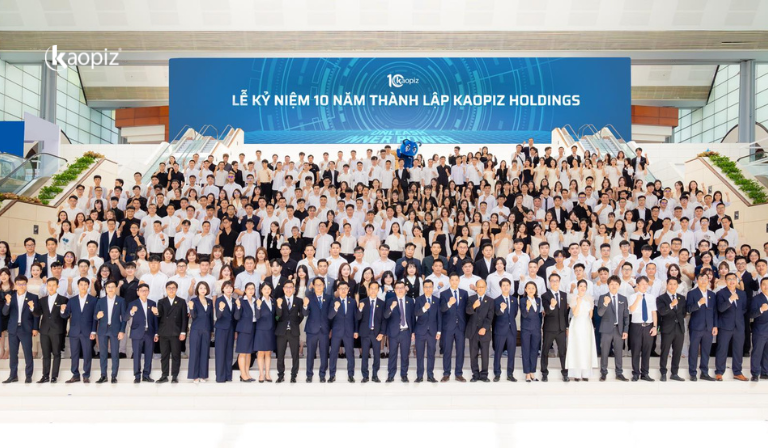
That experience shapes how we approach every new engagement. Before recommending a model, we ask the questions that matter: How stable is your scope? What does your internal team look like? How much involvement do you want in day-to-day execution? What happens to this project in 12 months?
The answers determine the engagement models for software development projects, not our preferences, not our staffing convenience.
What this looks like in practice:
- A Japanese enterprise client began with a focused T&M engagement to validate a core system replacement. Six months in, the working relationship was strong, and the scope had grown significantly. The engagement evolved into a Dedicated Team, same people, deeper commitment, clearer long-term structure.
- A Singapore-based startup needed a fixed-price MVP delivered in 10 weeks. Post-launch, as the product gained traction and the roadmap expanded, the engagement transitioned into a Hybrid model, T&M for active feature development, Managed Services for infrastructure and operations.
These transitions happen naturally when the vendor is structured to support them. At Kaopiz, no client has ever had to restart a vendor relationship simply because their project outgrew the original engagement model.
Conclusion
There is no universally best engagement models for software development projects. There is only the model or combination of models, that fits your specific project, team, budget, and long-term goals.
The decision is worth getting right. A mismatched engagement model does not just create administrative friction, it misaligns incentives, obscures accountability, and compounds into delivery problems that are expensive and slow to fix.
FAQs
- What Is the Difference Between a Dedicated Team and Staff Augmentation?
- A Dedicated Team is vendor-managed and self-contained. Staff Augmentation places individual engineers inside your existing team under your direct management. The key difference is who manages the engineers day-to-day.
- Can I Switch Engagement Models Mid-Project?
- Yes — and in long-running projects, it is often the right move. The most common transition is T&M into a Dedicated Team once scope stabilizes and the working relationship is proven. Define the transition terms clearly before switching, not during it.
- Which Engagement Model Is Best for Startups with a Limited Budget?
- T&M or Fixed Price for an initial MVP phase, depending on how clearly the scope is defined. Avoid committing to a Dedicated Team or ODC before the product direction is validated — the overhead is not justified at that stage.
- How Does the Engagement Model Affect IP Ownership?
- It depends entirely on what the contract says — not the model itself. Define IP ownership explicitly before work begins, especially in ODC, BOT, and Dedicated Team arrangements. Never assume it transfers automatically.
- What Engagement Model Works Best for AI or Blockchain Projects?
- Staff Augmentation is often the most practical starting point — plug specialized engineers into your existing team without building an entirely new vendor relationship. For larger, longer-term initiatives, a Dedicated Team with the right technical profile gives you the continuity complex projects require.
Author

Lucie Tran
Head of Growth of Kaopiz Global
Table of Contents
Don’t miss what’s next!
Thank you! Your form has been submitted successfully.