
IT Outsourcing for Australian Enterprise: Benefits, Models, and Best Practices in 2026
Australian enterprises face a growing gap: digital transformation demands are rising, but the local technology talent market can’t keep pace. As cloud, cybersecurity, AI, and software development needs grow, traditional hiring alone can’t deliver the scale or speed enterprises need.
Having worked with Australian organizations across multiple industries, I have seen IT outsourcing shift from a cost-reduction tactic into a strategic way to access specialized skills and accelerate delivery without expanding headcount at the same pace.
Enterprise IT outsourcing now extends well beyond helpdesk or infrastructure support. Organizations increasingly use managed services, dedicated offshore teams, staff augmentation, and development partners to drive cloud modernization, cybersecurity, AI adoption, and large-scale transformation.
This guide covers how IT outsourcing for Australian enterprise is evolving, the delivery models available, key benefits and risks, and how enterprises can use outsourcing strategically to scale capabilities and accelerate transformation.
Key Takeaways
- IT outsourcing for Australian enterprise has shifted from cost-saving to strategic capability-building.
- Talent shortages are making outsourcing essential for accessing cloud, cybersecurity, AI, and engineering expertise.
- The right model depends on business objectives, Project-Based, Staff Augmentation, Managed Services, and Dedicated Offshore Teams each serve different needs, and high-performing enterprises often combine several.
- Outsourcing delivers the most value through speed, scalability, and specialized talent access, not labor cost alone.
- Vietnam is gaining traction as a nearshore destination for its engineering talent, cost efficiency, and timezone alignment.
- Governance, cybersecurity, compliance, and knowledge retention deserve as much scrutiny as cost during vendor selection.
What Does IT Outsourcing for Australian Enterprise Really Mean Today?
IT outsourcing for Australian enterprise has evolved far beyond a cost-reduction strategy. According to Mordor Intelligence, Australia’s IT services market is projected to grow from approximately USD 39.6 billion in 2025 to more than USD 58 billion by 2030, representing a CAGR of over 8%.
This growth reflects rising enterprise investment in cloud computing, cybersecurity, AI, managed services, and application modernization as organizations accelerate digital transformation initiatives.
Why Enterprise IT Outsourcing Has Evolved Beyond Cost Reduction
A decade ago, outsourcing decisions were primarily driven by labor costs. Today, Australian enterprises are increasingly using IT outsourcing to access capabilities that are difficult to build internally, including cloud engineering, cybersecurity operations, AI development, and enterprise software modernization.
For CIOs and CTOs, the challenge is no longer simply controlling technology spending. The greater priority is securing the expertise and delivery capacity needed to execute transformation programs without being constrained by local talent shortages or lengthy recruitment cycles.
How Australian Enterprises Use Outsourcing Across the Technology Lifecycle
Modern enterprise IT outsourcing spans the entire technology lifecycle. Organizations engage outsourcing partners for software development, cloud migration, cybersecurity monitoring, AI implementation, quality assurance, infrastructure management, and ongoing application support.

Rather than replacing internal teams, outsourcing is increasingly used to extend enterprise capabilities. This allows organizations to maintain strategic ownership while gaining access to specialized skills, scalable delivery capacity, and faster execution across multiple technology initiatives.
Why IT Outsourcing for Australian Enterprise Is Accelerating in 2026
Growth is being driven by more than cost pressures. Talent shortages, AI adoption challenges, cybersecurity demands, and compressed transformation timelines are together creating a gap between what enterprises need to achieve and what internal teams can realistically deliver.
- Australia’s talent shortage is becoming structural. Cloud architects, cybersecurity specialists, AI engineers, and platform engineers remain hard to find, driving longer hiring cycles and rising competition. Enterprises now need to scale entire capabilities, not fill single vacancies, pushing outsourcing toward accessing specialized expertise without months-long recruitment.
- Digital transformation timelines have compressed. Multi-year roadmaps have shrunk into shorter windows for measurable outcomes, with cloud, AI, and data initiatives all competing for limited internal resources. This urgency is visible in AI adoption: only 12% of Australian organizations believe AI is already transforming their business, versus 25% globally, according to Deloitte’s 2026 State of AI report.
- Enterprises need enterprise-grade capabilities without enterprise-scale hiring. Building deep in-house expertise across every emerging technology area raises costs, while hiring too late slows delivery. Outsourcing lets enterprises combine internal leadership with external capacity, scaling capabilities and accessing specialized skills without the long-term cost of permanent headcount growth.
What Are the Business Benefits of IT Outsourcing for Australian Enterprise?
As outsourcing matures, enterprise leaders are evaluating it less as a procurement decision and more as a business capability strategy. The strongest outsourcing programs do not simply reduce costs. They help organizations access skills faster, improve delivery agility, and free internal teams to focus on higher-value initiatives.
Access to Specialized Expertise at Scale
Many Australian enterprises struggle to hire and retain talent in areas such as AI, cybersecurity, cloud engineering, data platforms, and enterprise architecture. Building these capabilities internally can take months, while transformation programs often operate under much tighter timelines.

Through enterprise IT outsourcing, organizations can access specialized talent on demand and rapidly scale capabilities around strategic initiatives without waiting for lengthy recruitment cycles or expanding permanent headcount.
Cost Optimization Beyond Salary Reduction
The business case for IT outsourcing for Australian enterprise extends far beyond labor costs. Enterprises must also consider recruitment expenses, onboarding time, retention challenges, training investments, and the opportunity cost of delayed delivery.
Deloitte notes that organizations are increasingly shifting toward outcome-based sourcing models that prioritize business value, flexibility, and measurable results rather than cost reduction alone. This reflects a broader trend toward outsourcing as a strategic enabler rather than a procurement exercise.
Greater Organizational Agility
Technology priorities rarely remain static. New regulatory requirements, cybersecurity threats, AI opportunities, or business initiatives can quickly create demand for skills that are not available internally.
Outsourcing provides the flexibility to scale teams and capabilities as business needs evolve. This allows enterprises to respond faster to change without carrying the long-term cost and complexity associated with large-scale hiring programs.
Increased Focus on Strategic Innovation
One of the most valuable benefits of outsourcing is the ability to free internal leaders from execution-heavy activities. When external partners handle operational delivery, internal teams can dedicate more time to innovation, governance, architecture, and business alignment.
The most successful enterprises do not outsource strategy. They outsource execution where appropriate while retaining ownership of business outcomes, creating a balance that supports both delivery efficiency and long-term innovation.
What IT Functions Should Australian Enterprises Outsource First?
Not every technology function should be outsourced. High-performing enterprises typically retain strategic ownership of areas that directly shape competitive advantage while outsourcing functions that require specialized expertise, scalable delivery capacity, or around-the-clock operational support. The goal is not to outsource more, but to outsource the right capabilities at the right stage of growth.
| IT Function | Outsourcing Priority | Typical Outsourcing Model |
|---|---|---|
| Cybersecurity Operations (SOC, Monitoring, Incident Response) | High | Managed Services |
| Cloud Infrastructure Management | High | Managed Services |
| Software Development | High | Dedicated Team |
| Quality Assurance & Testing | High | Dedicated Team |
| AI & Data Engineering | Medium-High | Staff Augmentation |
| IT Helpdesk & End-User Support | High | Managed Services |
| Application Maintenance & Support | High | Managed Services |
| Enterprise Architecture | Low | In-House |
| Product Strategy & Technology Roadmap | Low | In-House |
For most organizations, cybersecurity, cloud operations, software development, and application support deliver the fastest return on outsourcing investment. These functions benefit from external specialization and can be scaled more efficiently than internal teams alone.
Meanwhile, enterprise architecture, product strategy, and technology governance should typically remain in-house, ensuring that strategic decisions stay closely aligned with long-term business objectives while outsourcing partners contribute execution capacity and specialized expertise.
Which IT Outsourcing Model Fits Your Enterprise Strategy?
Selecting the right outsourcing model is often more important than selecting the right vendor. Different models solve different business problems, and the model that works for a cloud migration project may be completely unsuitable for a long-term product development initiative. Understanding where each model creates value helps enterprises align outsourcing decisions with business objectives rather than cost alone.
Project-Based Outsourcing for Defined Transformation Initiatives
Project-based outsourcing is best suited to initiatives with clearly defined requirements, timelines, and deliverables. Common examples include cloud migrations, legacy system modernization, ERP integrations, and infrastructure upgrades.
The model offers predictable budgeting and straightforward governance. However, it becomes less effective when requirements are expected to evolve significantly throughout the project, which is often the case with AI, product innovation, or customer-facing digital initiatives.
Staff Augmentation for Specialized Skill Gaps
Staff augmentation allows enterprises to add external specialists directly into existing teams. This model is particularly effective when organizations need cloud engineers, cybersecurity specialists, AI developers, or platform engineers but do not want to commit to permanent hiring.
The primary advantage is flexibility. Enterprises maintain full control over delivery while gaining immediate access to expertise that may be difficult to source locally within the required timeframe.
Managed Services for Operational Stability
Managed services are designed for functions that require continuous operational oversight rather than strategic ownership. Common examples include cybersecurity monitoring, cloud infrastructure management, IT support, and application maintenance.
For enterprise organizations, the value lies in predictability and scalability. Internal teams can focus on innovation and transformation while managed service providers ensure critical systems remain secure, available, and compliant.
Dedicated Offshore Teams for Long-Term Product Development
Dedicated offshore teams provide a stable group of engineers who work exclusively on a client’s products and technology initiatives. Unlike project-based engagements, knowledge accumulates within the team over time, creating stronger continuity and higher delivery efficiency.
This model is particularly attractive for Australian enterprises building long-term digital platforms, enterprise applications, AI products, or customer-facing software where sustained product knowledge directly impacts development velocity and quality.
Enterprise Insight: Why High-Performing Organizations Combine Multiple Models
One of the biggest misconceptions about IT outsourcing for Australian enterprise is that organizations must choose a single model. In practice, the most mature enterprises operate multiple outsourcing models simultaneously across different parts of the technology organization.
A common approach is to use managed services for infrastructure and cybersecurity operations, staff augmentation for specialized expertise, dedicated offshore teams for software development, and project-based engagements for discrete transformation initiatives. This portfolio approach allows enterprises to optimize cost, flexibility, knowledge retention, and delivery speed without forcing every technology function into the same operating model.
IT Outsourcing for Australian Enterprise: Australia vs Offshore vs Nearshore Models
One of the most important decisions in IT outsourcing for Australian enterprise is selecting the right delivery location. While discussions often focus on hourly rates, enterprise leaders should evaluate a broader set of factors, including access to talent, collaboration efficiency, scalability, compliance requirements, and time zone alignment. The optimal model depends on business priorities rather than cost alone.
| Model | Key Advantage | Key Challenge | Best Fit |
|---|---|---|---|
| Onshore (Australia) | Strong collaboration and local compliance alignment | Highest operating cost | Regulated industries and stakeholder-intensive projects |
| Nearshore (Vietnam) | Strong timezone overlap and cost efficiency | Smaller talent pool than major offshore markets | Long-term software development and digital transformation |
| Offshore (India, Eastern Europe) | Large talent pools and lower costs | Greater communication and timezone challenges | Large-scale development and cost optimization initiatives |
When evaluating outsourcing models, enterprise leaders should consider:
- Onshore outsourcing delivers the closest collaboration experience but often comes with significant cost premiums and ongoing talent shortages.
- Nearshore outsourcing offers a balance between cost efficiency and operational alignment. For Australian enterprises, Vietnam has emerged as a leading destination due to its growing engineering talent pool and strong working-hour overlap.
- Offshore outsourcing provides access to large-scale talent and competitive pricing, but managing communication, knowledge transfer, and delivery coordination can require additional effort.
- For long-term transformation initiatives, delivery speed and collaboration quality often have a greater impact on outcomes than hourly rates alone, making nearshore models increasingly attractive for enterprise organizations.
Critical Risks and Compliance Considerations for Australian Enterprises
While IT outsourcing for Australian enterprise can accelerate delivery and expand access to specialized expertise, it also introduces governance, security, and compliance responsibilities that cannot be delegated entirely to a vendor. The most successful enterprises treat outsourcing as a risk management exercise as much as a delivery strategy, ensuring that growth in external capabilities does not create blind spots in accountability or control.
When evaluating outsourcing partners, Australian enterprises should pay particular attention to:
- Privacy Act and APP 8 compliance: Under Australian regulations, organizations remain accountable for how personal information is handled by overseas service providers, even when data processing is outsourced.
- Cybersecurity governance: Security operations can be outsourced, but responsibility for security outcomes cannot. Enterprises should establish clear controls, reporting structures, and incident response procedures.
- Vendor lock-in risks: Overreliance on a single provider can create challenges when business priorities change or contracts expire. Documentation, knowledge transfer, and transition planning should be addressed early.
- Knowledge retention and continuity: High turnover within outsourced teams can impact delivery quality and institutional knowledge. Enterprises should evaluate team stability and succession planning during vendor selection.
- Service level agreements (SLAs): Performance expectations, escalation processes, response times, and accountability measures should be clearly defined and regularly reviewed.
- Data sovereignty requirements: Certain industries may face restrictions regarding where data is stored, processed, or accessed, making infrastructure and hosting decisions a critical consideration.
Organizations that proactively address these risks are typically able to capture the benefits of outsourcing while maintaining the governance, security, and operational resilience expected of enterprise technology environments.
How Kaopiz Supports Australian Enterprise Technology Initiatives
As Australian enterprises face growing pressure to accelerate digital transformation, many are turning to Vietnam as a strategic outsourcing destination. Beyond cost efficiency, Vietnam offers strong engineering talent, increasing expertise in AI and cloud technologies, and significant timezone overlap with Australia, making collaboration faster and more effective for enterprise-scale initiatives.
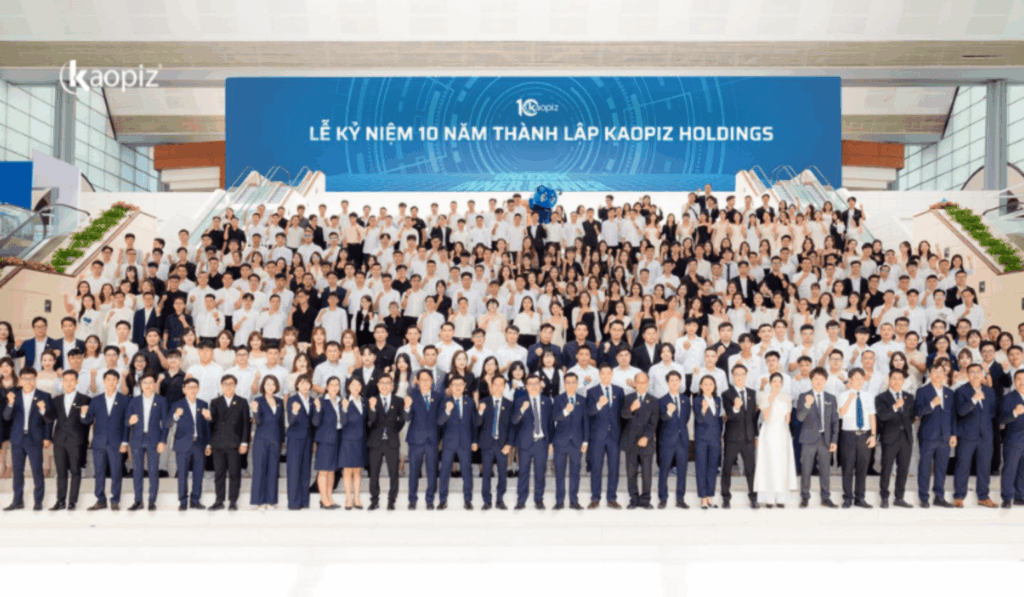
Why Australian enterprises partner with Kaopiz:
- 12+ years of experience delivering software, cloud, and AI solutions for global clients since 2014.
- Nearly 1,000 engineers and technology specialists supporting enterprise development, modernization, and innovation initiatives.
- 1,000+ successful projects delivered across Australia, Singapore, Japan, and other international markets.
- Strong capabilities in enterprise software development, cloud migration, AI solutions, data platforms, and managed IT services.
- Flexible engagement models including Dedicated Teams, Staff Augmentation, Project-Based Development, and Offshore Development Centers (ODC).
- Vietnam-based delivery with strong overlap with Australian business hours, enabling real-time collaboration and faster decision-making.
Whether your organization is modernizing legacy systems, scaling engineering capacity, implementing AI solutions, or accelerating digital transformation, Kaopiz provides the technical expertise and delivery flexibility needed to support long-term enterprise growth.
Looking for a technology partner that combines enterprise-grade expertise with the advantages of Vietnam outsourcing? Contact Kaopiz to discuss your next initiative.
IT Outsourcing for Australian Enterprise: A Decision Framework for Tech Companies
Choosing the right outsourcing strategy is not about finding the lowest-cost provider. It is about aligning outsourcing decisions with business objectives, technology priorities, and long-term growth plans.
- Define the objective: Determine whether the goal is accessing specialized expertise, accelerating delivery, improving operations, or scaling capacity.
- Assess strategic importance: Keep core differentiators such as product strategy and technology governance in-house, while evaluating execution-focused functions for outsourcing.
- Select the right delivery model: Match the requirement to Project-Based Outsourcing, Staff Augmentation, Managed Services, or Dedicated Offshore Teams.
- Choose the optimal location strategy: Evaluate onshore, nearshore, and offshore options based on collaboration needs, talent access, and cost considerations.
- Review governance and compliance requirements: Validate security controls, regulatory obligations, SLAs, and knowledge-retention mechanisms before engagement.
- Prioritize long-term scalability: Select a model and partner that can evolve alongside future business and technology requirements.
Enterprises that follow a structured evaluation process typically achieve better outsourcing outcomes than those focused solely on short-term cost savings.
Conclusion
The conversation around IT outsourcing for Australian enterprise has moved well beyond cost reduction. As talent shortages persist and digital transformation initiatives become more complex, outsourcing is increasingly being used as a strategic tool to access specialized expertise, accelerate delivery, and strengthen organizational capabilities.
The most successful enterprises do not view outsourcing as a replacement for internal teams. Instead, they combine internal leadership with the right mix of managed services, staff augmentation, dedicated teams, and project-based engagements to create a scalable technology operating model aligned with business goals.
Ultimately, the question is not whether to outsource, but how to do so strategically. Organizations that align outsourcing decisions with long-term technology priorities, governance requirements, and growth objectives are better positioned to innovate faster, manage risk effectively, and maintain a competitive advantage in an increasingly digital economy.
FAQs
- What Is IT Outsourcing for Australian Enterprise?
- IT outsourcing for Australian enterprise involves partnering with external providers to deliver technology services such as software development, cloud operations, cybersecurity, infrastructure management, and IT support.
- Why Do Australian Enterprises Outsource IT Services?
- Most enterprises outsource to access specialized expertise, overcome talent shortages, accelerate digital transformation, and improve operational efficiency without significantly increasing headcount.
- Which IT Functions Are Most Commonly Outsourced?
- Software development, cybersecurity operations, cloud management, application support, IT helpdesk services, and quality assurance are among the most frequently outsourced functions.
- Is Offshore Outsourcing Secure for Australian Enterprises?
- Yes, provided the outsourcing partner follows established security standards, compliance frameworks, and contractual obligations related to data privacy, governance, and risk management.
- Why Is Vietnam Becoming a Popular Outsourcing Destination for Australia?
- Vietnam offers a strong engineering talent pool, competitive costs, growing expertise in cloud and AI technologies, and favorable timezone overlap that supports real-time collaboration with Australian teams.
Author

Lucie Tran
Head of Growth of Kaopiz Global
Table of Contents
Don’t miss what’s next!
Thank you! Your form has been submitted successfully.