
Outsource Leadership: When Should Australian Businesses Bring in External Executive Expertise? (A 2026 Guide)
In my experience working with Australian businesses on software development and digital transformation initiatives, one challenge continues to surface. Many organizations have ambitious growth plans but struggle to secure experienced technology leaders quickly enough. Recruiting senior executives is becoming increasingly expensive, competitive, and time consuming, especially for businesses that need to move fast.
What many companies have discovered is that executive leadership no longer has to be a full time commitment. Outsource leadership enables businesses to access experienced executives and technology leaders on demand, providing strategic direction, stronger governance, and hands on guidance during critical stages of growth without the long term cost of a permanent hire.
As AI adoption, cloud transformation, and software modernization accelerate across Australia, outsource leadership is evolving from a cost saving option into a strategic growth model. This guide explains how it works, when it delivers the greatest value, and how Australian businesses can choose the right leadership partner to achieve sustainable business outcomes.
Key Takeaways
- Outsource leadership enables businesses to access experienced executives on a flexible basis without the cost and commitment of full-time hiring.
- It is increasingly adopted by Australian businesses to accelerate AI adoption, digital transformation, and business growth while addressing leadership talent shortages.
- Fractional C-Suite executives, technology leaders, operations leaders, and project-based leaders can all provide strategic value depending on business needs.
- Success depends on a strong governance framework, including clear business outcomes, defined KPIs, decision making authority, SOPs, and continuous knowledge transfer.
- While outsource leadership presents challenges such as communication, governance, and organizational alignment, these risks can be mitigated with the right processes and partner.
- The ideal outsource leadership partner should combine executive expertise, proven delivery experience, flexible engagement models, transparent governance, and the ability to scale alongside your business.
What Is Outsource Leadership and Why Is It Growing in Australia?
As Australian businesses accelerate digital transformation, many are finding that technology is no longer the biggest challenge. The real bottleneck is experienced leadership. With executive recruitment becoming increasingly expensive and competitive, more organizations are exploring outsource leadership as a faster and more flexible way to access strategic expertise.

Outsource leadership is the practice of bringing in experienced executives or senior technology leaders on a part time or project basis to guide business strategy, strengthen governance, and lead execution. Unlike traditional consultants, outsourced leaders take ownership of outcomes, helping businesses bridge leadership gaps while avoiding the long term commitment of a permanent hire.
Rather than viewing IT outsourcing as a cost cutting tactic, leading Australian organizations are using it to improve agility, accelerate decision making, and gain specialized expertise exactly when it delivers the greatest business impact. The model is gaining momentum across the country as businesses invest in AI, cloud, and software modernization while facing ongoing talent shortages.
Why Companies Choose Outsource Leadership Instead Of Hiring Full-Time Executives
As business environments become more dynamic, Australian enterprises are rethinking the traditional approach to executive hiring. Rather than investing months in recruiting permanent leaders, many organizations are adopting outsource leadership to gain immediate access to senior expertise while maintaining greater flexibility and cost efficiency.
This shift is particularly evident among companies accelerating AI adoption, digital transformation, and enterprise software initiatives.
Reduce Executive Hiring Costs Without Sacrificing Strategic Expertise
Hiring a permanent executive involves significant costs beyond salary, including recruitment fees, onboarding, long term benefits, and retention risks. Outsource leadership allows businesses to access experienced executives only when their expertise is required, enabling organizations to invest strategically without compromising leadership quality.
For many Australian enterprises, the challenge is not only cost but also talent availability. Demand for highly skilled professionals continues to outpace supply across many technical occupations, making senior leadership recruitment increasingly difficult.
Access Specialized Leadership for Critical Growth Stages
Different stages of business growth require different leadership capabilities. Whether expanding into new markets, modernizing legacy systems, adopting AI, or scaling engineering teams, companies often need specialized expertise that does not justify a permanent executive position.
This is where outsource leadership delivers greater value. Instead of hiring for a single long term role, organizations can engage leaders with proven experience in similar transformation projects, reducing execution risk while accelerating business outcomes.
Increase Business Agility Through Flexible Leadership Models
Modern organizations compete on speed as much as innovation. Flexible leadership models allow businesses to scale executive involvement based on changing priorities without restructuring the entire leadership team.

This approach aligns with findings from Deloitte’s 2026 Global Human Capital Trends, which reports that seven in ten business leaders identify speed and adaptability as their primary competitive advantage over the next three years. Organizations are increasingly redesigning leadership models to respond faster to evolving market conditions.
Fill Leadership Gaps Faster Than Traditional Recruitment
Executive hiring often requires several months before a new leader can begin delivering measurable results. During this time, important technology initiatives lose momentum, delivery teams lack strategic direction, and critical business decisions are delayed.
Outsource leadership significantly shortens this timeline by providing experienced executives who can contribute almost immediately. Whether guiding a digital transformation programme or stabilizing a growing engineering organization, outsourced leaders help maintain business continuity while permanent hiring decisions are still being evaluated.
Is Outsource Leadership Right for Australian Enterprises?
For organizations navigating digital transformation, AI implementation, or rapid business growth, the key question is no longer whether external leadership is acceptable, but whether internal hiring alone can keep pace with business demands.
According to the PwC Australia CEO Survey 2026, Australian CEOs remain optimistic about growth but acknowledge a widening gap between AI investment and execution capability, reinforcing the need for experienced leadership to translate strategy into measurable outcomes.
Outsource Leadership Roles: Which Executive Functions Can Be Outsourced?
Outsource leadership extends far beyond traditional executive support. Today, businesses can engage experienced leaders across multiple functions, gaining the expertise needed to drive growth, improve operations, and lead transformation without expanding their permanent leadership team. The right role depends on the organization’s priorities, business stage, and strategic objectives.
Fractional C-Suite (CEO, CTO, CIO, CFO, CMO)
Fractional executives provide senior level expertise on a flexible basis, helping businesses make strategic decisions without the long term commitment of a full time hire. Whether acting as a CEO, CFO, CMO, CTO, or CIO, they bring industry experience, objective insights, and leadership that can quickly influence business performance.
For technology driven organizations, Fractional CTOs and Fractional CIOs are especially valuable. They align technology strategy with business goals, oversee digital initiatives, and help internal teams build stronger technical capabilities.
Technology & Engineering Leadership
Successful technology projects require strong leadership as much as technical expertise. Businesses often outsource Engineering Managers, Delivery Managers, Technical Leads, or Solution Architects to improve software delivery, manage engineering teams, and strengthen technical governance.
These leaders help organizations accelerate web, mobile, AI, and cloud projects while ensuring quality, collaboration, and execution remain aligned with business objectives.
HR, Operations and Compliance Leadership
Many organizations also outsource leadership in HR, operations, and compliance to improve business performance. These executives support workforce planning, operational efficiency, organizational development, and regulatory compliance without requiring a permanent leadership position.

By bringing specialized expertise into the business only when needed, companies gain greater flexibility while reducing long term overhead. This approach is especially valuable during organizational change, business expansion, or process improvement initiatives.
Project-Based Leadership for Digital Transformation
Large transformation initiatives often require experienced leadership for a defined period rather than a permanent executive appointment. Businesses implementing AI, cloud migration, enterprise software, or legacy modernization frequently engage outsourced leaders to oversee planning, execution, and stakeholder alignment.
With experience delivering similar initiatives, these leaders help reduce project risks, improve decision making, and ensure transformation programs stay aligned with business objectives. Their ability to drive execution allows organizations to achieve measurable outcomes faster and more efficiently.
How to Make Outsource Leadership Successful: A Practical Governance Framework
Successful outsource leadership is not determined by the executive you hire alone, but by the governance framework that supports them. Without clear objectives, accountability, and communication, even the most experienced leaders struggle to deliver meaningful results. The following practices help organizations maximize the value of outsourced leadership while ensuring long term business success.
Start with Clear Business Outcomes Instead of Job Descriptions
Many businesses focus on defining responsibilities rather than expected outcomes when engaging outsourced leaders. Instead of creating a detailed job description, organizations should identify the business goals they expect the leader to achieve, whether that is accelerating product delivery, improving engineering performance, or leading digital transformation.
Clear objectives provide both parties with a shared direction and make it easier to measure success. This outcome driven approach also allows outsourced leaders to leverage their expertise instead of being constrained by traditional role definitions.
Build SOPs Before Bringing in External Leaders
Experienced leaders can make decisions more effectively when business processes are well documented. Standard Operating Procedures provide valuable context, helping outsourced executives understand existing workflows, responsibilities, and internal governance from the beginning.
Well defined SOPs also reduce onboarding time and minimize operational disruption. More importantly, they ensure consistency across teams, making it easier for outsourced leaders to improve processes rather than rebuild them.
Define KPIs Based on Business Impact, Not Working Hours
The success of outsource leadership should be measured by business outcomes instead of time spent in meetings or hours worked. Effective KPIs focus on measurable results such as delivery speed, customer satisfaction, engineering productivity, or project milestones.

Outcome based performance metrics encourage leaders to prioritize strategic impact and continuous improvement. This approach creates stronger accountability while giving executives the flexibility to determine the best path to achieving business goals.
Create Decision-Making Authority Without Losing Internal Control
Outsourced leaders need sufficient authority to make timely decisions, but that authority should operate within clearly defined governance boundaries. Businesses should establish decision rights, approval processes, and reporting structures before the engagement begins.
This balance allows leaders to move quickly while ensuring executive oversight remains with the organization. Clear governance also reduces confusion, prevents duplicated responsibilities, and improves collaboration across internal and external teams.
Transfer Knowledge to Internal Teams for Long-Term Success
The value of outsource leadership should extend beyond the duration of the engagement. Throughout the project, outsourced executives should document key decisions, mentor internal leaders, and establish repeatable processes that strengthen organizational capability.
By prioritizing knowledge transfer, businesses reduce dependency on external leadership and create a stronger foundation for future growth. This ensures the expertise gained during the engagement continues to deliver value long after the project has been completed.
Outsource Leadership Challenges: What Most Companies Overlook
Although outsource leadership offers clear strategic advantages, it also comes with challenges that businesses should address from the outset. Most issues are not caused by the leadership model itself, but by unclear governance, communication, and expectations. Identifying these risks early helps organizations maximize the value of external leadership.
| Challenge | Potential Impact | How to Mitigate |
|---|---|---|
| Limited organizational context | Slower decision making during the initial engagement | Provide business documentation, organizational structure, and strategic context from day one. |
| Unclear roles and responsibilities | Confusion, duplicated work, and delayed decisions | Clearly define decision making authority, responsibilities, and reporting lines before the engagement begins. |
| Misaligned expectations | Difficulty measuring performance and business value | Set measurable KPIs based on business outcomes instead of working hours or activities. |
| Communication gaps | Reduced collaboration between internal and external teams | Establish regular executive meetings, transparent reporting, and consistent communication channels. |
| Knowledge dependency | Internal teams rely too heavily on outsourced leaders | Encourage documentation, mentoring, and continuous knowledge transfer throughout the engagement. |
With the right framework, these challenges can be effectively managed. Clear objectives, regular communication, and knowledge transfer ensure outsource leadership delivers long term value while strengthening the organization’s internal capabilities.
How to Choose the Right Outsource Leadership Partner in Australia: A Decision Framework
Choosing the right outsource leadership partner is about more than evaluating technical expertise or executive experience. The ideal partner should understand your business objectives, integrate seamlessly with your internal teams, and provide a governance model that supports sustainable growth. Before making a decision, Australian businesses should evaluate potential partners against several key criteria.
When assessing an outsource leadership provider, consider whether they can demonstrate proven experience leading projects similar to your industry, business size, and digital transformation goals, along with executive expertise across relevant functions such as technology, engineering, operations, or business strategy. Equally important is a clear governance framework with defined KPIs, reporting processes, and decision making responsibilities, paired with strong communication skills, cultural alignment, a flexible engagement model that can scale as business needs evolve, and a genuine focus on knowledge transfer and capability building.
The right partner should deliver more than temporary executive support. They should act as a strategic extension of your leadership team, helping your organization improve execution, reduce risk, and build long term competitive advantage through experienced and accountable leadership.
Why Kaopiz Is a Trusted Outsource Leadership Partner for Australian Businesses
Successful outsource leadership requires more than experienced executives. It demands a partner that understands technology, business strategy, and governance while delivering measurable outcomes.
With over 12 years of experience in software development and IT outsourcing, Kaopiz helps Australian businesses strengthen leadership capabilities through flexible executive engagement models that support sustainable growth and digital transformation.
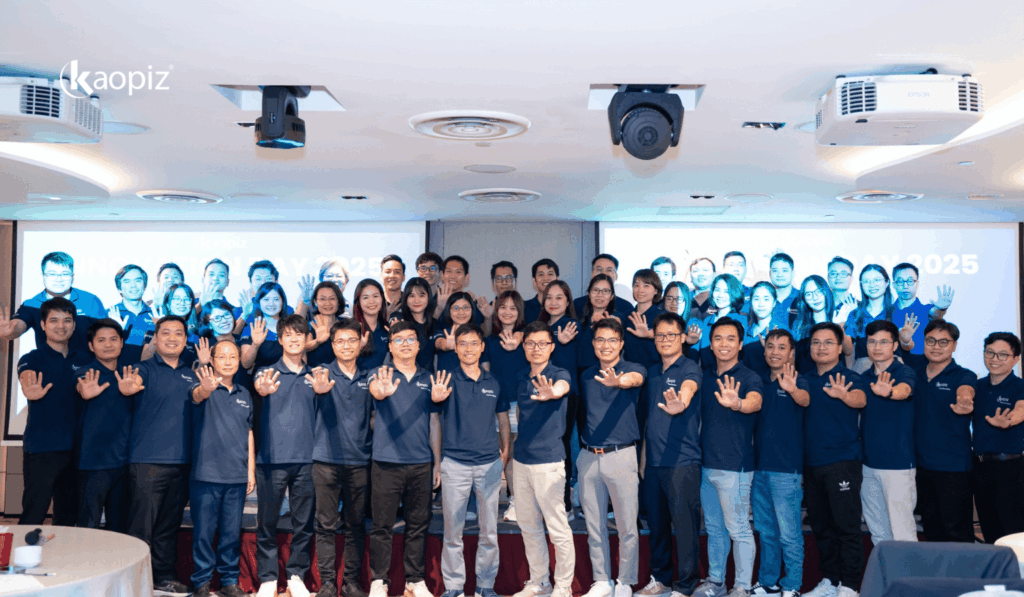
What makes Kaopiz a trusted outsource leadership partner for Australian businesses:
- Executive Leadership with Hands-On Delivery Experience: Our Fractional CTOs, Delivery Managers, Engineering Managers, and Solution Architects have led complex web, mobile, AI, cloud, and enterprise software projects. They combine strategic thinking with practical execution to help businesses accelerate delivery and reduce project risks.
- Governance First, Not Just Resource First: Every engagement is built around clear KPIs, transparent reporting, defined decision making authority, and structured communication. This ensures outsourced leaders integrate seamlessly with your internal teams while remaining accountable for business outcomes.
- Technology Leadership Backed by Nearly 1,000 Engineers: Leadership is most effective when supported by strong delivery capability. With nearly 1,000 engineers across AI, cloud, web, mobile, QA, cybersecurity, and enterprise software, Kaopiz can scale from executive leadership to full engineering execution as your business grows.
- Built for Australian Collaboration: Working within a 2 to 4 hour time difference from major Australian cities, Kaopiz enables real time communication, faster decision making, and closer collaboration. This allows outsourced leaders to work as a natural extension of your internal leadership team.
- Flexible Leadership Models That Grow with Your Business: Whether you need a Fractional CTO to define technology strategy, an Engineering Manager to improve delivery, or a Delivery Manager to lead a transformation programme, our engagement models adapt to your changing business priorities without the commitment of permanent executive hiring.
Whether you are exploring outsource leadership for the first time or looking to strengthen your existing leadership team, Kaopiz provides the executive expertise, governance framework, and engineering capability to help your business scale with confidence.
Conclusion
As Australian businesses continue investing in AI, cloud, and digital transformation, leadership has become a key driver of successful execution. Outsource leadership offers a practical way to access experienced executives, accelerate strategic initiatives, and strengthen governance without the long term commitment of traditional executive hiring.
The greatest value of outsource leadership lies not only in reducing costs but also in bringing the right expertise at the right time. With clear objectives, strong governance, and the right leadership partner, businesses can improve decision making, reduce delivery risks, and build internal capabilities that support sustainable growth.
If your organization is evaluating how to strengthen technology leadership or scale digital initiatives more effectively, choosing the right partner is critical. With experienced technology leaders, flexible engagement models, and proven software delivery expertise, Kaopiz helps Australian businesses turn leadership challenges into long term competitive advantage.
FAQs
- When Should a Company Consider Outsource Leadership Instead of Hiring Internally?
- Businesses should consider outsource leadership when they need executive expertise quickly, are undergoing digital transformation, entering a new market, scaling operations, or require specialized leadership that does not justify a permanent executive role.
- How Long Does an Outsource Leadership Engagement Typically Last?
- The duration varies depending on business needs. Some organizations engage outsourced leaders for a few months to oversee a specific project, while others retain fractional executives on an ongoing basis to provide long term strategic guidance.
- Can Outsource Leadership Work Alongside an Existing Executive Team?
- Yes. Outsource leadership is designed to complement, not replace, internal leadership. Outsourced executives often collaborate closely with founders, C-suite leaders, and department heads to fill capability gaps, mentor teams, and accelerate key initiatives.
- What Industries Benefit Most from Outsource Leadership?
- While almost any industry can benefit, outsource leadership is particularly valuable for technology, SaaS, fintech, healthcare, manufacturing, logistics, and professional services organizations where rapid innovation and specialized expertise are critical to growth.
- Can Outsource Leadership Support AI and Digital Transformation Initiatives?
- Absolutely. Many organizations engage Fractional CTOs, CIOs, or Delivery Managers through outsource leadership to define AI strategies, modernize legacy systems, oversee cloud migration, and ensure digital transformation projects deliver measurable business outcomes.
Author

Lucie Tran
Head of Growth of Kaopiz Global
Table of Contents
Don’t miss what’s next!
Thank you! Your form has been submitted successfully.