
Sora Shutdown Guide (2026): What Happened, Key Dates & What Businesses Should Do Next
In early 2024, OpenAI introduced Sora, a text-to-video AI model that quickly captured global attention. Its ability to generate realistic, cinematic videos from simple prompts signaled a major shift in how content could be created. For many businesses, Sora represented the future of video production.
But by 2026, the narrative changed. Instead of a full public rollout, Sora moved from limited access to official discontinuation, leaving many users asking the same questions: Was Sora ever meant to be a real product? And what should businesses do now?
This guide breaks down what actually happened, from Sora shutdown’s timeline to the best alternatives available today. More importantly, it explores what the Sora shutdown 2026 situation reveals about AI tool dependency and how businesses should approach AI moving forward.
Key Takeaways:
- Sora AI is officially shut down in 2026: OpenAI confirmed a phased discontinuation, making Sora no longer available for production use.
- Breakthrough technology doesn’t guarantee a viable product: Despite its capabilities, Sora faced challenges in cost, scalability, and real-world adoption.
- AI tool dependency is a real business risk: Relying on external platforms can lead to uncertainty when access, pricing, or availability changes.
- There is no single “Sora replacement”: Alternatives like Runway, Pika Labs, and Synthesia serve different use cases.
- The winning strategy is building AI capability, not chasing tools: Businesses should focus on scalable, controllable AI systems rather than depending entirely on third-party tools.
What Is Sora AI and Why It Gained Global Attention
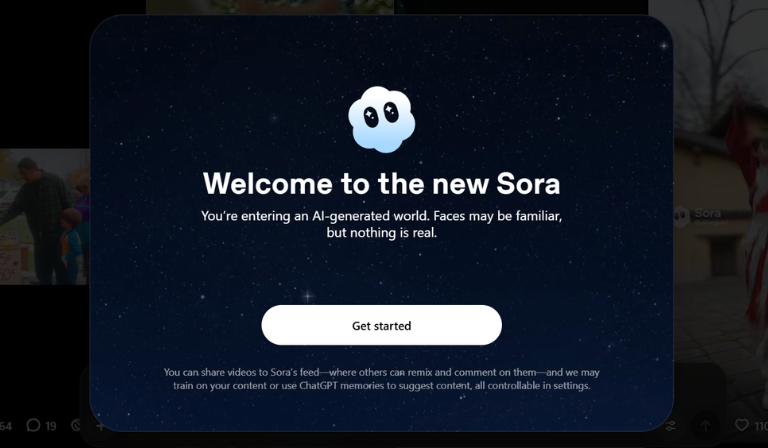
Sora AI is a text-to-video generative model developed by OpenAI, designed to create highly realistic video scenes from simple text prompts. Instead of stitching together pre-made clips, Sora generates videos from scratch, simulating motion, lighting, camera angles, and even physical interactions within a scene.
At its core, Sora represents a major leap beyond earlier AI video tools. While previous models could generate short, often inconsistent clips, Sora demonstrated the ability to produce longer, coherent videos with cinematic quality, something that had traditionally required entire production teams, expensive software, and weeks of work.
Key Capabilities That Set Sora Apart
- Text-to-Video Generation at Scale: Users can describe a scene in natural language (e.g., “a futuristic city at sunset with flying cars”), and Sora generates a corresponding video with remarkable detail.
- Realistic Motion & Physics Simulation: Unlike earlier tools, Sora can simulate how objects move and interact in a believable way, water flows, shadows shift, and characters move naturally within environments.
- Multi-Shot & Narrative Consistency: Sora is capable of generating sequences that feel like connected scenes, maintaining visual continuity across frames, closer to real filmmaking than isolated clips.
- Creative Flexibility: From photorealistic footage to stylized animation, Sora supports a wide range of visual styles, making it useful for marketing, storytelling, and concept design.
Why Sora Captured Global Attention
When Sora was first introduced, it quickly became one of the most talked-about AI breakthroughs. The reason wasn’t just technical, it was transformational.
- It Redefined Video Production Economics: Sora suggested a future where high-quality video content could be created without large crews, studios, or long production cycles. This has massive implications for industries like media, advertising, education, and e-commerce.
- It Accelerated the “AI Content” Revolution: Following the rise of AI tools for text (like ChatGPT) and images, Sora marked the next frontier: fully generated video content, unlocking new possibilities for personalization and scale.
- It Bridged the Gap Between Idea and Execution: Traditionally, turning an idea into a video required significant resources. With Sora, the gap between concept → visual output became dramatically shorter, empowering creators and businesses alike.
- It Sparked Both Excitement and Concern: Alongside its potential, Sora also raised serious questions about deepfakes and misinformation, copyright and content ownership, and the future of creative industries.
Is Sora AI Shut Down in 2026?
Short answer: Yes, Sora AI is officially being discontinued in 2026, but in stages rather than an immediate shutdown.
Official Status (2026)
According to official updates from OpenAI about Sora shutdown date:
- The Sora web app and user interface will be shut down on April 26, 2026
- The Sora API will remain available longer but will be discontinued on September 24, 2026
Timeline snapshot:
- March 2026: Sora shutdown officially announced
- April 26, 2026: Sora app fully discontinued
- September 24, 2026: Sora API shutdown (final stage)
This means:
- Users will lose access to the Sora platform interface first
- Developers and enterprise users will retain limited access via API until late 2026
Why There’s Confusion Around “Sora Shutdown”
Many users are still asking whether Sora is “shut down” because the situation is not a simple on/off event:
- Earlier versions (like Sora 1) were already phased out in early 2026
- Sora 2 had limited availability and was never fully global
- The shutdown is happening gradually across products (app → API)
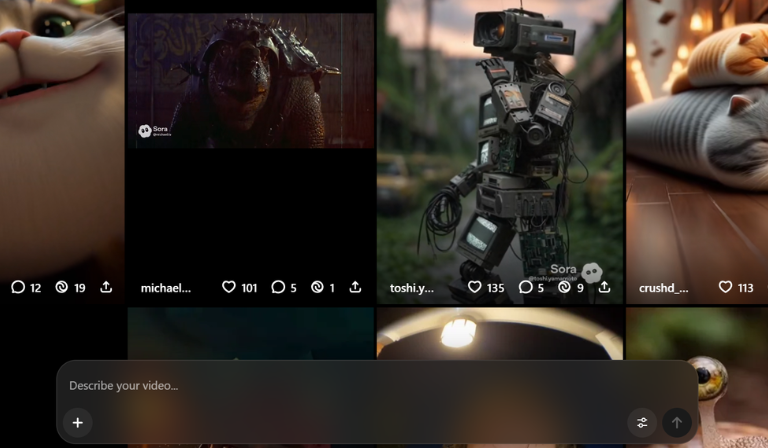
Some users experience it as:
- “Not available”
- “Restricted access”
- Or “never released”
What This Means in Practice
- Sora is not just “limited” — it is being actively sunset as a product
- The technology itself may still exist internally, but:
- Public access is ending
- Commercial usage via API will also stop
Industry Context
Recent reports indicate that the shutdown is part of a broader strategic shift at OpenAI, including:
- Moving away from experimental consumer tools
- Refocusing on core products like ChatGPT, coding tools, and enterprise AI
At the same time, factors such as:
- Extremely high compute costs
- Legal and copyright concerns
- Low profitability of video generation at scale
have made Sora difficult to sustain as a standalone product.
Sora AI Timeline: Key Updates, Delays & Shutdown Signals
Understanding Sora’s trajectory helps explain why so many users moved from excitement → confusion → “shutdown” perception within just two years. Below is a clear, fact-based timeline of how events unfolded.
2024: Initial Announcement & Breakthrough Demo
In early 2024, OpenAI introduced Sora as a next-generation text-to-video model, instantly capturing global attention.
- OpenAI released demo videos showcasing highly realistic, multi-scene outputs
- The model demonstrated:
- Long-duration video generation
- Consistent characters and environments
- Advanced physics simulation
This was widely seen as a breakthrough moment in generative AI, comparable to the earlier impact of ChatGPT and DALL·E.
2025: Limited Access & Growing Expectations
Following the initial hype, Sora entered a controlled testing phase rather than a full public launch.
- Access was restricted to:
- Selected creators
- Researchers
- Safety testers (“red teamers”)
- OpenAI emphasized:
- Risk evaluation (deepfakes, misinformation)
- Model reliability and control
- No official public release date or pricing model was announced

Meanwhile, expectations continued to grow, with businesses anticipating:
- Commercial rollout
- API access
- Integration into content workflows
However, competing tools like Runway and Pika Labs began gaining traction with real, accessible products.
2026: Delays, Restrictions, or “Perceived Shutdown”
By 2026, the narrative around Sora shifted significantly.
- There were no major public rollout updates
- Access remained highly restricted and unclear
- Market perception began shifting toward: “delayed indefinitely” or “effectively unavailable”
Then, a major update clarified the situation:
- OpenAI officially announced Sora’s discontinuation timeline
- This confirmed that Sora would not transition into a widely available product
In hindsight, what looked like “delays” were actually early signals of product shutdown.
Why Sora AI Was Restricted or “Shut Down”
Sora’s discontinuation wasn’t caused by a single issue; it was the result of multiple structural challenges across technology, economics, regulation, and strategy. Below are the key reasons, based on verified reports and industry analysis.
Extremely High Compute Costs & Unsustainable Economics
One of the biggest factors was the cost of running AI video generation at scale.
- Sora required massive GPU resources to generate realistic videos
- Reports estimate the platform cost up to ~$1 million per day to operate
- Low user retention and declining adoption made it difficult to justify the cost
As a result, Sora was described as: an “expensive strategic miscalculation” and a “money pit”. This made it economically unsustainable compared to other AI products.
Strategic Shift by OpenAI Toward Core Products
Sora’s shutdown is closely tied to OpenAI’s broader business strategy.
- OpenAI began shutting down non-core or experimental projects
- Focus shifted toward:
- Enterprise AI solutions
- Coding tools (e.g., developer platforms)
- Unified AI products
- Coding tools (e.g., developer platforms)
- Enterprise AI solutions
According to multiple reports:
- The company wanted to avoid “side projects” and consolidate resources
- Sora was discontinued as part of a refocus on productivity and revenue-driving products
Low Adoption & Weak Product-Market Fit
Despite massive hype, real-world usage didn’t match expectations.
- User numbers declined significantly after launch
- Engagement dropped as novelty wore off
- Many users lacked clear practical use cases
In short:
- Sora was impressive technically
- But struggled to become a daily-use or business-critical tool
This gap between hype vs actual usage accelerated its shutdown.
Legal, Copyright & Ethical Risks
Sora also faced serious concerns around content ownership and misuse.
- The model could generate:
- Copyrighted characters and scenes
- Hyper-realistic synthetic content
- This raised issues such as:
- Intellectual property violations
- Deepfakes and misinformation

Industry and policy discussions highlighted:
- Ongoing disputes over copyrighted material usage
- Pressure to implement stricter safeguards
These risks made large-scale public deployment more difficult.
Infrastructure Limits & Compute Shortage
Even beyond cost, there were physical constraints:
- OpenAI faced limited compute resources
- Video models are significantly heavier than text or image models
- Resources were redirected to higher-priority systems
This forced trade-offs:
- Continue Sora
- Or invest in more scalable, profitable AI products
Sora ultimately lost that trade-off.
Competitive Pressure in the AI Race
The AI video market evolved quickly:
- Competitors released:
- More accessible tools
- Faster iteration cycles
- Meanwhile, rivals gained traction in:
- Coding AI
- Enterprise AI platforms
OpenAI responded by:
- Prioritizing areas with clear commercial advantage
- Scaling back experimental products like Sora
Leo Nguyen’s Perspective: “Sora wasn’t shut down because it failed, it was shut down because the ecosystem around it wasn’t ready. The cost, the risks, and the lack of scalable use cases made it difficult to turn a breakthrough into a business. For enterprises, the lesson is clear: AI advantage doesn’t come from using the most advanced tool, it comes from building systems that you can control, scale, and sustain.”
How Sora Quietly Killed a $1 Billion The Walt Disney Company Deal
Sora didn’t need to officially cancel a $1 billion deal to reshape the industry, it simply made deals at that scale uncertain. While there is no verified public record of a finalized $1B agreement between The Walt Disney Company and OpenAI specifically tied to Sora, its impact on media economics was immediate and significant.
When Sora was introduced in 2024, it demonstrated the ability to generate high-quality video from simple text prompts, challenging the foundations of traditional content production. Studios like Disney typically invest heavily in CGI, VFX, and long production pipelines, often involving hundreds of millions to billions of dollars per project. Sora introduced a new variable: what if parts of that pipeline could be automated?
This uncertainty alone was enough to pause or delay large-scale investments across the industry. As reported in broader coverage of generative AI’s impact on media, major studios have been actively reassessing production strategies due to AI advancements.
However, the real twist came in 2026, when OpenAI officially announced Sora’s discontinuation. This created a double shock: traditional investments had already been questioned, yet the AI alternative itself was no longer viable.
From my perspective, this is the real story. “Sora didn’t kill a deal, it killed certainty. And at the billion-dollar level, that’s enough to stop decisions entirely.”
Best Sora AI Alternatives in 2026 (Practical Guide)
With Sora discontinued, businesses and creators need practical, available alternatives, not just impressive demos. Below are the most relevant Sora alternatives 2026, each suited for different use cases.
Runway
Runway is currently one of the closest AI video generator alternatives to Sora in terms of capability and accessibility.
- Strong text-to-video and video-to-video generation
- Advanced editing tools (background removal, motion tracking)
- Widely used by creators and production teams
Best for: creative production, marketing content, experimental AI video
Pika Labs
Pika Labs focuses on ease of use and speed, making it popular among creators.
- Simple prompt-based video generation
- Strong community adoption
- Fast iteration for short-form content
Best for: social media, quick content creation, prototyping ideas
Synthesia
Synthesia takes a different approach by focusing on AI avatar-based videos.
- Create videos with realistic AI presenters
- Supports multiple languages and localization
- No filming or production required
Best for: training, onboarding, internal communication, enterprise use
HeyGen
HeyGen is widely used for marketing and personalized content at scale.
- AI avatars and voice cloning
- Personalized video generation
- Strong integration for business workflows
Best for: sales outreach, marketing campaigns, personalized content
Stability AI (Stable Video Diffusion)
Stability AI offers Stable Video Diffusion, an open-source alternative.
- More control and customization
- Can be deployed privately
- Requires technical expertise
Best for: companies building custom AI video systems
Key Takeaway: There is no single “Sora replacement.”
Instead:
- Tools like Runway and Pika focus on creative generation
- Synthesia and HeyGen focus on business applications
- Stability AI enables custom-built solutions
The right choice depends on your goal, not just the technology.
How to Choose the Right Sora Alternative for Your Business
Choosing a Sora alternative isn’t about finding the “most advanced” tool, it’s about finding what actually fits your business use case, scale, and long-term strategy.
- Start with your use case (not the tool): Identify what you actually need: marketing videos, training content, or creative production. Tools like Runway or Pika Labs suit creative use, while Synthesia and HeyGen fit business workflows better.
- Balance output quality vs speed: Higher-quality videos usually take more time and cost more to generate. For most businesses, scalable and consistent output is more valuable than cinematic perfection.
- Check scalability and integration early: Ensure the tool can connect with your existing systems (CRM, CMS, marketing tools). Many platforms work well standalone but struggle when scaled into real business workflows.
- Understand the true cost at scale: Look beyond subscription pricing and evaluate cost per video, usage limits, and upgrade tiers. AI tools can become expensive quickly when used at high volume.
- Evaluate control vs dependency risks: Relying fully on third-party tools means limited control over roadmap, pricing, and availability. If AI video becomes core to your business, consider a hybrid or custom-built approach.
- Think long-term, not just experimentation: Tools are great for testing ideas, but production requires stability and predictability. Choose solutions that can support your growth over time, not just short-term needs.
From my perspective, the right AI tool is not the one with the best demo, it’s the one you can rely on at scale. For experimentation, there are enough tools. For production, control becomes critical.
How Businesses Can Build Sora-Like AI Video Systems with Kaopiz
Building a Sora-like system is not about replicating a single model — it requires deep expertise across AI, cloud infrastructure, and enterprise system design. This is where Kaopiz stands out, combining large-scale engineering capability with real-world experience in delivering production-ready AI solutions.

- Proven scale with global delivery capability: Kaopiz has delivered 1,000+ projects for 500+ clients worldwide, supported by a team of 1,000+ engineers and technology specialists across Vietnam, Japan, and Singapore.
- Strong expertise in AI, cloud, and full-cycle development: Kaopiz specializes in AI/ML, cloud engineering (AWS, GCP, Azure), and custom software development, covering the entire lifecycle from ideation to deployment and optimization.
- Enterprise-grade system design for complex workloads: With experience building systems that handle high data volumes, multi-user environments, and strict security requirements, Kaopiz focuses on production-ready solutions, not just demos.
- Cross-industry experience in AI applications: Kaopiz has implemented solutions across healthcare, education, retail, logistics, and finance, giving them practical insight into real-world AI use cases.
- Recognized global technology provider: Kaopiz is recognized with international certifications such as ISO 27001:2013, ISO 9001:2015, and partnerships like AWS Advanced Consulting Partner, validating its enterprise-grade delivery standards.
If you’re exploring alternatives after Sora, this is the moment to move beyond tools and build something you can truly control. At Kaopiz, we help businesses design and deploy scalable, production-ready AI video systems tailored to real use cases, not just demos.
Conclusion
Sora’s journey, from breakthrough to shutdown, shows a key reality: not every advanced AI technology becomes a scalable product. While OpenAI proved what’s possible with AI video, the challenges of cost, risk, and real-world adoption ultimately limited its path.
For businesses, the bigger lesson is clear. AI tools are evolving fast, but they are also unpredictable, access can change, and platforms can disappear. Relying solely on external tools introduces real strategic risk.
At the same time, the opportunity remains strong. Companies that succeed will shift from using tools to building AI capabilities they can control and scale.
FAQs
- Was Sora Ever Publicly Available?
- No. Sora was never fully released to the public. It remained in a limited access phase with selected users before being discontinued.
- What Are the Best Alternatives to Sora AI in 2026?
- Some of the most practical alternatives include Runway, Pika Labs, Synthesia, and HeyGen. Each serves different use cases, from creative production to business content.
- Can Businesses Still Use Sora for Production?
- No. With the shutdown timeline in place, Sora is no longer suitable for production use. Businesses should consider alternative tools or custom-built solutions.
- Should Businesses Rely on AI Tools like Sora?
-
AI tools are useful for experimentation, but relying entirely on them can be risky. As seen with Sora, access and availability can change quickly, making long-term dependency a challenge.
- What Is the Best Long-term Approach after Sora?
- The most sustainable approach is to combine tools with internal AI capabilities. This allows businesses to maintain control, scale efficiently, and reduce dependency on external platforms.
Author

Leo Nguyen
Chief Executive Officer of Kaopiz Global
Table of Contents
Don’t miss what’s next!
Thank you! Your form has been submitted successfully.