
When to Outsource IT Services: A Strategic Guide for Australian Businesses in 2026
Over the past decade working with Australian businesses, I’ve noticed the companies with the best technology outcomes aren’t the ones with the largest IT teams. They’re the ones that know when to outsource IT services and when to keep capabilities in-house.
Rising tech salaries, cybersecurity risks, and rapid AI and cloud adoption mean hiring alone often can’t keep pace with business demands. As a result, IT outsourcing services have shifted from a cost-saving tactic into a flexible operating model. Outsource too early and you risk unnecessary dependencies; outsource too late and innovation slows while technical debt builds.
The real question isn’t whether outsourcing is good or bad, but when external expertise creates more value than building everything internally. This guide covers the signs it’s time to outsource and the frameworks to make that call.
Key Takeaways
- Timing matters more than cost. Knowing when to outsource IT services determines whether it becomes a growth accelerator or just a short-term fix.
- Watch for overloaded IT teams, rising downtime, unpredictable costs, cybersecurity gaps, and difficulty hiring specialized talent, these are the clearest signs it’s time to act.
- Australia’s IT landscape is shifting fast, driven by talent shortages, rising salaries, and compressed digital transformation timelines.
- Not everything should be outsourced. Keep core competitive advantages in-house; outsource operational or specialized functions.
- Good starting points include IT support, cybersecurity, cloud management, software development, QA, and AI initiatives.
- Outsourcing isn’t all-or-nothing, match scope and timing to your business goals and internal capabilities.
- The right partner matters as much as the right model. Expertise, communication, security, and cultural fit drive long-term success.
When to Outsource IT Services: Why Timing Matters More Than Cost
For many Australian businesses, the outsourcing question is no longer whether to outsource, but when to outsource IT services to maximize business value. Timing has become a critical factor as companies face growing pressure to innovate faster, strengthen cybersecurity, and access specialized expertise in an increasingly competitive market.
Outsourcing Is No Longer Just a Cost-Saving Strategy
A decade ago, businesses primarily outsourced IT to reduce operational expenses. Today, IT outsourcing is increasingly viewed as a strategic operating model that enables companies to access advanced capabilities, accelerate digital transformation, and improve organizational agility. Outsourcing is no longer about replacing internal teams, but about complementing them with expertise that would otherwise be difficult or expensive to build in-house.

This shift is reflected in the Australian market. According to KPMG Australia’s Keeping Us Up at Night 2026 survey, 63% of business leaders consider new technologies and AI their biggest challenge, while 54% cite digital transformation as a top concern. These pressures are encouraging organizations to seek external partners that can help them adapt faster and execute more effectively.
The Hidden Cost of Waiting Too Long
Many companies delay outsourcing because they believe keeping everything in-house provides greater control. However, the true cost of waiting often appears in less visible forms: delayed product launches, overworked IT teams, growing technical debt, and missed opportunities to adopt emerging technologies.
The real question is not whether outsourcing costs money, but whether continuing to rely solely on internal resources costs even more. As organizations increasingly compete on speed and innovation, when to outsource IT services becomes a strategic timing decision, one that can determine whether a business keeps pace with change or struggles to catch up.
7 Clear Signs That It Is Time to Outsource IT Services
Most companies do not suddenly decide to outsource. The decision usually comes after recurring operational challenges begin affecting productivity, innovation, and growth. If several of the following signs sound familiar, it may be the right time to rethink your IT operating model and consider when to outsource IT services.
Your Internal Team Is Overwhelmed by Day-to-Day Operations
One of the clearest signs is when your internal IT team spends most of its time resolving tickets, maintaining legacy systems, and responding to urgent issues. Strategic initiatives such as AI adoption, cloud migration, or application modernization are repeatedly delayed because there is simply no bandwidth left.
Over time, this creates a vicious cycle: operational demands continue to grow while innovation slows down. Outsourcing routine IT functions allows internal teams to focus on initiatives that directly contribute to business growth rather than constantly firefighting.
Downtime and Technical Issues Are Hurting Productivity
Frequent outages, sluggish applications, and recurring infrastructure issues do more than frustrate employees. They slow decision-making, interrupt customer experiences, and create hidden costs that are difficult to quantify but significant over time.
If technical problems are becoming a regular part of business operations, outsourcing IT support or infrastructure management can provide the expertise and proactive monitoring needed to improve reliability and minimize downtime.
IT Costs Have Become Unpredictable
Unexpected hardware failures, emergency support requests, software upgrades, and cybersecurity incidents can quickly turn IT budgets into moving targets. As technology environments become more complex, reactive spending often replaces long-term planning.
IT outsourcing services introduce more predictable operating costs through scalable pricing models and service agreements. This gives businesses better budget visibility and reduces the financial uncertainty associated with maintaining increasingly sophisticated IT environments.
Cybersecurity Risks Are Growing Faster Than Internal Expertise
Cybersecurity threats are evolving faster than most organizations can build expertise internally. AI-powered attacks, ransomware, and increasingly sophisticated phishing campaigns require specialized capabilities that many in-house teams struggle to maintain.
IBM’s latest security research found that 13% of organizations have already experienced breaches involving AI models or applications, while 97% of those incidents occurred in organizations lacking proper AI access controls. This highlights a growing gap between AI adoption and cybersecurity readiness, making external expertise increasingly valuable.
Your IT Leaders Spend More Time Fixing Problems
Technology leaders create the most value when they focus on strategy, architecture, and innovation. However, many CIOs and CTOs find themselves trapped in a player-coach role, spending more time resolving operational issues than shaping the future direction of the business.
When senior talent becomes consumed by routine support activities, innovation inevitably slows. Outsourcing operational workloads can free leadership teams to focus on initiatives that drive competitive advantage and long-term growth.
You Need Specialized Expertise for a Specific Initiative
Projects such as AI implementation, cloud migration, DevOps transformation, or cybersecurity modernization often require skills that are difficult to hire quickly or justify as permanent positions. Recruiting these specialists internally can take months and significantly increase labor costs.
According to Robert Half Australia, 97% of hiring managers now expect new hires to possess AI and automation skills, while 88% report difficulty finding candidates with the right capabilities. For businesses pursuing specialized initiatives, outsourcing provides immediate access to expertise without long-term hiring commitments.
Business Growth Is Outpacing Your Internal IT Capacity
Growth is exciting, but it also places increasing pressure on technology teams. More users, more systems, and more integrations create complexity that hiring alone may not solve, especially in Australia’s increasingly competitive technology market.
The 2026 Tech Leaders Survey by the Tech Council of Australia and Datacom found that 78% of tech leaders identify AI as the defining trend of 2026, yet only 7% believe Australia is adequately prepared to meet future AI demand. As growth accelerates faster than talent availability, outsourcing becomes less about cost reduction and more about maintaining momentum and accessing capabilities at scale.
Why the IT Outsourcing Market in Australia Is Changing in 2026
For Australian businesses, deciding when to outsource IT services has become more complex and more important than ever. Rising talent costs, increasing cybersecurity demands, and faster digital transformation cycles are reshaping how organizations build and manage technology capabilities.
The result is a fundamental shift in mindset. Outsourcing is no longer a reactive response to budget pressure, but a proactive strategy that helps businesses stay competitive in an environment where speed, expertise, and adaptability matter more than ever.
Rising IT Talent Costs and Skill Shortages
Hiring and retaining technology talent in Australia has become increasingly challenging. Demand for skills in AI, cloud computing, cybersecurity, and data engineering continues to outpace supply, pushing salaries higher and extending recruitment timelines. Even businesses with strong employer brands often struggle to compete for highly specialized roles.

As a result, many organizations are reconsidering the traditional build-everything-in-house approach. IT outsourcing services offer access to global talent pools and niche expertise that may be difficult or expensive to secure locally. Rather than replacing internal teams, outsourcing allows businesses to fill capability gaps quickly and scale resources according to business needs.
Cybersecurity and Compliance Are Becoming More Complex
Cybersecurity is no longer limited to protecting networks and devices. Businesses must now manage risks across cloud environments, AI systems, third-party vendors, and increasingly strict regulatory requirements. For many organizations, keeping up with this evolving threat landscape requires expertise that extends beyond the capabilities of a generalist IT team.
Compliance requirements are also becoming more demanding. Industries such as healthcare, finance, and critical infrastructure face growing expectations around data governance, privacy, and incident response. Outsourcing cybersecurity or managed IT services enables companies to access specialized skills, established security frameworks, and continuous monitoring without building these capabilities entirely from scratch.
Digital Transformation Has Compressed Delivery Timelines
The pace of digital transformation has accelerated significantly over the past few years. Businesses are expected to adopt AI, modernize legacy systems, launch digital products, and improve customer experiences faster than ever before. At the same time, market conditions are changing rapidly, leaving little room for lengthy hiring cycles or delayed projects.
This creates a new reality for technology leaders: speed has become a competitive advantage. Companies that can quickly access the right expertise and scale delivery teams are often better positioned to innovate and respond to changing market demands. In this environment, knowing when to outsource IT services is not simply an operational decision, but a strategic choice that can directly influence growth and long-term competitiveness.
What IT Services Should You Outsource First?
After deciding when to outsource IT services, the next challenge is identifying where outsourcing can create the most immediate value. In practice, businesses often start with functions that require specialized expertise, operate around the clock, or place a heavy burden on internal teams.
| IT Service | Best Time to Outsource | Key Benefits |
|---|---|---|
| IT Help Desk & Managed Support | Internal teams are overwhelmed with routine issues | 24/7 support, predictable costs |
| Cybersecurity Services | Security risks outpace internal expertise | Continuous monitoring, compliance support |
| Cloud Infrastructure Management | Cloud environments become increasingly complex | Better scalability, optimized costs |
| Software Development | Need to accelerate delivery or access niche skills | Faster time-to-market, flexible scaling |
| AI & Data Engineering | Launching AI or data-driven initiatives | Access to specialized talent |
| QA & Testing | Release cycles slow due to testing bottlenecks | Improved quality, faster releases |
There is no universal outsourcing roadmap. The most successful organizations start with the functions creating the greatest operational friction and expand gradually as business needs evolve. The next step is understanding which outsourcing model best fits each of these services.
When Should You NOT Outsource IT Services?
While outsourcing can accelerate growth and improve operational efficiency, it is not the right solution for every situation. Understanding when not to outsource IT services is just as important as knowing when to do it, especially for businesses where technology plays a strategic role.
When IT Is Your Core Competitive Advantage
If your business competes primarily through proprietary technology, outsourcing critical functions may introduce unnecessary risks. Core product architecture, unique algorithms, or systems that directly differentiate your company are often best kept in-house to preserve intellectual property and maintain full control over innovation.
This does not mean outsourcing should be avoided entirely. Many successful companies keep strategic capabilities internal while outsourcing supporting functions such as infrastructure management, QA, or cybersecurity. The key is to outsource execution where appropriate while retaining ownership of what truly sets the business apart.
When Processes Are Not Yet Mature
Outsourcing is not a shortcut for fixing unclear requirements or inefficient workflows. If internal processes are poorly documented, roles are undefined, or priorities change constantly, external teams will struggle just as much as internal ones.
Before outsourcing, businesses should establish clear objectives, decision-making processes, and success metrics. A mature operating model enables outsourcing partners to deliver value faster, while an immature one often leads to communication gaps, delays, and disappointing outcomes.
The Outsourcing Decision Framework: How Australian Businesses Should Evaluate Timing
The framework below provides a practical way to assess whether outsourcing is the right move for your organization.
| Question | If YES | If NO |
|---|---|---|
| Is your internal IT team overloaded with operational tasks? | Consider outsourcing IT support, infrastructure, or managed services. | Continue optimizing internal processes. |
| Do you need skills that are difficult or expensive to hire locally? | Outsource specialized capabilities such as AI, cloud, or cybersecurity. | Invest in internal talent development. |
| Are project timelines being delayed due to resource constraints? | Use outsourcing to scale delivery capacity quickly. | Maintain the current team structure. |
| Is IT a core competitive advantage for your business? | Keep strategic capabilities in-house and outsource selectively. | Outsourcing can play a larger role in your operating model. |
| Are your processes and requirements well-defined? | External teams can integrate and deliver effectively. | Improve governance and workflows before outsourcing. |
Before making a decision, Australian businesses should ask themselves:
- What capabilities are strategic and should remain in-house? Protect the technologies, products, or processes that directly differentiate your business.
- Which functions create operational bottlenecks? Outsourcing is often most effective when it removes friction from routine or highly specialized activities.
- Do we need speed, expertise, or cost optimization the most? The answer will influence not only whether to outsource, but also what to outsource first.
- Can our current team support growth over the next 12–24 months? If business ambitions are growing faster than internal capabilities, outsourcing may become a strategic accelerator rather than a temporary solution.
Ultimately, the best outsourcing decisions are not driven by cost alone. They are driven by a clear understanding of business priorities, internal capabilities, and future growth plans. This is where choosing the right technology partner becomes just as important as choosing the right outsourcing strategy.
Why Australian Businesses Choose Kaopiz as Their IT Outsourcing Partner
With 12+ years of experience in software development and IT outsourcing, Kaopiz helps Australian businesses make outsourcing decisions with clarity, not guesswork. We work with companies at the evaluation stage, helping them determine not only how to outsource, but also when to outsource IT services and which engagement model best fits their growth strategy.
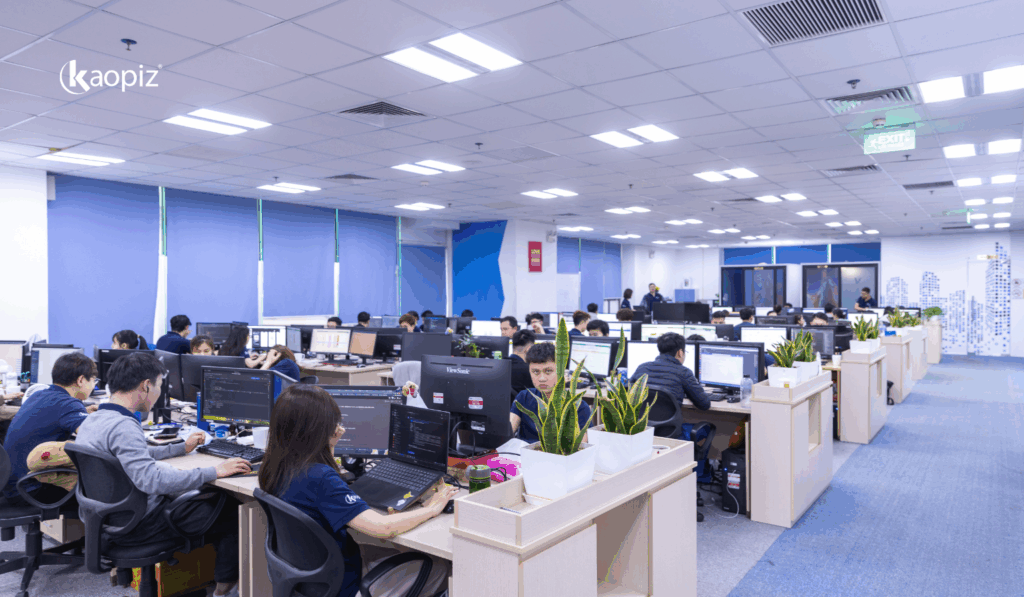
What makes Kaopiz stand out as one of the trusted IT outsourcing companies in Australia:
- 1,000+ Projects Delivered Across Global Markets: Kaopiz has successfully delivered over 1,000 projects for clients across Australia, Singapore, Japan, and the US. This experience enables us to recommend outsourcing strategies based on real delivery outcomes rather than generic best practices.
- Nearly 1,000 Engineers with Diverse Technical Expertise: Our engineering team covers AI, cloud, web and mobile development, cybersecurity, QA, and enterprise software. Whether you need a specialized team or end-to-end delivery, we provide the right expertise at the right stage of your product journey.
- Vietnam Nearshore Advantage for Australian Businesses: With only a 2-4 hour timezone difference from Sydney and Melbourne, Kaopiz enables real-time collaboration without the coordination delays common in traditional offshore models. Teams work in sync, accelerating feedback loops and improving sprint efficiency.
- Flexible Engagement Models Built Around Your Needs: From IT Staff Augmentation and Dedicated Teams to ODC, Kaopiz offers multiple engagement models that evolve with your business. We help clients choose the model that balances speed, control, and long-term scalability.
- Transparent Delivery and Enterprise-Grade Security: Every engagement comes with clear scope definition, itemized pricing, and internationally recognized security standards such as ISO 27001 and ISO 9001. We believe trust is built through transparency, not promises.
If you are evaluating when to outsource IT services or exploring the right outsourcing model for your business, Kaopiz is ready to help you make that decision with confidence through practical advice, transparent delivery, and a partnership designed for long-term growth.
Conclusion
Knowing when to outsource IT services is not about finding a universal rule. It is about understanding your organization’s stage of growth, internal capabilities, and the trade-offs between speed, control, and expertise. For some businesses, outsourcing begins with IT support or cybersecurity. For others, it becomes a strategic way to accelerate AI adoption, cloud transformation, or product development.
The Australian market is changing rapidly. Rising talent costs, persistent skill shortages, and compressed delivery timelines mean that relying solely on in-house teams is no longer the default option it once was. The most successful companies are not asking whether outsourcing is good or bad, they are asking which capabilities to keep in-house, which to outsource, and how to combine both models effectively.
Ultimately, outsourcing is neither a shortcut nor a cost-cutting tactic. Done right, it is a strategic lever that helps businesses access specialized talent, scale faster, and stay focused on what truly drives competitive advantage. The key is choosing the right time, the right model, and the right partner to support your long-term vision.
FAQs
- When Should a Business Outsource IT Services?
- There is no universal answer, but the best time to outsource IT services is usually when internal teams are overloaded, technology costs become unpredictable, or the business needs specialized expertise that is difficult to hire locally. Outsourcing is most effective when it enables the company to focus on strategic priorities rather than routine operations.
- What IT Services Are Most Commonly Outsourced?
- Businesses often start by outsourcing functions that require specialized skills or continuous support. Common examples include IT help desk services, cybersecurity, cloud infrastructure management, software development, QA testing, and AI or data engineering projects. The right starting point depends on where outsourcing can create the greatest business impact.
- Is IT Outsourcing Cheaper Than Hiring an In-House Team?
- In many cases, yes. Outsourcing eliminates recruitment costs, employee benefits, training expenses, and infrastructure investments associated with maintaining a full in-house team. More importantly, it gives businesses access to experienced talent and scalable resources without long-term hiring commitments.
- Is IT Outsourcing Secure for Australian Businesses?
- Yes, as long as businesses choose vendors with strong security practices and internationally recognized certifications such as ISO 27001 or SOC 2. It is also important to establish clear agreements on data protection, intellectual property, and compliance requirements to ensure that outsourced operations align with Australian regulations and industry standards.
- Should Startups and SMEs Outsource IT Services?
- Absolutely. Outsourcing allows startups and SMEs to access experienced talent, accelerate product development, and scale technology capabilities without building large internal teams from day one. Many successful businesses use outsourcing strategically, keeping core competencies in-house while relying on external partners for specialized or operational functions.
Author

Lucie Tran
Head of Growth of Kaopiz Global
Table of Contents
Don’t miss what’s next!
Thank you! Your form has been submitted successfully.