
AI in Real Estate Development: How Singapore’s Most Competitive Developers Are Pulling Ahead in 2026
In a conversation with a Singapore-based property developer last year, a senior project director made a remark that stuck: “We are not losing to our competitors on land. We are losing on data.” At the time, his firm was still relying on manually compiled demographic reports and broker intuition to validate site acquisitions. Their competitor had already deployed an AI-driven feasibility platform and was shortlisting sites in days, not months.
That gap is widening fast. Across Singapore’s property market, one of the most competitive and data-dense in Southeast Asia, AI in real estate development has moved from innovation showcase to operational necessity. The developers who adopted early are now compressing project timelines, reducing construction risk, and converting prospects at significantly higher rates.
This guide cuts through the hype and delivers a practical, data-backed breakdown of how AI transforms every stage of real estate development, from site selection and generative design to smart construction management and AI-powered leasing. More importantly, it addresses the concerns that prevent many C-level and IT leaders from moving forward: ROI clarity, integration complexity, and implementation risk.
Key Takeaways
- The global AI in real estate market is projected to reach $41.5 billion by 2033, growing from $2.9 billion in 2023, at a 30.5% CAGR.
- McKinsey estimates generative AI could generate $110–180 billion or more in value for the real estate industry; companies already report 10%+ gains in net operating income.
- Singapore’s Real Estate Industry Transformation Map (ITM) 2025 makes it the most policy-supported AI real estate market in Southeast Asia.
- AI delivers measurable ROI across six development stages: site selection, feasibility, design, construction, risk management, and marketing.
- The primary risk is not deploying AI — it is deploying it without a clear data strategy, integration plan, and vendor accountability framework.
What Is AI in Real Estate Development? Moving Beyond the Buzzword
AI in real estate development refers to the application of machine learning, predictive analytics, computer vision, natural language processing, and generative AI across the full property development lifecycle, from land acquisition analysis through to post-occupancy management. Understanding what it is and why 2026 represents a critical inflection point is the essential starting position for any strategic decision.
For years, AI in real estate was discussed more than deployed. That is changing decisively. According to PwC’s Emerging Trends in Real Estate 2026, AI is no longer experimental; it is “gradually becoming a practical driver of efficiency and performance.” Companies that ran AI pilots in 2023 are now deploying in production.

The global AI in real estate market was valued at $2.9 billion in 2023 and is forecast to reach $41.5 billion by 2033, a 30.5% CAGR that reflects accelerating institutional commitment, not speculative enthusiasm. For Singapore developers, the urgency is compounded by a government-mandated digital transformation timeline under the Real Estate ITM 2025.
AI in real estate development is distinct from the broader PropTech category. PropTech traditionally covers digital transaction platforms, listing portals, and CRM tools. AI specifically addresses the core technical and financial challenges of creating property assets: identifying the right opportunity with predictive precision, designing efficiently with generative tools, building accurately with real-time monitoring, and mitigating investment risk before capital is deployed.
How Singapore Developers Apply AI Across the Development Lifecycle
AI in real estate development delivers value at every stage of the development lifecycle, but the nature and measurability of that value differ significantly between phases. The table below provides a quick reference before the detailed breakdowns.
| Development Stage | AI Application | Key Benefit | Time / Cost Impact |
|---|---|---|---|
| Site Selection & Feasibility | Predictive analytics, zoning AI, demographic modeling | Shortlist high-potential sites in days vs. months | 60–75% reduction in analysis time |
| Design & Planning | Generative AI floor plan tools, spatial programming | Rapid iterative design aligned with zoning & cost models | 40–50% faster design iteration |
| Construction Management | IoT monitoring, ML defect detection, site robotics | Real-time quality control & schedule optimization | 20–30% reduction in rework costs |
| Risk & Finance | AI cost validation, demand forecasting, scenario modeling | Accurate pre-capital deployment assumptions | Significant reduction in cost overruns |
| Marketing & Leasing | AI chatbots, virtual tour automation, lead scoring | 24/7 prospect engagement, higher pre-leasing rates | 35–50% faster lead response |
| Asset Management | Predictive maintenance, smart building AI, energy optimization | Lower opex, higher tenant retention | 15–25% reduction in maintenance costs |
Site Selection and Feasibility: The Fastest ROI for AI in Real Estate
Site selection has historically been judgment-intensive, driven by broker relationships, local knowledge, and intuition. AI grounds that judgment in data at a scale no analyst team can match.
Modern AI platforms simultaneously analyse thousands of variables: zoning regulations, demographic trends, environmental risk layers, competing supply pipelines, transport infrastructure, and urban growth models derived from satellite and mobile data. What traditionally took six to eight weeks now takes two to three days.
For Singapore developers operating in a constrained land market, this precision is particularly valuable: AI models surface micro-opportunities such as mixed-use rezoning corridors or underutilised industrial parcels, faster than any traditional research process. Before capital is committed, AI also validates assumptions about construction costs and market demand. According to McKinsey, this pre-deployment risk validation is where AI delivers some of its most significant ROI.
Generative AI for Design and Planning: From Brief to Optimised Space
Traditional design iteration, produce a concept, check zoning compliance, revise for cost, repeat, takes weeks per cycle. Generative AI platforms can generate hundreds of spatial configurations in hours, each automatically scored against the developer’s financial model.

The result: architects shift from producing options to curating and refining AI-generated options, improving both speed and quality. Designs optimised by generative AI tend to be more compliant at the submission stage because zoning constraints are built into the generation logic.
For Singapore’s large-scale mixed-use developments, which are increasingly common in URA masterplan areas, generative design also optimises the relationship between commercial, residential, and amenity spaces in ways traditional spatial programming rarely achieves.
AI-Powered Construction Efficiency: Smarter Sites, Fewer Surprises
AI applications in construction span four interconnected areas:
- Schedule optimization: ML models trained on historical project data produce construction schedules that account for weather risk, subcontractor performance patterns, material lead times, and inspection cycles, and update in real time as conditions change.
- Supply chain coordination: AI platforms match procurement needs against supplier availability and lead times, reducing the material shortfalls that drive schedule slippage.
- Real-time quality control: Computer vision systems connected to site cameras detect defects and deviations from plan within hours of occurrence, not at milestone inspections.
- Safety monitoring: AI flags proximity violations, missing PPE, and site hazards continuously, reducing incident rates.
Kaopiz’s own work in construction technology for Singapore firms has demonstrated how AI-powered site monitoring can be smart, efficient and precise.
Risk Mitigation and AI-Driven Investment Decisions
Morgan Stanley’s 2025 AI in real estate research identifies risk quantification as one of AI’s most consequential contributions to development finance. AI risk platforms model multiple demand scenarios, stress-test assumptions against interest rate movements, validate absorption projections using live comparable data, and flag environmental or geotechnical risks that human due diligence misses.
The practical impact is that capital is deployed with significantly tighter assumptions and fewer post-commitment surprises on cost and demand. For Singapore institutional developers and REITs operating under MAS disclosure frameworks, this validation capability also supports more defensible board presentations and investor reporting.
AI in Marketing, Leasing, and Sales: The Conversion Layer
AI-powered chatbot and virtual assistant platforms manage 24/7 client inquiries, deliver instant property information, schedule viewings, and facilitate virtual tour access without human intervention. Lead scoring algorithms rank prospects by conversion probability based on engagement behaviour, financial indicators, and search pattern data — allowing sales teams to focus on the highest-value opportunities.
For mixed-use Singapore developments where buyers include regional investors who cannot attend in-person viewings, AI virtual tour platforms and instant response capability directly impact pre-launch take-up rates. AI integration principles apply directly to residential and commercial leasing: speed, personalization, and 24/7 availability are the three factors that move the conversion needle most consistently.
What Are the Key AI in Real Estate Development Trends Shaping 2026?
The AI real estate landscape is not static. Four macro trends are redefining how developers, investors, and technology providers approach AI in real estate development. Understanding these trends determines which investments will compound in value and which will become obsolete.
From Hype to Operations: AI Becomes Core Infrastructure
PwC’s Emerging Trends in Real Estate 2026 is direct: “AI is no longer just an experimental tool; it is gradually becoming a practical driver of efficiency and performance.” Companies that were running AI pilots two years ago are now scaling production deployments.

For Singapore developers, this shift is reinforced by government policy: the BCA’s Integrated Digital Delivery (IDD) framework mandates digital collaboration tools across the construction value chain, creating the data infrastructure that AI applications depend on. Developers who invested in IDD-compliant systems in 2023–2024 are now positioned to layer AI capability on top of that foundation at significantly lower marginal cost.
Data Centers: How AI Is Creating New Real Estate Asset Classes
The AI boom is not just changing how real estate is developed; it is creating an entirely new category of asset. Data centers and high-specification logistics facilities are among the fastest-growing segments in Southeast Asia, driven by the explosive demand for AI computing infrastructure.
As reported in Fortune, major property developers, including Mah Sing Group are actively repositioning toward AI data center development, with the company’s Deputy CEO Lionel Leong citing data centers as a key growth pillar.
Singapore’s regulatory clarity, power grid reliability, and connectivity infrastructure make it the preferred data center location for regional hyperscalers. This trend represents a direct intersection between AI adoption and real estate development opportunities that forward-thinking Singapore developers are already capitalizing on.
Smart Home and Building Integration: From Feature to Standard
Integrate AI-enabled building management systems as standard specifications, not premium features:
- Energy optimization: AI adjusts HVAC and lighting based on occupancy patterns and external weather data, reducing energy consumption by 15–25%.
- Predictive maintenance: IoT sensors flag equipment degradation before failure, shifting maintenance from reactive to scheduled and reducing emergency repair costs.
- Access and security: AI-powered access control and threat detection systems replace static security infrastructure.
- Tenant experience: AI-driven concierge platforms manage service requests, community communications, and amenity bookings.
For developers, smart building AI translates into higher asset values, better ESG ratings, and improved tenant retention, three factors that directly affect long-term development project value.
Workforce Transformation: Human + AI, Not Human vs. AI
Both Morgan Stanley and PwC highlight in their 2025–2026 research that AI in real estate is transforming roles, not eliminating them. Routine analysis tasks, such as market comps, schedule tracking, lead qualification, and maintenance scheduling, are being automated. Professional roles are evolving toward interpretation, strategy, and relationship management.
For Singapore developers, this means AI investment is not a headcount reduction strategy; it is a capability amplification strategy. The analogy to other sectors is instructive: just as AI in manufacturing automates repetitive inspection and quality tasks while creating new roles for data analysts and process engineers, real estate AI creates higher-value work for the professionals who understand how to use it.
AI vs. Traditional Real Estate Development: A Practical Comparison
For technology leaders building an internal business case for AI investment, the following comparison captures the key operational differences that translate into measurable outcomes. Each dimension maps directly to a budget line or a competitive risk factor.
| Dimension | Traditional Approach | AI-Powered Approach |
|---|---|---|
| Site selection timeline | 4–8 weeks of manual analysis | 2–5 days with AI platform |
| Feasibility validation | Subjective, experience-driven | Data-validated, scenario-modelled |
| Design iterations | 3–5 weeks per major iteration | Hours with generative AI tools |
| Construction monitoring | Periodic site inspections | Real-time continuous monitoring |
| Lead response time | 24–48 hours average | Instant (24/7 AI automation) |
| Risk identification | Post-commitment discovery | Pre-capital deployment validation |
| Market demand accuracy | Broker estimates + historical data | Live transaction + ML forecasting |
| ESG reporting | Manual data collection | Automated IoT-driven dashboards |
What Are the Biggest Challenges of Implementing AI in Real Estate Development?
For all its potential, AI in real estate development is not a plug-and-play transformation. The developers and IT leaders who have tried and fallen short share consistent points of failure. Understanding these upfront is as strategically important as understanding the upside.
Data Quality Is the Hidden Gatekeeper
AI systems are only as reliable as the data they run on. Most real estate organizations hold valuable data, project financials, tenant behavior, maintenance histories, and construction records, but in formats that are inconsistent, siloed across departments, or simply not digitized. Before any AI application can deliver value, a data readiness audit is required.
Common data readiness failures include:
- Project cost data is stored in inconsistent formats across different spreadsheet systems
- Maintenance and inspection records held in paper-based or non-searchable formats
- Tenant transaction history is fragmented across multiple CRM platforms with no unified identifier
- No standardized data schema connecting design, construction, and operational data
This is the step most implementation plans underestimate, and it is typically where projects stall. A data readiness assessment should be the first deliverable in any AI deployment roadmap.
Integration Complexity With Legacy Systems
Property development organizations, particularly larger groups with established ERP, project management, and financial reporting systems, face significant integration complexity when deploying AI. AI platforms that cannot connect to existing data infrastructure create parallel workflows rather than replacing them, defeating the efficiency objective.

The engagement model determines whether integration is properly resourced or left as an afterthought. Start with AI applications that work on data outputs from existing systems before building deeper real-time integrations. This approach delivers faster time-to-value while the integration architecture matures.
Choosing the Wrong Platform in an Immature Vendor Market
The AI vendor market for real estate is fragmented. Platforms that perform well in demonstration environments sometimes fail when confronted with the specific data conditions and regulatory requirements of actual projects. For Singapore developers operating under BCA, URA, and PDPA frameworks, platform evaluation must include:
- PDPA compliance documentation and data residency options (Singapore or compliant offshore)
- BCA IDD compatibility and API integration with approved project management systems
- Reference validation from comparable development organizations in Singapore or comparable regulated markets
- Clear contractual SLAs for data accuracy, system availability, and model performance
Vendor demonstrations are necessary but not sufficient. Reference checking with comparable organizations is consistently the most predictive evaluation method.
Change Management: The Human Factor That Determines AI ROI
Deploying AI tools without investing in change management consistently produces poor outcomes. Development teams that do not trust or understand AI outputs work around them rather than with them.
Successful AI adoption requires parallel investment in three areas: user training tailored to specific roles (project manager, site engineer, sales executive), leadership buy-in that communicates why AI is being adopted and what it changes about how people work, and an internal champion model where nominated individuals own each AI tool and drive adoption.
How to Implement AI in Real Estate Development Without Burning Your Budget
The most common implementation mistake is trying to transform everything simultaneously. Complexity kills momentum. The developers delivering real ROI from AI in 2026 started with one well-defined use case and built outward from proven results. The following five-step framework reflects what works in practice.

- Conduct a data readiness assessment. Audit your existing data: what you have, in what format, how accessible it is, and what cleaning or standardization is needed. This determines which AI applications are immediately deployable and which require data infrastructure investment first.
- Select one high-ROI use case for a 90-day pilot. Site feasibility analysis, construction schedule optimization, and lead response automation are strong first candidates; all have clear before-and-after metrics and manageable integration scope.
- Evaluate platforms against your regulatory environment. For Singapore, this means PDPA compliance documentation, BCA IDD compatibility, and API integration capability with your existing project management and financial systems. Reference check with comparable organizations.
- Identify internal champions and invest in training. Nominate role-specific AI champions, a project manager, a finance analyst, a digital lead. External training accelerates adoption but does not replace internal ownership.
- Scale from measured pilot results. Use 90-day pilot metrics to build the internal business case for expansion. Measurable outcomes from a controlled pilot outperform vendor ROI projections as persuasion tools for boards and investment committees.
From experience working alongside property technology teams in Southeast Asia: the projects that stall are not those with insufficient ambition; they are the ones where ambition ran ahead of data infrastructure. A modest, well-executed 90-day pilot with clear metrics consistently outperforms a six-month strategy exercise that never reaches implementation.
Why Leading Property Developers Partner With Kaopiz to Build AI Real Estate Solutions
Deploying AI in real estate development is a software engineering challenge as much as a strategic one. Property organizations need AI outsourcing development partners who understand both the domain complexity of real estate and the technical depth required to build, integrate, and scale AI applications in production environments.
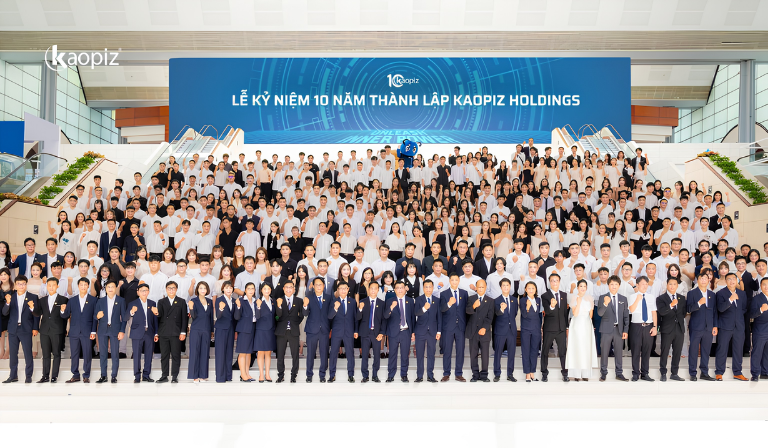
With a team of 1,000+ engineers and experience delivering over 1,000 projects for 500+ clients worldwide, Kaopiz helps real estate developers and property technology companies design and deploy AI-powered systems tailored to every stage of the development lifecycle, from site acquisition through to asset management.
Kaopiz supports real estate developers and PropTech companies in Singapore with solutions such as:
- AI-powered site analysis platforms that process zoning data, demographic trends, and market signals to shortlist high-potential development opportunities in days
- Generative design integration tools that connect AI-generated spatial configurations with BIM, cost models, and zoning compliance workflows
- Smart construction monitoring systems using computer vision and IoT to detect quality defects, track project progress, and flag safety risks in real time
- Predictive analytics platforms that forecast construction delays, cost overruns, and market demand shifts before capital is committed
- AI-driven leasing and sales automation tools, including lead scoring, 24/7 chatbot platforms, and virtual tour systems that improve pre-launch conversion rates
- Custom AI applications and enterprise software designed for complex, multi-site development environments with PDPA and BCA IDD compliance built in
By combining deep engineering capabilities with practical expertise in AI for the built environment, Kaopiz enables real estate developers to accelerate digital transformation, reduce project risk, and build more efficient, data-driven operations across Singapore and the wider Southeast Asian region.
Conclusion
The AI in the real estate market is projected to grow from 2.9 billion to $41.5 billion by 2033. It reflects rapid institutional adoption rather than gradual experimentation. For Singapore developers, strong digital infrastructure and rising AI adoption among competitors mean the first-mover advantage is shrinking quickly.
The good news is that AI in real estate development does not require a full-scale transformation to create impact. A focused use case, supported by the right data foundation and technology partner, can already deliver measurable business value. The developers leading in 2026 will not simply be the biggest, but the ones who moved early, executed strategically, and adopted AI with precision.
FAQs
- What Is AI in Real Estate Development?
- AI in real estate development refers to the application of machine learning, predictive analytics, generative AI, and computer vision across the property development lifecycle, including site selection, design, construction management, investment risk analysis, and sales automation.
- How Does AI for Real Estate Development Help With Site Selection?
- AI platforms analyse zoning data, demographic trends, environmental risk layers, and competing supply pipelines simultaneously, shortlisting high-potential sites in days. McKinsey’s research identifies this pre-capital validation as one of AI’s highest-ROI applications in real estate.
- What Are the Main Challenges of AI in Real Estate?
- The primary challenges are data quality and readiness, integration complexity with legacy systems, platform selection in an immature vendor market, and change management. Data infrastructure investment is the prerequisite most organisations underestimate.
- How Should a Real Estate Developer Start With AI Implementation?
- Begin with a data readiness assessment, identify one high-ROI use case for a 90-day pilot, evaluate platforms against PDPA and BCA compliance requirements, build internal champions, and scale from measured results. Start narrow, prove value, then expand.
- How Much Does AI in Real Estate Development Cost, and What ROI Can Developers Expect?
- Costs vary significantly depending on scope, from focused point solutions for a single use case to enterprise-wide platforms. However, ROI is measurable at every stage: AI site selection reduces analysis time by 60–75%, generative design tools accelerate iteration by 40–50%, and AI-driven leasing automation delivers 35–50% faster lead response. The most cost-effective approach is a scoped 90-day pilot on a single high-ROI use case, which builds the internal business case for broader investment without committing full transformation budgets upfront.
Author

Leo Nguyen
Chief Executive Officer of Kaopiz Global
Table of Contents
Don’t miss what’s next!
Thank you! Your form has been submitted successfully.