
Dedicated Team vs Managed Services: How Australian Technology Leaders Should Choose the Right Delivery Model (A 2026 Guide)
As Australian businesses accelerate digital transformation and AI adoption while facing an ongoing shortage of technology talent, choosing the right outsourcing model has become a strategic business decision. One of the most common questions I hear from Australian technology leaders is whether a Dedicated Team vs Managed Services model is the better fit for their organization.
Although these two models are often compared, they are designed to solve different problems. A Dedicated Team extends your engineering capability and supports long-term product development. Managed Services transfer operational responsibility to a provider that is measured against defined outcomes rather than hours worked.
In this guide, I compare Dedicated Team vs Managed Services from the perspective of the CTOs, engineering managers, and product leaders we work with across Singapore, Japan, and Australia, covering ownership, governance, scalability, cost, and the business outcomes each model is actually built to deliver.
Key Takeaways
- A Dedicated Team gives you ownership of the roadmap, backlog, and delivery decisions, Managed Services shifts that ownership to the provider under a defined service scope.
- Dedicated Team pricing is resource-based (rates per role or team composition); Managed Services pricing is scope-based (SLA tier, coverage hours, response times).
- Choose a Dedicated Team for continuous product development, AI initiatives, and roadmap flexibility. Choose Managed Services for operational stability, cloud/infrastructure support, and SLA-based accountability.
- Across the delivery lifecycle, Dedicated Teams fit discovery-to-optimization work best; Managed Services fit deployment, maintenance, and support work best.
- Most high-performing Australian organizations don’t choose one model exclusively — they run a hybrid, using a Dedicated Team for product innovation and Managed Services for operational continuity.
Why Dedicated Team vs Managed Services Matters More for Australian Businesses
As Australian businesses accelerate digital transformation and AI adoption, technology leaders face growing pressure to deliver faster while managing an ongoing engineering talent shortage. Dedicated Team vs Managed Services is no longer just an outsourcing question, it’s about choosing the operating model that best supports innovation, scalability, and long-term business goals.

- Australia’s demand for software engineers, cloud specialists, AI professionals, and cybersecurity experts continues to outpace local recruitment.
- Outsourcing has shifted from a pure cost-saving lever to a way of accessing specialized capability and reducing hiring constraints.
- Modern engineering teams juggle product work, cloud infrastructure, and operational reliability, each needing a different level of ownership and governance.
- No single model fits every objective; matching the model to the outcome (innovation vs. operational excellence) is the real decision.
What Are the Key Differences Between Dedicated Team vs Managed Services?
As Australian businesses evaluate different IT outsourcing models, understanding the differences between Dedicated Team vs Managed Services becomes essential for choosing the right delivery approach. While both models provide access to external expertise, they differ significantly in ownership, management responsibility, pricing structure, and long-term business outcomes.
Deloitte’s perspective on outsourcing as a strategic advantage also reinforces why modern sourcing decisions should be evaluated through capability, governance, scalability, and outcome-based value rather than cost alone.
Delivery Ownership and Accountability
The biggest difference between Dedicated Team vs Managed Services is ownership. A Dedicated Team works as an extension of your internal workforce, meaning your business keeps control over the product roadmap, priorities, backlog, and delivery decisions.
Managed Services shift more responsibility to the provider. Instead of managing individual tasks or team members, your business delegates a defined function, such as IT operations, cloud management, help desk support, or application maintenance, to a third-party provider that is accountable for service outcomes.
For Australian businesses, this transfer of responsibility also requires clear supplier governance and a documented shared responsibility model, particularly when external providers manage critical IT services, applications, or cloud environments.
Team Management and Technical Governance
Dedicated Team governance is typically client-led. Australian technology leaders remain actively involved in sprint planning, roadmap alignment, backlog refinement, architecture decisions, and delivery reviews. As a result, this model gives businesses stronger control over product direction and engineering priorities.
Managed Services governance is service-led. The provider manages the people, tools, workflows, escalation paths, and operational processes required to deliver the agreed service. For this reason, Managed Services vs. Dedicated Team is ultimately a decision between direct delivery control and provider-owned execution.
Pricing Structure and Cost Control
Dedicated Team pricing is usually resource-based. Businesses pay for dedicated engineering capacity, often structured around monthly rates per role, seniority level, or team composition. This model provides visibility into team capability and supports long-term capacity planning.
Managed Services pricing is usually based on service scope and SLA commitments. Costs are linked to coverage hours, support levels, response times, incident management, system complexity, and service continuity requirements. In commercial terms, this model is often more suitable for predictable operational budgeting.
Scalability, Flexibility, and Business Agility
Dedicated Team scalability supports product development and innovation. Businesses can expand technical capacity, add specialist roles, adjust sprint priorities, and respond to changing product requirements without rebuilding the internal team from scratch.
Managed Services scalability is centred on service coverage and operational maturity. Companies can extend support hours, add more systems under management, or increase SLA requirements. However, major changes usually require a revised service scope, making this one of the clearest Managed Services vs. dedicated development team differences.
Why the Difference Is Really About Business Outcomes
Dedicated Development Team vs Managed Services should be evaluated based on the business outcome each model is designed to support. A Dedicated Team is best suited for building, improving, and scaling digital products where roadmap control and engineering flexibility matter.
Managed Services, meanwhile, are better suited for maintaining, operating, and optimizing business-critical technology functions where reliability, service continuity, and reduced management overhead are the priority.
For Australian businesses, the decision should not be framed around which model is cheaper. The stronger question is which model aligns better with the target outcome: faster product delivery, stronger engineering capability, operational resilience, or service-level accountability.
When Does a Dedicated Team Create More Value?
A Dedicated Team creates more value when software development is not a one-off task but a long-term capability. For Australian businesses, this model is especially relevant when product ownership, engineering scalability, and delivery flexibility are important to business growth.
Unlike Managed Services, which focus on operating defined technology functions, a Dedicated Team supports continuous development, roadmap execution, and product innovation. This makes the Dedicated Development Team vs Managed Services decision particularly important for organizations that need to build, improve, and scale digital products over time.
Building Long-Term Digital Products
Product engineering continuity is one of the strongest advantages of a Dedicated Team. Digital products require ongoing development beyond the initial launch, including feature enhancement, performance optimization, user experience improvement, and technical maintenance.
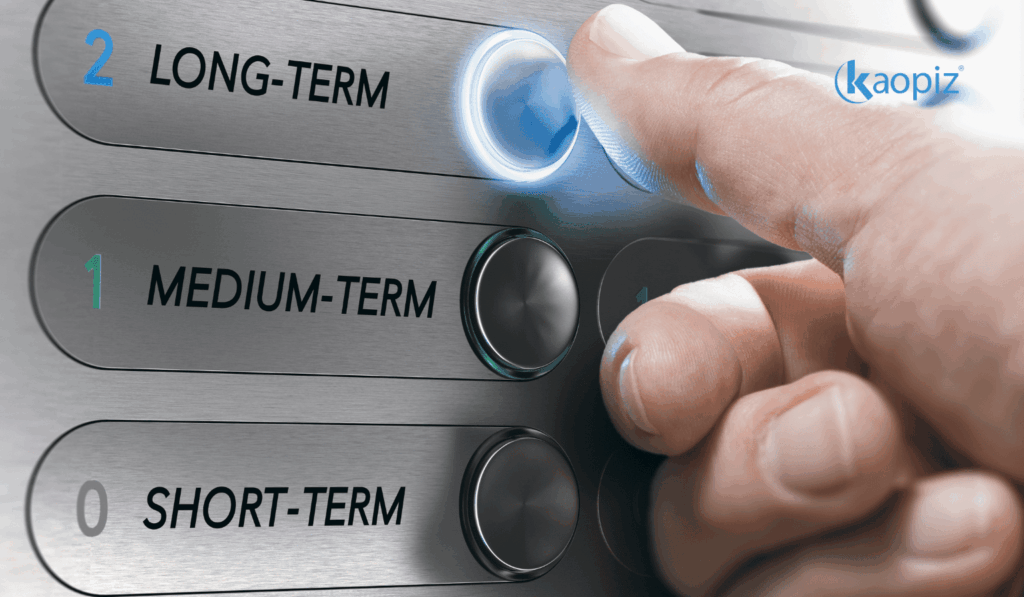
A dedicated development team builds deeper knowledge of the product, business logic, technical architecture, and customer needs over time. As a result, delivery becomes more consistent and better aligned with long-term business objectives.
Scaling Internal Engineering Capability
Engineering capacity is often difficult to scale through local recruitment alone. A Dedicated Team allows Australian businesses to extend their internal capability with software engineers, QA specialists, cloud engineers, UI/UX designers, business analysts, or AI developers.
Team scalability also gives businesses more control over delivery planning. The team size, skill mix, and development capacity can be adjusted based on roadmap priorities, product complexity, and changing business requirements.
Accelerating AI and Product Innovation
AI and product innovation require experimentation, iteration, and close collaboration between business and technical teams. A Dedicated Team provides the flexibility needed to test ideas, validate use cases, refine features, and move from prototype to production.
Innovation speed is stronger when the business retains control over roadmap decisions and technical priorities. This makes a Dedicated Team more suitable for AI solutions, automation platforms, data-driven products, and customer-facing digital applications.
Australia’s Department of Industry, Science and Resources identifies artificial intelligence, robotics, quantum, and other critical technologies as priorities for strengthening national digital capability. For businesses investing in AI-enabled products or automation platforms, a Dedicated Team can provide the engineering continuity needed to move from experimentation to scalable product delivery.
Maintaining Full Control Over Delivery
Delivery control is a key reason businesses choose a Dedicated Team. Product leaders, CTOs, and engineering managers remain directly involved in backlog prioritization, sprint planning, architecture decisions, release management, and quality standards.
This level of control is especially important when the product is strategic, commercially sensitive, or closely connected to customer experience. In this context, Managed Services vs Dedicated development team is not only a delivery choice but a decision about how much ownership the business wants to retain.
When Are Managed Services the Better Strategic Choice?
Managed Services become the better strategic choice when the business priority is operational stability rather than continuous product development. For Australian organizations managing cloud infrastructure, cybersecurity, application support, or IT service operations, this model provides defined accountability, structured processes, and measurable service performance.
Unlike a Dedicated Team, which supports roadmap execution and engineering scalability, Managed Services are designed to maintain, operate, and optimize business-critical technology functions. This makes the Managed Services vs Dedicated Team decision especially important when reliability, service continuity, and reduced operational burden are key priorities.
Running Business-Critical Operations
Operational continuity is one of the strongest reasons to choose Managed Services. Business-critical functions such as cloud operations, infrastructure monitoring, cybersecurity support, help desk services, and application maintenance require consistent execution, defined escalation paths, and ongoing service supervision.

Managed Services allow businesses to delegate these responsibilities to a provider with the processes, tools, and technical capability to manage day-to-day operations. As a result, internal teams can reduce operational pressure while maintaining stable performance across essential technology environments.
Improving Service Reliability Through SLAs
Service-level accountability is a core advantage of Managed Services. Instead of measuring success only by task completion, businesses can evaluate performance through agreed service-level agreements, such as uptime, response time, resolution time, support availability, and incident handling.
SLA-based governance gives Australian businesses clearer visibility into service performance and operational risk. Managed Services focus on measurable reliability, while Dedicated Teams focus more on product delivery, development velocity, and roadmap progress, one of the key Managed Services vs. Dedicated Team differences.
Reducing Operational Overhead
Operational overhead can increase quickly when internal teams are responsible for both innovation and day-to-day technology management. Routine support, system monitoring, incident response, infrastructure maintenance, and user requests can consume significant time from internal engineering and IT teams.
Managed Services reduce this burden by transferring defined operational responsibilities to an external provider. This creates a more efficient operating structure, especially for businesses that need dependable IT performance but do not want to expand internal headcount for every support or maintenance function.
Letting Internal Teams Focus on Innovation
Managed Services give internal teams more capacity to work on product innovation, digital transformation, AI adoption, process automation, and customer-facing improvements.
For many Australian businesses, this is where Dedicated Team vs Managed Services becomes a strategic operating model decision. Managed Services help stabilize and optimize existing technology functions, while internal teams or Dedicated Teams can focus on building new capabilities that create long-term business value.
Dedicated Team vs Managed Services Across the Software Delivery Lifecycle
Comparing Dedicated Team vs Managed Services across the software delivery lifecycle helps Australian businesses understand where each model creates the most value. It also clarifies when a dedicated development team should drive product growth and when Managed Services should support stable, reliable operations.
| Software Delivery Stage | Dedicated Team | Managed Services |
|---|---|---|
| Discovery & Planning | Best when product direction, requirements, and roadmap priorities are still evolving | Best when service scope, operational requirements, and support needs are already defined |
| Product Development | Supports continuous feature delivery, architecture decisions, and roadmap execution | Less suitable when frequent product changes or active development are required |
| Deployment & Release | Gives the business stronger control over release planning, technical decisions, and quality standards | Supports stable deployment, operational readiness, and release continuity |
| Maintenance | Works well when the product requires ongoing enhancement, optimization, and technical improvement | Works well when the system requires monitoring, patching, incident handling, and routine support |
| Support | Suitable when product-related issues require engineering involvement and roadmap-level decisions | Suitable when tickets, incidents, and service requests require SLA-based handling |
| Optimization | Best for product innovation, user experience improvement, and long-term business growth | Best for operational efficiency, reliability, and predictable service performance |
Key considerations when comparing models across the software delivery lifecycle:
- Choose a Dedicated Team when your business needs continuous product development, roadmap control, and engineering flexibility.
- Choose Managed Services when your business needs stable operations, SLA-based accountability, and reduced internal workload.
- Choose a hybrid approach when product innovation and operational reliability need to be managed at the same time.
Why High-Performing Australian Organizations Combine Both Models
A Dedicated Team can drive product development, AI initiatives, and long-term roadmap execution, while Managed Services can maintain system reliability, service continuity, and operational performance. This hybrid approach allows businesses to separate product innovation from day-to-day technology operations without losing control over strategic outcomes.
| Business Need | Recommended Model | Why It Works |
|---|---|---|
| Building a new digital product or platform | Dedicated Team | Provides dedicated engineering capacity, roadmap control, and delivery flexibility |
| Maintaining cloud infrastructure or IT operations | Managed Services | Provides SLA-based accountability, monitoring, and operational continuity |
| Scaling AI, automation, or data initiatives | Dedicated Team | Supports experimentation, iteration, and close collaboration with internal stakeholders |
| Reducing internal IT workload | Managed Services | Transfers routine operations, support, and service management to the provider |
| Managing both product growth and system reliability | Hybrid Model | Dedicated Team drives product innovation, while Managed Services maintain operational stability |
| Supporting long-term digital transformation | Hybrid Model | Combines scalable engineering capability with structured service governance |
Many high-performing Australian organizations no longer view Dedicated Team vs Managed Services as an either-or decision. Instead, they combine both models to balance product innovation with operational excellence, using each where it creates the greatest business value. The key is finding a technology partner that can design and deliver the right engagement model for your business objectives rather than offering a one-size-fits-all outsourcing solution.
How Kaopiz Helps Australian Businesses Build the Right Delivery Model
With 12+ years of software outsourcing experience, nearly 1,000 engineers, and 1,000+ successful projects delivered for 500+ clients worldwide, Kaopiz helps Australian businesses build delivery models that balance product innovation, engineering scalability, operational reliability, and long-term business value.

As one of the trusted IT outsourcing companies in Australia, Kaopiz supports businesses through:
- Dedicated development teams for long-term product development, AI solutions, enterprise software, mobile applications, cloud platforms, and digital transformation initiatives.
- Managed services capabilities that support ongoing application maintenance, cloud operations, infrastructure management, monitoring, technical support, and service continuity.
- Hybrid delivery model design, helping businesses separate product development from operational management while maintaining clear ownership, governance, and accountability.
- Structured delivery governance, including project managers, delivery reporting, sprint planning, quality assurance, risk management, and transparent communication throughout the engagement.
- Scalable cross-functional teams with expertise in software engineering, AI, cloud, mobile development, QA, business analysis, and enterprise system integration.
- Flexible engagement planning, allowing Australian businesses to choose the right mix of Dedicated Team, Managed Services, or hybrid delivery based on product roadmap, internal capability, operational maturity, and budget priorities.
If you are evaluating Managed Services vs Dedicated Team for your next software initiative, Kaopiz can help you assess delivery ownership, define the right team structure, and build an engagement model that supports both innovation and operational stability.
FAQs
- What Is the Difference Between Dedicated Team vs Managed Services?
- A Dedicated Team extends your internal engineering capability and gives your business control over product roadmap, backlog, and delivery priorities. Managed Services transfer responsibility for a defined technology function to a provider, usually measured through service scope, SLAs, and operational performance.
- When Should a Business Choose a Dedicated Team?
- A Dedicated Team is best suited for long-term product development, AI initiatives, custom software, mobile applications, and enterprise platforms where continuous development, roadmap flexibility, and technical ownership are important.
- When Are Managed Services the Better Choice?
- Managed Services are more suitable when the business needs stable operations, application maintenance, cloud management, cybersecurity support, help desk services, or infrastructure monitoring with clear service-level accountability.
- How Do Managed Services vs. Dedicated Team Pricing Models Differ?
- Dedicated Team pricing is usually resource-based, often structured around monthly rates per role or team composition. Managed Services pricing is typically based on service scope, support coverage, SLA requirements, response times, and operational complexity.
- Can Australian Businesses Combine Dedicated Team and Managed Services?
- Yes. Many Australian businesses use a hybrid model where a Dedicated Team focuses on product development and innovation, while Managed Services handle ongoing operations, support, monitoring, and service continuity. This approach helps balance scalability, flexibility, and operational reliability.
Author

Lucie Tran
Head of Growth of Kaopiz Global
Table of Contents
Don’t miss what’s next!
Thank you! Your form has been submitted successfully.