
How Kaopiz Built a Digital Muscle Health Platform That’s Transforming MedTech Care
I’ve seen healthcare and wellness providers successfully manage growing programs with a small team for a while. The challenge comes when participant numbers increase, services expand, and administrative processes become too complex to handle through disconnected tools and manual workflows.
This muscle health platform case study explores how Kaopiz built a digital platform for a Singapore-based MedTech company. We walk through the operational challenges, the web and mobile solutions we developed, and how a unified digital platform helped create a more scalable experience for both administrators and program participants.
Key Takeaways
- Client: Singapore-based MedTech company specializing in muscle health management and preventive healthcare
- Scope: Development of a web-based management platform and mobile application for healthcare operators and program participants
- Technology Stack: ReactJS, Flutter, and Python
- Key Features: Appointment scheduling, participant management, health assessments, payment administration, progress tracking, and operational reporting
- Administrative Efficiency: Reduced manual administrative workload by 42% through workflow automation and centralized management
- Operational Performance: Improved appointment management efficiency by 55% and established 100% centralized reporting across partner centers
- Participant Engagement: Increased participant engagement by 31% through a unified mobile experience
- Scalability: Built a platform capable of supporting approximately 3x greater operational capacity for future growth
The Client: Driving Innovation in Preventive Healthcare Through Muscle Health Management
Our client is a Singapore-based MedTech company specializing in muscle health management and preventive healthcare services. Through a structured program that combines health assessments, treatment plans, and progress monitoring, the company helps participants improve their physical well-being and long-term health outcomes.
As the business expanded, managing appointments, participant records, assessments, and payments became increasingly complex. To support future growth and deliver a more seamless experience, the company needed a centralized digital platform that could connect both operational teams and program participants.
The Challenges: Scaling a Growing Muscle Health Program
As I’ve seen in many healthcare projects, growth often creates challenges that are difficult to solve with manual processes alone. As participant numbers increased and services expanded, the client needed a more efficient way to manage daily operations while maintaining a high-quality experience.
The challenge was not simply digitizing existing workflows. The organization needed a scalable platform capable of connecting participant management, appointments, assessments, payments, and progress tracking into a single ecosystem that could support long-term growth.
Problem 1: Manual Administrative Processes Reduced Operational Efficiency
Many of the client’s day-to-day operations relied on manual workflows. Staff were required to manage participant information, coordinate appointments, process payments, and track program progress across multiple systems, creating unnecessary administrative overhead.
As participant numbers continued to grow, these fragmented processes became increasingly difficult to maintain. The organization needed a more efficient way to centralize operations, reduce repetitive tasks, and allow staff to focus on delivering healthcare services rather than administrative work.
Problem 2: Limited Scalability Across Multiple Partner Centers
The muscle health program was delivered through a growing network of partner centers, each handling participant assessments, appointments, and treatment activities. As the network expanded, maintaining consistent operations and visibility across locations became increasingly challenging.
Without a centralized platform, data was often scattered across different systems and communication channels. This made it difficult for administrators to monitor program performance, coordinate activities between centers, and support future expansion efficiently.
Problem 3: Fragmented User Experience for Program Participants
From the participant’s perspective, managing their healthcare journey was not always seamless. Booking appointments, accessing program information, tracking progress, and managing service packages often involve multiple touchpoints rather than a single, connected experience.
As expectations for digital healthcare services continued to rise, the organization needed a more convenient and engaging way for participants to interact with the program. A unified mobile experience became essential for improving accessibility, engagement, and long-term participation.
Problem 4: Dependence on Third-Party Systems Restricted Flexibility
Several core processes relied on third-party tools that were not specifically designed for the organization’s unique healthcare workflows. While these solutions supported day-to-day operations, they limited the ability to customize features, streamline processes, and adapt to evolving business requirements.
As the muscle health program continued to grow, the organization needed greater control over its digital ecosystem. A custom-built platform offered flexibility to support future service innovations, integrate new capabilities, and scale alongside the business.
Our Solution: A Comprehensive Healthcare Management Platform
Rather than implementing separate tools for different operational needs, Kaopiz developed a unified healthcare management platform that connected administrators, healthcare staff, partner centers, and program participants within a single ecosystem.
The solution consisted of a web-based management platform and a mobile application, designed to streamline daily operations, improve participant engagement, and provide the scalability needed to support the client’s long-term growth strategy.
| Component | Primary Users | Purpose |
|---|---|---|
| Web Platform | Administrators, healthcare staff, partner centers | Manage participants, appointments, assessments, payments, and operational reporting |
| Mobile Application | Program participants | Book appointments, track progress, manage service packages, and access health resources |
| Centralized Database | All stakeholders | Maintain a single source of truth for participant and operational data |
| Reporting & Analytics | Management teams | Monitor program performance and support data-driven decision-making |
Web Application for Operators and Administrators
The web platform was designed to centralize operational workflows and provide healthcare teams with a single system for managing daily activities. By bringing key functions into one interface, the solution reduced administrative complexity and improved visibility across the entire muscle health management program.
Key capabilities included:
- Participant Management: Maintain participant profiles, medical records, and program enrollment information.
- Appointment Scheduling: Coordinate bookings, treatment sessions, and staff availability across partner centers.
- Health Assessment Management: Record assessment results and monitor participant progress over time.
- Payment & Package Administration: Manage service packages, payment records, and transaction history.
- Partner Center Management: Oversee operations across multiple locations through a centralized dashboard.
- Reporting & Analytics: Generate operational reports and gain insights into program performance.
Mobile Application: Enhancing Engagement Throughout the Participant Journey
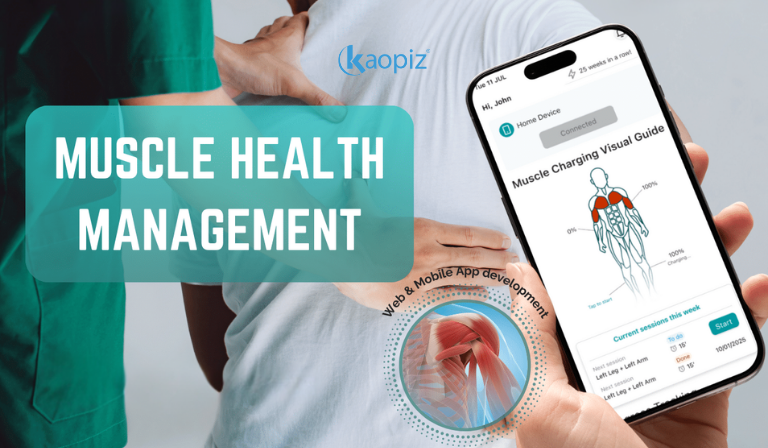
To complement the web platform, Kaopiz developed a mobile application that allowed participants to manage their healthcare journey more conveniently. The app provided direct access to essential services, helping users stay engaged with the program while reducing reliance on manual communication channels.
Key capabilities included:
- Appointment Booking: Schedule, reschedule, and manage appointments directly from a mobile device.
- Progress Tracking: View assessment results and monitor health improvements over time.
- Package Management: Purchase, renew, and manage service packages within the application.
- Health Resources Access: Access program-related information and educational content in one place.
- Notifications & Reminders: Receive appointment reminders, program updates, and important announcements.
- Personal Account Management: Update personal information and manage participant profiles seamlessly.
How Kaopiz Designed and Delivered the Healthcare Platform
Developing a healthcare management platform required more than translating requirements into software features. The solution needed to support complex operational workflows, deliver a seamless experience for participants, and provide a scalable foundation for future service expansion.
To achieve these goals, Kaopiz followed a structured development process that combined business analysis, user-centered design, and iterative development practices. This approach ensured that every feature addressed real operational challenges while remaining flexible enough to support the client’s long-term vision.
Discovery and Healthcare Workflow Analysis
The muscle health platform case study began with a comprehensive discovery phase focused on understanding the client’s business model, operational processes, and participant journey. The team worked closely with stakeholders to identify pain points related to appointment management, participant tracking, assessments, and payment administration.
By mapping existing workflows and evaluating how information moved across different touchpoints, Kaopiz gained a clear understanding of where inefficiencies existed. These insights helped define the platform architecture and establish a development roadmap aligned with both immediate needs and future growth objectives.
User-Centric UX/UI Design
One lesson I’ve learned from healthcare projects is that even powerful functionality can fail if users find the system difficult to navigate. For this reason, usability became a key consideration from the earliest design stages.
Kaopiz designed intuitive interfaces for both administrators and participants, ensuring that common tasks could be completed with minimal effort. The design process focused on simplifying workflows, reducing unnecessary steps, and creating a consistent experience across web and mobile platforms.
Agile Development and Continuous Testing
The platform was developed using an agile methodology, allowing new features to be delivered through iterative development cycles. Regular feedback sessions enabled the team to validate requirements, adjust priorities, and continuously improve the product throughout the project.
Testing was integrated into every stage of development to ensure system reliability and performance. Through continuous quality assurance activities, Kaopiz minimized development risks and delivered a platform capable of supporting the client’s operational requirements at scale.
Technology Stack Behind the Healthcare Management Platform
Selecting the right technology stack was essential to ensuring the platform could deliver a seamless user experience while supporting future growth. Kaopiz chose a modern architecture that balanced performance, scalability, and development efficiency across both web and mobile environments.
ReactJS for Web Administration
The web management platform was built with ReactJS to provide a responsive and intuitive experience for administrators and healthcare staff. Its component-based architecture enabled the development team to create reusable interfaces while maintaining flexibility as new features and workflows were introduced.
ReactJS also supported fast page rendering and smooth interactions, helping operational teams manage participants, appointments, assessments, and reporting activities more efficiently.
Flutter for Cross-Platform Mobile Development
To deliver a consistent experience across iOS and Android devices, Kaopiz selected Flutter for mobile application development. A single codebase allowed the team to accelerate development while ensuring feature parity across platforms.
Flutter’s rich UI capabilities enabled the creation of an engaging participant experience, making it easier for users to book appointments, track progress, manage service packages, and stay connected with the program.
Python for Backend Development
The platform’s backend services were developed using Python, providing a reliable foundation for business logic, data processing, and system integrations. Python’s flexibility also enabled the team to support evolving requirements without introducing unnecessary technical complexity.
Combined with a centralized database architecture, the backend ensured secure data management and seamless communication between the web platform and mobile application.
Results: How the Platform Improved Efficiency, Engagement, and Scalability
Following the muscle health platform case study, the client gained a centralized system for managing operations, participant engagement, and program performance. The new digital ecosystem reduced reliance on manual processes while providing a foundation for future expansion.
| Metric | Outcome | Business Impact |
|---|---|---|
| Administrative workload | 42% reduction | Less time spent on manual coordination and data entry |
| Appointment management efficiency | 55% improvement | Faster scheduling and fewer operational bottlenecks |
| Participant engagement | 31% increase | Higher usage of digital services and self-service features |
| Operational visibility | 100% centralized reporting | Real-time access to data across partner centers |
| Scalability readiness | 3x capacity increase | Infrastructure prepared for future program growth |
Reduced Administrative Workload Through Automation
Before the platform was introduced, many operational tasks required manual coordination between staff, participants, and partner centers. Activities such as appointment management, payment tracking, and participant record updates often involved multiple systems and repetitive administrative work.
By centralizing these workflows within a single platform, the client reduced administrative workload by approximately 42%. Staff spent significantly less time on manual coordination, allowing healthcare teams to focus more on program delivery and participant support.
Improved Operational Visibility Across Multiple Locations
As the network of partner centers expanded, maintaining visibility into daily operations became increasingly challenging. Data was distributed across different tools, making performance monitoring and reporting more time-consuming.
The platform introduced 100% centralized reporting across all participating locations, giving administrators real-time access to operational and participant data. This improved decision-making while increasing appointment management efficiency by 55% compared to the previous workflow.
Enhanced Participant Experience and Engagement
The dedicated mobile application transformed how participants interacted with the program. Instead of relying on fragmented communication channels, users could manage appointments, track progress, and access important information through a single digital platform.
As a result, participant engagement increased by 31% within the first year after launch. Higher adoption of self-service features also reduced support requests and created a more convenient healthcare experience.
Established a Scalable Foundation for Future Growth
One of the project’s most valuable outcomes was the creation of a platform designed for long-term scalability. The client no longer needed to depend on disconnected systems that limited operational flexibility and future service expansion.
Built on a modern technology stack and centralized architecture, the platform increased operational capacity by approximately 3x. This provided the flexibility to onboard additional partner centers, support more participants, and introduce new healthcare services without significant system redevelopment.
Why Healthcare Development Platform Requires Industry-Specific Expertise
In my experience, healthcare platforms are fundamentally different from standard business applications. Success depends not only on technical execution but also on understanding how healthcare services are delivered, how participants interact with providers, and how operational workflows support the overall care journey.
Healthcare organizations often manage complex processes involving appointments, assessments, payments, treatment plans, and participant engagement simultaneously. Building software without considering these interconnected workflows can create inefficiencies rather than solve them.
This project demonstrated the importance of combining technical expertise with industry knowledge. By aligning the platform with real healthcare operations and participant needs, Kaopiz delivered a solution that improved efficiency today while supporting the client’s long-term growth strategy.
Is a Custom Healthcare Management Platform Right for Your Organization?
When evaluating healthcare software investments, I often look for a few common indicators. If your organization is spending significant time on manual administration, managing operations across multiple locations, or struggling with disconnected systems, a custom platform may provide greater long-term value than off-the-shelf solutions.
A custom healthcare management platform is particularly beneficial for organizations that need to support unique workflows, deliver a seamless participant experience, and scale services over time. By tailoring the technology to the business rather than adapting the business to the technology, healthcare providers can improve efficiency while creating a stronger foundation for future growth.
If your organization is facing similar challenges, this project demonstrates how the right digital platform can transform operational complexity into a scalable and sustainable healthcare ecosystem.
Conclusion
Healthcare organizations often reach a point where manual processes and disconnected tools can no longer support growing operational demands. As services expand and participant expectations evolve, having a centralized digital platform becomes essential for maintaining efficiency and delivering a seamless experience.
This muscle health platform case study demonstrates how Kaopiz helped a Singapore-based MedTech company transform its muscle health management program through a custom web and mobile platform. By streamlining operations, improving participant engagement, and creating a scalable technology foundation, the solution positioned the organization to support future growth with greater confidence and flexibility.
Author

Lucie Tran
Head of Growth of Kaopiz Global
Table of Contents
Don’t miss what’s next!
Thank you! Your form has been submitted successfully.