

Travel Booking App Development Case Study: How Kaopiz Improved Booking Efficiency by 48%
Today’s travelers expect far more than simple online reservations. They want the ability to discover services, book activities, manage itineraries, and receive real-time updates through a seamless mobile experience. For travel businesses, meeting these expectations often requires more than digitizing existing processes; it requires rethinking how travel services are delivered.
This travel app development case study explores how Kaopiz helped a Singapore-based travel company create a mobile booking platform that connected travelers, drivers, and operational teams in a single ecosystem. By combining booking capabilities with real-time location tracking, the solution improved operational efficiency while delivering a more convenient travel experience.
A note on confidentiality: the client’s name has been withheld at their request, but all figures, solutions, and outcomes presented in this case study reflect the actual engagement.
Key Takeaways
- Client: Singapore-based travel company
- Industry: Travel & Tourism
- Scope: Mobile application development for travel booking and operational management
- Technology Stack: Flutter, Node.js, GPS tracking technologies
- Key Features: Activity booking, transfer booking, real-time location tracking, trip management, and traveler-driver coordination
- Booking Efficiency: Increased mobile booking adoption by 48%
- Operational Visibility: Improved traveler-driver coordination by 52%
- User Engagement: Increased platform engagement by 29%
- Scalability: Built a platform capable of supporting 2.5x more bookings for future growth
The Client: Delivering Seamless Digital Travel Experiences Through a Travel Concierge Platform
Our client is a Singapore-based travel company focused on creating convenient and personalized travel experiences. Through their travel concierge services, the company helps travelers book transportation, activities, and other travel-related services more efficiently throughout their journeys.
As customer expectations continued to evolve, the company recognized the need for a more connected digital experience. By investing in a dedicated mobile platform, the client aimed to simplify the booking process, improve operational coordination, and provide travelers with greater visibility and convenience before and during their trips.
The Challenges: Scaling Travel Operations Across Multiple User Groups
As the business expanded, managing interactions between travelers, drivers, and operational teams became increasingly complex. The client needed a solution that could streamline bookings, improve coordination, and ensure that all stakeholders had access to accurate, real-time information.
At the same time, travelers were expecting a more convenient and mobile-first experience. The challenge was to build a platform that could simplify service management behind the scenes while delivering a seamless booking journey for end users.
Problem 1: Limited Mobile Functionality Reduced Booking Convenience
Travelers increasingly expect to book and manage services directly from their mobile devices. However, the existing experience lacked the convenience and flexibility needed to support a seamless booking journey, creating unnecessary friction for users.
Without a dedicated mobile platform, travelers often had to rely on multiple communication channels to make reservations, access trip information, or request support. This not only affected the user experience but also increased the workload for operational teams responsible for handling booking requests and updates.
Problem 2: Lack of Real-Time Location Visibility Affected Operational Coordination
Coordinating travel services often requires accurate and timely information about the location of both travelers and service providers. However, the absence of real-time location visibility made it difficult for operational teams to monitor ongoing trips and respond quickly to unexpected situations.
Without a centralized tracking capability, communication between travelers, drivers, and support staff frequently relied on manual updates. This not only slowed down coordination but also limited the company’s ability to deliver a smooth and transparent travel experience.
Problem 3: Inconsistent User Experience Across Web and Mobile Platforms
Travelers interact with digital services across multiple devices throughout their journeys. However, differences in functionality and user experience between web and mobile channels created inconsistencies that could impact customer satisfaction and service accessibility.
The client needed a more unified digital ecosystem where users could access information, manage bookings, and receive updates seamlessly regardless of the device they were using. Delivering a consistent experience across platforms became essential for strengthening user engagement and supporting long-term customer retention.
Problem 4: Fragmented Information Sharing Reduced Operational Efficiency
Operational teams, drivers, and travelers all relied on access to timely and accurate information to ensure smooth service delivery. However, important updates were often distributed across multiple communication channels, making information management more complex than necessary.
This fragmented approach increased the risk of delays, miscommunication, and duplicated efforts. To support growing booking volumes and maintain service quality, the client needed a centralized platform that could connect stakeholders and provide a single source of truth for operational data.
Our Solution: A Unified Travel Booking and Location Tracking Platform
To address these challenges, Kaopiz developed a centralized travel platform that connected travelers, drivers, and operational teams through a seamless digital experience. The solution combined booking management, real-time location tracking, and information sharing capabilities within a single ecosystem.
By integrating key travel services into one platform, the client was able to streamline daily operations, improve service coordination, and provide travelers with greater visibility throughout their journeys.
| Component | Primary Users | Purpose |
|---|---|---|
| Traveler Mobile App | Travelers | Book services, manage trips, receive updates, and access travel information |
| Driver Application | Drivers and service providers | Manage assignments, share real-time location, and coordinate trip activities |
| Location Tracking System | Travelers, drivers, and operations teams | Provide real-time visibility into ongoing trips and service status |
| Operations Dashboard | Internal teams | Monitor bookings, coordinate services, and manage operational activities |
| Centralized Data Platform | All stakeholders | Ensure consistent information sharing and support decision-making |
Traveler Mobile Application: Making Booking and Travel Management More Accessible
A key part of the solution was a dedicated mobile application designed to simplify how travelers interact with the company’s services. The app enabled users to access essential travel features from a single platform, reducing friction throughout the booking and travel journey.
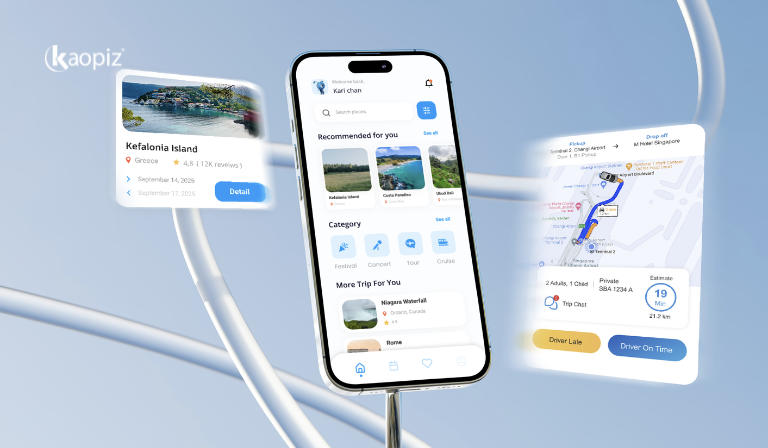
Key capabilities included:
- Activity Booking: Browse and reserve travel activities directly through the application.
- Transfer Booking: Arrange transportation services with a streamlined booking process.
- Trip Management: Access booking details, schedules, and travel information in one place.
- Real-Time Location Tracking: View trip status and track service providers during active journeys.
- Notifications & Updates: Receive booking confirmations, service updates, and important travel alerts.
- Personalized Travel Experience: Access relevant recommendations and information based on booking activities.
By bringing these features together within a mobile-first experience, the platform made travel services more accessible while encouraging greater user engagement throughout the customer journey.
Driver and Guide Application: Improving Coordination in the Field
To support service providers during daily operations, Kaopiz developed a dedicated application for drivers and guides. The solution provided real-time access to trip information, helping field staff coordinate more effectively while delivering a smoother experience for travelers.
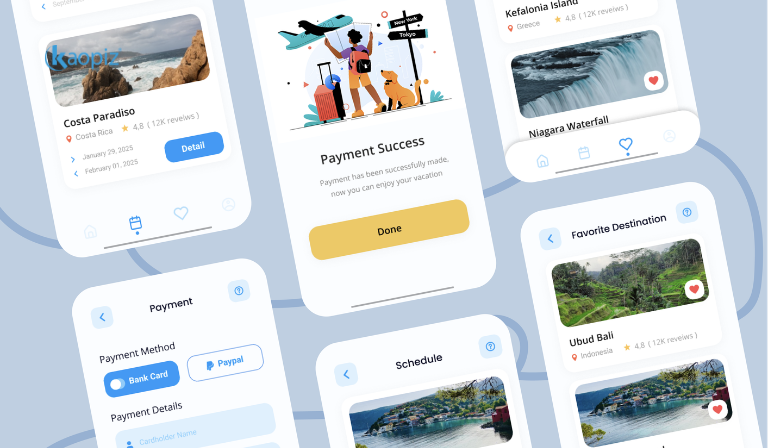
Key capabilities included:
- Trip Assignment Management: View and manage assigned bookings through a centralized interface.
- Real-Time Location Sharing: Share live location data to improve visibility for travelers and operational teams.
- Schedule Management: Access daily schedules and upcoming assignments in one place.
- Traveler Information Access: View relevant booking details to better prepare for each service.
- Status Updates: Update trip progress and service status in real time.
- Operational Communication: Facilitate faster coordination between drivers, guides, and support teams.
By improving visibility and communication in the field, the application helped reduce coordination challenges and enabled more efficient delivery of travel services.
How Kaopiz Designed and Delivered the Travel Platform
Building a travel platform that serves travelers, drivers, guides, and operational teams requires a deep understanding of how information flows throughout the travel journey. To ensure the solution aligned with real business needs, Kaopiz followed a structured development approach focused on usability, scalability, and operational efficiency.
Discovery and Travel Workflow Analysis
The project began with a detailed analysis of the client’s booking processes, service delivery model, and operational challenges. By identifying key pain points across traveler management, trip coordination, and information sharing, the team established a clear roadmap for the platform’s development.
These insights helped define the platform architecture and prioritize features that would deliver the greatest impact for both end users and internal stakeholders.
User-Centric UX/UI Design
Creating a seamless travel experience required interfaces that were intuitive for travelers while remaining practical for drivers and operational teams. Kaopiz focused on simplifying common tasks, reducing unnecessary steps, and ensuring users could quickly access the information they needed.
Special attention was given to mobile usability, allowing users to manage bookings, monitor trips, and coordinate services efficiently while on the move.
Agile Development and Continuous Testing
The platform was developed using an agile methodology, enabling features to be delivered incrementally and refined through continuous feedback. This approach allowed the team to adapt quickly to evolving requirements while maintaining alignment with the client’s business objectives.
Quality assurance activities were integrated throughout the development lifecycle to ensure system stability, performance, and a consistent user experience across different devices and user groups.
Technology Stack Behind the Travel Platform
To support a seamless user experience and real-time operational coordination, Kaopiz selected a modern technology stack capable of handling mobile interactions, location tracking, and scalable backend services. This architecture provided the flexibility needed to support both current requirements and future business growth.
Flutter for Cross-Platform Mobile Development
Both traveler-facing and driver-facing applications were developed using Flutter, enabling a consistent experience across iOS and Android devices. By leveraging a single codebase, the development team accelerated delivery while maintaining feature consistency and reducing long-term maintenance efforts.
Flutter’s performance and rich UI capabilities also helped create responsive mobile experiences for booking management, trip coordination, and location tracking.
Node.js for Backend Services
The platform’s backend services were built with Node.js, providing the speed and scalability required to manage booking transactions, user activities, and real-time communication between different stakeholders.
Its event-driven architecture was particularly well-suited for handling travel operations, where multiple users and services need to exchange information efficiently and reliably.
GPS and Real-Time Location Tracking Technologies
Real-time location tracking played a critical role in improving operational visibility across the platform. GPS technologies were integrated to enable live location sharing between travelers, drivers, and operational teams.
This capability allowed stakeholders to monitor trip progress, improve coordination, and respond more effectively to changing travel conditions, ultimately contributing to a more transparent and reliable travel experience.
Results: How the Platform Improved Booking Efficiency and Operational Visibility
Following the platform launch, the client gained a more connected and efficient travel ecosystem. By combining mobile booking capabilities, real-time location tracking, and centralized information sharing, the solution improved both operational performance and traveler satisfaction.
| Metric | Outcome | Business Impact |
|---|---|---|
| Mobile booking adoption | 48% increase | More travelers completed reservations through digital channels |
| Traveler-driver coordination | 52% improvement | Faster communication and trip management |
| User engagement | 29% increase | Higher interaction with booking and travel management features |
| Operational efficiency | 36% improvement | Reduced manual coordination and information handling |
| Scalability readiness | 2.5x capacity increase | Platform prepared for future booking growth |
Reduced Booking Friction Through Mobile Reservations
Before the platform was introduced, booking travel services often required multiple interactions across different channels. This created unnecessary steps for travelers and increased the workload for operational teams responsible for managing reservations.
With a dedicated mobile application, travelers could browse services, complete bookings, and access trip information from a single platform. As a result, mobile booking adoption increased by 48%, helping the client streamline the reservation process while encouraging greater use of digital services.
Improved Coordination with Real-Time Location Tracking
Coordinating travelers, drivers, and support teams can be challenging when location updates are delayed or inconsistent. The lack of visibility often resulted in additional communication efforts and slower response times during active trips.
The introduction of real-time location tracking improved traveler-driver coordination by 52%, providing greater transparency throughout the travel journey. Operational teams could monitor ongoing services more effectively, while travelers benefited from more accurate trip visibility and updates.
Enhanced User Experience Across Multiple Platforms
Creating a consistent experience across traveler-facing and driver-facing applications was a key objective of the project. The platform enabled users to access relevant information, manage services, and receive updates through intuitive mobile interfaces.
These improvements contributed to a 29% increase in user engagement, reflecting stronger adoption of the platform’s booking, trip management, and travel support features. Users spent less time navigating fragmented processes and more time interacting with value-added services.
Established a Scalable Foundation for Future Travel Services
Beyond immediate operational improvements, the platform provided the client with a technology foundation capable of supporting future business expansion. The centralized architecture made it easier to introduce new services, onboard additional users, and manage growing booking volumes.
The solution was designed to support approximately 2.5 times more bookings than the previous operating model while contributing to a 36% improvement in overall operational efficiency. This positioned the client to scale its travel services without significantly increasing administrative complexity.
Why Travel App Development Requires Industry-Specific Expertise
Travel applications involve far more than booking functionality. They must support complex interactions between travelers, service providers, and operational teams while ensuring that information remains accurate and accessible throughout the entire travel journey.
In addition, travel businesses often require features such as real-time location tracking, itinerary management, service coordination, and instant communication. Successfully integrating these capabilities requires a deep understanding of both technology and the operational realities of the travel industry.
This travel booking app development case study demonstrated the value of combining technical expertise with industry knowledge of Kaopiz as a trusted mobile app development company in Singapore. By aligning the platform with the client’s travel workflows and customer expectations, Kaopiz delivered a solution that improved day-to-day operations while supporting long-term business growth.
Is a Custom Travel Booking Platform Right for Your Business?
As travel businesses grow, managing bookings, service providers, customer communications, and operational workflows can become increasingly complex. If your organization relies on multiple disconnected systems or manual coordination processes, a custom platform may offer a more efficient and scalable solution.
A custom travel booking platform is particularly valuable for companies that need to support unique service models, improve traveler experiences, and gain greater visibility into daily operations. By building technology around business requirements rather than adapting to off-the-shelf limitations, organizations can create a stronger foundation for long-term growth and innovation.
Whether you’re managing transportation services, guided tours, travel concierge offerings, or multi-destination experiences, investing in the right digital platform can help transform operational complexity into a competitive advantage.
Conclusion
As traveler expectations continue to evolve, digital platforms have become a critical component of delivering seamless and efficient travel experiences. Businesses that rely on manual coordination or disconnected systems often struggle to maintain service quality as booking volumes and operational complexity increase.
This travel app development case study demonstrates how Kaopiz helped a Singapore-based travel company transform its booking and service management processes through a unified mobile platform. By improving booking efficiency, strengthening operational visibility, and enabling real-time coordination, the solution created a scalable foundation for future growth while enhancing the overall travel experience for both travelers and service providers.
Author

Lucie Tran
Head of Growth of Kaopiz Global
Table of Contents
Don’t miss what’s next!
Thank you! Your form has been submitted successfully.